
Okinawa Climate
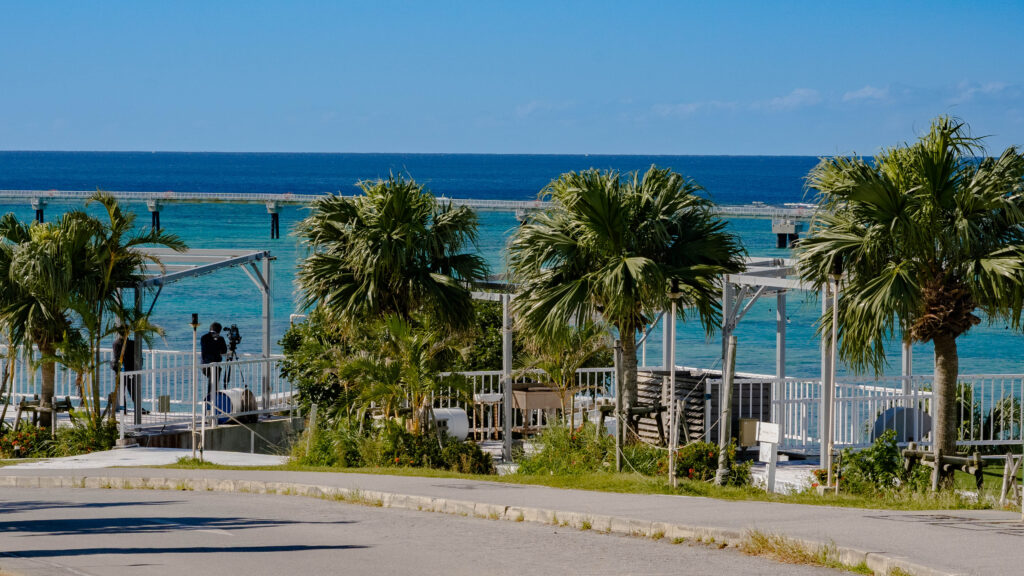
Okinawa has a subtropical climate, meaning it stays warm throughout the year compared to mainland Japan.
While many people imagine a calm tropical paradise, sudden heavy rain showers can occur quite frequently.
To avoid being caught off guard by unexpected weather, it’s helpful to understand Okinawa’s climate characteristics before traveling.
In this article, we introduce Okinawa’s rainfall patterns as well as the timing of the rainy season (tsuyu).
This guide is especially useful for those planning to visit during the rainy season, so we hope you find it helpful for your trip planning!
Okinawa Rainfall
In Okinawa, the highest rainfall occurs during the rainy season from May to June and during the typhoon season from August to September.
However, sudden heavy rain can occur in any season, making Okinawa a region with relatively high rainfall throughout the year.
That said, rain in Okinawa often differs from mainland Japan. Instead of long periods of continuous rainfall, it is more common to experience short, intense showers that stop quickly.
Annual Rainfall in Okinawa
Okinawa ranks 8th in Japan for annual rainfall, placing it among the highest in the country.
The national average is 1,610 mm, while Kochi Prefecture ranks 1st.
To help visualize this, we have compared the annual rainfall of Kochi, Tokyo, and Naha below for reference.
▼Annual Rainfall: Kochi, Tokyo, and Naha
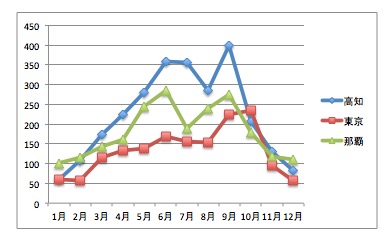
Source: Japan Meteorological Agency (Reference period: 1991–2020)
| Annual precipitation | |
|---|---|
| Kochi | 2,667mm |
| Tokyo | 1,598mm |
| Naha | 2,161mm |
During Okinawa’s rainy season, rainfall is more than twice that of Tokyo.
Even in winter (January to March), there is still a relatively high amount of rainfall, and April and October show precipitation levels similar to Tokyo’s rainy season.
As you can see, Okinawa actually receives much more rainfall than many people might expect.
Okinawa’s Rainy Season
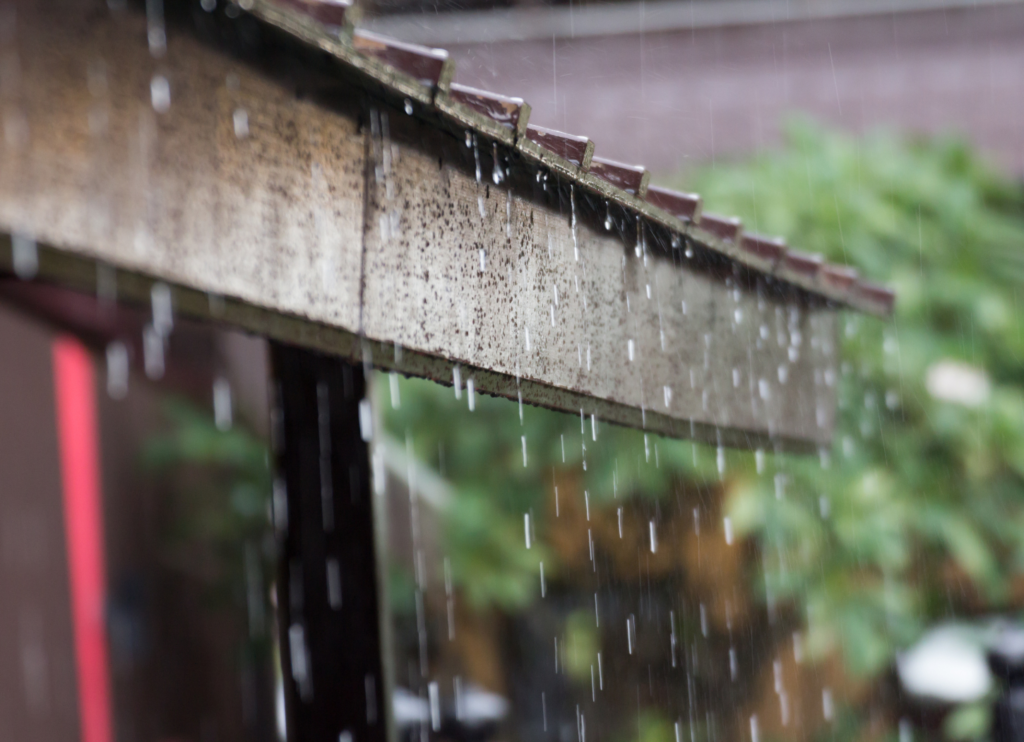
Because Okinawa’s rainy season brings a high amount of rainfall, some travelers may be hesitant to visit during this period.
However, it rarely rains all day. Instead, short and intense downpours, similar to squalls, are more common.
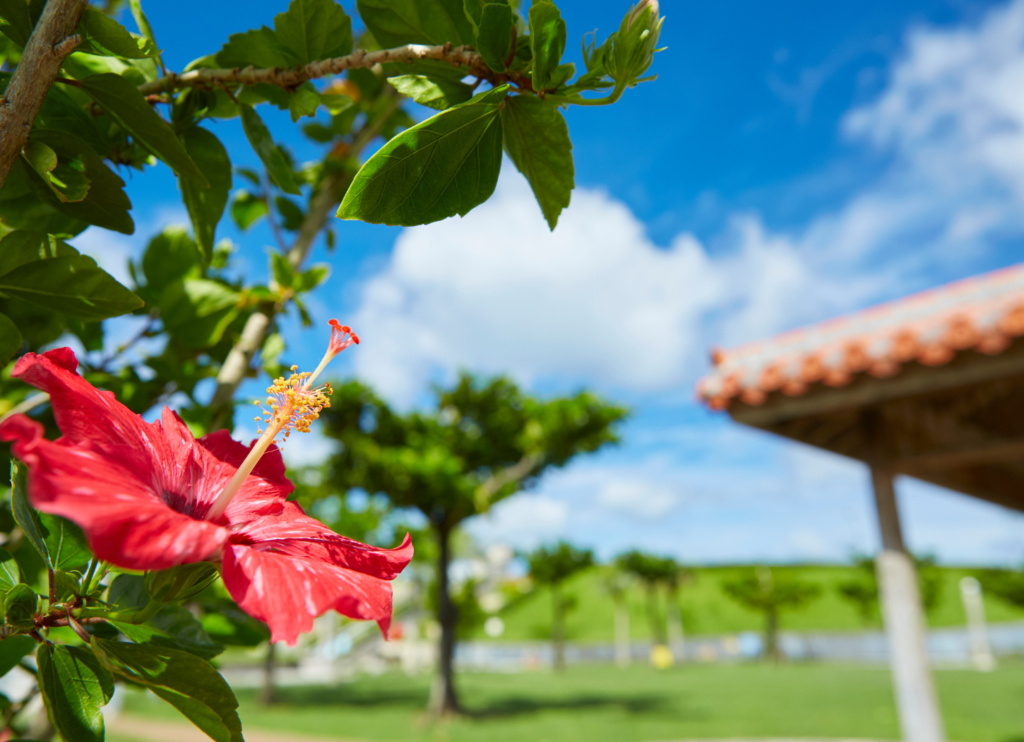
Unlike mainland Japan, where the sky can remain overcast from morning to evening, Okinawa often sees clear breaks in the weather after rain, sometimes revealing bright blue summer-like skies.
The rainfall tends to be heavy in short bursts, so it is uncommon for it to rain continuously throughout your entire trip—so there’s no need to worry too much.
When Is the Rainy Season in Okinawa?
Okinawa has the earliest rainy season in Japan, typically starting about one month earlier than mainland Japan.
For reference, in 2022, Okinawa’s rainy season began on May 4 and ended on June 20.
▼Rainy Season Onset & End Dates Across Japan (2022)
| Start of the rainy season (tsuyu) | End of the rainy season | |
|---|---|---|
| Okinawa | around May 4 | around June 20 |
| Kyushu | around June 11 | June 27 |
| Shikoku | June 13 | June 28 |
| Chugoku | June 14 | June 28 |
| Kinki (Kansai) | June 14 | June 28 |
| Tokai | June 14 | June 27 |
| Kanto-Koshin | June 6 | June 27 |
| Hokuriku | June 14 | June 28 |
| Northern Tohoku | June 15 | July 26 |
Source: Japan Meteorological Agency – Start and End of the Rainy Season (FY2022 provisional data)
On average, Okinawa’s rainy season runs from around mid-May (about May 10) to late June (around June 21), lasting approximately one month.
In contrast, mainland Japan typically enters the rainy season from early to mid-June. This means that Okinawa often finishes its rainy season around the time the rest of Japan is just beginning it.
Below are the recent 5-year trends for Okinawa’s rainy season start and end dates:
▼Okinawa – Rainy Season Start & End (Past 5 Years)
| Start of the rainy season | End of the rainy season | |
|---|---|---|
| 2018 | June 1 | June 23 |
| 2019 | May 16 | July 10 |
| 2020 | May 16 | June 12 |
| 2021 | May 5 | July 3 |
| 2022 | May 4 | June 20 |
Looking at the past five years, there are cases where the rainy season ended in early July, showing that in some years the rainy season can last longer than usual.
This indicates that while Okinawa’s rainy season generally follows a similar pattern each year, its duration can occasionally vary depending on weather conditions.
Recommended Items for Traveling to Okinawa During the Rainy Season
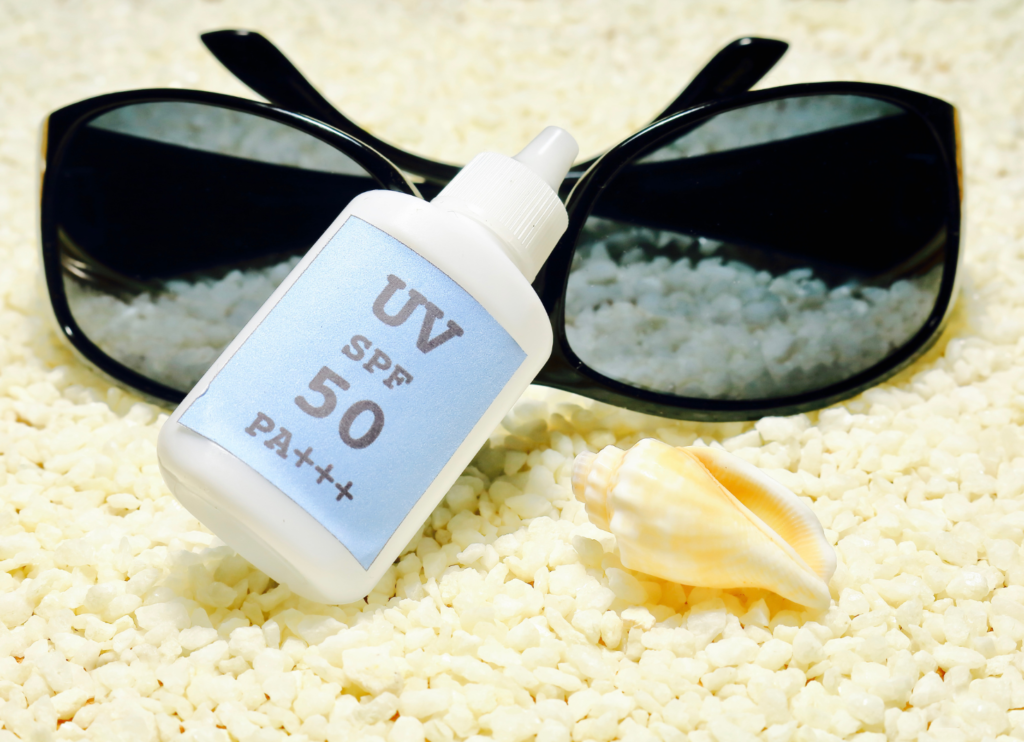
Next, here are some recommended items for visiting Okinawa during the rainy season:
▼Recommended items
- Foldable umbrella
- Raincoat
- Towel
- Sunglasses
- Hat
- Sunscreen
- Lightweight, breathable cardigan
During Okinawa’s rainy season, it rarely rains continuously throughout the entire day, so a foldable umbrella is usually sufficient.
A compact, UV-protection foldable umbrella that can be used for both sun and rain is ideal.
Also, even on cloudy or rainy days, UV levels in Okinawa during June are comparable to those of August in mainland Japan.
Be sure not to forget sun protection such as sunglasses, hats, and sunscreen.
From May to June, temperatures remain high, and humidity can exceed 80% on some days, creating a hot and sticky environment.
Since you may sweat frequently, it’s best to choose breathable clothing or quick-drying fabrics.
As soon as the rainy season ends, summer conditions arrive immediately, so it’s important to choose versatile clothing that can adapt easily in case the weather shifts during your stay in Okinawa.
Make Your Trip More Enjoyable with GO!GO!TOUR Rent a Car
In Okinawa, the period from late June after the rainy season ends through before the summer holidays is considered a great time for sightseeing.
Compared to the peak summer season, there are relatively fewer tourists, and the weather is generally more comfortable, making it an ideal time to visit.

However, even during this less crowded travel period, rental cars in Okinawa can still be in short supply, so it’s important to secure your vehicle early.
To avoid last-minute stress before your trip, it’s best to book your rental car right after purchasing your flights.
For finding a rental car in Okinawa, “GO!GO!TOUR Rent a Car” is highly recommended.
Use the “GO!GO!TOUR Rent a Car” comparison site to book your vehicle at the best possible price.