In one line: Okinawa’s typhoon season runs from June through October, with August and September as the peak months. In 2025, a total of 7 typhoons passed within 300 km of the Okinawa region. This guide covers everything you need to know for 2026 — typhoon statistics, what to do before and during a storm, cancellation policies for flights and Okinawa rental cars, and how to keep your trip on track even when a typhoon strikes.
- Okinawa Typhoon Season 2026 — When Does It Start and Peak?
- Okinawa Typhoon Statistics 2021–2025
- What to Do Before a Typhoon — 5-Step Checklist
- Rental Car & Marine Sports Cancellation Policy During Typhoons
- During a Typhoon in Okinawa — What to Do & Not Do
- After the Typhoon — Back on Track Fast
- Best Time to Visit Okinawa to Avoid Typhoons
- Frequently Asked Questions (FAQ)
Okinawa Typhoon Season 2026 — When Does It Start and Peak?
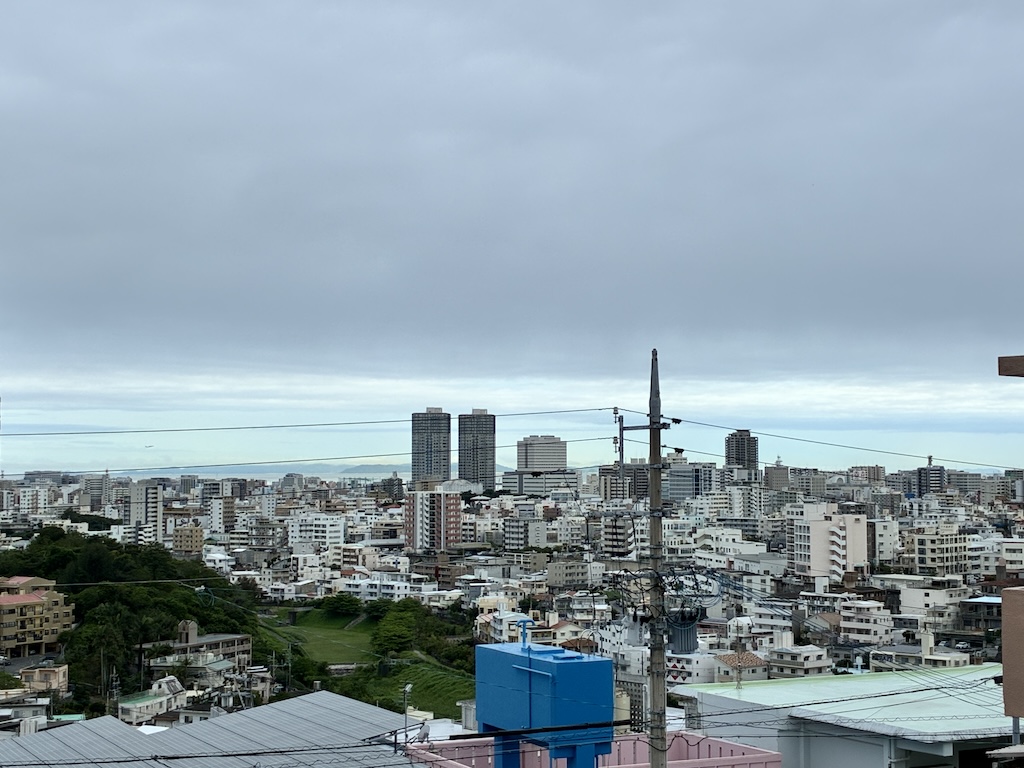
Okinawa is Japan’s most typhoon-prone prefecture. Sitting in the path of storms that form in the western Pacific, the main island and surrounding islands including Miyakojima, Ishigaki, and the Kerama Islands face direct or nearby typhoon threats every year without exception.
Here is a quick overview of the typhoon season calendar for Okinawa:
| Month | Risk Level | Avg. Approaches (JMA 1991–2020) | Notes |
|---|---|---|---|
| June | Low–Moderate | 0.6 | Rainy season overlap; early season typhoons possible |
| July | High | 1.5 | Peak summer travel season; typhoon risk rising |
| August | Very High | 2.2 | Peak typhoon month — heaviest concentration of strong storms |
| September | Very High | 1.9 | Large, slow-moving typhoons more common; long disruptions |
| October | Moderate | 1.1 | Late-season risk; typhoons can be powerful |
| November+ | Low | 0.3 | Risk fades quickly |
Source: Japan Meteorological Agency (JMA) 30-year climate normals (1991–2020). “Approach” = typhoon passing within 300 km of Okinawa prefecture weather stations.
Okinawa Typhoon Statistics 2021–2025
How bad has it actually been in recent years? Here is a summary of typhoons that affected Okinawa from 2021 to 2025:
| Year | Total Approaches (Okinawa Region) | Notable Events |
|---|---|---|
| 2025 | 7 | Typhoon No. 3 direct hit Miyakojima (Jul); Typhoon No. 6 disrupted Naha flights for 3 days (Aug) |
| 2024 | 8 | Record-breaking Typhoon Shanshan (Super Typhoon, Aug); multiple flight cancellations |
| 2023 | 6 | Typhoon No. 6 caused 3-day closure of Naha Airport in August |
| 2022 | 6 | Typhoon Nanmadol brought extreme winds; Okinawa schools closed for 2 days |
| 2021 | 7 | 4 typhoons in Aug–Sep caused repeated short-haul disruptions |
| 5-yr average | 6.8 | Roughly one significant disruption per summer trip during peak season |
What to Do Before a Typhoon — 5-Step Checklist
The key to a typhoon-proof Okinawa trip isn’t avoiding August or September — it’s preparation. Follow this checklist as soon as you book:
- Choose flexible fares and bookings: Book refundable or low-penalty airline tickets. ANA, JAL, Peach, and Jetstar all have typhoon-specific cancellation waivers — check the policy before purchasing.
- Get travel insurance with trip interruption coverage: Look specifically for policies that cover typhoon-related cancellations, extended stays, and additional accommodation costs. Standard travel insurance may not cover “weather delays” — confirm the typhoon clause explicitly.
- Book a flexible rental car: Okinawa rental car providers listed on GO!GO!TOUR Japan typically allow free cancellation in the event of confirmed flight cancellations. Keep the airline’s official cancellation notice — you will need it. For pricing and options, see Okinawa Rental Car Prices 2026.
- Note the cancellation process: If your flight is cancelled due to a typhoon, contact your rental car company with the flight cancellation certificate from the airline. Most reputable companies will cancel without penalty. However, voluntary cancellations (changing plans because of typhoon risk, without confirmed cancellation) may still incur fees.
- Identify indoor backup plans: Have 2–3 indoor activity options ready (aquariums, museums, outlet malls) in case outdoor sightseeing is not possible on specific days.
Rental Car & Marine Sports Cancellation Policy During Typhoons
One of the most common concerns for visitors to Okinawa is what happens to their booked rental car or marine sports activity if a typhoon hits. Here is a straightforward breakdown:
Okinawa Rental Car — Typhoon Cancellation
| Situation | Typical Policy | What You Need |
|---|---|---|
| Flight cancelled by airline due to typhoon | ✅ Free cancellation at most companies | Official flight cancellation certificate from airline |
| You cancel voluntarily (flight not cancelled) | ⚠️ Standard cancellation fees apply | Check terms before booking |
| Typhoon warning issued locally | Varies by company — some offer free changes | Contact the company directly |
| Typhoon warning during rental period | Company may restrict driving — follow instructions | Do not drive in Typhoon Warning Level 6+ |
Pro tip: Book your Okinawa rental car through a platform that clearly explains cancellation conditions in English and provides responsive customer support. Compare options at Japan Rental Car by GO!GO!TOUR.
Marine Sports & Activities — Typhoon Cancellation
Most marine sports operators in Okinawa (diving, snorkeling, kayaking) will automatically cancel tours when a typhoon warning or strong wave warning is issued. This is a standard safety protocol. Reputable operators will contact you in advance and offer:
- A full refund if they cancel due to weather
- A reschedule option if your stay allows
Book Okinawa activities through GO!GO!TOUR Japan to ensure you are working with providers that have transparent cancellation policies. Avoid booking cash-only standalone operators who may be harder to contact in an emergency.
During a Typhoon in Okinawa — What to Do & Not Do
If a typhoon is approaching or has made landfall near Okinawa during your stay, here is what the local authorities and experienced travelers recommend:
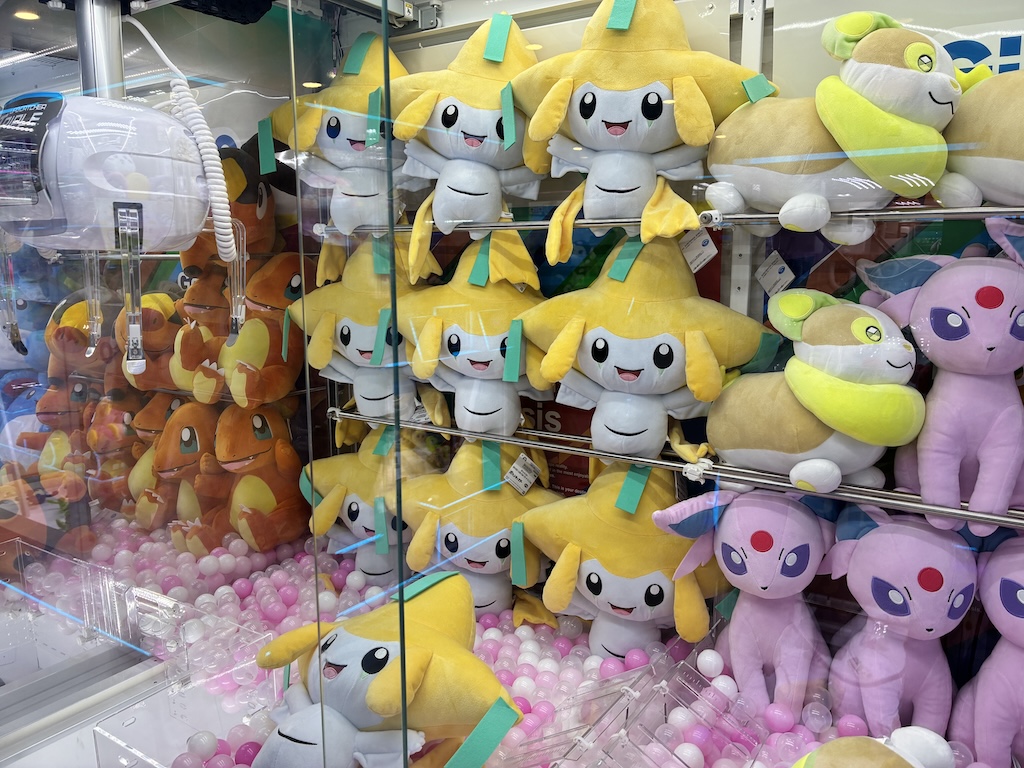
Indoor backups like arcades, aquariums, and shopping centers keep a typhoon day from being a wasted day. Most are within walking distance of Kokusai-dori in central Naha.
✅ Do:
- Stay inside your hotel or accommodation. Lobby and basement floors are safest.
- Stock up on food, water, and any needed medications at least 24 hours before the storm arrives. Convenience stores and supermarkets sell out fast.
- Keep your passport, insurance docs, and cash in a waterproof bag.
- Monitor JMA (Japan Meteorological Agency) typhoon track forecasts: jma.go.jp
- Charge all devices and portable batteries while power is available.
- Contact your airline and rental car company as early as possible if you believe your flight may be cancelled.
❌ Do Not:
- Drive a rental car during a Typhoon Special Warning or when wind speeds exceed 25 m/s. Most rental companies explicitly prohibit this.
- Go to the beach, sea walls, or any coastal area “to watch the waves” — this is one of the most common causes of typhoon-related deaths in Okinawa.
- Leave windows open. Even a “weakened” typhoon can push rain horizontally.
- Assume the storm is over when it gets quiet — the calm eye of the typhoon can pass, followed by an equally violent second half.
After the Typhoon — Back on Track Fast
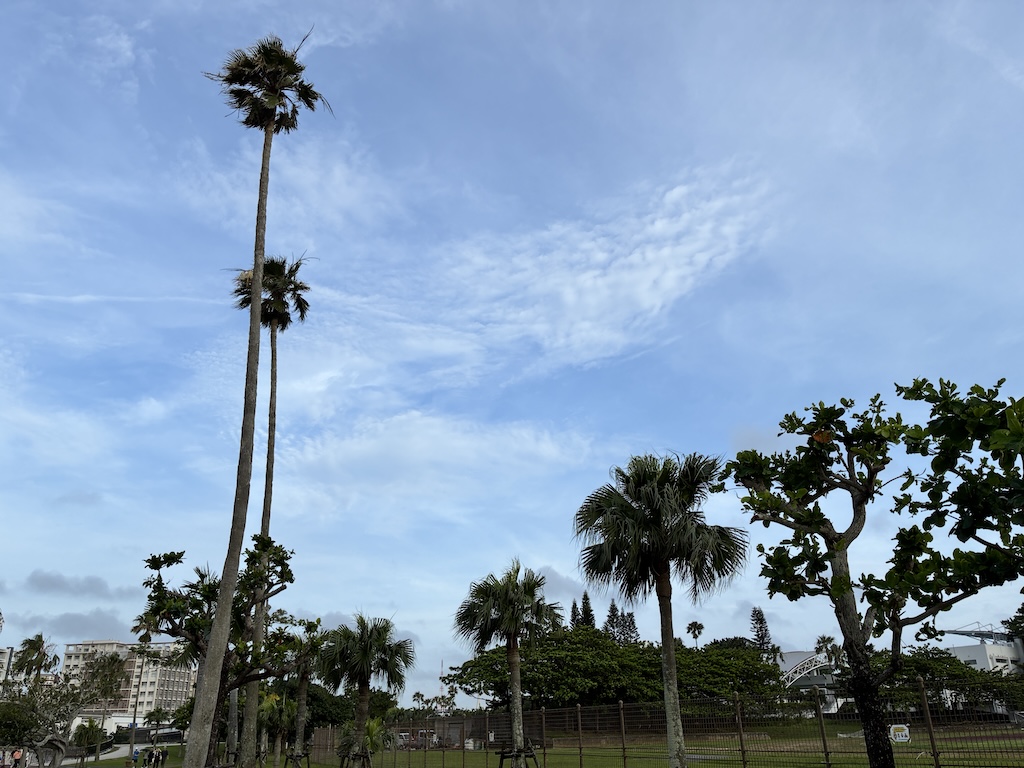
One positive thing about typhoons in Okinawa: they move fast. A storm that grounds flights for a day or two is typically followed by clear, calm weather — and often some of the most crystal-clear sea conditions of the year.
- Flights typically resume within 24–48 hours after a typhoon passes Okinawa
- Marine sports operations resume in 1–2 days once sea conditions stabilize
- Road conditions improve quickly — but watch for fallen trees and temporary road closures, especially in northern Okinawa
- Coral visibility often improves after a typhoon stirs the ocean — dive shops frequently report exceptional conditions post-storm
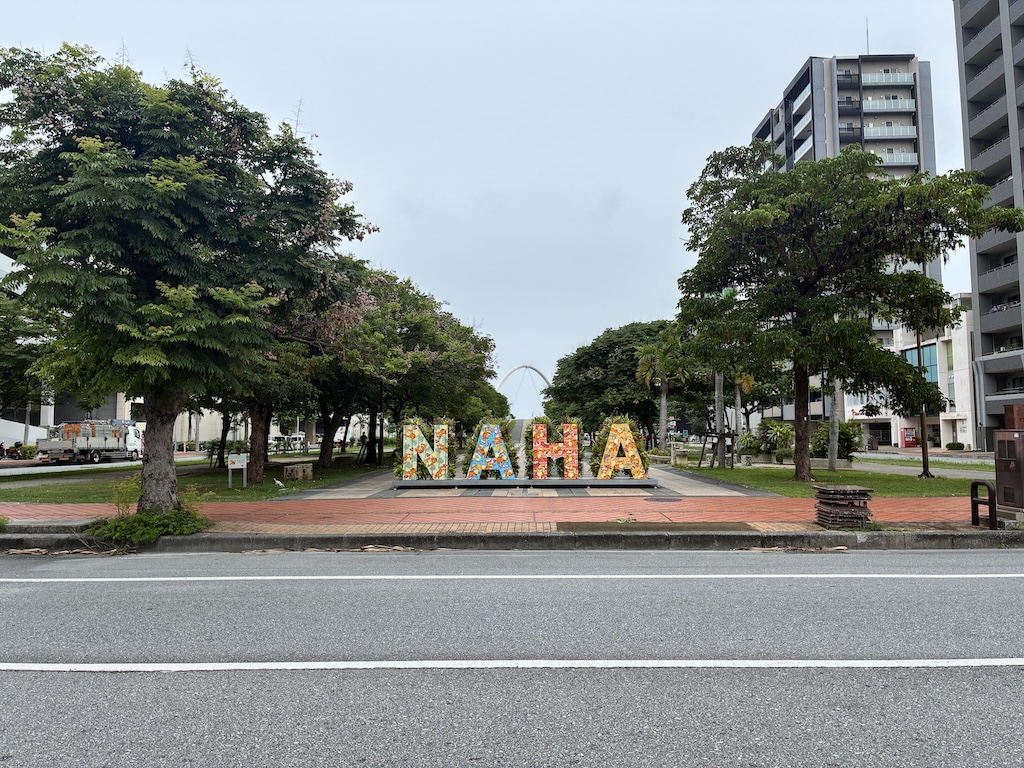
If your itinerary gets shifted, consider adding a day in Naha (Kokusai-dori, Shuri Castle, Makishi Market) while waiting for conditions to improve. Naha’s urban environment is typhoon-resilient and most indoor attractions remain open throughout.
Best Time to Visit Okinawa to Avoid Typhoons
If avoiding typhoons entirely is your priority, here are the safest travel windows for Okinawa in 2026:
- March – Early June: Before typhoon season peaks. Rainy season (tsuyu) runs late May to June, but typhoon risk is low. Sea is warm enough for snorkeling from late May.
- Early July (Jul 1–15): Often a sweet spot — post-rainy season, lower typhoon risk than August, and sea conditions are excellent.
- Late October – November: Typhoon risk drops sharply. Sea stays warm enough for water activities. Crowds thin out and rates drop.
- December – February: Zero typhoon risk. Cool and sometimes windy, but popular for whale watching (Jan–Apr) and uncrowded sightseeing.
For a detailed look at Okinawa’s temperature, rainfall, and seasonal patterns throughout the year, see our Okinawa Climate Guide.
Planning an Okinawa trip and want to secure a rental car before availability runs out? Browse options at GO!GO!TOUR Okinawa Rental Car. For Fukuoka, Hokkaido, or island-hopping trips, check Fukuoka rental cars, Hokkaido rental cars, or the full Japan rental car comparison.
Frequently Asked Questions (FAQ)
Q1. Is it safe to travel to Okinawa during typhoon season?
Yes — with preparation. Millions of people visit Okinawa during August and September every year without incident. The key is booking flexible fares, having cancellation-friendly reservations, getting travel insurance with a typhoon clause, and monitoring JMA forecasts from about a week before your trip.
Q2. What happens to my rental car if my flight is cancelled by a typhoon?
If the airline officially cancels your flight due to a typhoon, most Okinawa rental car companies will cancel your booking without a fee — but you must provide the official cancellation certificate issued by the airline. If you cancel voluntarily before a formal flight cancellation, standard fees typically apply.
Q3. Can I still drive a rental car during a typhoon?
No. When a Typhoon Warning or Special Warning is in effect, driving is prohibited by most rental companies and is extremely dangerous. You will be responsible for any damage to the vehicle if you drive against company policy during a storm. Stay indoors and wait for the all-clear.
Q4. How far in advance can I track a typhoon approaching Okinawa?
JMA typically issues a 5-day track forecast for active typhoons. You can monitor in real time at jma.go.jp or via apps like Tenki.jp. For travel planning purposes, check from about 7 days before your trip start date and daily from 5 days out.
Q5. Does Okinawa still have typhoon risk in October?
Yes — October averages about 1.1 typhoon approaches near Okinawa (JMA 1991–2020 normals). However, the risk is significantly lower than August–September. October storms tend to be more slowly moving and less frequent. Travel insurance is still recommended for October visits.
Q6. What is the difference between a Typhoon Warning and a Typhoon Special Warning?
A Typhoon Warning (暴風警報) is issued when strong winds are expected within 6 hours. A Special Warning (特別警報) is the highest level, issued only when catastrophic damage is expected — historically rare but worth understanding. During any warning level, outdoor activities and driving should be suspended.
Q7. Which months are the absolute peak of typhoon season in Okinawa?
August and September are the two highest-risk months, with JMA 30-year normals showing 2.2 and 1.9 typhoon approaches per month respectively. If your travel dates are flexible, shifting to early July or late October significantly reduces typhoon risk while keeping sea conditions warm enough for snorkeling and diving.
Q8. Do hotels in Okinawa offer refunds when a typhoon hits?
Policies vary widely by hotel and booking channel. Direct bookings with major hotel groups (Hilton, ANA InterContinental, Halekulani Okinawa, Hyatt) generally offer flexible rebooking when a typhoon prevents arrival. Third-party sites like Booking.com or Expedia follow the rate plan you selected — non-refundable rates remain non-refundable unless the hotel itself closes due to the storm. Always read the cancellation policy before booking, and consider a refundable rate during August and September.
Ready to book your Okinawa trip? Secure your Okinawa rental car early — availability drops fast during summer. Compare marine sports activities and car rental deals together at GO!GO!TOUR Japan Rental Car & Activity Platform.