- Ishigaki Island in September — Summer Sea Still Open, But Watch Typhoons & Jellyfish
- At a Glance — Ishigaki Island September Weather
- Weather Overview — Hotter and Wetter Than Miyakojima
- 🌀 Typhoon Statistics — Yaeyama is the "First Landfall Point"
- 🚨 3 Safety Warnings for Ishigaki in September
- What to Pack for Ishigaki in September
- 🐠 The Headline Act — Kabira Ishizaki Manta Ray Dives Peak in September
- 🏝️ Yaeyama Island Hopping — September Fitness Ratings
- When to Visit — Avoid the Respect for the Aged 3-Day Weekend
- 🥩 Food — Ishigaki Wagyu, Yaeyama Soba & Awamori
- Rental Car — The Only Way to Really See Ishigaki 🚗
- Frequently Asked Questions
- Wrap-Up — Ishigaki in September at a Glance
Ishigaki Island in September — Summer Sea Still Open, But Watch Typhoons & Jellyfish
Quick answer: September on Ishigaki Island keeps the full summer feel — average air 28.2°C (82.8°F), sea 28°C+ (82°F+), 6.3 sunshine hours per day — with warm ocean swimming still at its best. The trade-off: 259mm (10.2 in) of rainfall, tail-end typhoon season, and the last month of Okinawa’s habu jellyfish alert (through Sep 30). On the upside, Kabira Ishizaki Manta Scramble hits its annual peak in Sep–Oct — the “grand dance” when 10+ manta rays are sighted at once, making it the best month of the year for divers. Flights and hotels drop 30–40% versus August peak, except for Japan’s Silver Week (Sep 19–23, 2026) — Respect for the Aged + Citizens’ Holiday + Autumnal Equinox back-to-back, creating a 5-day national holiday.
Ishigaki Island sits about 410 km (255 mi) southwest of Okinawa’s main island — closer to Taipei than to Naha — and is the gateway to the Yaeyama Islands, Japan’s southernmost tropical archipelago. Manta ray reefs, red-tiled Ryukyu villages on Taketomi Island, and Iriomote Island’s UNESCO-listed jungle await. It’s the “Maldives of Japan,” and September is a fascinating month to visit.
Because Ishigaki lies far south of Okinawa’s main island, September brings hotter days, heavier rain, and a higher chance of being the first landfall point for typhoons tracking north from the Philippines or Taiwan. Prepared travelers get the best of both worlds — full-summer diving conditions at shoulder-season prices.
This guide covers Ishigaki September weather, typhoon statistics, jellyfish safety, peak manta ray season, Yaeyama island-hopping, food, and rental-car tips — for international travelers flying in from Tokyo, Osaka, Naha, Taipei, or elsewhere.
Before you go, check the Okinawa Typhoon Guide 2026 and lock in your Okinawa rental car early — the Ishigaki branch is minutes from New Ishigaki Airport. September’s headline attraction, the Ishigaki manta ray dives and island tours, sells out fast — book at least 2 weeks ahead.
At a Glance — Ishigaki Island September Weather
Everything you need for packing and planning, in one table.
| Metric | Value | What it means for you |
|---|---|---|
| Average air temp | Avg 28.2°C (82.8°F) / High 31.0°C (87.8°F) / Low 26.0°C (78.8°F) | Full summer, tropical nights |
| Sea temperature | 28°C+ (82°F+) | Same as July/August — swimming still ideal |
| Humidity / heat index | Avg humidity 76% / feels like 33°C+ (91°F+) | Hot & humid — hydrate constantly |
| Rainfall / sunshine | 259.7 mm (10.2 in) / 6.3 hrs sunshine per day | 30 mm more than Miyakojima due to typhoons |
| Wind speed | 5.3 m/s (12 mph), prevailing NNE | Windy Yaeyama coast — rain jacket beats umbrella |
| UV index | Peak 10–11 (very high to extreme) | SPF 50+ and a rash guard are non-negotiable |
| Water visibility | Approx. 20–30 m (65–100 ft) | No rivers to muddy water; a few days murky post-typhoon |
| Beach-day rating | ⭐⭐⭐⭐ (great, mind jellyfish & typhoons) | Excellent temp & clarity, read safety section |
| Typhoon risk | Tail end of peak season | Yaeyama is often the first landfall zone |
| Manta ray dives | Annual peak Sep–Oct (“grand dance” season) | Kabira Ishizaki Manta Scramble |
| Best travel window | Late-September weekdays (Sep 24 onward, post-holiday) | Avoid Sep 19–23 Silver Week (5-day holiday) |
Keep this table in mind and you’re 90% ready. Now for the details.
Weather Overview — Hotter and Wetter Than Miyakojima
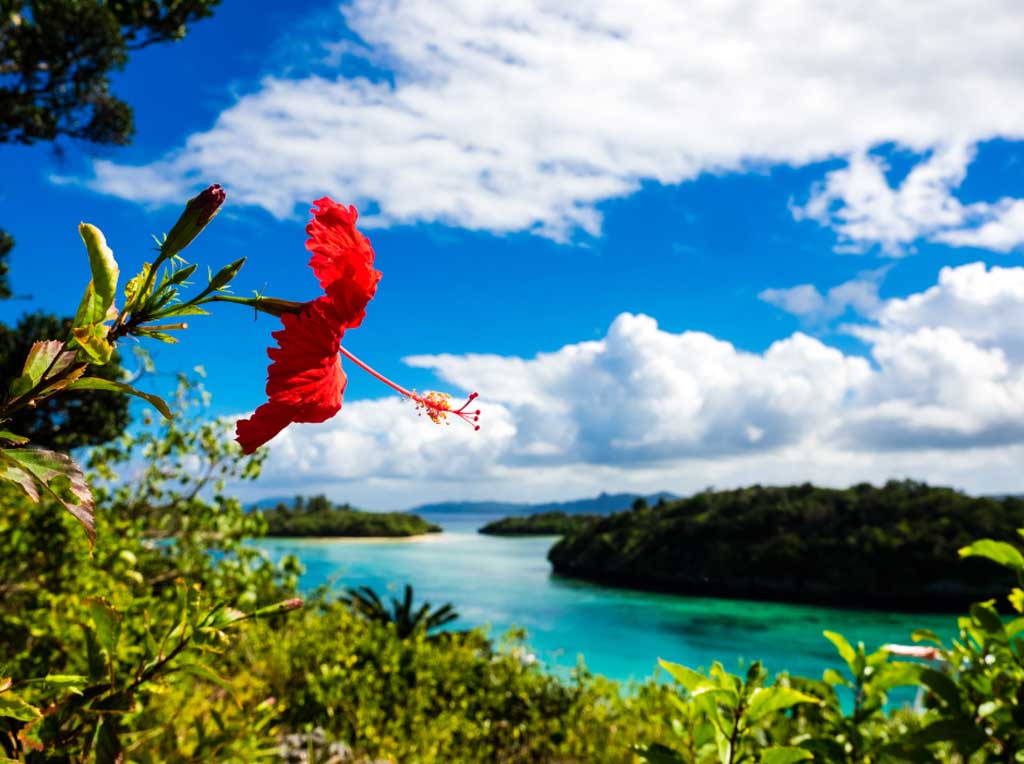
Even within Okinawa Prefecture, as you move southwest from Naha to Miyakojima to Ishigaki, temperature, sea temperature, and rainfall all climb slightly. Here are the key September numbers for Ishigaki Island (JMA 1991–2020 normals):
- Average / high temperature: Avg 28.2°C (82.8°F) / High 31.0°C (87.8°F) — 0.8°C warmer than Miyakojima
- Sea temperature: 28°C+ (82°F+) — essentially unchanged from midsummer, long swims still comfortable
- Humidity / heat index: 76% humidity, feels-like 33°C+ (91°F+)
- Rainfall / sunshine: 259.7 mm (10.2 in) / 6.3 hours sunshine per day — 30 mm more than Miyakojima
- Wind: 5.3 m/s (12 mph) — Yaeyama gets a stiff sea breeze; pack a light waterproof jacket
The signature feature of September on Ishigaki is “midsummer heat continues, but typhoon rain pushes monthly rainfall sharply higher.” The reef, coral, and tropical fish are still humming with life. When a typhoon does swing close, though, expect 1–2 days of rough seas and cancelled marine activities — build slack into your itinerary.
🌀 Typhoon Statistics — Yaeyama is the “First Landfall Point”
“Is it safe to visit Ishigaki in September?” — the most common question we get. Short answer: September is at the tail end of the Okinawa typhoon peak (August–September), but statistically the number of approaches is actually lower than July or August, and it keeps dropping through late September.
Here are the Japan Meteorological Agency (JMA) statistics for typhoon approaches to the Okinawa area — defined as any typhoon coming within 300 km of a prefectural weather station, which includes the Ishigaki station.
Okinawa Typhoon Approaches — Directly Applicable to Ishigaki (Source: JMA)
* “Approach” = typhoon center passing within 300 km of an Okinawa weather station (Ishigaki, Miyako, Naha, etc.)
| Year | May | Jun | Jul | Aug | Sep | Oct | Annual |
|---|---|---|---|---|---|---|---|
| 2025 | 3 | 1 | 1 | 1 | 1 | 1 | 7 |
| 2024 | 1 | 2 | 3 | 1 | – | 1 | 8 |
| 2023 | 2 | 1 | – | 1 | 2 | 1 | 6 |
| 2022 | 2 | 2 | – | 4 | – | – | 6 |
| 2021 | 1 | 3 | 1 | – | – | – | 7 |
| 5-yr avg (2021–2025) | 1.8 | 1.8 | 1.0 | 1.4 | 0.6 | 0.6 | 6.8 |
| 1991–2020 normal (JMA) | 0.6 | 1.5 | 2.2 | 1.9 | 1.1 | 0.3 | 7.7 |
* JMA Okinawa Region Typhoon Approach Count / JMA 30-year climatological normals (1991–2020)
On the 30-year normal, September averages just 1.1 approaches — below the July (2.2) and August (1.9) peaks. But there’s a Yaeyama-specific catch: Ishigaki sits about 400 km southwest of the Okinawa main island, right in the path of typhoons tracking north from the Philippines or Taiwan. Systems that curve around Miyakojima or Okinawa can score a direct hit on Ishigaki.
Within September, the pattern is clear: early-to-mid September carries the highest risk, and it drops steadily through the last third of the month. If your calendar is flexible, late September into early October is the sweet spot. Note that Japan’s Silver Week — a 5-day connected holiday of Respect for the Aged, Citizens’ Holiday, and Autumnal Equinox — falls on Sep 19–23, 2026 — domestic tourists surge, so bookings tighten again.
If a typhoon does hit, flights and ferries can be grounded for 1–2 days. Three preparations cover the risk:
- Flexible flights and hotels — Book refundable fares and low-fee cancellation policies wherever possible
- Travel insurance with trip-interruption coverage — Confirm typhoon-related cancellations are included
- Rental car with a typhoon-cancellation policy — When your flight is officially cancelled by the airline, contact us and we’ll process a 100% refund on your rental booking. You’ll need the official “flight cancellation certificate” issued by your airline — get it from the check-in counter, the airline’s app, or their call center.
🚨 3 Safety Warnings for Ishigaki in September
Three things to keep front-of-mind on Ishigaki in September.
1. Typhoon response — When a typhoon approaches Ishigaki, you don’t need a direct hit for problems to start. Any system within a 200–300 km radius brings strong south winds, big surf, and heavy rain. During those windows:
- All marine activities (snorkeling, diving, SUP) are cancelled
- Coastal walks and cape lookouts are closed off (wind hazard)
- Convenience stores and supermarkets see panic-buying of water and food — stock up early
- Avoid driving; the Ishigaki–Taketomi ferry stops running in high wind
2. UV is still extreme — Ishigaki’s September UV index reaches 10–11 (very high to extreme). The heat hasn’t dropped from August, so your sunscreen and rash guard routine has to match midsummer intensity. Even people who “don’t normally burn” at home get scorched here — sunscreen goes on before you leave the hotel, and you reapply every 2 hours (more often after swimming).
3. Habu jellyfish alert — September is still the final month
Okinawa Prefecture’s official “habu jellyfish alert” runs June 1 through September 30 every year. The habu jellyfish (Chironex yamaguchii, a cubozoan box jellyfish sometimes called the sea wasp) carries a potentially fatal sting. August is the peak, but September is still fully within the danger window. About half of all Okinawa marine incidents involve habu jellyfish stings, and over 70% happen outside the anti-jellyfish nets.
Prevention (do all of these)
- ✅ Swim only inside the anti-jellyfish nets at protected beaches — do not snorkel off the reef in unmarked water
- ✅ Wear a long-sleeve rash guard and water leggings to cover exposed skin (a swimsuit alone is a risk)
- ✅ Carry a small bottle of household vinegar to douse any stinging tentacles — never rinse with fresh water, which triggers more venom release
- ✅ Kids swim inside the net, always in an adult’s line of sight
- ✅ If stung, call 119 (Japan emergency) or head straight to the beach management office
What to Pack for Ishigaki in September
September packing for Ishigaki is broadly similar to Miyakojima, but two Yaeyama-specific factors add gear: stiff coastal wind (avg 5.3 m/s), and Iriomote jungle tours if you’re going there.
- Everyday clothes: Breathable cotton/linen tees, tanks, shorts, and light dresses
- Water gear (essential): Long-sleeve rash guard + water leggings — double protection against jellyfish and UV
- Sun protection: SPF 50+ / PA++++ sunscreen, reapplied every 2 hours; polarized sunglasses; a chin-strap or clip-on hat (wide brims blow off in Yaeyama wind)
- Indoor A/C + cool evenings: Light cardigan or windbreaker — rental cars, restaurants, and malls run the A/C hard
- Iriomote jungle / kayak tours: Closed-toe aqua shoes, long pants, insect repellent. Shorts and sandals don’t cut it in mangrove country
- Rain gear: Rainfall exceeds August. A compact folding umbrella is basic; when a typhoon is near, a rain jacket beats an umbrella hands down
🐠 The Headline Act — Kabira Ishizaki Manta Ray Dives Peak in September
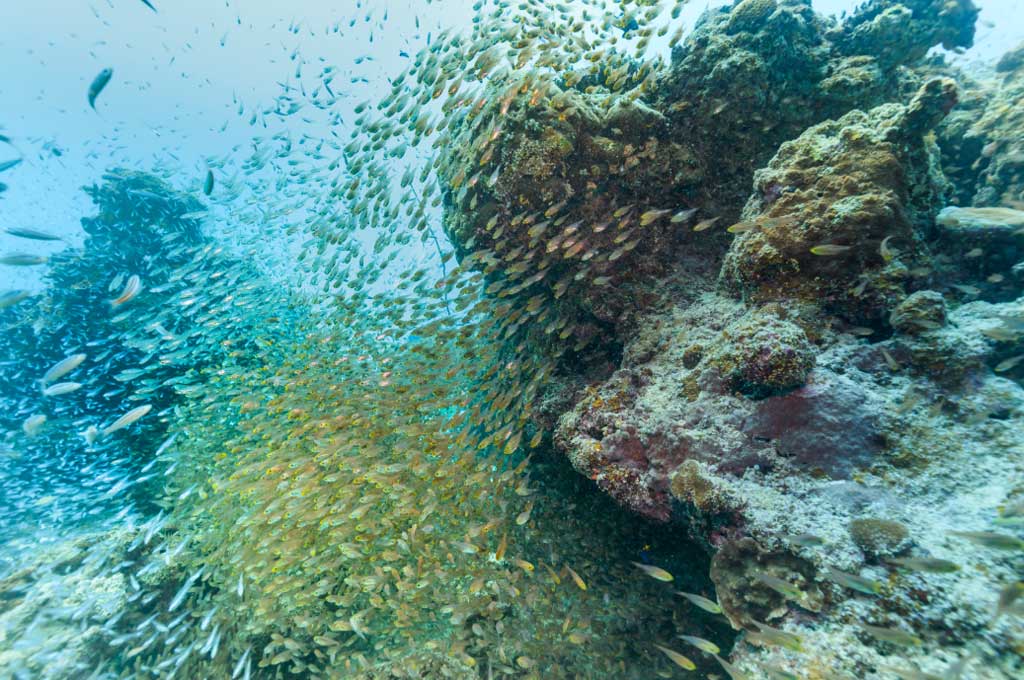
One of the reasons Ishigaki appears on world-diving bucket lists is Kabira Ishizaki Manta Scramble (川平石崎マンタスクランブル) — a reef where reef manta rays are seen on the vast majority of dives. September and October mark the population and mating-season peak, when “manta trains” and the “grand dance” (10+ mantas swirling at once) are observed. For divers, this is the best month of the year.
Tips for Ishigaki manta diving & snorkeling
- Season: Manta season runs April–November, with Sep–Oct as the annual peak (highest chance of grand-dance sightings)
- Time of day: 10:00–14:00 has the highest encounter rate
- No dive license needed — Snorkeling tours departing from Kabira Bay can reach the mantas. Plenty of beginner-friendly half-day trips are on offer
- Certified divers: Access the deeper sites — Ishizaki Manta Scramble and Manta City Point
- Booking: Peak season means book at least 2 weeks in advance
Note: Local dive operators report that overall manta encounter rates on Ishigaki have edged down in recent years. Sightings are never 100% guaranteed, but the relative advantage of Sep–Oct as the best month of the year is unchanged.
👉 Book Ishigaki manta dives and Yaeyama island tours in English: GO!GO!TOUR Ishigaki activities
🏝️ Yaeyama Island Hopping — September Fitness Ratings
The real magic of an Ishigaki trip is the day-trip ferries out to the smaller Yaeyama islands from Ishigaki Port. Most are 10 to 60 minutes away, and each has its own personality. Here’s how the main islands rate in September.
| Island | September rating | Highlights & access |
|---|---|---|
| Taketomi Island (竹富島) | ⭐⭐⭐⭐ | Water-buffalo carts through a preserved Ryukyu village, star-sand at Kaiji Beach, powder-white Kondoi Beach. 10–15 min ferry. Perfect half-day |
| Iriomote Island (西表島) | ⭐⭐⭐ | UNESCO World Heritage jungle, Pinaisara Falls kayak tours, endemic Iriomote wildcat habitat. Still rain-affected in September; overnight recommended |
| Yubu Island (由布島) | ⭐⭐⭐⭐ | Wade across the tidal shallows from Iriomote by water-buffalo cart. A 30-minute botanical stroll |
| Kuroshima (黒島) | ⭐⭐⭐⭐ | “Heart Island” — flat, cattle-country, prime diving. 25–30 min ferry |
| Hateruma Island (波照間島) | ⭐⭐⭐ | Japan’s southernmost inhabited island. Nishihama Beach is world-class, but check swell forecasts |
Ferry cancellations — Ferries stop running when swells exceed 3 m (10 ft) or winds are high. Check the Anei Kanko and Yaeyama Kanko Ferry apps or websites the morning of travel before heading to Ishigaki Port.
How to structure an Ishigaki trip in September
- Day 1 — Ishigaki city + Kabira Bay (buffer for arrival)
- Day 2 — Half-day Taketomi Island + Ishigaki afternoon activity
- Day 3 — Iriomote + Yubu combo (full day)
- Day 4 — Manta dive or Kuroshima
- Always leave at least one buffer day in case of ferry cancellations
When to Visit — Avoid the Respect for the Aged 3-Day Weekend
- Sep 1–5 (post-peak): Last week of Japanese school holidays; flights and hotels still on peak pricing. Drops sharply after Sep 5.
- Mid-September (weekdays): Airfare and hotels 30–40% cheaper than July/August. Fewer crowds — cars, cafés, ferries all more relaxed. The classic “shoulder-season Ishigaki” window.
- Sep 19–23, 2026 — Silver Week (シルバーウィーク) 5-day holiday: Respect for the Aged (Sep 21) + Citizens’ Holiday (Sep 22) + Autumnal Equinox (Sep 23) form a rare 5-day connected weekend. Domestic travelers pack the flights; ferries and popular beaches get busy again. Book 2–3 months ahead if you must travel then.
- Late September (weekdays, Sep 24 onward, post-Silver Week): Typhoon risk drops off, prices stay low. The sweet spot for the September calendar.
The best window overall is late September on weekdays, avoiding the Respect for the Aged holiday. You still get summer sea temperatures and peak manta season, the typhoon curve is trending down, and airfare + hotels are dramatically cheaper than peak August — a rare triple win.
🥩 Food — Ishigaki Wagyu, Yaeyama Soba & Awamori
Note on festivals: The famous Yaeyama Hōnensai (Harvest Festival) follows the lunar calendar and, in 2026, runs July 18 through August 7 — so it’s already over by September. That said, the summer festival spirit lingers in town, and the warm Yaeyama dialect greeting “Haisai” still fills local izakayas.
What to eat on Ishigaki in September
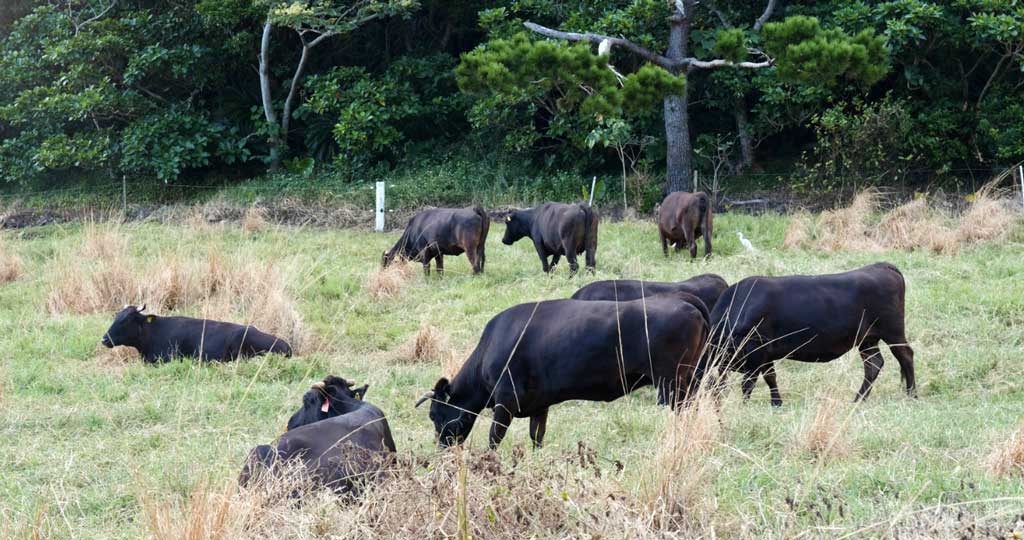
- Ishigaki wagyu (石垣牛): One of Japan’s top three wagyu beef varieties, alongside Matsusaka and Kobe. Famous spots include “Sumibi Yakiniku Yamamoto” and “Steakhouse Paikaji” in town. Reservations essential for dinner in season
- Yaeyama soba (八重山そば): A local twist on Okinawa soba, with thick pork belly on a round-noodle base. Year-round comfort food
- Yaeyama purple sweet potato (紫芋): Late-September harvest. Try it as a topping on Yaeyama soba, or as purple-yam ice cream
- Apple mango tail end: The August peak is winding down, but you can still find fruit into early September
- Awamori — “Seifuku (請福)” and “Yaesen (八重泉)”: Ishigaki-only awamori distilleries. Order it mizuwari (water-cut) at a local izakaya — the traditional way
Rental Car — The Only Way to Really See Ishigaki 🚗
Ishigaki’s headline scenery — Kabira Bay, Cape Hirakubo, Cape Tamatori, Sukuji Beach — is spread along the coast, and the drive itself is half the point. Local buses run once every 30–60 minutes, which quickly kills a day; and you’ll need to reach the ferry terminal anyway to island-hop. A rental car is effectively mandatory for a real Ishigaki trip.
In September, a rental car also gives you the flexibility to chase good weather — pivoting from a beach day to a market/museum day when a squall rolls through.
- ✅ Book in English — full booking flow in English, no phone calls needed
- ✅ Ishigaki Airport pickup shuttle to nearby branch
- ✅ Transparent pricing, no hidden fees — insurance options explained clearly in English
- ✅ Changes and questions handled by an English-speaking support line
- ✅ Full refund with your airline’s official flight-cancellation certificate in a typhoon shutdown
👉 Compare and book an Ishigaki rental car in English: GO!GO!TOUR Okinawa & Ishigaki rental cars
Related reading:
- 🌀 Okinawa Typhoon Guide 2026 — Seasonal risk & rental-car cancellation policy
- 🏝️ Miyakojima Weather & Seasons — How the neighboring Miyako Islands compare
Frequently Asked Questions
Q1. How risky are typhoons on Ishigaki in September?
On the JMA 30-year normal, September averages 1.1 approaches — fewer than August (1.9) or July (2.2). But Ishigaki sits about 400 km southwest of the Okinawa main island, right in the northbound track of storms from the Philippines and Taiwan, so systems that curve around Okinawa’s main island can still hit Yaeyama directly. Build in flexible bookings and travel insurance. Late September (Sep 24 onward, post-Silver Week) is statistically the safest window of the month.
Q2. Is it safe to swim in September? I’ve heard about jellyfish.
The water is fine — 28°C+ (82°F+), essentially the same as midsummer. But the habu jellyfish alert runs June 1 through September 30, so September is still peak-warning territory. Rules: swim only inside the anti-jellyfish nets at monitored beaches, and wear a rash guard and water leggings to minimize exposed skin. If stung, apply vinegar to remove tentacles — never rinse with fresh water, which makes it worse. Grab a small bottle of vinegar at any convenience store.
Q3. Will I really see manta rays diving in September?
Yes — September and October are the best manta ray months of the year on Ishigaki. Kabira Ishizaki Manta Scramble is famous for “manta trains” and the “grand dance” (10+ mantas at once) during this window. Best of all, you don’t need a dive license — half-day snorkeling tours from Kabira Bay can reach mantas too. Encounters aren’t 100% guaranteed (local reports suggest sighting rates have slipped a bit in recent years), but no month is better. Book at least 2 weeks ahead.
Q4. How much cheaper is Ishigaki in September?
Mid-to-late September weekdays run 30–40% cheaper than July or August on flights and hotels. Rental car pricing also drops out of peak. The exception is the Silver Week 5-day holiday (Sep 19–23, 2026), when domestic Japanese travelers push prices back up to peak levels — avoid those dates if you can.
Q5. Can I do all the Yaeyama island trips in September?
Ferries mostly run normally, but they’re cancelled when swells top 3 m (10 ft) or winds are strong. Hateruma and Iriomote routes are the most weather-sensitive. Build in at least one buffer day. Taketomi, Yubu, and Kuroshima are more consistent. Check the Anei Kanko or Yaeyama Kanko Ferry app the morning of your trip.
Q6. How do I get to Ishigaki Island from mainland Japan or overseas?
New Ishigaki Airport (ISG) is served by direct flights from Tokyo (Haneda ~3 hrs, Narita), Osaka (Kansai/Itami ~2.5 hrs), Nagoya, Fukuoka, and Naha (~1 hr) on JAL, ANA, Solaseed, Peach, and Jetstar. From overseas, most international travelers connect through Naha (Okinawa) or Tokyo. Direct international routes are limited; Taipei has occasional charters. If you’re already on the Okinawa main island, a Naha–Ishigaki hop is under an hour and easy to add to an existing itinerary.
Q7. Does Ishigaki packing differ from Miyakojima?
The base list is the same (tees, rash guard, SPF 50+, light cardigan). Two Ishigaki-specific additions: Yaeyama’s wind (avg 5.3 m/s) means a chin-strap or clip-on hat works better than a wide brim; and for Iriomote jungle or kayak tours, pack aqua shoes, long pants, and insect repellent. Miyakojima has no jungle — Iriomote does.
Q8. Should I really avoid the Respect for the Aged weekend?
Yes, if you can. In 2026 this becomes Silver Week (シルバーウィーク) — a rare 5-day connected holiday when Respect for the Aged (Sep 21), Citizens’ Holiday (Sep 22), and Autumnal Equinox (Sep 23) fall back-to-back. Flights and hotels can double or triple in price, and popular beaches and ferries get slammed. The upside: prices drop off sharply right after, so flying in on the Thursday or Friday after (Sep 24–25, 2026) puts you in the best value window of the entire month.
Wrap-Up — Ishigaki in September at a Glance
September on Ishigaki is “the summer sea is still open, manta season peaks, and — with typhoon and jellyfish planning — everything is dramatically less crowded and less expensive than August.” 28°C+ water and 20–30 m visibility keep snorkeling and diving at their absolute best; the crush of summer domestic travelers is over; and airfare + hotel costs drop 30–40%. Manage the typhoon and habu jellyfish risks with flexible bookings and simple safety rules, and you get the year’s best manta diving at shoulder-season prices.
Ishigaki September checklist
- Avg 28.2°C / High 31.0°C — hotter than Miyakojima by 0.8°C
- Sea 28°C+ — swimming still excellent
- 259 mm rain, 76% humidity — rain jacket & folding umbrella
- UV 10–11 (very high to extreme) — SPF 50+ & long-sleeve rash guard
- Wind avg 5.3 m/s — chin-strap hat wins over wide brim
- Habu jellyfish alert until Sep 30 — swim inside nets, carry vinegar
- Typhoon peak tail-off — Yaeyama is often first landfall
- Manta ray dives peak Sep–Oct grand dance — book 2 weeks ahead
- Skip Silver Week 5-day holiday (Sep 19–23) → late-Sep weekdays from Sep 24 are the best
- Build in one buffer day for ferry weather cancellations
📌 Ready to book? Do it in English with GO!GO!TOUR
From Kabira Bay drives to manta ray dives to water-buffalo carts on Taketomi — an Ishigaki trip really comes down to two things: a rental car + a solid activity lineup. Both bookable in English, both with English-language support.
- 🚗 GO!GO!TOUR Okinawa & Ishigaki rental cars — English booking, airport shuttle, transparent pricing, insurance & NOC included
- 🐠 Ishigaki activities — Manta ray dives, Taketomi water-buffalo cart, Kuroshima diving, Iriomote jungle cruise
- 🗺️ Ishigaki model itineraries — 3-day & 4-day sample routes covering Kabira Bay, Taketomi & manta diving
- 🌀 Okinawa Typhoon Guide 2026 — Seasonal risk & rental-car cancellation policy
- 🏝️ Miyakojima Weather & Seasons — Compare with the neighboring Miyako Islands
* Weather figures in this article are from the Japan Meteorological Agency (JMA) Ishigaki station 1991–2020 climatological normals. Typhoon and ferry operations vary by season and sea conditions — check official sources for current information before departure.