Harajiri Falls, Oita — The Niagara of Japan That Erupts Out of Nowhere
Hi from the GO!GO!TOUR team — your Japan road-trip companion.
Today we are heading to Harajiri Falls (原尻の滝) in Bungo-Ono, a countryside town in Oita Prefecture on the eastern side of Kyushu.
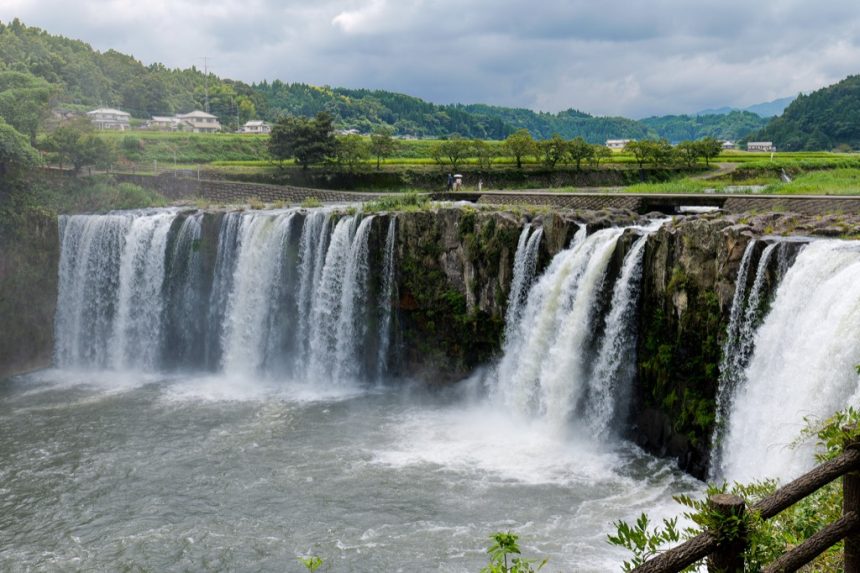
Here is the short version: this waterfall is 120 m wide and 20 m tall, and it does not sit in a mountain gorge. It drops straight out of a flat rice-farming plateau, which is exactly why locals call it the “Niagara of Japan.”
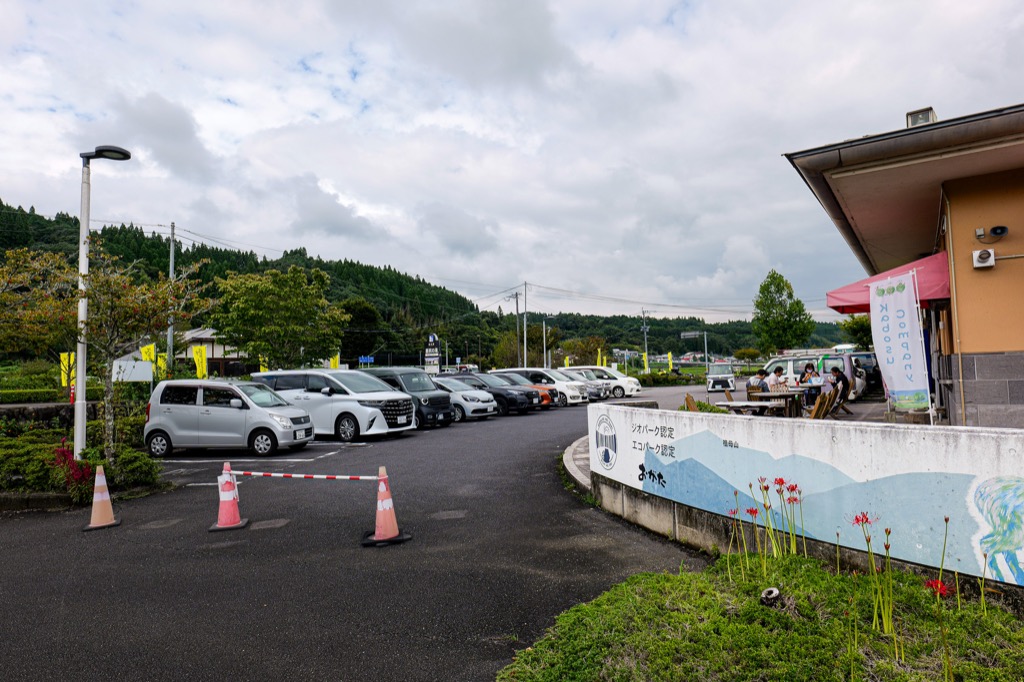
It sits right on the driving route from Oita city up to Mt. Aso, and a Michi-no-Eki roadside station is attached to the site — so parking, restrooms and lunch are all one stop. Parking is free, 200 spaces. That is why we are pitching it here as “the perfect side trip on the way somewhere else,” rather than a destination in its own right.
If you are putting together a Kyushu self-drive itinerary, grab a car with our Oita rental car search and slot Harajiri Falls into the Fukuoka – Yufuin – Kurokawa – Aso loop. Public transport basically does not reach this spot.
A waterfall in the middle of a flat plain
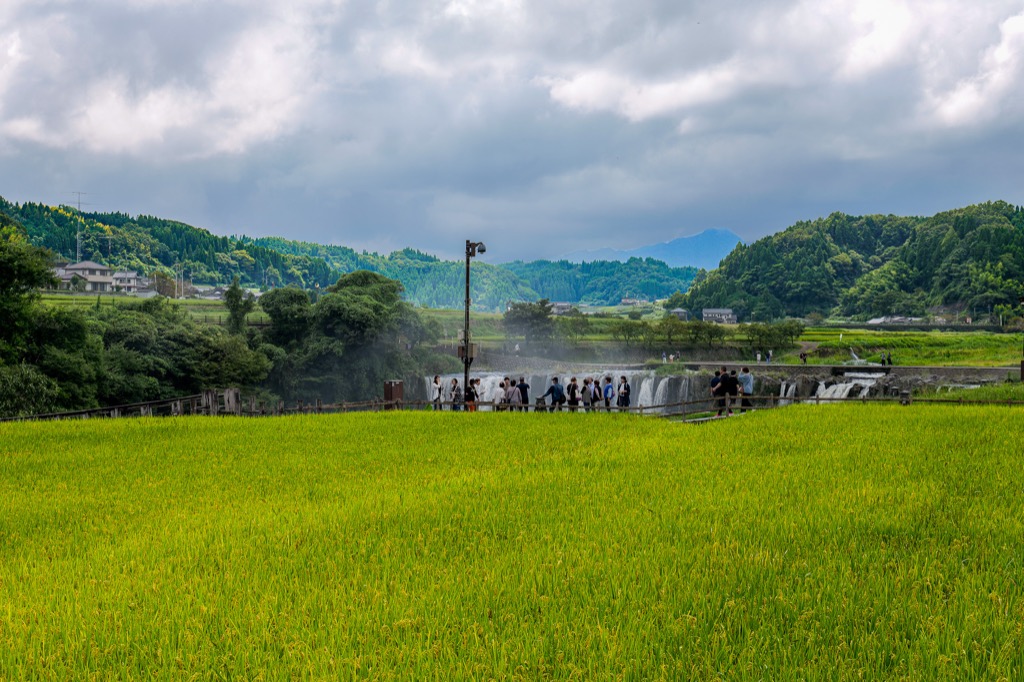
Most waterfalls in Japan require a hike deep into a mountain. Harajiri is the opposite.
You are driving through open farmland, and then the ground simply ends — a 120-meter-wide horseshoe of water pouring over the edge. The curved shape is why the “Niagara of Japan” nickname stuck. It looks less like a Japanese waterfall and more like a scaled-down version of the North American original.
The landform itself is a leftover from the great eruption of Mt. Aso, roughly 90,000 years ago. Pyroclastic flows filled the valleys, cooled into Aso welded tuff, and the Ogata River has spent millennia carving this cliff back into the plateau. If you look closely at the rock face beside the falls you can spot rows of tall vertical stone columns, formed as the once-molten rock slowly cooled and cracked into hexagonal pillars (geologists call this “columnar jointing”). The cliff almost looks hand-carved, and it’s a nice bonus if you like geology.
Harajiri is listed in Japan’s “100 Best Waterfalls” and the “100 Landscapes of Oita,” and it is one of the signature sights of the Sobo, Katamuki and Okue UNESCO Eco Park.
A near-perfect rest stop on the road to Aso
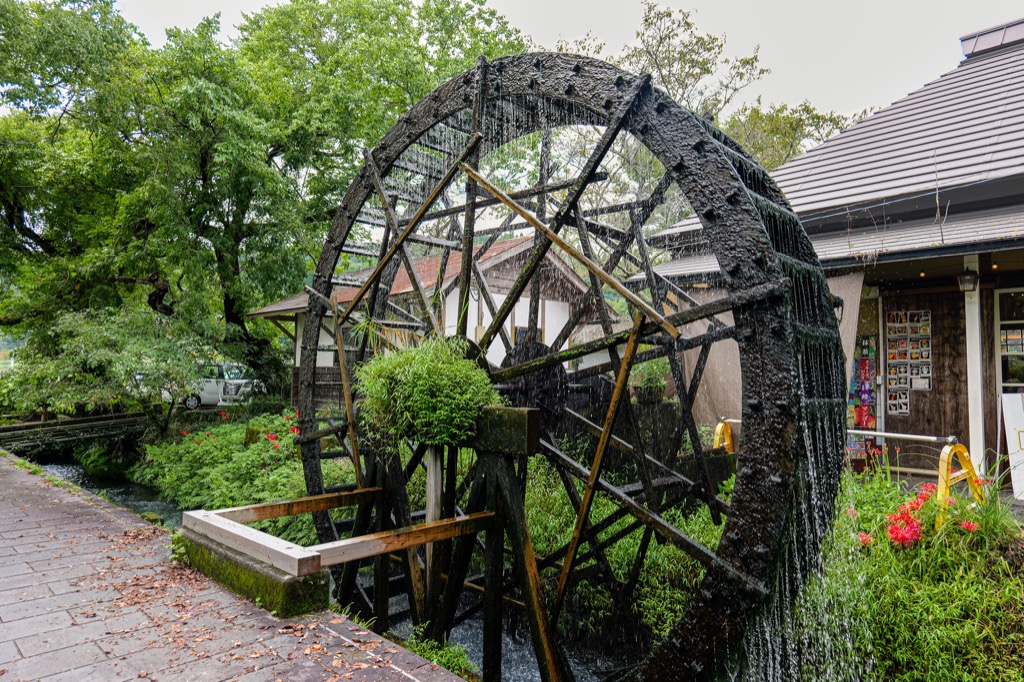
If you are driving from Oita or Beppu toward Mt. Aso, Harajiri Falls falls exactly where you would want a break anyway.
| From | Drive time | Distance |
|---|---|---|
| Kyukamura Minami-Aso | ~50 min | — |
| Kanponoyado Aso | ~55 min | ~40 km |
| Naka-Kyushu Expressway, Asaji IC | ~15 min | — |
The Michi-no-Eki Harajiri-no-Taki sits right next to the falls. From the car park it is a two-minute walk to the viewing bridge.
And this is where Harajiri stands out from other roadside waterfalls. Inside the Michi-no-Eki you can sit down to Bungo beef (Oita’s premium regional brand) grilled on a stone plate, a tori-ten set (Oita-style chicken tempura), or dango-jiru (a hearty miso soup with hand-torn wheat noodles). The souvenir shop sells shiitake cheese fries made with local dried mushrooms and a kabosu soft-serve using Oita’s signature citrus — both are here-only items.
Restrooms, a quick lunch and local produce all in one stop makes this an easy call if you are traveling with kids or older parents. “Rest area plus sightseeing” in the same footprint.
Practical info before you go
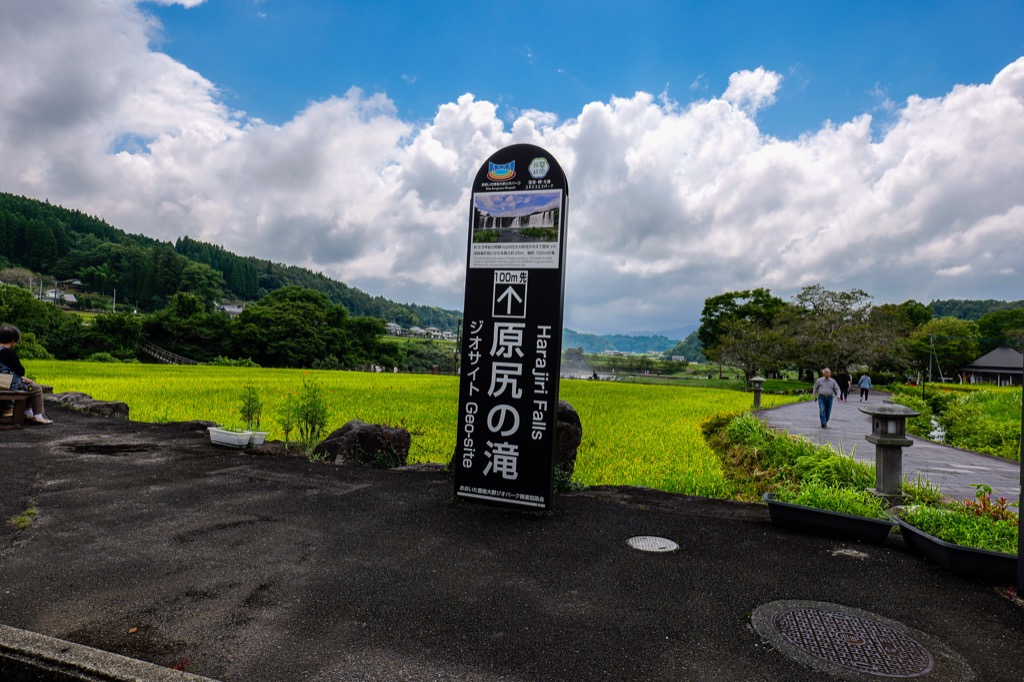
Here are the essentials in one table.
| Item | Details |
|---|---|
| Admission | Free |
| Parking | 200 spaces · Free (at Michi-no-Eki Harajiri-no-Taki) |
| Address | 大分県豊後大野市緒方町原尻936-1 (Ogata-machi, Bungo-Ono, Oita) |
| Michi-no-Eki hours | Mar–Nov 9:00–17:30 / Dec–Feb 9:00–16:30 |
| Restaurant “Shirataki” | Weekdays 10:00–16:30 · Weekends & holidays 11:00–16:30 (L.O. 16:00) |
| Closed | Dec 31 – Jan 1 |
| Time needed | 30 min – 1 hour |
| Public transport | Extremely limited — rental car essential |
| Restrooms | Multi-purpose restroom inside Michi-no-Eki (diaper changing table, baby seat) |
| Accessibility | Wheelchair accessible on parts of the viewing deck |
The best viewpoint is head-on from the suspension bridge
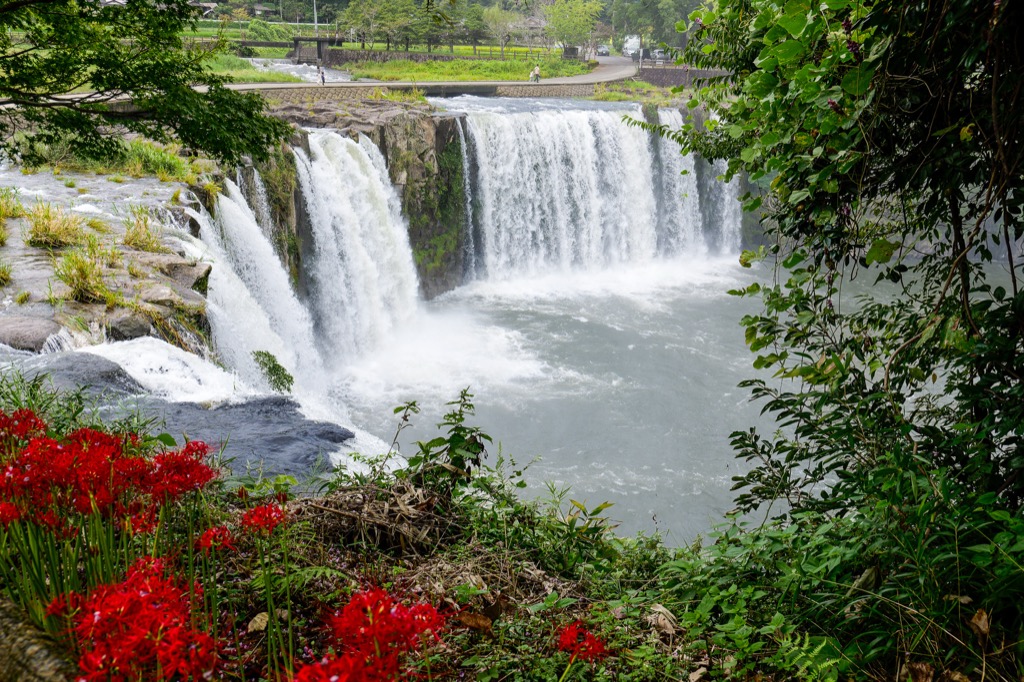
The classic shot is taken from Takimi-bashi (滝見橋), the wooden suspension bridge just downstream.
It puts you directly in front of the falls, dead center. What the signs do not tell you is how much this bridge sways. In fact the city posts a notice asking visitors to “cross quietly and slowly, and please do not shake the bridge on purpose.”
Because of the swing a tripod is basically useless. Handhold your camera and push the shutter speed up, or wait a few seconds on the bridge for the sway to settle before you press the shutter — that is when you get the crispest water texture.
Come the day after heavy rain if you can — the volume swells and the falls turn genuinely thunderous. If you want the “big” version of Harajiri, chase the weather.
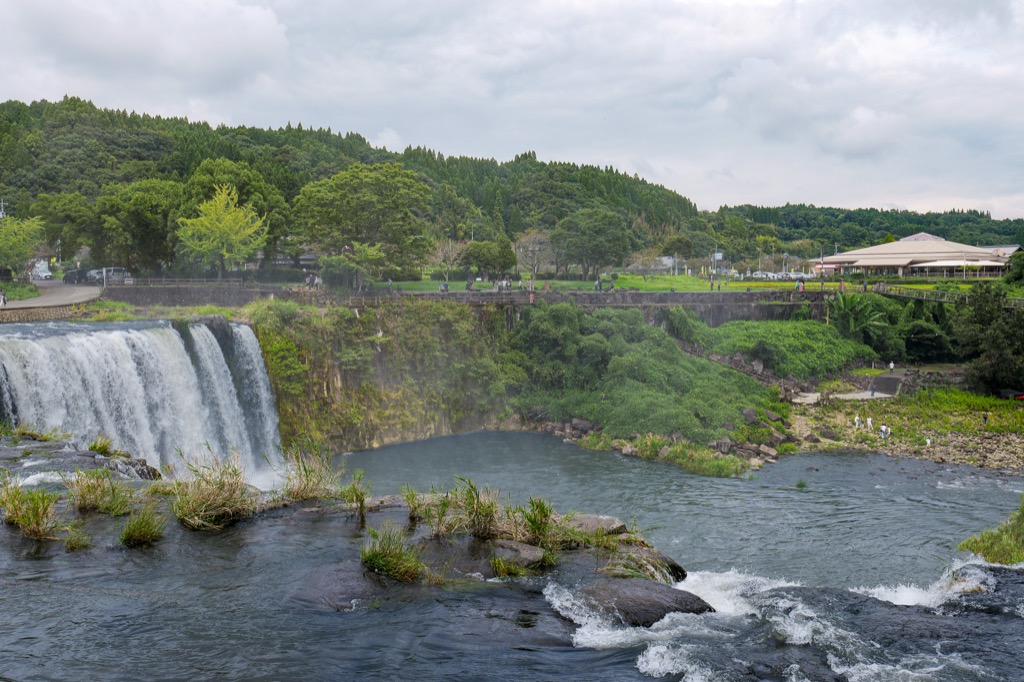
There is also a route to look down on the falls from above. A new promenade opened in May 2024, and it now makes a one-way loop: “front of the falls → left onto the suspension bridge → promenade → stairs → back up to the road above the falls.” A lower path lets you get close enough to feel the spray as well.
Staying safe around the falls
The site is left in its natural state, so a few basic notes will make the visit smoother.
The rocks above the falls and along the cliff edges are slippery, and the drop is significant. Stay behind the barriers and out of any roped-off areas, and enjoy the view from the designated paths and platforms.
- Do not step out to the edge above the falls — some sections have no guardrail
- No swimming, diving or wading — the volume is high and the underwater terrain is unknown
- Watch your footing after rain — the lower approach and wet rock get slick
- Hold your kids’ hands, especially on the upper walking path
- Walk, do not run, on the suspension bridge
Honestly, the head-on view from the bridge is more than enough. Enjoy it from the safe vantage points.
What each season looks like
Spring (Mar–Apr) — Ogata Tulip Festa
A local festival in the fields around the Michi-no-Eki. The 34th edition in 2026 runs Fri, April 3 to Sun, April 12, ten days total, with 117 varieties and 190,000 tulips in bloom. Framing the falls with tulips is a spring-only shot.
Summer — Komatsuake Hi-matsuri (小松明火祭り)
A local fire festival with strong regional character on summer evenings.
Autumn
Some years a harvest festival is held in early November, showcasing Oita’s autumn produce.
Winter
In some past years the falls were lit up between December and February. Timing changes year to year, though, so if you are aiming for a winter visit check the official Michi-no-Eki Harajiri-no-Taki site before you go. If you do come for a winter light-up, bring a flashlight or use your phone light — the path is dark.
Pairing Harajiri with Aso and Yufuin
Harajiri Falls works far better as a stop along the way than as a destination in itself.
- Oita → Mt. Aso: on the corridor from Yufuin or Beppu up to Aso. Lunch, waterfall, restrooms all in one break.
- Fukuoka-based Kyushu self-drive loop: Fukuoka → Yufuin → Harajiri Falls → Aso → Kurokawa Onsen slots in cleanly.
- After Harajiri: heading into the Aso caldera opens up the Milk Road (roughly 45 km along the outer rim) and Daikanbo (an observation deck at 936 m elevation), two of Kyushu’s most photogenic drives.
When planning the schedule, our recommended model courses are a good starting point.
Frequently asked questions
Q1. Is there an entrance fee for Harajiri Falls?
No, it is free. There is no ticket booth or gate — just park at the Michi-no-Eki (200 spaces, free) and walk two minutes to the falls.
Q2. How much time should I plan?
30 minutes to one hour is enough for most visitors. Cross the suspension bridge for the front view, and if you have time do the loop above and below the falls on the new promenade.
Q3. Can I get there by public transport?
The nearest station is JR Ogata Station on the Hohi Main Line, but trains are so infrequent that it is not really practical. You can rent a bike at the Michi-no-Eki, but for a Kyushu trip covering Oita and Kumamoto a rental car is essentially required.
Q4. Is it OK to bring kids or older family?
The Michi-no-Eki has restrooms, a diaper changing table, a baby seat and partial wheelchair access. Just note that parts of the upper walking path have no guardrail, so keep a hand on younger kids.
Q5. Where is the best photo spot?
Head-on from Takimi-bashi, the suspension bridge. The bridge sways, so bump up your shutter speed or wait for the swing to settle before pressing the button.
Q6. What about visiting in or after rain?
Volume goes up and the falls look far more powerful. Just note the lower approach gets slippery — non-slip shoes recommended.
Q7. Is Harajiri worth visiting in winter?
Light-ups have been held between December and February in some past years, but it varies annually, so check the official site before your trip. Also remember the Michi-no-Eki closes at 16:30 in winter.
Wrap-Up — Give It 30 Minutes on the Way to Aso
One line summary:
“A 120-meter waterfall dropping out of a flat plain, with parking, food and restrooms attached.“
Harajiri Falls pays off best when you treat it as a waypoint rather than a destination. Slot 30 minutes to an hour into your Oita-to-Aso drive and you will walk away with one of the more memorable shots of your Kyushu trip.
Quick checklist:
- Admission free · parking free (200 spaces)
- Michi-no-Eki hours: Mar–Nov 9:00–17:30 / Dec–Feb 9:00–16:30 · Closed Dec 31 – Jan 1
- Public transport is minimal — rental car required
- Stay on marked paths — the upper edges are dangerous
- Classic shot: head-on from the suspension bridge
Book your Kyushu rental car through GO!GO!TOUR and you can be at the falls the same day.
Plan your Kyushu road trip
- Search Oita kei cars
- Search Oita compact cars
- Search Oita mid-size cars & wagons
- Search Oita minivans
- Browse rental car providers
- Find activities by category

Give yourself a little buffer in the schedule and drop this spot in between Oita and Aso. Waypoints like this often end up being the shot you remember most.