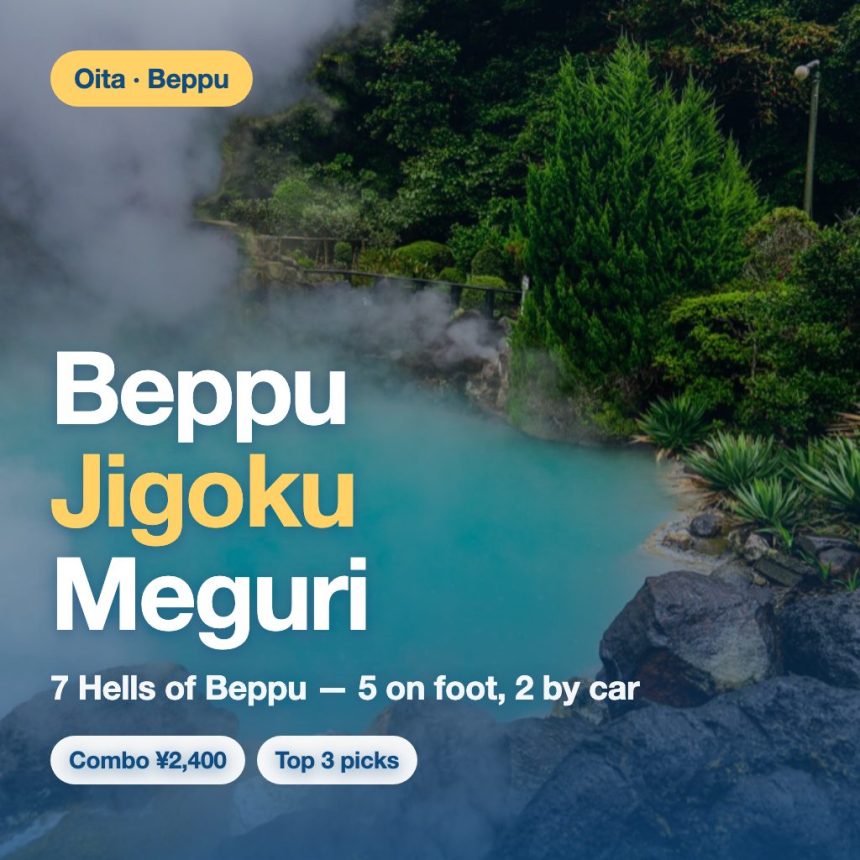
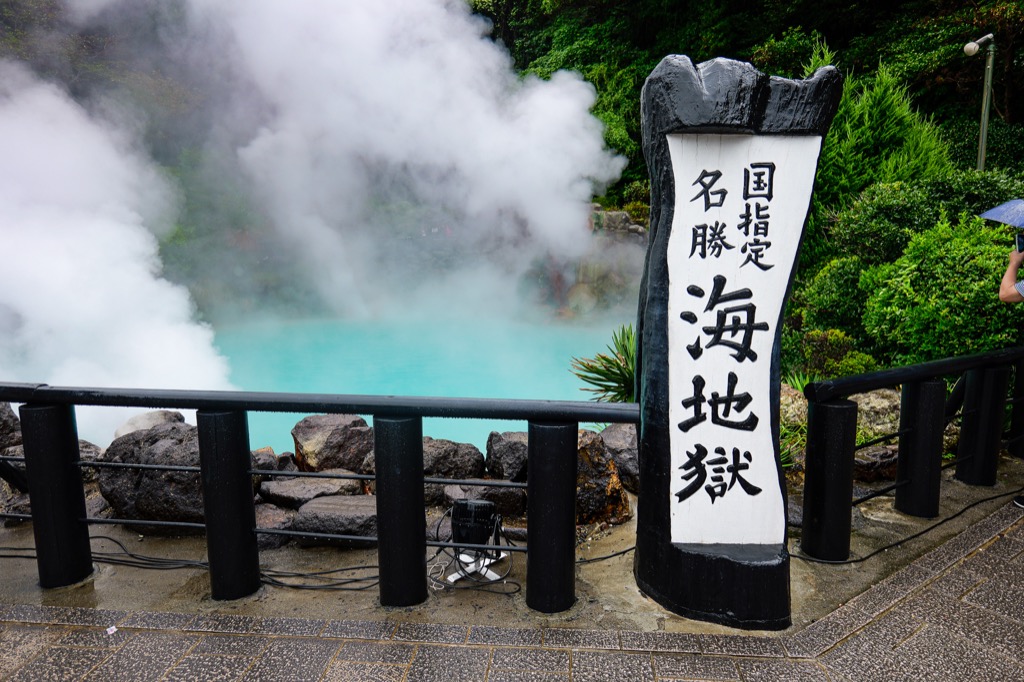
Hi, this is GO!GO!TOUR. Beppu, on the east coast of Oita in Japan’s Kyushu region, is famous for the Jigoku Meguri — the “Hells Tour.”
The word “hell” makes it sound like a hot spring you soak in, but that’s not what it is. The Jigoku are a set of viewing attractions built around cobalt-blue pools, blood-red ponds, mud craters and a live geyser — most of them well over 90 °C, none of them for bathing.
This guide walks you through the smart way to visit the 7 hells, which ones are actually worth your time, how the ticket math works, and where to go if you also want a real soak afterward.
- The short answer — combo pass or singles?
- What Beppu Jigoku Meguri actually is
- The Kannawa 5 — the walkable cluster
- The Kamegawa 2 — you need a car for these
- Fees, hours and parking at a glance
- How much time to budget
- Beating the crowds
- Where to actually bathe — Kannawa onsen next door
- Getting there from JR Beppu Station
- Frequently asked questions
- Our take
- Plan your Kyushu trip with GO!GO!TOUR
The short answer — combo pass or singles?
Short version — if you plan to see 5 or more hells, buy the combo pass; if 4 or fewer, buy singles.
The combo pass is 2,400 yen for adults (revised 1 February 2025). Single tickets are 500 yen each. Buy five singles and you’ve already paid more than the combo pass.
| Hells to visit | Singles total | Combo pass | Better deal |
|---|---|---|---|
| 2 hells | ¥1,000 | ¥2,400 | Singles |
| 3 hells | ¥1,500 | ¥2,400 | Singles |
| 4 hells | ¥2,000 | ¥2,400 | Singles |
| 5 hells | ¥2,500 | ¥2,400 | Combo |
| All 7 hells | ¥3,500 | ¥2,400 | Combo |
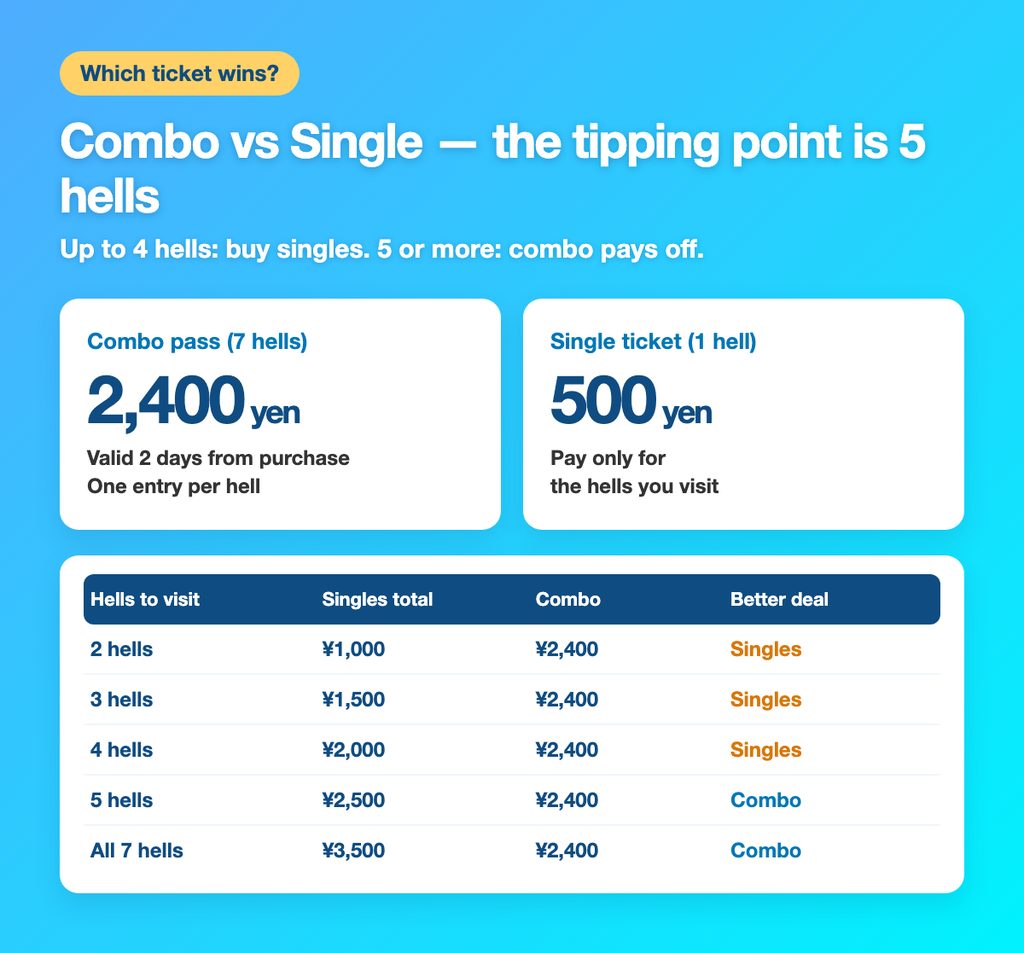
Honestly, our recommendation for most travellers is to pick 2 or 3 signature hells and skip the rest. Doing all seven eats 3 to 4 hours and several of the pools look similar enough that the last few feel repetitive.
If you’re picking three, the photogenic winners are Umi Jigoku (the sea hell), Chinoike Jigoku (the blood pond hell) and Tatsumaki Jigoku (the geyser hell).
What Beppu Jigoku Meguri actually is
“Jigoku” is the local word for the patches of ground around Beppu where boiling water and steam have been erupting for over a thousand years. Farmers couldn’t work them, travellers couldn’t cross them, and the name — hell — stuck.
Today the seven most dramatic spots have been fenced, landscaped and turned into walkable viewing gardens under the collective name Beppu Jigoku Meguri.
The seven hells split into two clusters:
- Kannawa cluster (5 hells) — close enough to walk between
- Kamegawa cluster (2 hells) — about 3 km further north, need a car or bus
The most common question we get is “Can I get in the water?” The answer is no — the Jigoku are viewing attractions only. For an actual bath, use the Kannawa onsen next door (see the section below).
The Kannawa 5 — the walkable cluster
The five Kannawa hells are within easy walking distance of each other. Park once at Umi Jigoku and cover the whole cluster on foot.
1. Umi Jigoku — the cobalt-blue hell
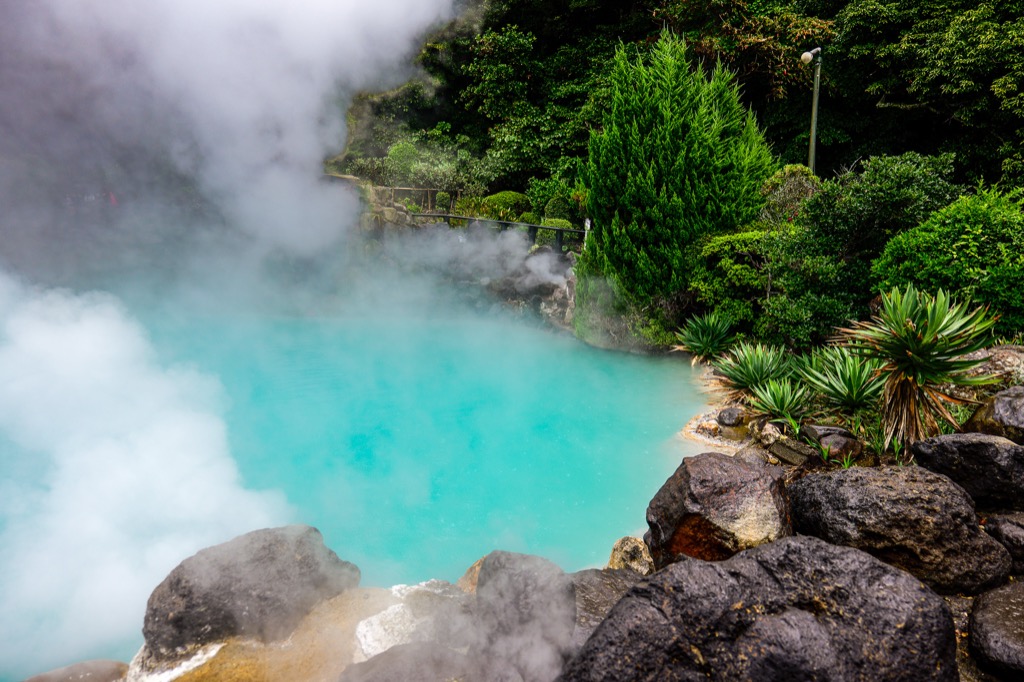
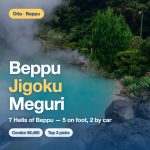
The signature hell of Beppu. A vivid sea-blue pool at 98 °C and 200 m deep, designated a National Place of Scenic Beauty.
The grounds are large — a proper loop takes 20 to 30 minutes. This is where most photos of “Beppu hells” you’ve seen online were taken, and it’s the one you’ll want to spend the most time at.
2. Oniishibozu Jigoku — the bubbling mud hell
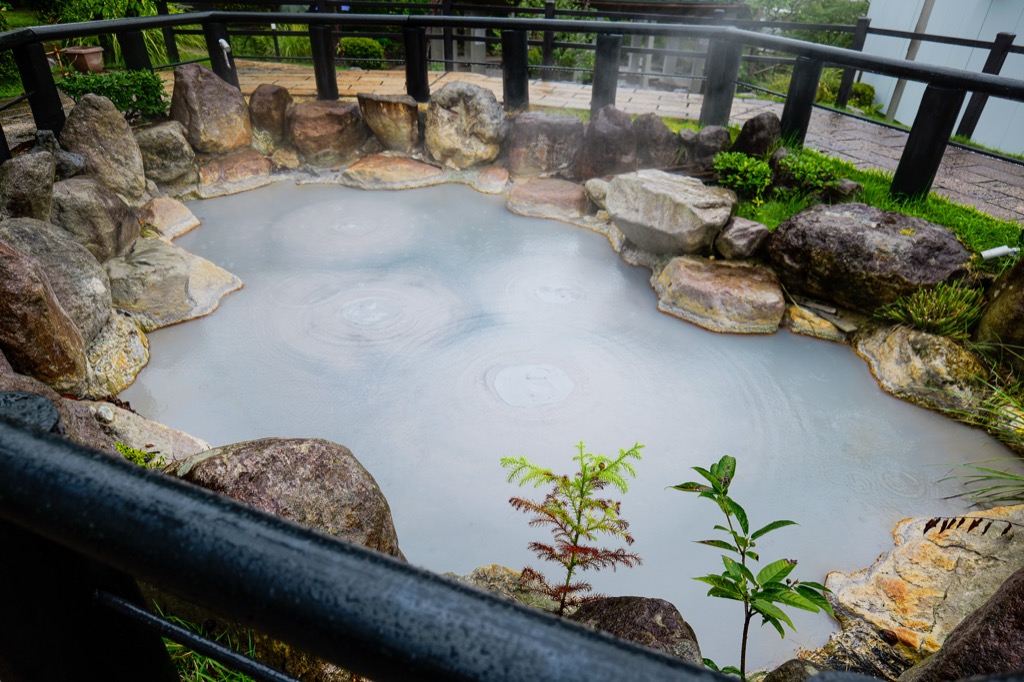
Grey mud bubbles up in round domes that early visitors thought looked like the shaved heads of Buddhist monks (bozu). Also a National Place of Scenic Beauty, and immediately next door to Umi Jigoku, so most people do the two as a pair.
3. Kamado Jigoku — the “cooking pot” hell
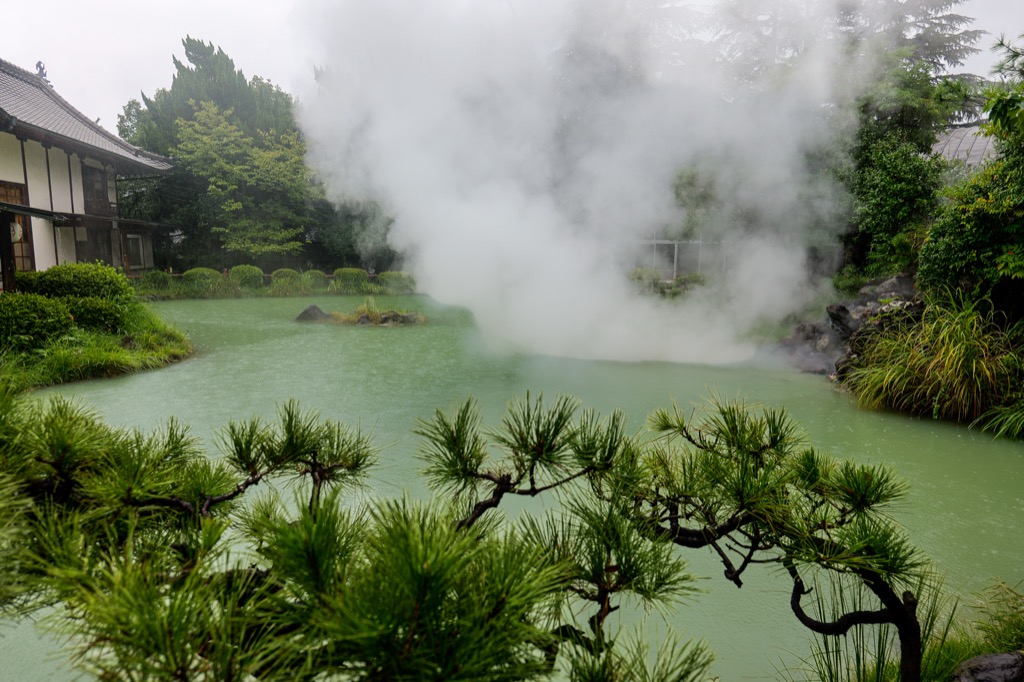
The name means “cooking stove” — steam from this hell was traditionally used to cook rice offered to the local shrine. Inside a single garden you’ll find six different sub-hells with different colours, temperatures and textures, so this is the best value for a short visit.
There are also hands-on features — foot baths, steam inhalation, hot spring drinking — that make it the most fun stop if you’re travelling with kids.
4. Oniyama Jigoku — the crocodile hell
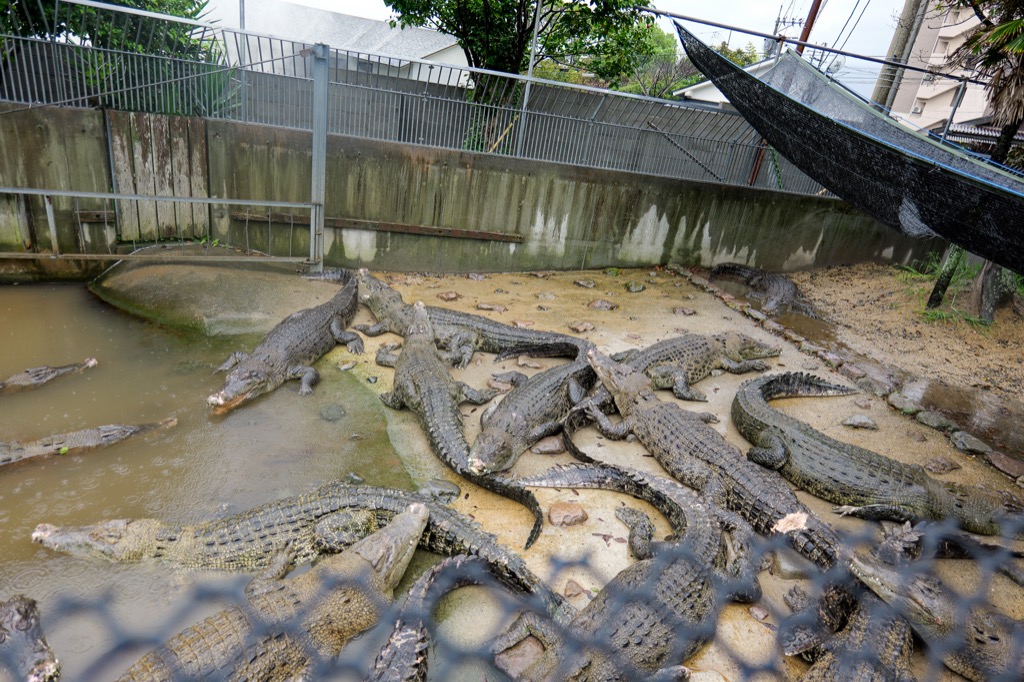
The first place in Japan to farm crocodiles using geothermal heat, opened in 1923. About 70 crocodiles live here today.
The crocodile-and-hot-spring combo is odd, but it’s a real artefact of the early days of Beppu’s onsen tourism, when the town was experimenting with what else the geothermal energy could do.
5. Shiraike Jigoku — the white pond hell
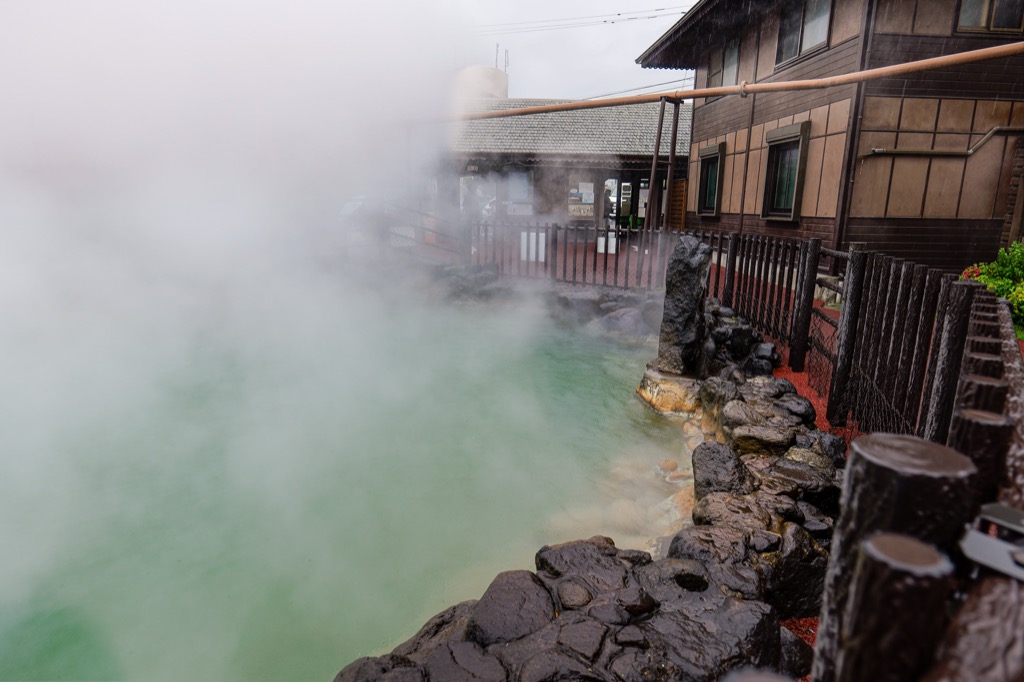
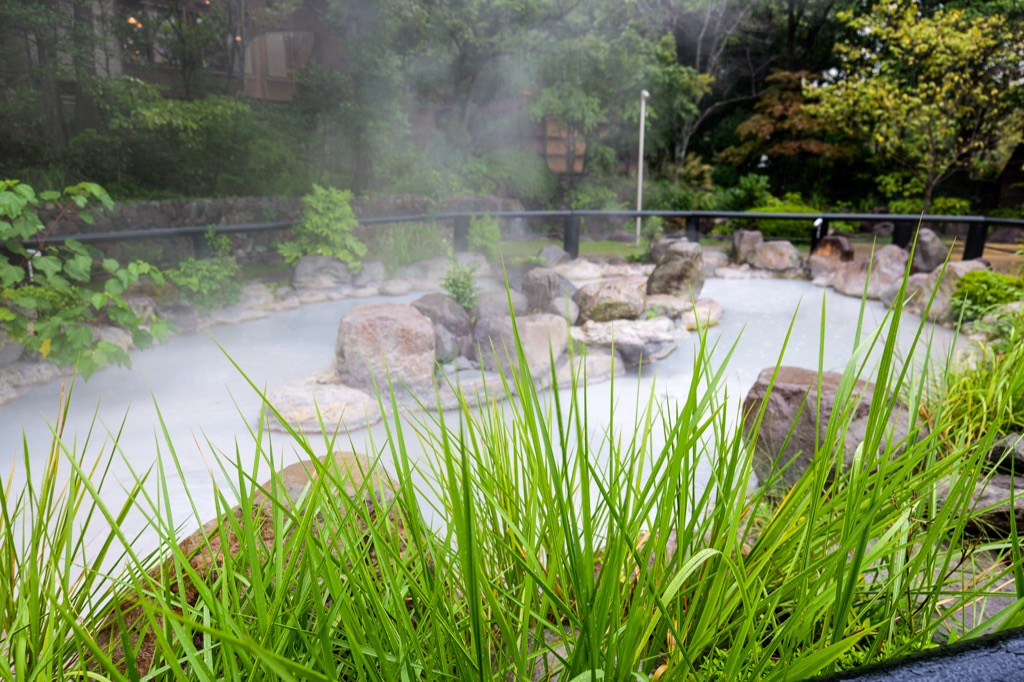
A bluish-white pool set in a small Japanese garden, with a tropical fish house on the side. Also a National Place of Scenic Beauty.
It’s the quietest of the five Kannawa hells, and a calm place to end the walking loop.
The Kamegawa 2 — you need a car for these
About 3 km north of Kannawa. Walking distance is a stretch, so plan on a rental car or the local bus.
6. Chinoike Jigoku — the blood pond
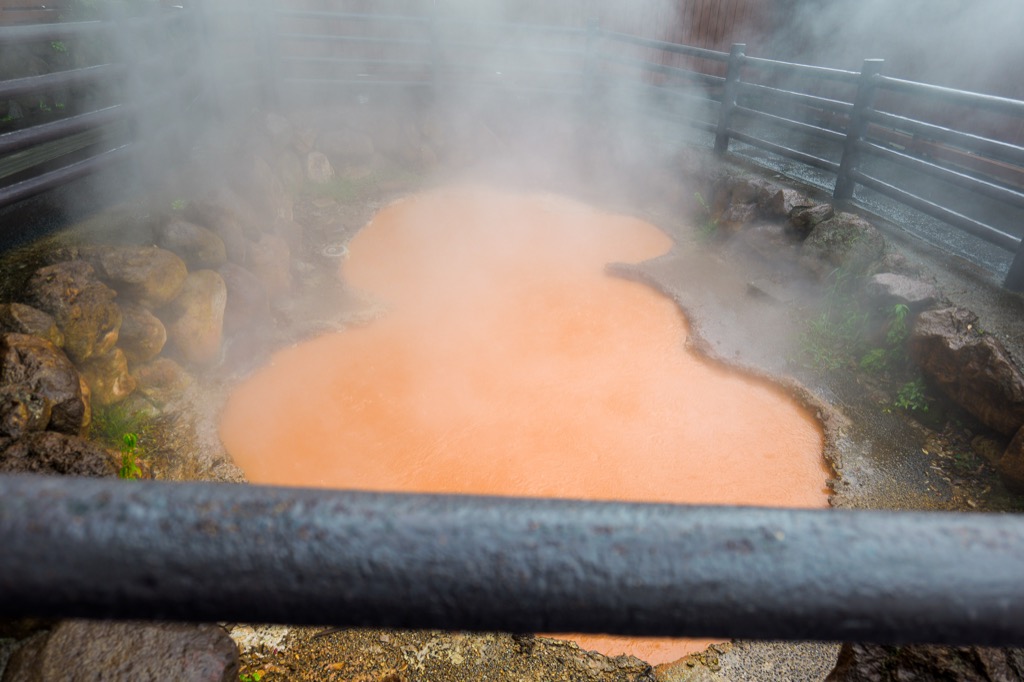
Iron oxide from deep underground turns the whole pond a deep red-brown. The oldest natural hell in Japan — recorded over 1,300 years ago and designated a National Place of Scenic Beauty.
The red pairs beautifully in photos with Umi Jigoku’s blue, which is why most photographers try to visit both on the same trip.
7. Tatsumaki Jigoku — the geyser
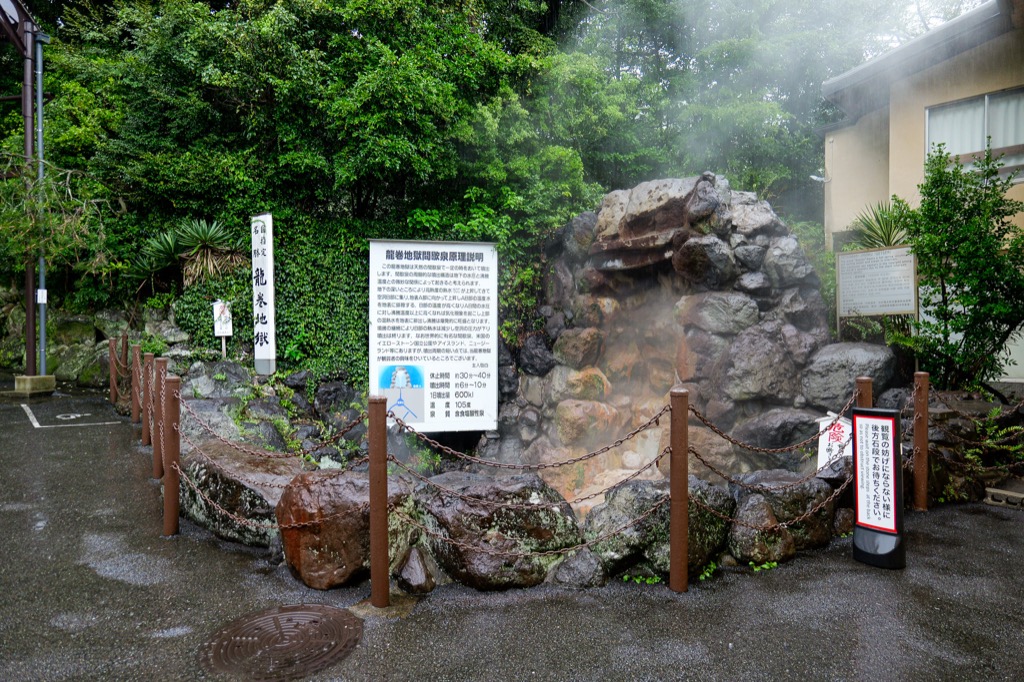
A live geyser designated a Beppu City Natural Monument. It erupts every 30 to 40 minutes, sending boiling water and steam up into a stone hood built above the vent.
Because of the wait, plan Chinoike first and Tatsumaki second — that way you don’t burn time twice. Once you’re seated in the viewing gallery, the 5-to-10-minute wait for the next eruption is actually a nice pause in the day.
Fees, hours and parking at a glance
| Item | Details |
|---|---|
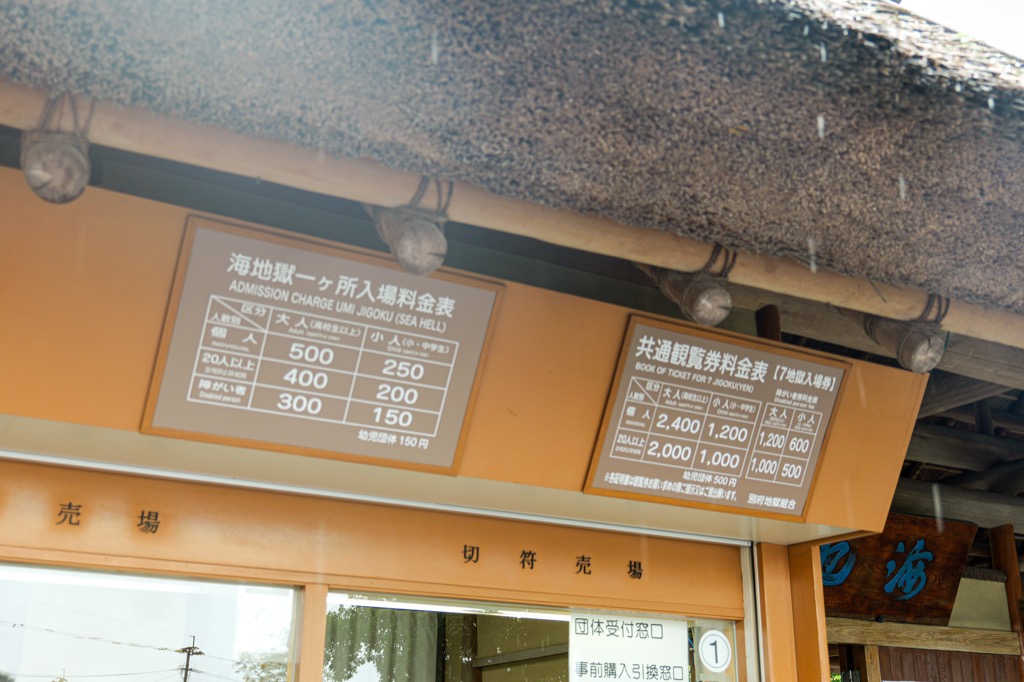
| Combo pass (all 7 hells) | Adult ¥2,400 / Elementary & JHS ¥1,200 · Preschool free |
| Single ticket (1 hell) | Adult ¥500 / Elementary & JHS ¥250 |
| Combo pass validity | 2 days including the purchase date (1 entry per hell) |
| Opening hours | 8:00 – 17:00 |
| Closed days | Open year-round |
| Parking | Free at every hell |
| Last price revision | 1 February 2025 (old ¥2,200 → new ¥2,400) |
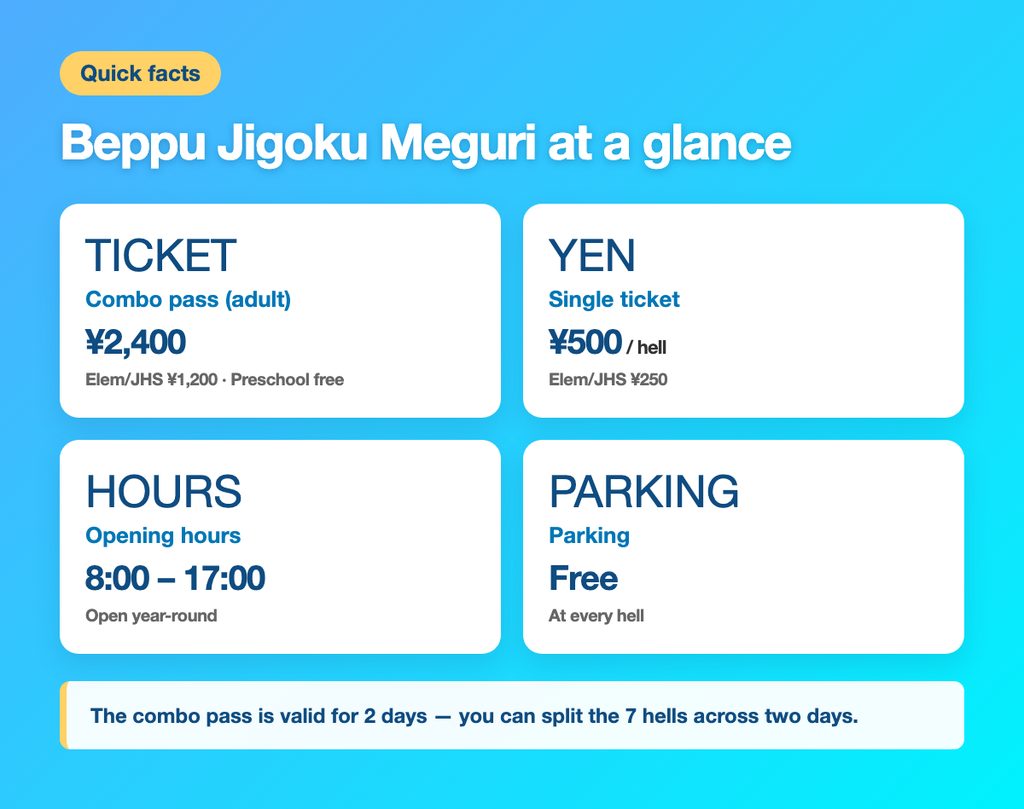
The combo pass is valid on the day of purchase and the following day. If you can’t finish all seven in one go, you can do the Kannawa 5 on day one and the Kamegawa 2 the next morning — a nicer pace than trying to squeeze it all in.
How much time to budget
| How you visit | Time needed |
|---|---|
| All 7 hells by rental car | About 2.5–3.5 hours |
| Regular sightseeing bus (with guide) | About 3 hours |
| 5 on foot + 2 by car | 3–4 hours (includes Tatsumaki wait) |
| Kannawa 5 only, on foot | About 2 hours |
| Signature 3 or 4 only | 1–2 hours |
The 30-to-40-minute Tatsumaki eruption interval is the wild card. Check the next eruption time the moment you arrive.
Beating the crowds
Tour buses cluster mid-morning to early afternoon, and Umi Jigoku’s parking lot is the first to fill. If you’re arriving in that window, do the smaller Kannawa hells first and save Umi Jigoku for the tail end when the buses have moved on.
The two quiet windows are:
- Right after opening, 8:00–9:30 — softer light and the steam reads beautifully in photos
- Late afternoon, 15:30–16:30 — after the tour buses have left
Weekends and Japanese public holidays stay busy all day, so a weekday morning is your friend.
Where to actually bathe — Kannawa onsen next door
Since the hells themselves are viewing-only, the classic move is to pair Jigoku Meguri with a bath at one of the Kannawa onsen a short walk away.
Hyotan Onsen
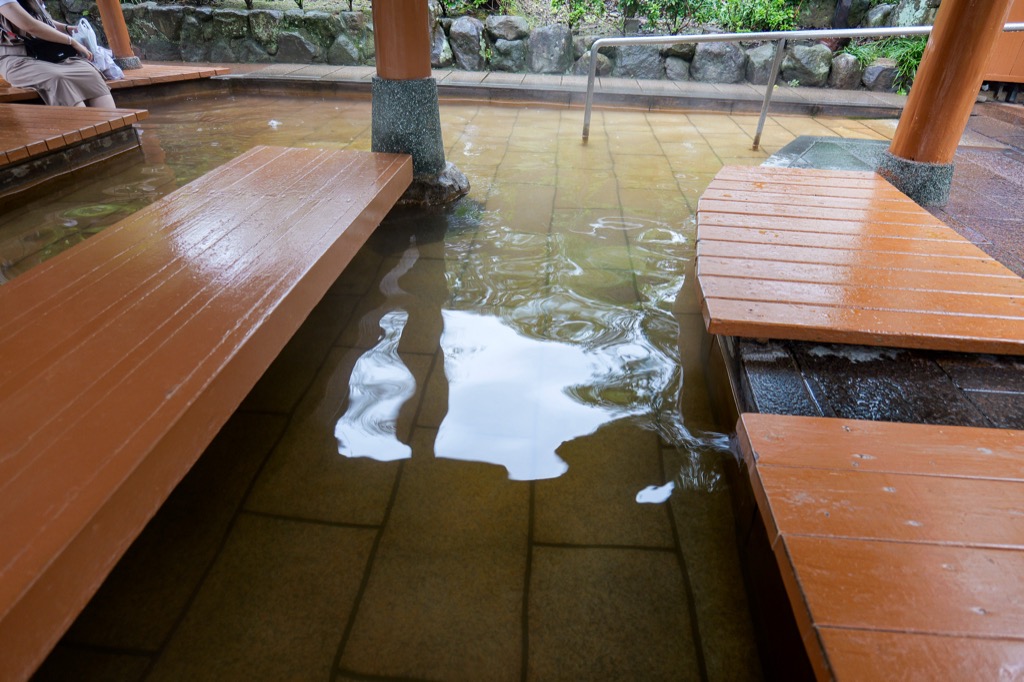
Opened in 1922 and awarded three stars in the Michelin Green Guide Japan. The source water arrives at over 100 °C, so the bath uses a traditional bamboo cooling structure called “Yuamedake” to bring it down to bathing temperature naturally, without adding any water.
You’ll find large indoor baths, an outdoor rotenburo, a waterfall bath, a sand bath and a steam sauna. It’s the obvious place to unwind after the Jigoku loop.
Kannawa Mushiyu
A traditional herbal steam bath run by Beppu City. You lie on a bed of medicinal sekisho leaves inside a stone chamber and let the geothermal steam do the work. Completely different from a normal onsen soak, and worth trying at least once for the experience.
Getting there from JR Beppu Station
To the Kannawa 5
| Mode | Time & fare |
|---|---|
| Kamenoi bus lines 2/5/24/41 (to Kannawa) | About 20 min |
| Rental car (via Beppu IC on the Higashi-Kyushu Expressway) | About 5 min from the IC |
| Taxi | About 15 min · ~¥1,900 |
Get off at “Umi Jigoku-mae” or “Kannawa” — the hells are a 1-minute walk from either stop.
To the Kamegawa 2
| Mode | Time & fare |
|---|---|
| Kamenoi bus line 26 (Kannawa → Chinoike Jigoku-mae) | About 40 min from Beppu Station · ~¥390 |
| Taxi | About 15 min · ~¥2,000 |
If you have a rental car, you can do the Kannawa 5 and the Kamegawa 2 in one clean loop with no waiting for buses. Picking up a car at Oita Airport or JR Beppu Station is the easiest way to open up the rest of the region — Yufuin, Mt. Aso, Takachiho — in the same trip.
Frequently asked questions
Q. How much is the Beppu Hells combo pass?
A. 2,400 yen for adults and 1,200 yen for elementary and junior high school students. The price was revised on 1 February 2025 and the pass is valid for two days from purchase (one entry per hell).
Q. Can I visit only a few of the hells?
A. Yes. Single tickets are 500 yen each, so if you plan to see 2 to 4 hells the singles are cheaper. The combo pass only pays off from 5 hells upward.
Q. Can I walk to all 7 hells?
A. You can walk between the 5 hells in Kannawa, but the 2 hells in Kamegawa (Chinoike and Tatsumaki) are about 3 km away and need a car or bus.
Q. Can I actually bathe in the hells?
A. No. The hells are viewing attractions, not bathing spots. For an actual soak, use nearby Kannawa onsen such as Hyotan Onsen or Kannawa Mushiyu.
Q. Is parking free?
A. Yes. Each hell has its own free parking lot. The easiest plan is to park at Umi Jigoku and walk the 5 Kannawa hells from there.
Q. When is it least crowded?
A. Right after opening (8:00–9:30) or after 15:30 in the afternoon. Mid-morning to early afternoon is when the tour buses arrive.
Q. How long do I wait for the Tatsumaki geyser?
A. It erupts every 30 to 40 minutes. The next eruption time is posted at the entrance, so you can time your seat in the viewing gallery.
Our take
One-line version: “Pick three signature hells, take your time, and finish with a real bath at Hyotan Onsen.”
Chasing all seven is a completionist trip, not a satisfying one. Umi Jigoku, Chinoike Jigoku and Tatsumaki Jigoku give you the blue, the red and the geyser — three completely different textures of Beppu’s geothermal landscape — and leave you with time and energy for an actual onsen soak afterward.
A rental car turns the Kamegawa 2 from a bus hassle into a 10-minute detour, and opens up Yufuin and the rest of Oita in the same day. If you’re flying into Oita Airport or coming in on the Sonic express from Hakata to Beppu Station, picking up a car at the airport or the station is by far the easiest setup.
Jigoku Meguri isn’t a race — it’s a slow trip built around sitting still, watching steam rise, and letting the day breathe.
Plan your Kyushu trip with GO!GO!TOUR
Kyushu rental cars — Pick up at Oita Airport or JR Beppu Station and drive Beppu, Yufuin and beyond at your own pace.
- Kyushu rental car overview
- Search Oita K-cars (compact class)
- Search Oita small cars (S)
- Search Oita midsize & wagon (M/W)
- Search Oita minivans (V)
Find activities by category — Snorkelling, hiking, food tours and more across Japan.
Hotels in Oita & Kyushu