Kinkaku-ji (Rokuon-ji) — A Three-Tiered Golden Pavilion Floating on a Mirror Pond in Northwest Kyoto
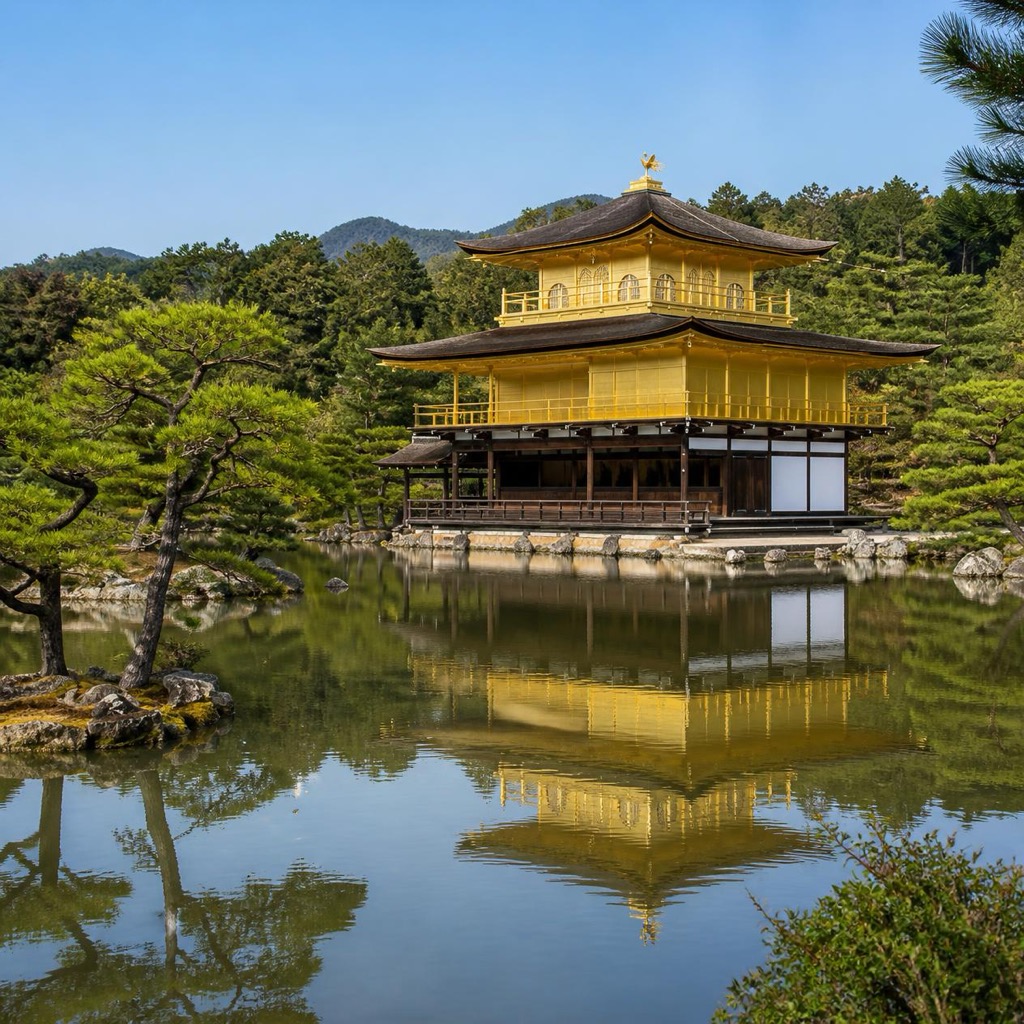
If Kiyomizu-dera is the wooden stage of Higashiyama, Kinkaku-ji (金閣寺, formally Rokuon-ji 鹿苑寺) is its northwest counterpart — a three-story pavilion sheathed in gold leaf and reflected almost perfectly in the still surface of Mirror Pond. Together they form the pair that most first-time visitors to Kyoto anchor their trip around. Both temples were registered as UNESCO World Heritage Sites in 1994 as part of the “Historic Monuments of Ancient Kyoto,” and seeing only one of them means missing half the picture.
This guide is written for foreign visitors arriving in Kyoto. Inside you’ll find the admission fee and opening hours, how to reach the temple, the meaning behind the three architectural styles stacked into the golden pavilion, the garden walking route, the story of the 1950 fire and 1955 reconstruction, and how to pair Kinkaku-ji with Kiyomizu-dera in a single day. First-person, English-language, practical.
👉 Planning to see Kyoto plus Osaka, Nara, or Kobe in the same trip? A rental car makes the whole Kansai region one connected day. GO!GO!TOUR Kansai rental car offers English support and pickup near the main JR terminals.
Quick Facts at a Glance
The overview most foreign travelers want before locking in a date.
| Item | Details |
|---|---|
| Official name | Rokuon-ji (鹿苑寺) — popularly called Kinkaku-ji (金閣寺, “Golden Pavilion Temple”) |
| Location | 京都府京都市北区金閣寺町1 (Kita-ku, Kyoto) |
| School of Zen | Rinzai Zen — Shokoku-ji sect |
| Founded | 1397 CE — originally the retirement villa of Shogun Ashikaga Yoshimitsu |
| UNESCO status | World Heritage Site (1994) — “Historic Monuments of Ancient Kyoto” |
| Admission | Adults ¥500 / Elementary & JHS ¥300 |
| Opening hours | 9:00 – 17:00 (open year-round) |
| Night illuminations | Not held — unlike Kiyomizu-dera, no seasonal night viewings. Daytime only |
| Recommended time | 40 – 60 minutes — a compact visit compared with Kiyomizu-dera |
| Payment | Cash preferred at the ticket booth (cards accepted at some, but not all, gates) |
| Access | City bus 101/205 to “Kinkakuji-michi” + 3-minute walk / paid parking on site |
A Shogun’s Villa That Became a World Heritage Site
Kinkaku-ji’s story begins in 1397 CE. Third-generation Ashikaga Shogun Yoshimitsu (足利義満) retired from politics and built himself a retreat, Kitayama-den, on scenic land in northwestern Kyoto. After his death the whole estate was converted into a Zen temple according to his will, and the temple was named Rokuon-ji after his posthumous Buddhist name.
The temple’s signature building — the Shariden (Reliquary Hall), universally nicknamed “Kinkaku” (the Golden Pavilion) — has three floors, each built in a completely different architectural style. This unusual stacked composition is the architectural embodiment of Kitayama culture, the blending of aristocratic, samurai, and Zen influences that defined Yoshimitsu’s political vision. It’s also why the nickname “Kinkaku-ji” long ago overtook the formal name.
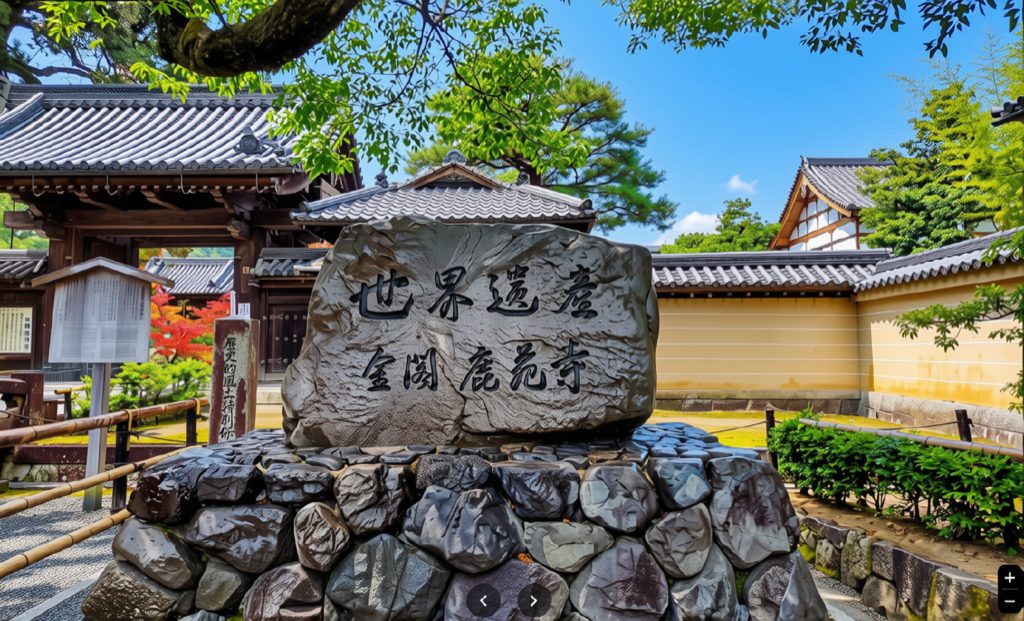
The stone marker in front of the main gate reads “World Heritage — Kinkaku Rokuon-ji”. After the ticket booth you walk a few paces along a white-plastered wall, and then — the view suddenly opens up, and the Golden Pavilion appears reflected in Mirror Pond right in front of you. The “reveal” is designed as pure theater, and it hits every visitor the same way on the first look.
One historical fact often surprises foreign visitors: today’s pavilion was rebuilt in 1955. The original had stood for over 500 years when a young monk set fire to it in 1950 (the incident later inspired the famous Yukio Mishima novel The Temple of the Golden Pavilion). The current structure was reconstructed, then in 1987 the entire gold leaf was replaced, and in 2020 the roof was also re-thatched — so right now you’re seeing the pavilion at its most brilliantly gold-covered state in decades.
How to Get to Kinkaku-ji — On the Opposite Side of Kyoto from Kiyomizu-dera
An important geographical note: Kinkaku-ji is in northwestern Kyoto, while Kiyomizu-dera is on the eastern slope of Higashiyama. They’re on essentially opposite sides of the city, so if you’re doing both in one day the transit time between them matters.
| From | Best route | Time | Notes |
|---|---|---|---|
| Kyoto Station | City Bus 101 / 205 to “Kinkakuji-michi” + 3-minute walk | About 40 – 45 minutes | Most popular route. ¥230 one way |
| Kiyomizu-dera | Bus + subway (2 – 3 transfers) | About 50 – 60 minutes | East-to-west cross-city — build in buffer |
| Gion / Shijo | City Bus 12 (direct) or subway + bus | About 40 minutes | Bus 12 is the easiest — direct with no transfer |
| Arashiyama | Bus or Keifuku Randen tram | About 40 – 50 minutes | Same west-side region — natural afternoon pairing |
| Driving in from Kansai | On-site paid parking (¥400/hour) or coin lots nearby | — | Parking is much easier than at Kiyomizu-dera |
One of Kinkaku-ji’s underrated advantages is that parking is genuinely manageable. Kiyomizu-dera’s neighborhood is famously difficult for drivers, but Kinkaku-ji has an on-site paid lot plus multiple coin parking lots within a five-minute walk. A single day covering Kiyomizu-dera → Kinkaku-ji → Arashiyama is a nightmare on public transit but perfectly reasonable in 3 – 4 hours with a rental car.
The Golden Pavilion — Three Floors, Three Architectural Styles
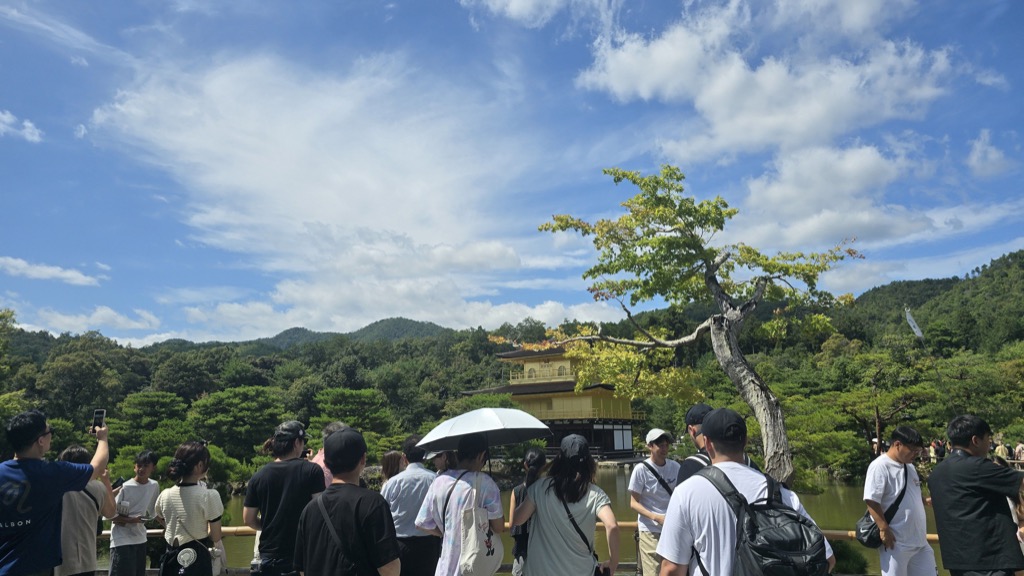
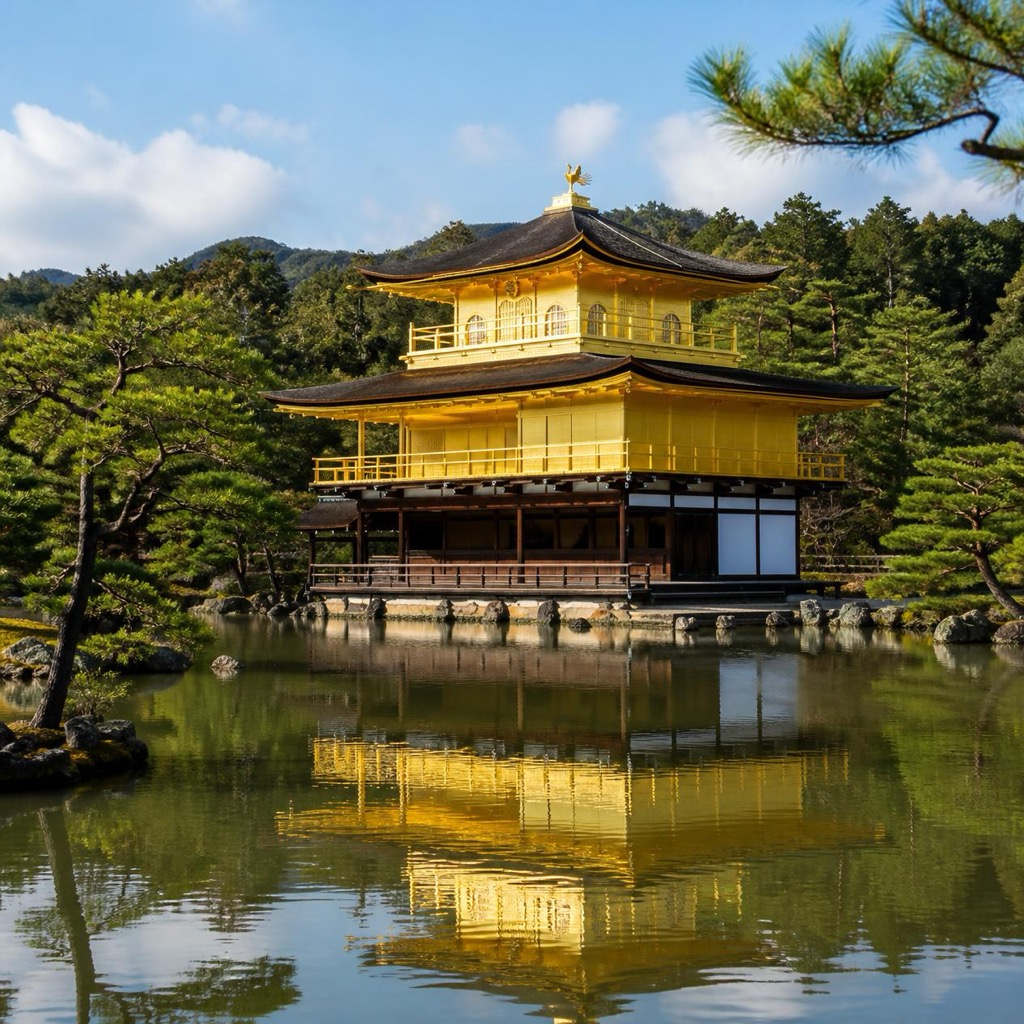
Step past the ticket booth and the Golden Pavilion is right there, much larger and more physically present than photographs suggest. The three-story wooden pavilion has its second and third floors sheathed in genuine gold leaf, and sunlight bouncing off the surface can be almost blinding at midday. The Kyoko-chi (Mirror Pond) in front of it becomes a huge natural mirror, doubling the pavilion on calm days — the signature shot of Kyoto.
The remarkable part is that each of the three floors was built in a completely different architectural style. Yoshimitsu was making a statement:
- First floor: Hōsui-in (法水院) — Heian-era aristocratic residence style (shinden-zukuri). No gold leaf; the natural wood and white walls give it an understated elegance
- Second floor: Chōonrō (潮音洞) — Samurai residence style (buke-zukuri). Covered in gold leaf, with a seated Kannon (Bodhisattva of Compassion) enshrined inside
- Third floor: Kukkyō-chō (究竟頂) — Chinese Zen temple style (zenshū-butsuden-zukuri). Also fully gilded. The golden phoenix on the roof serves as the crown of the entire structure
“Aristocrats, samurai, and Zen monks” — three cultural layers of the Muromachi era, stacked vertically into a single building. That is the essence of Kitayama culture, and why Kinkaku-ji is much more than “a shiny gold temple.” The phoenix on the roof is a Chinese auspicious bird said to appear when a wise ruler emerges — a subtle signal of Yoshimitsu’s political self-image.
You cannot go inside the pavilion — interior access is not permitted. The visit takes the form of a designated walking route around the pond, allowing you to see the building from multiple angles and reflection points. The route is counter-clockwise, one-way, so keep the pace with the crowd; there’s no going back.
Mirror Pond and the Muromachi Garden — Look for the Hidden Meaning
Mirror Pond is one of the defining masterpieces of Muromachi-era Japanese garden design. Small islands of carefully placed rocks dot the water, and each stone has a name and a symbolic meaning — some are said to represent an idealized map of the Japanese archipelago, others the political factions of Yoshimitsu’s era. There’s political symbolism scattered throughout the garden if you look for it.
Main viewpoints as you walk the path:
- Front viewing platform — The first stop after the ticket booth, where you get the postcard-perfect frontal composition. The most crowded spot in the entire compound, expect a short wait for a clear photo
- 45-degree side view — A short walk further and you can see the pavilion from an angle, with fewer people. Easier for relaxed shots
- Rear view (near Anmintaku Pond) — Loop behind the pavilion and you reach a quieter back-garden pond called Anmintaku. See the pavilion from behind and enjoy a moment of quiet
- Stone islands close-up — Named islands like Ashihara-shima (representing the Japanese archipelago) are labeled with small signs. Reading them adds a full layer to the walk
Seasonal variation is significant:
- Spring — Fresh green rather than cherry blossoms. The soft new pine growth is the highlight
- Summer — Deep green mountains behind; the gold leaf reflects most intensely
- Autumn — The hills behind turn crimson, giving you the year’s most spectacular color contrast against the gold
- Winter (Yuki no Kinkaku) — Snow on the pavilion’s roof is the ultimate rare shot. Only a handful of mornings each year deliver this scene
Reality Check — What the Crowds Actually Look Like
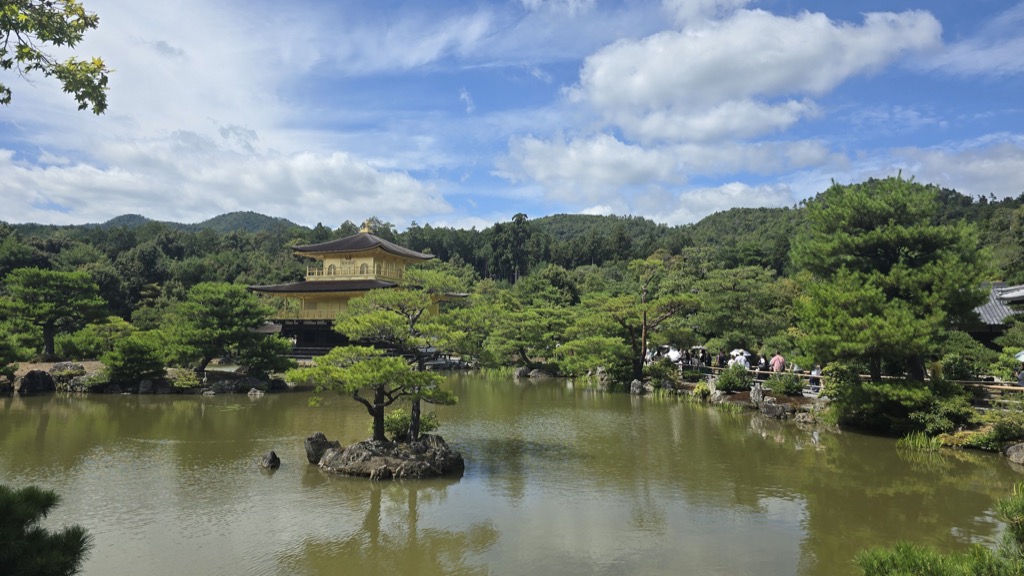
Photos of Kinkaku-ji tend to look serene and empty. In reality, this is one of the most-visited temples in the world, and the front viewing platform is almost always shoulder-to-shoulder. This vertical shot from the side garden path gives you a slightly quieter angle — worth walking a bit further past the main viewpoint if you want more breathing room.
To avoid the worst crowds, aim for the first hour after opening (9:00 – 10:00) or the last hour before closing (16:00 – 17:00). Summer school holidays, Golden Week (early May), autumn foliage season, and the New Year’s holidays are the peak crowd periods. During cherry blossom or autumn peak, even the “quieter” hours can feel busy.
A photographer’s tip: the very first hour after opening is magic. Tour buses haven’t arrived yet, morning light hits the east-facing gold leaf at a low angle, and the pavilion looks its most luminous. If you have to pick a single time slot, be at the gate at 8:55 AM.
The Garden Beyond the Pavilion — Don’t Skip the Back Half
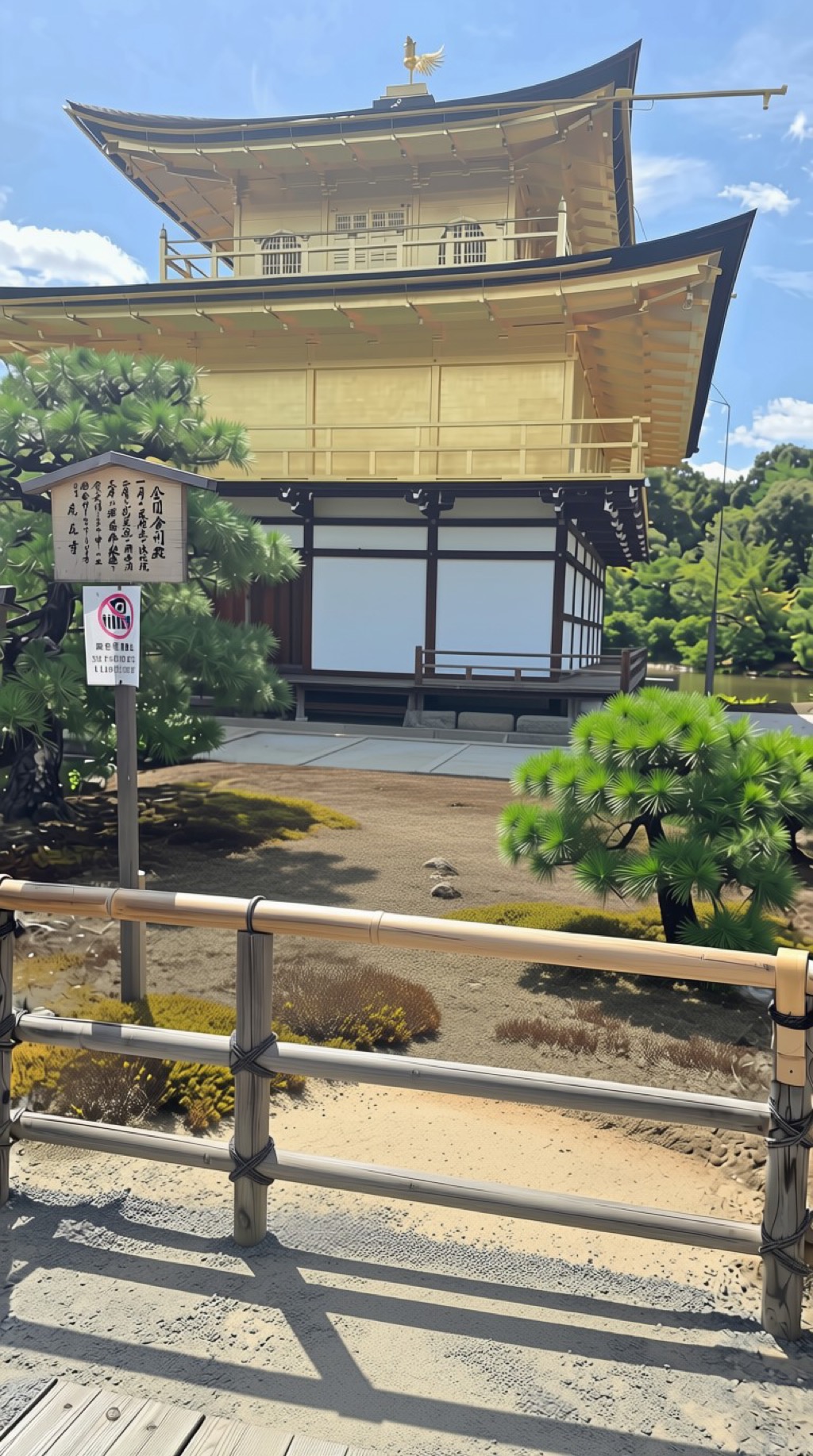
Most first-time visitors turn around after the reflection shot and miss half the visit. The garden loop past the pavilion is where the crowd thins out and you get a proper Zen temple atmosphere. Give yourself an extra 20 – 30 minutes to walk it fully.
Main garden stops:
- Ginga-sen (Silver River Spring) — A well said to have supplied water for Yoshimitsu’s tea ceremonies. Legend says it hasn’t run dry in over 600 years
- Ganka-sui (Rock Bottom Spring) — Another spring, said to be where Yoshimitsu washed his hands. Paired with Ginga-sen as the “water source for tea”
- Ryumon-baku (Dragon Gate Falls) — A small waterfall with a carp-shaped stone at its base, representing the Chinese legend that a carp climbing this waterfall becomes a dragon. A prayer spot for academic success
- Anmintaku Pond — Back-garden pond with a small pagoda (“White Snake Mound”), popular for prayers of family prosperity
- Jizo statues — A cluster of small stone Bodhisattva statues where visitors toss coins into shallow bowls. Landing a coin in the bowl is said to increase the chance your wish comes true — a charming game hidden in a serious garden
- Fudo-do Hall — Small wooden hall at the end of the loop, enshrining Fudo Myoo (a fierce guardian deity), associated with warding off misfortune
Beyond Fudo-do the route naturally leads to the omikuji fortune slips and omamori charm counter, and then to a traditional tea house where you can sit and enjoy matcha tea with a small sweet (¥500 or so) with a view of the garden. It’s the perfect way to close the visit.
Pair Kinkaku-ji With the Rest of Kyoto
Kinkaku-ji alone doesn’t fill a full day. Combine it with these nearby sites for a rich half-day or full-day plan:
- Ryoan-ji — 20 minutes on foot or one bus stop from Kinkaku-ji. The world-famous rock garden of dry landscape (karesansui). Also a UNESCO site
- Ninna-ji — 5 minutes by bus from Ryoan-ji. Famous for late-blooming omuro cherry trees in mid-April. Also UNESCO
- Kitano Tenmangu — 15 minutes by bus from Kinkaku-ji. Shrine dedicated to the deity of scholarship, famous for plum blossoms in February
- Arashiyama Bamboo Grove — 40 minutes by Keifuku tram. Natural afternoon connection from Kinkaku-ji
- Kiyomizu-dera and Gion — Opposite side of the city (east). Doable in the same day only with a car or a lot of transit patience
The best one-day gold-standard route is “Morning: Kiyomizu-dera + Sannenzaka + Gion → lunch → Afternoon: Kinkaku-ji + Ryoan-ji + Ninna-ji → Evening: Arashiyama” — a full east-to-west sweep. Between the transit legs, having a rental car or a chartered private car saves 90+ minutes across the day.
FAQ — Quick Answers for First-Time Visitors
Q. How much is admission to Kinkaku-ji?
Adults ¥500, elementary and junior high school students ¥300. The ticket is printed as a paper ofuda (temple talisman) that doubles as a souvenir.
Q. What are the opening hours?
9:00 AM to 5:00 PM year-round. Unlike Kiyomizu-dera, Kinkaku-ji does not hold night viewings in any season — always plan a daytime visit.
Q. What’s the easiest way to get there?
From Kyoto Station, take city bus 101 or 205 and get off at “Kinkakuji-michi,” then walk 3 minutes. If you’re driving, an on-site paid parking lot (¥400/hour) makes Kinkaku-ji much easier for drivers than Kiyomizu-dera.
Q. How much time should I plan for the visit?
Allow 40 – 60 minutes — shorter than Kiyomizu-dera because the route is one-way through the garden. Add another 15 – 20 minutes for the tea house at the end.
Q. Should I visit Kinkaku-ji or Kiyomizu-dera first?
Do Kiyomizu-dera in the early morning, then Kinkaku-ji at 9:00 opening. Kiyomizu-dera opens at 6:00 so you can beat the crowds there, and Kinkaku-ji’s later 9:00 opening lines up naturally with the cross-city transit time.
Q. Can I go inside the Golden Pavilion?
No. The interior is not open to the public. The visit is a walk around the pond and gardens, with viewing points at multiple angles.
Q. Is the current pavilion the original one?
No. The original 1397 building was destroyed by a young monk’s arson in 1950 (the incident inspired Yukio Mishima’s novel The Temple of the Golden Pavilion). Today’s pavilion was rebuilt in 1955, had its gold leaf fully re-applied in 1987, and had its roof re-thatched in 2020 — so you’re seeing the temple at one of its most brilliant states in decades.
Q. When can I see the snow-covered “Yuki no Kinkaku”?
Only rarely. Kyoto has relatively little snowfall, so this scene is a lucky-morning phenomenon in late December to February. Follow weather apps and go early on any morning with a snow forecast — that’s the only way.
Q. Is the site accessible for strollers or wheelchairs?
Most paths are gravel and not fully step-free, but designated alternate routes exist. Ask at the ticket booth for the accessible path.
Q. Where can I eat lunch nearby?
The approach street has matcha cafés, yudofu, and soba shops. A short walk further out (10 – 15 minutes) puts you at a handful of long-established local restaurants. Aim for lunch before 11:30 AM in peak season to avoid queues.
Wrap-Up — The Golden Pavilion and Mirror Pond, Kyoto’s Signature in 40 Minutes
Thanks for reading. This guide walked you through Kinkaku-ji’s admission and hours, the three-tier architecture of the Golden Pavilion, the meaning of Mirror Pond and the Muromachi garden, the walking route, and the smart way to pair it with Kiyomizu-dera in one day. Kiyomizu-dera is the wooden theater on the mountainside; Kinkaku-ji is the golden reflection on the pond. Both are essential to the visual memory of a Kyoto trip.
If you plan to combine Kyoto with Osaka, Nara, or Kobe in the same trip, a Kansai rental car or a private chartered car with driver is by far the most flexible way to move. The buses work for single stops, but they add hours across a multi-temple day.
Quick checklist before you go:
- Admission ¥500, open 9:00 – 17:00 year-round, no night viewings
- From Kyoto Station: bus 101 / 205 to Kinkakuji-michi + 3-minute walk
- Drivers: on-site paid parking (¥400/hr) — much easier than at Kiyomizu-dera
- Avoid crowds — arrive at 9:00 opening or after 16:00
- No interior access — the visit is a one-way walking loop around the pond
- The route is counter-clockwise, one-way — you can’t backtrack
- End at the tea house for matcha (~¥500) — the perfect closer
Explore Kyoto and Kansai the easy way — GO!GO!TOUR car options with English support.
Kinkaku-ji plus Kiyomizu-dera in one day is a long transit journey by bus. A rental car cuts the travel time significantly, and a private chartered car with driver removes the driving stress entirely — great for families, seniors, or anyone who wants to spend more time at the temples and less on maps. GO!GO!TOUR handles the full booking process in English.
🚗 GO!GO!TOUR Osaka / Kansai rental car — pickup near JR terminals

The gold pavilion and its perfect reflection — see you in Kyoto 🏯✨