17END Shimojishima — Where Jets Skim a Turquoise Sea at the Edge of the Runway
If you’ve ever scrolled past a travel photo of Okinawa and stopped at a shot of a passenger jet floating just above an unreal turquoise lagoon, you were almost certainly looking at 17END on Shimojishima Island. It’s the northwestern tip of Runway 17 at Shimojishima Airport, and the single most photographed coastal spot in the entire Miyako region.
This guide is written for foreign visitors arriving in Miyako Island for the first time. Inside you’ll find how to reach 17END, where to park, when planes actually land, the best photo timing, what to bring, and how to pair it with the rest of the Irabu–Shimoji loop. Practical, English-language, written from a first-person visit rather than a tourism brochure.
👉 You’ll need a rental car. Public transit doesn’t reach 17END and the only practical way in is a drive across Irabu Ohashi Bridge. GO!GO!TOUR Miyako Island rental car offers English support, transparent pricing, and pickup at both Miyako and Shimojishima airports.
Quick Facts at a Glance
The single-screen overview most foreign travelers want before locking in a date.
| Item | Details |
|---|---|
| Spot name | 17END — the northwestern threshold of Runway 17 at Shimojishima Airport |
| Location | 沖縄県宮古島市伊良部佐和田 (Sawada, Irabu, Miyakojima City, Okinawa) |
| Admission | Free, 24 / 7 — public coastal road, no gate |
| Parking | Free roadside spaces (no formal lot) — arrive before 10:00 on weekends |
| Recommended stay | 60 – 120 minutes for sea views; 2 – 3 hours if you want to catch a landing |
| Best light | 10:00 – 14:00 for peak Miyako Blue; clear sky and light wind |
| Swimming | Not recommended — no lifeguards, fast drop-off; use nearby Toguchi Beach instead |
| Restrooms / shops | None on-site — closest at Shimojishima Airport terminal or Toguchi Beach |
| Access | Rental car effectively required — no useful bus, no taxi practicality |
Why “17END”? The Story Behind the Name
The name “17END” comes straight from runway nomenclature. Shimojishima Airport has a single north–south runway. Aircraft approaching from the south land on what’s labeled Runway 17, and the threshold of that runway — the very end where the pavement gives way to the sea — sits on the northwestern coast of the island. Locals and travelers shortened “the end of Runway 17” to “17END,” and the nickname stuck.
The airport itself opened in 1979 as a pilot training base for Japanese airlines. For decades it was almost exclusively used for touch-and-go training flights with no scheduled passengers. That changed in 2019 when Skymark Airlines launched regular service to Kobe and Tokyo Ibaraki, plus occasional international routes. Today, on a lucky day, you can see large commercial jets pass directly overhead at a spot that still feels remote.
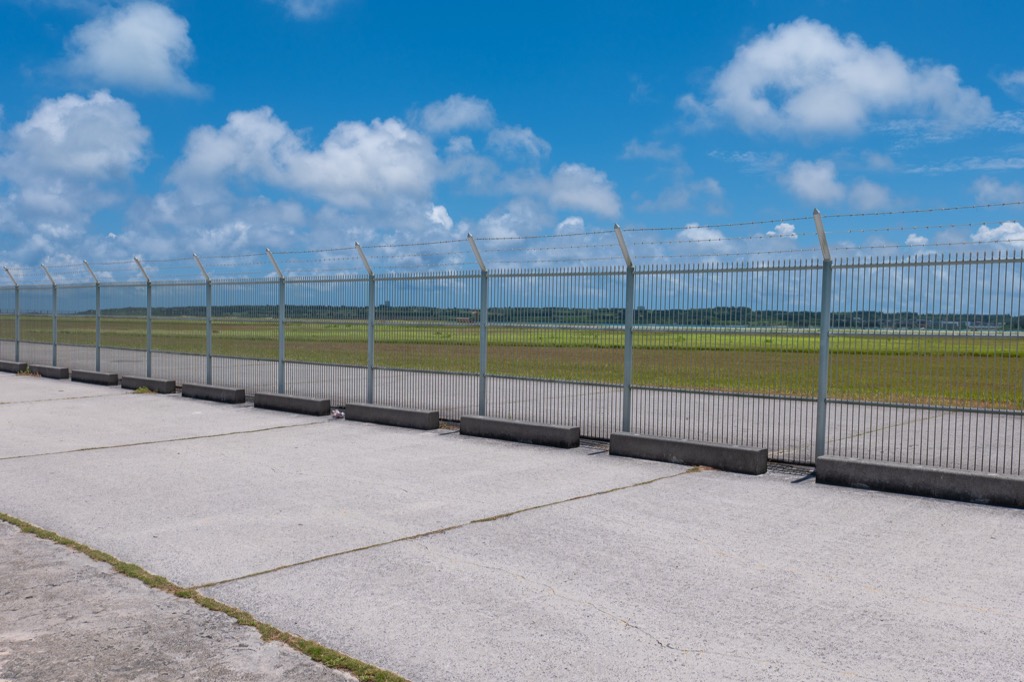
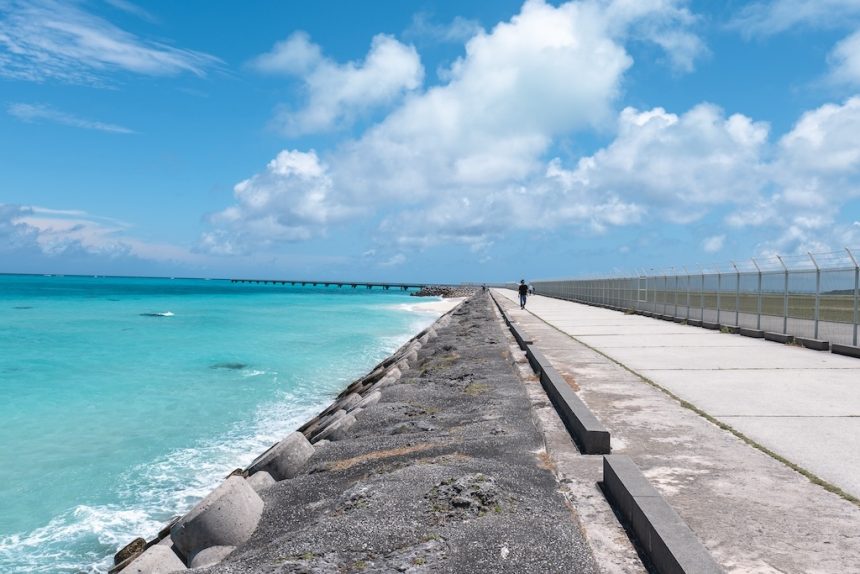
The viewing area is simply a public coastal road that runs along the western edge of the runway. No admission, no opening hours, no booking. You park along the shoulder, walk a short way to the fence line and the seawall, and look up. When wind direction is right, jets cross directly overhead — wheels down, seconds from touchdown.
How to Get to 17END from Miyako Island
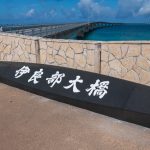
17END sits on Shimojishima Island, which is land-linked to Irabu Island, which is linked to mainland Miyako via the 3,540-meter Irabu Ohashi Bridge. The whole drive is one of the most beautiful in Japan, with shallow turquoise water on both sides for most of the bridge crossing.
| From | Drive Time | Notes |
|---|---|---|
| Shimojishima Airport (MMD) | About 5 minutes | Best for Skymark flights from Kobe or Ibaraki, or international arrivals |
| Miyako Airport (MMY) | About 35 – 40 minutes | Best for travelers connecting via Naha on JAL or ANA |
| Hirara (main town) | About 35 minutes | Most hotel and restaurant base — straightforward drive via the bridge |
| Yonaha Maehama Beach | About 50 minutes | South of Miyako — give yourself extra buffer in summer |
Public buses to Shimojishima are limited and don’t reach 17END itself, so virtually every visitor arrives by rental car. Reserve a compact car in the Miyako area early — availability tightens from May through October.
Parking and First Steps After You Arrive
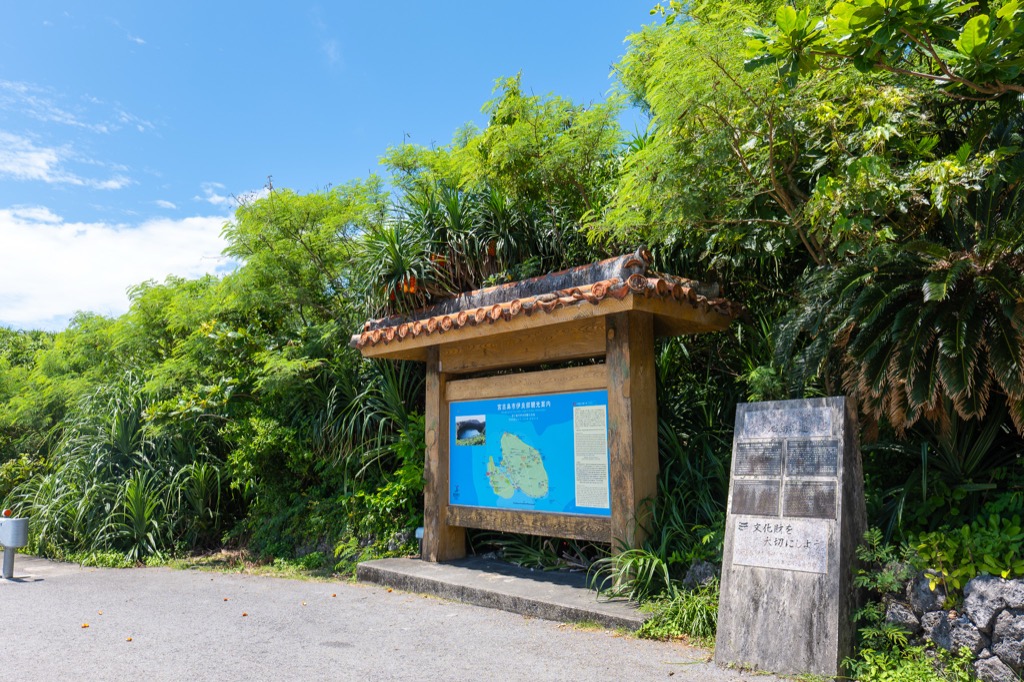
There is no formal paid parking lot at 17END. Visitors park along the wide shoulder of the coastal road and on a flat dirt area set back from the seawall. Parking is free, and on a regular weekday morning you can almost always find a spot. On clear weekends and Japanese holiday weeks, the area fills up by 10:00, so an early start is wise.
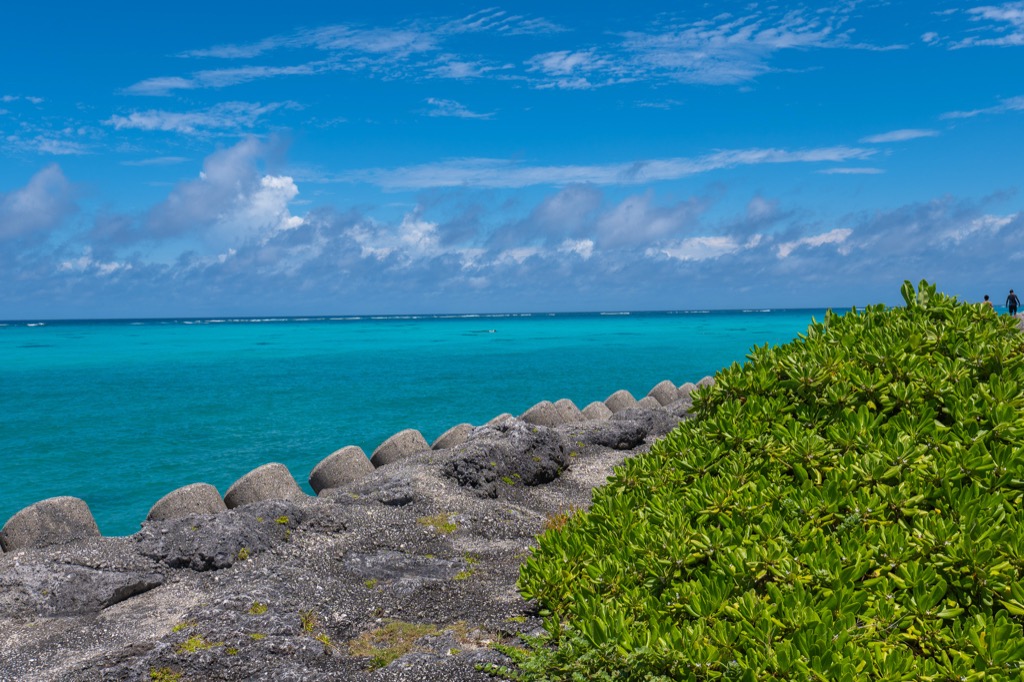
From the parking area to the fence line, it’s a one-minute walk on flat ground. The seawall is bordered by concrete tetrapods — do not climb past the obvious viewing edge. The rocks are slippery and the drop is sharper than it looks.
When Do Planes Actually Land at 17END?
This is the question every visitor asks, and the honest answer is: it depends on the day. Shimojishima Airport hosts three different flight types and none of them produce a constant stream.
- Scheduled commercial flights — Skymark Airlines operates daily flights to/from Tokyo Narita, Kobe, and Naha. Typical arrival windows are mid-morning and early afternoon, but schedules change seasonally. Check the airline’s official timetable a day or two before your visit
- Pilot training flights — Japanese carriers’ narrow-body jets run touch-and-go landings in clustered sessions, typically late morning to early afternoon on weekdays. Schedules are not publicly posted
- Charter and seasonal international flights — Less predictable, but occasionally produce a great spotting day
Wind direction is the other variable. Aircraft land into the wind, so when winds blow from the south, planes approach over the sea toward 17END — the iconic overhead shot. When winds blow from the north, planes land in the opposite direction and you’ll only see them take off, which is a less dramatic angle. For the best odds, aim for May to September with a stable south wind and a clear sky.
If your top priority is the photo, build at least two to three hours of buffer time into your visit. Bring a book, snacks, sunscreen, and enough water — there are no shops or vending machines within walking distance.
The Miyako Blue at 17END — Why the Color Is Unreal
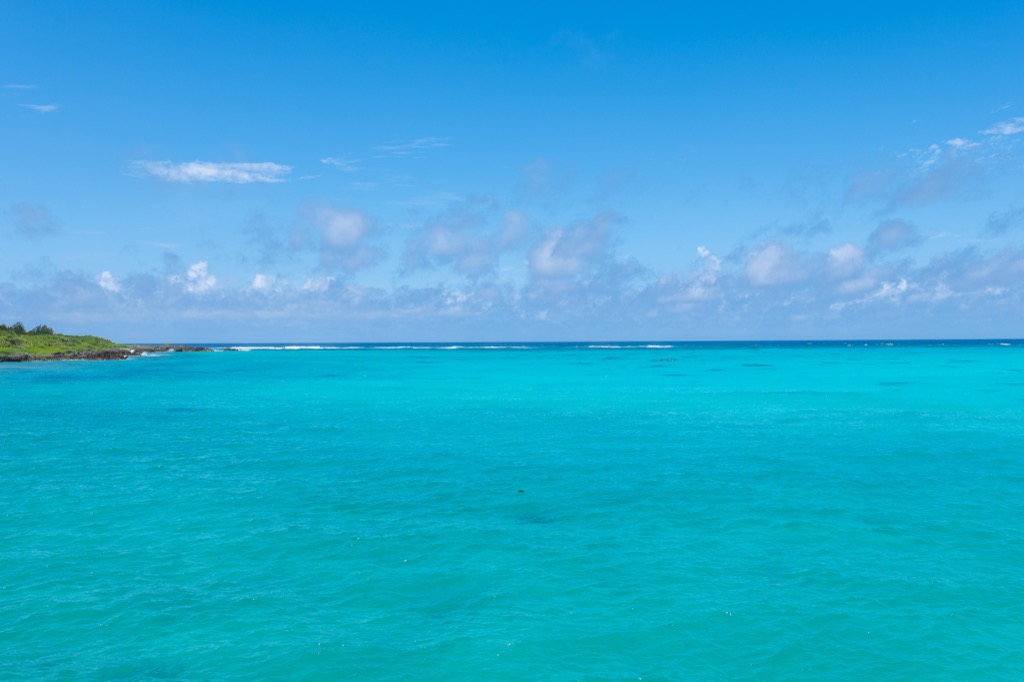
Even on a day without a single plane, the water at 17END alone justifies the drive. The shallow shelf just off the seawall is a near-perfect gradient of pale turquoise to deep cobalt, with a coral and white-sand floor that reflects sunlight back through clear water. This is the “Miyako Blue” you see plastered across travel posters — and it really does look that way in person.
Color peaks under direct overhead sunlight — roughly 10:00 to 14:00 local time — and is most saturated on days with little wind and minimal cloud cover. After heavy rain or on windy days, churned sand can give the water a milky look. Plan flexibly if you can.
Swimming and snorkeling are not recommended directly off the seawall. There are no lifeguards, the seabed drops off quickly, and currents around the runway extension can be strong. If you want to actually get in the water nearby, head to Toguchi Beach a short drive away, where there’s sand entry, calm water, and a small parking area.
A Quiet North-Side Pocket Beach
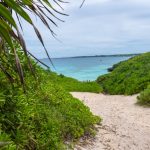
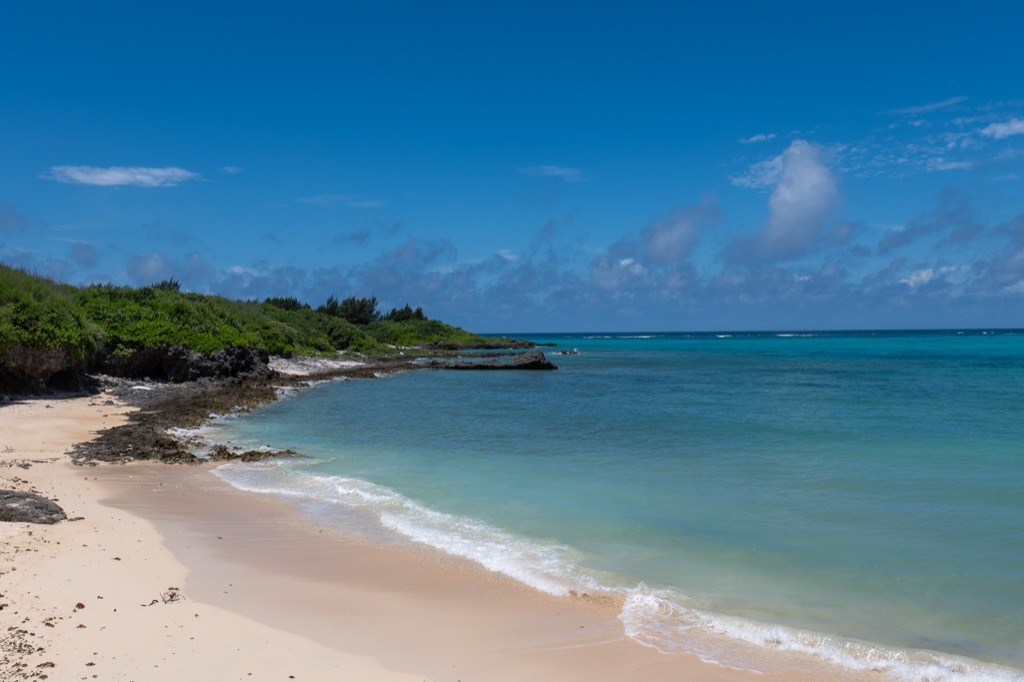
A short walk along the road from the main 17END viewpoint, the coastline opens into a small undeveloped cove. There are no facilities here, but the water is just as bright, and it’s far quieter than the main spot — a perfect sit-down break between flights.
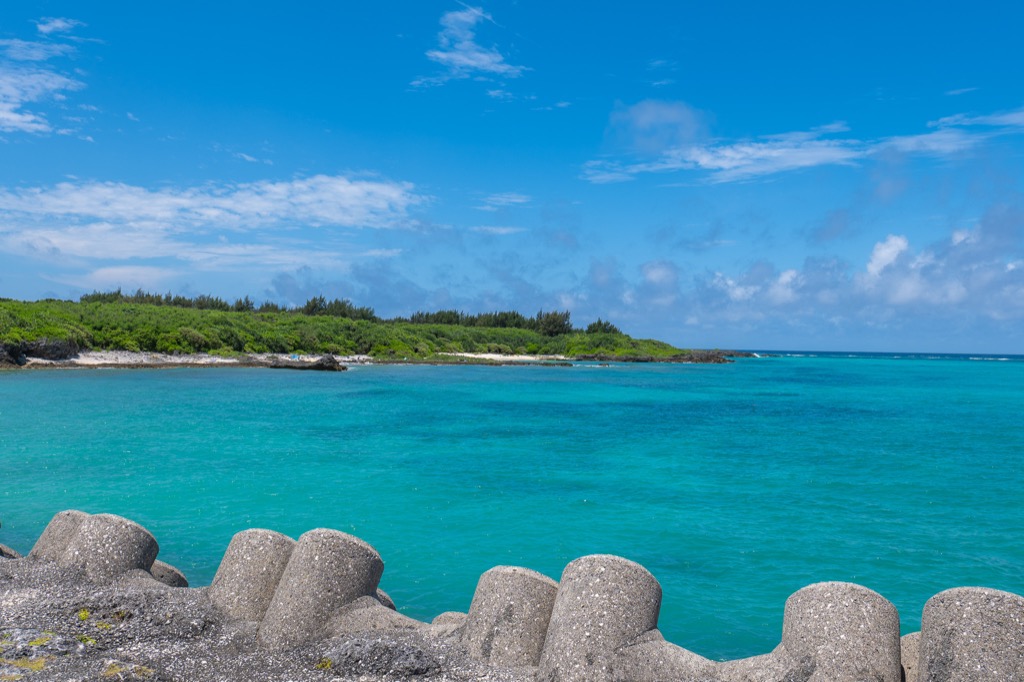
This is a great vantage for reflective photos at low tide. Bring a beach towel if you want to sit, and pack your trash out — there are no rubbish bins on this stretch of road.
Practical Tips for Foreign Drivers
Things first-time visitors to Japan often want to know before they fly in:
- You need an International Driving Permit (1949 Geneva Convention). Issued in your home country before you fly — rental counters cannot create one on arrival. Drivers from Germany, Switzerland, Taiwan, Monaco, Belgium, and Slovenia must instead bring a JAF-certified Japanese translation of their home licence
- Japan drives on the left. Like the UK, opposite of the US and EU. Most foreign drivers adapt within 30 minutes — Miyako’s quiet roads are a forgiving place to learn
- English signage is limited. Major junctions usually have English, but smaller roads are Japanese-only. A phone with offline maps (Google Maps offline area download, or Apple Maps cache) saves a lot of stress
- Cash is still king on the islands. Convenience stores accept cards and IC cards (Suica, ICOCA, etc.) but small parking lots, local cafés, and beach kiosks are often cash-only. Carry small yen notes
- Fuel up on Miyako Island before crossing. Gas stations on Irabu and Shimoji are scarce and many close early
- Drunk-driving rules are zero tolerance. Even one drink can lead to arrest, very large fines, and deportation for foreigners. Take the rental back to your hotel before drinking
- Drones are prohibited near the active runway. Flying a drone near 17END is illegal and will get you into serious trouble. Do not do it
What to Bring, What to Skip
- Strong sunscreen (SPF50+) — Almost no shade anywhere on the walkway. Reef-friendly formulations are appreciated
- Sunglasses and a wide-brimmed hat — The white seawall and turquoise water create intense glare
- At least 1.5 L of water per person — No vending machines, no café, no restroom on site
- Camera with a longer lens (70 – 200 mm) if you want crisp plane-belly shots; phone wide angles work for sea-only frames
- Cash for tolls and small purchases — many smaller shops on the way back are cash-only
- A trash bag — there are no rubbish bins. Pack out what you bring in
Pair 17END With the Rest of the Irabu–Shimoji Loop
Most visitors pair 17END with two or three other spots on the same loop, since driving distances between viewpoints are short.
- Toguchi Beach — White-sand beach with shallow swimming, about 10 minutes from 17END. Showers and restrooms
- Toriike Pond — Two sapphire-blue sinkholes connected to the open sea by underwater caves. Free entry. About 10 minutes from 17END
- Sawada-no-hama Beach — One of Japan’s “100 best beaches,” widely loved for sunset. About 15 minutes from 17END
- Shimojishima Airport (MMD) terminal — Restrooms, gift shop, the Ryukyu-inspired wooden roof. About 5 minutes from 17END
- Irabu Ohashi Bridge plazas — Stop on the return for the classic bridge-and-sea photo
A common day plan: 17END in the morning for sea color and a chance at a landing, Toguchi Beach in the early afternoon for a swim, Sawada-no-hama at sunset to close the day. Want to add a marine activity? Browse Miyako-area snorkeling, SUP, and boat tours in advance to lock in your preferred time slot.
FAQ — Quick Answers for First-Time Visitors
Q. Is there an admission fee at 17END?
No. 17END is a public coastal road and entry is free at any time.
Q. How long should I budget for a visit?
Plan at least 90 minutes on site. Add buffer if you want to photograph a specific flight — landings are not on a fixed timetable.
Q. Can I swim at 17END?
Not recommended. There are no lifeguards and the seabed drops off quickly. Use nearby Toguchi Beach for swimming.
Q. Are there restrooms or a café on site?
No facilities at the 17END walkway itself. The closest restrooms are at the airport terminal or at Toguchi Beach.
Q. What’s the best time of day for photos?
Late morning to early afternoon, with the sun high overhead. The turquoise color is most saturated between 10:00 and 14:00.
Q. Do I need a rental car to visit?
Effectively yes. Public transit doesn’t reach 17END. A rental car from Miyako or Shimojishima airport is the standard choice.
Q. Can I fly a drone here?
No. Drone flights near the active runway are prohibited by law.
Q. Which airport is closest to 17END?
Shimojishima Airport (MMD) is about 5 minutes by car. Miyako Airport (MMY) is about 35 – 40 minutes via Irabu Ohashi Bridge.
Q. Do I need to know Japanese to drive here?
No. Major road signs include English on Miyako. Bring offline maps and a translation app for smaller signs, and you’ll be fine.
Wrap-Up — Drive Out Early, Stay for the Color, Hope for a Plane
Thanks for reading this far. This guide walked you through what 17END is, how to get there, when planes actually land, and the practical tips that make the visit memorable for foreign travelers. Landings are unpredictable, but the sea is reliably stunning — so plan for the color first and treat a plane sighting as a bonus.
If you want to make the most of Miyako Island, book a rental car with GO!GO!TOUR and drive yourself out to 17END. Reserving early — especially May through October — keeps the day relaxed.
Quick checklist before you go:
- Free entry, free roadside parking, 24 / 7 — no gate, no booking
- Best light is 10:00 – 14:00 on a clear day with light south wind
- No restrooms or shops on site — water and snacks from Hirara before you go
- Build 2 – 3 hour buffer if you want a plane shot
- Swim at Toguchi Beach, not at 17END
- A rental car is essentially required
Book Your Miyako Rental Car with GO!GO!TOUR — English Support and Easy Pickup.
GO!GO!TOUR is locally operated in Miyako Island with English-speaking staff, transparent pricing, and pickup at both Miyako and Shimojishima airports. First-time visitors to Japan can complete the whole rental process — from booking to vehicle handover — entirely in English.
🚗 Miyako Rental Car — Search by Category
- 🚗 Kei-car (K) search — narrowest body, easiest for first-time Japan drivers
- 🚗 Compact (S) search — 2 – 3 travelers, hybrid options (Yaris, Aqua)
- 🚗 Mid-size / Wagon (M/W) search — 4 – 5 travelers with luggage
- 🚗 Minivan (V) search — 6 – 8 travelers, families and groups
🏝️ Miyako Island rental car landing page — vehicles, pickup locations, prices
🏖️ Miyako marine activities — snorkeling, diving, SUP
🍴 Miyako Island travel guide — spots, food, seasonal tips

See you out there above the Miyako Blue 🌊✈️