Irabu Ohashi Bridge — 3,540 Meters of Pure Miyako Blue, and Not a Yen to Cross
If there is one drive in all of Okinawa that earns the “bucket list” label, it’s Irabu Ohashi Bridge. At 3,540 meters long, it’s the longest toll-free bridge in Japan — a single graceful arc over reef shallows so turquoise they look digitally retouched. No toll booth, no gate, no fee. Just drive in, slow down, and let the view do the rest.
This guide is for international visitors making their first trip to Miyako Island. Inside you’ll find how to get to the bridge, when to go, where to park, the best photo spots, and what’s worth visiting once you’re on the other side — written from a first-person drive, not a tourism brochure.
👉 To drive Irabu Ohashi you’ll need a rental car — GO!GO!TOUR Miyako Island rental car offers English support, transparent pricing, and pickup at both Shimojishima and Miyako airports.
Quick Facts at a Glance
Save this table for trip planning — it answers the most common questions in one screen.
| Item | Details |
|---|---|
| Official name | Irabu Ohashi (伊良部大橋) — “Great Irabu Bridge” |
| Length | 3,540 m — longest toll-free bridge in Japan |
| Connects | Miyako Island ⇔ Irabu Island (Irabu is land-linked to Shimoji Island) |
| Location | Miyakojima City, Okinawa Prefecture, Japan |
| Opened | January 31, 2015 (9 years of construction) |
| Toll | Free, 24/7 |
| Speed limit | 50 km/h (~31 mph) |
| Crossing time | 5–10 minutes one way (30–60 minutes with photo stops at the ends) |
| Pedestrians? | No — cars, scooters, and bicycles only |
| Best time of day | 10:00–14:00 (peak Miyako Blue) or late afternoon for sunset shots from the Irabu side |
Why This Bridge Earns Its Reputation
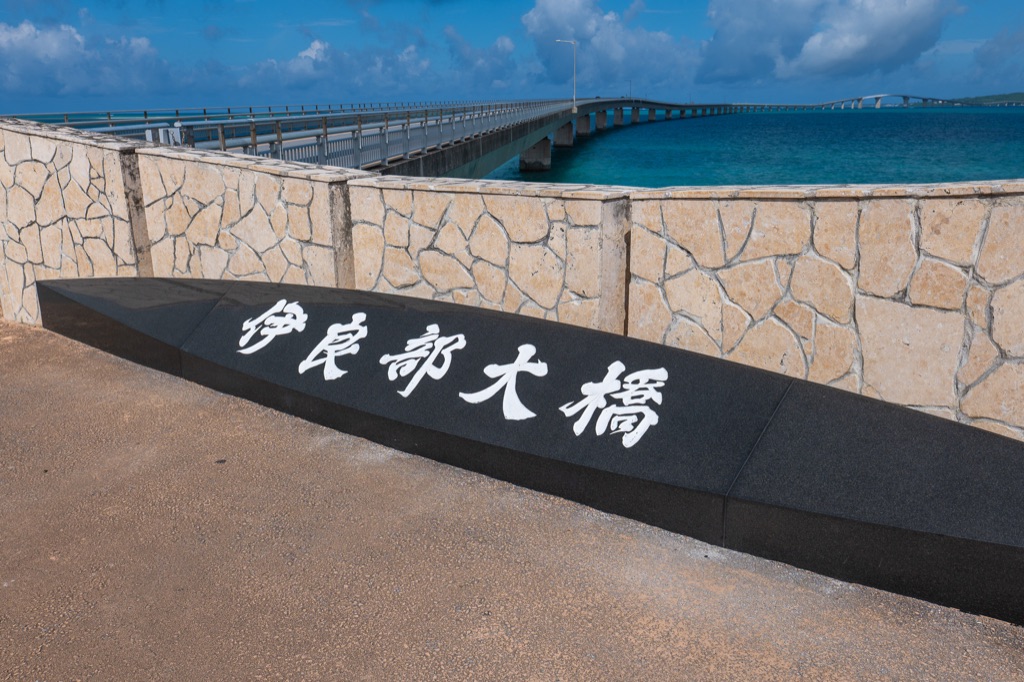
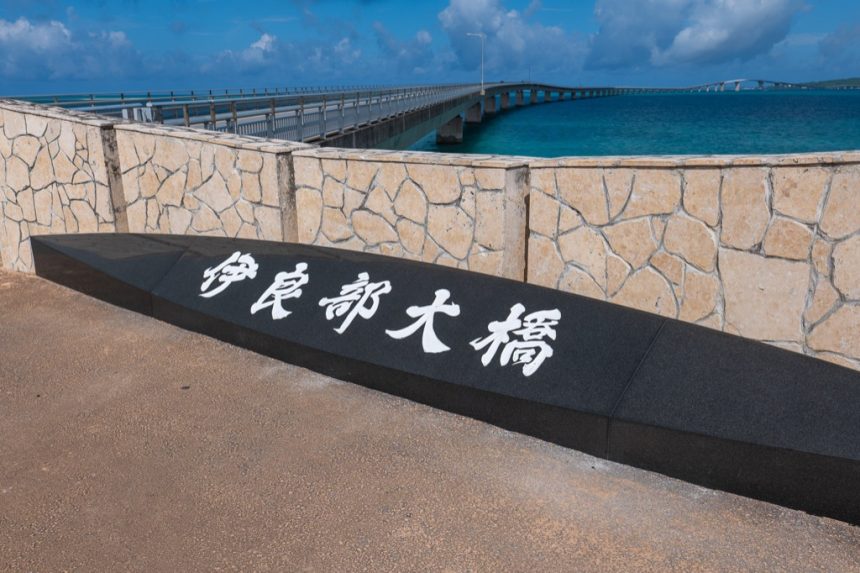
On the Miyako side, the bridge entrance is marked by a striking stone monument carved with “伊良部大橋” — the bridge’s name in Japanese. The kanji translates loosely to “Great Irabu Bridge,” and behind it stretches the structure itself, dropping and rising in three gentle waves across the channel.
That subtle “wave” is the most underrated detail about driving Irabu Ohashi. The deck is highest in the middle — about 27 meters above sea level — to allow boats and small ships to pass underneath. When you drive across, you’ll feel yourself climb, descend, climb again, descend. It’s this rolling profile, not just the length, that makes Irabu Ohashi feel different from every other sea bridge in Japan.
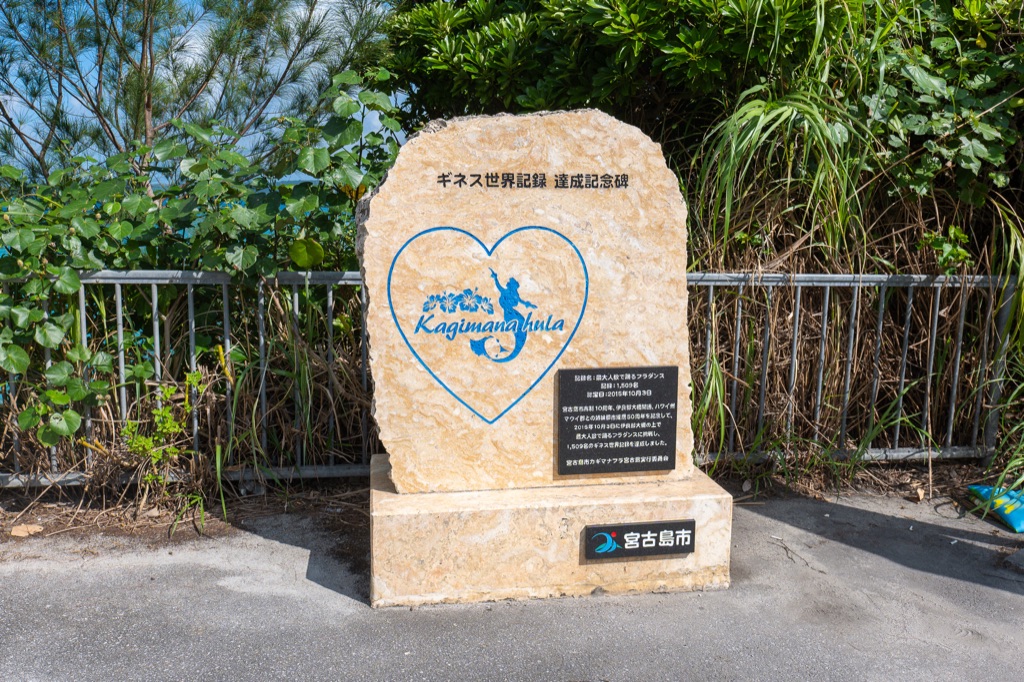
Next to the main marker stands the “Kagimanainta” stone, which commemorates the bridge’s record. The word comes from the local Miyako dialect and means roughly “beautiful connection” — a fitting name for what united two communities that were once separated by a 25-minute ferry ride. Before the bridge opened in 2015, residents of Irabu and Shimoji islands relied on that ferry for everything from high school commutes to medical care. The bridge didn’t just shorten a trip; it rewrote daily life.
The Drive: What You’ll Actually Experience
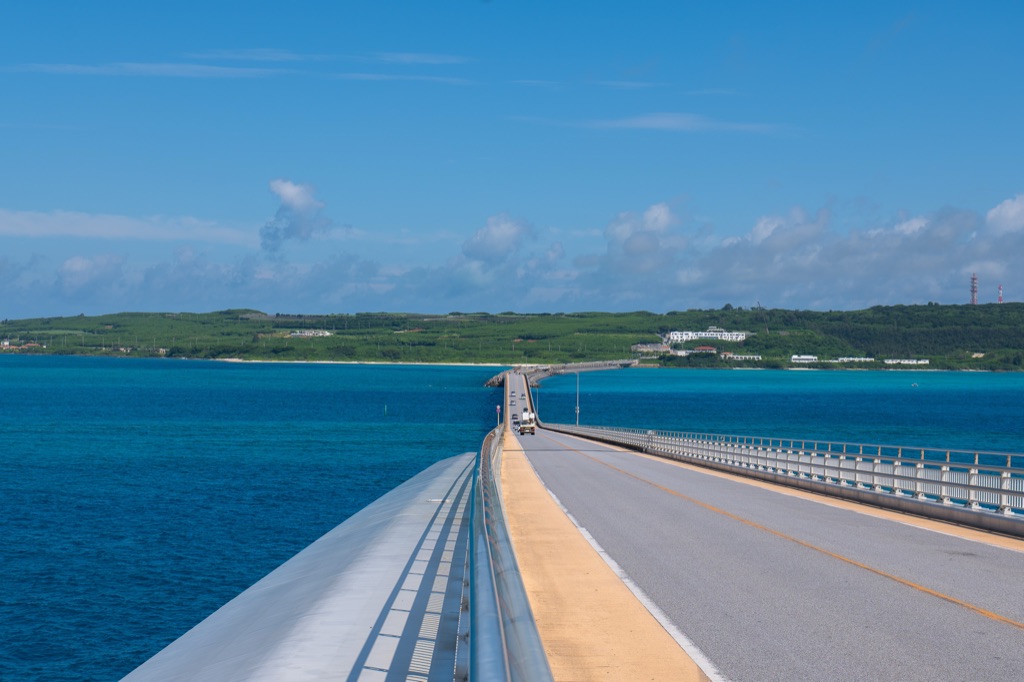
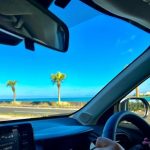
This is what the drive looks like from behind the wheel. The road opens up over the water, the painted shoulder running to a vanishing point. On both sides, the reef shallows glow that fluorescent turquoise unique to coastal Okinawa. The horizon ahead is Irabu Island, and beyond it the western edge of Shimoji Island — where the famous Shimojishima Airport sits.
Three things to know before you go:
- The speed limit is 50 km/h and is worth respecting. The drive is more rewarding slower
- You cannot stop on the bridge itself. The shoulders are not for parking, photos, or sightseeing. Use the small plazas at either end instead
- High winds can close the bridge. During typhoon season (July–October), check road status before driving out
Best Photo Spots: The “Hashizume Plazas”
The best photos of Irabu Ohashi come from the “Hashizume Plazas” at each end of the bridge. Both have free parking, paved viewing platforms, and clean sightlines. No tickets, no time limits, nothing to book.
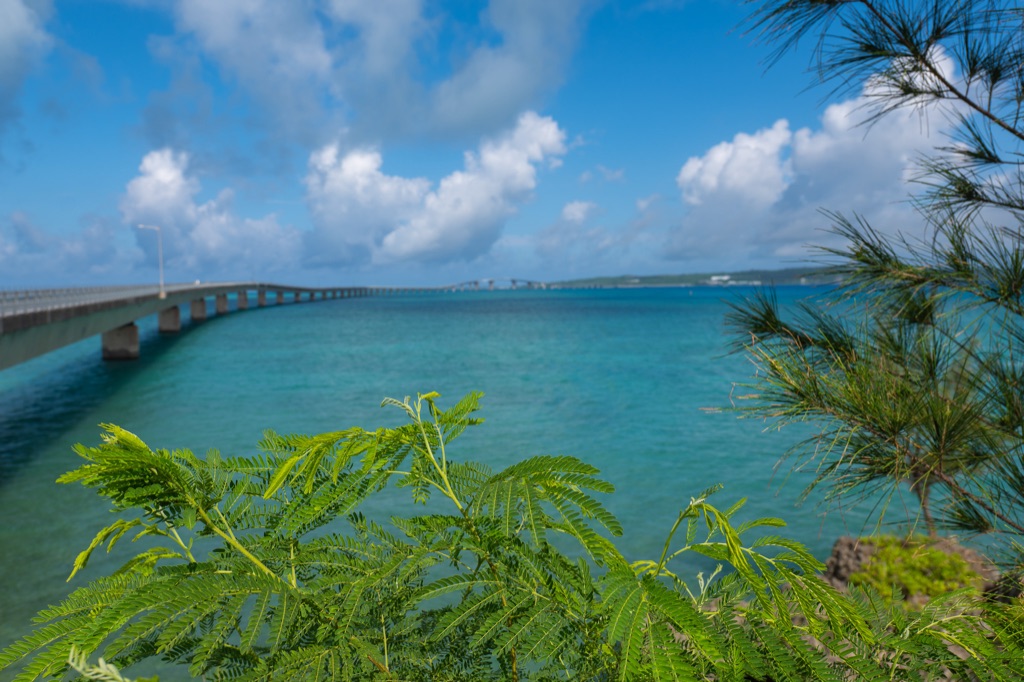
The Miyako-side platform is the easier of the two for photographers. Framing the bridge with the tropical foliage in the foreground adds depth and unmistakable Okinawan character — far more interesting than just pointing the camera down the centerline.
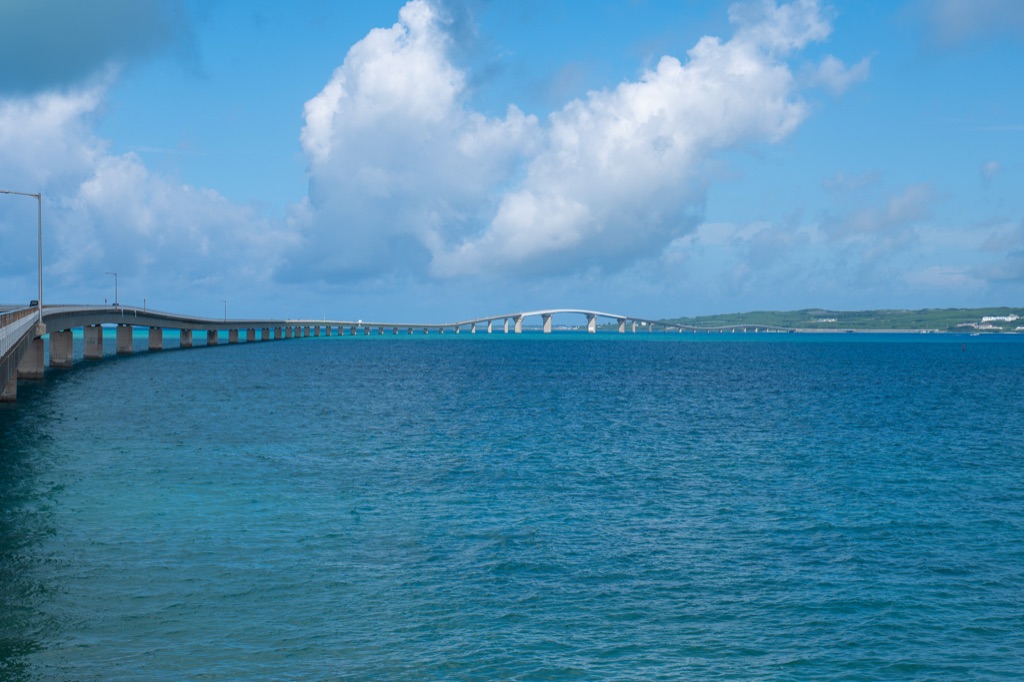
From a slightly different angle you can see the full silhouette of the bridge, including the central arch. This is the shot that conveys the scale — 3,540 meters is hard to grasp from the air, but easy to feel when the far end is on the horizon.
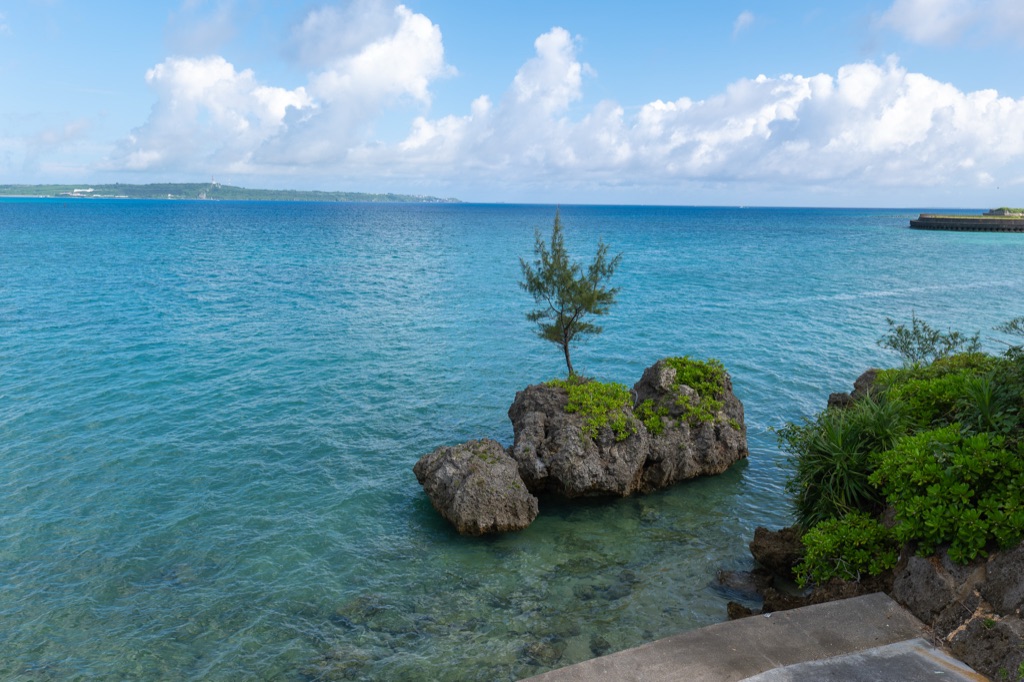
One unexpected detail near the Miyako-side plaza: a small rock outcropping with a single pine tree growing on it. Locals sometimes call it a “natural bonsai.” It’s a favorite among photographers, especially in late-afternoon side light.
How to Get to Irabu Ohashi Bridge
The bridge sits near the center of Miyako Island’s road network, with easy access from both airports and the main town of Hirara.
| From | Drive Time | Notes |
|---|---|---|
| Miyako Airport (MMY) | ~15 minutes | Best for travelers connecting via Naha on JAL/ANA |
| Shimojishima Airport (MMD) | ~25 minutes | Best for direct international flights or Skymark from Tokyo |
| Hirara (main town) | ~10 minutes | Where most hotels and restaurants are |
| Higashi-Henna Cape | ~70 minutes | Easy east-to-west day trip combo |
Miyako Island has effectively no public transportation between attractions. Buses are rare, taxis are expensive over long distances, and the bridge does not allow pedestrians. For any meaningful Miyako sightseeing — including this bridge — booking a rental car in advance is essentially required.
What’s on the Other Side: Irabu and Shimoji Islands
Crossing the bridge is only the start. Once on the Irabu side you are within 30 minutes of some of the most photographed spots in all of Okinawa.
- Toguchi-no-hama Beach — a quiet white-sand beach minutes from the Irabu end of the bridge, ideal for sunset. 5 minutes from bridge
- 17END — the runway-end beach at Shimojishima Airport, where landing planes pass directly overhead. 20 minutes from bridge
- Toriike Pond — two sapphire sinkholes connected to the open sea by underwater caves. Free entry. 25 minutes from bridge
- Nakanoshima Beach — shallow protected reef great for first-time snorkelers. 25 minutes from bridge
- Sawada-no-hama Beach — one of Japan’s “100 best beaches,” widely loved for its sunset. 30 minutes from bridge
A common single-day loop is Hirara → Irabu Ohashi → Toguchi-no-hama → 17END → Toriike Pond → back across the bridge for dinner. About 6 hours including stops. Easily one of the most rewarding day drives in Japan.
Practical Tips Before You Drive
- Best light is 10:00–14:00 — the sun is high enough to fully illuminate the reef. Early morning and late afternoon shoot darker
- Never stop on the bridge itself — parking is at the free Hashizume Plazas on either end
- Stick to 50 km/h or below — local enforcement happens occasionally, and slower is better for the view
- High wind can close the bridge — check road status during typhoon season (July–October)
- Fill up on Miyako Island before crossing — gas stations on Irabu and Shimoji are scarce
- The plazas have no shops — bring water and snacks. The nearest convenience stores are back in Hirara
- Check the forecast — overcast or rainy days flatten the colors. Save this drive for a clear day
- Combine with 17END and Toriike Pond — they’re all on the same island chain and easily linked in a single loop
FAQ — Quick Answers for First-Time Visitors
Q. Is Irabu Ohashi really toll-free?
Yes. There is no toll booth and no fee at any time. The bridge is fully maintained by Okinawa Prefecture and open 24 hours a day.
Q. How long is Irabu Ohashi Bridge?
The over-water span is 3,540 meters. Counting the connecting access roads on both sides, the complete Irabu Bridge corridor measures roughly 4.3 km. It is the longest toll-free bridge in Japan.
Q. Can I walk across Irabu Ohashi?
No. There is no pedestrian walkway. The bridge is open only to cars, scooters, and bicycles. To photograph the bridge, drive to either Hashizume Plaza and use the viewing platform.
Q. What’s the best time of day to cross?
Between 10:00 and 14:00, when the sun is high enough to make the reef water glow turquoise. Sunset from the Irabu side is also beautiful, but the bridge itself looks best at midday.
Q. Does Irabu Ohashi close in bad weather?
Light rain is fine. The bridge may close during typhoons or high-wind warnings. During the typhoon season (July–October), check the latest road status before driving out.
Q. Which airport is closest to Irabu Ohashi?
Miyako Airport (MMY) is about 15 minutes by car. Shimojishima Airport (MMD) is about 25 minutes by car. MMY is best for travelers connecting through Naha; MMD is best for travelers from Tokyo (Skymark) or international direct flights.
Q. Is the parking at Irabu Ohashi free?
Yes. Both Hashizume Plazas have free parking, free entry, and reliable availability even during peak tourist season.
Q. Can I visit Irabu Ohashi without a rental car?
It’s very difficult. Miyako has minimal public transit, taxis are expensive over long distances, and pedestrians cannot cross the bridge. A rental car is the practical requirement.
Wrap-Up — Drive Across, Photograph From Both Sides, Stay for the Sunset
Thanks for reading this far. This guide walked you through the history of Irabu Ohashi Bridge, the best photo spots, how to get there, and the practical tips that make the drive memorable. Some rental car providers limit hours or require advance booking, so it’s worth confirming your plan before you fly in.
If you want to make the most of Miyako Island, book a rental car with GO!GO!TOUR and drive Irabu Ohashi yourself. You may also find a better rate than you expected.
Quick checklist before you go:
- Free to cross, 24/7 — open to cars, scooters, and bikes (not pedestrians)
- Best light is 10:00–14:00 on a clear day
- Free parking at the Hashizume Plazas at both ends
- 50 km/h speed limit, no stopping mid-bridge
- Pair with 17END, Toriike Pond, and Sawada-no-hama for a full day’s worth
- A rental car is essentially required
Book Your Miyako Rental Car with GO!GO!TOUR — English Support and Easy Pickup.
GO!GO!TOUR is locally operated in Miyako Island with English-speaking staff, transparent pricing, and pickup at both airports. First-time visitors to Japan can complete the whole rental process — from booking to vehicle handover — entirely in English.
🚗 Miyako Rental Car — Search by Category
- 🚗 Kei-car (K) search — narrowest body, easiest for first-time Japan drivers
- 🚗 Compact (S) search — 2–3 travelers, hybrid options (Yaris, Aqua)
- 🚗 Mid-size / Wagon (M/W) search — 4–5 travelers with luggage
- 🚗 Minivan (V) search — 6–8 travelers, families and groups
🏝️ Miyako Island rental car landing page — vehicles, pickup locations, prices
🏖️ Miyako marine activities — snorkeling, diving, SUP
🍴 Miyako Island travel guide — spots, food, seasonal tips

See you out there above the Miyako Blue 🌊🚗