- Miyazaki in September — A Surf Mecca on the Typhoon Corridor
- Miyazaki September at a Glance — Key Numbers
- Miyazaki Climate Across the Year — Where Does September Sit?
- 🌀 Miyazaki September Typhoons — The Geography of "Direct Exposure"
- 🏄 September Highlight — The Real Surf Peak and Its "Golden Swell"
- 🚨 Four Things to Watch in September — Typhoons, UV, Jellyfish, Rip Currents
- ✈️ Reaching Miyazaki from Tokyo, Osaka, Fukuoka & International Gateways
- 🗺️ 4-Day Miyazaki Itinerary — City, Nichinan Coast, Takachiho, Seagaia
- 👕 What to Pack for September in Miyazaki — Scene by Scene
- 🍶 September Events & Seasonal Food in Miyazaki
- 📅 When Exactly to Go — Avoid Silver Week
- Frequently Asked Questions (FAQ)
- Wrapping up
Miyazaki in September — A Surf Mecca on the Typhoon Corridor
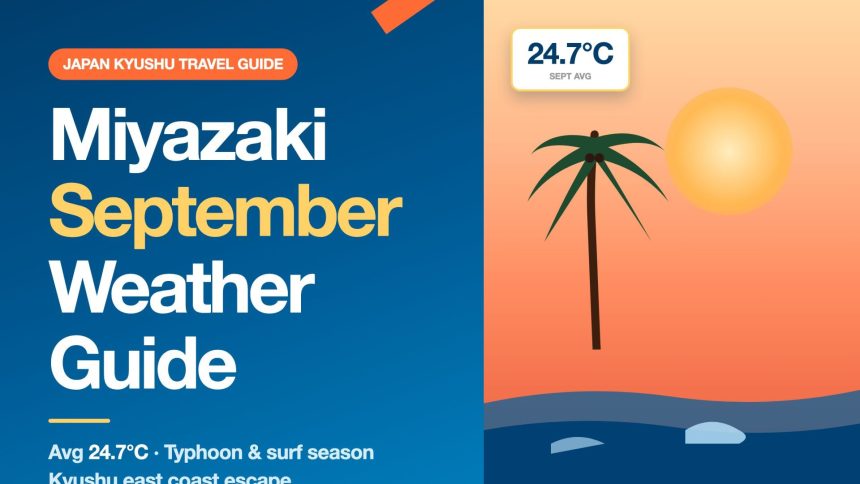
Short answer: September in Miyazaki (宮崎) sits at an unusual balance point — average 24.7°C / rainfall 370.9 mm (the year’s 2nd-wettest month) / 156 sunshine hours — where the mantra is “when it rains, it pours; the rest of the time, the sun is out”. Because Miyazaki faces the Pacific on Kyushu’s east coast it takes direct typhoon exposure, but that same setup is exactly why September is the real peak surf season: long-period swells arrive from tropical lows, and offshore winds groom the wave faces to glass. The Nichinan Coast (日南海岸) drive, Aoshima (青島) and Udo Jingu (鵜戸神宮) are still very much in T-shirt territory, while Takachiho Gorge (高千穂峡) up in the mountains asks for a light long-sleeve layer. And here is Miyazaki’s quiet superpower: it is a 20-minute drive from the airport to the Seagaia resort — the shortest airport-to-resort transfer in all of Kyushu, which makes even late arrivals easy to work with.
Welcome! This is GO!GO!TOUR, your travel partner for independent trips across Japan. Miyazaki sits on the southeast corner of Kyushu, facing the Pacific Ocean (specifically the Hyuga-nada sea) head-on. The warm Kuroshio (Black Current) runs just offshore, and the combination gives the prefecture two very distinct calling cards: “the best surf coast in Japan” and “year-round resort golf”.
September in Miyazaki is a rare month where peak typhoon season, the real peak of the surf season, and the last stretch of summer resort weather all overlap. It flies under the radar compared with Fukuoka or Kagoshima, which means the marquee spots are noticeably less crowded and the local flavor is more intact — a genuine plus for independent travelers.
This guide lays out Miyazaki in September for the international independent traveler — temperature and rainfall, the geography of typhoon exposure, why surf peaks now, the coast-vs-mountain temperature gap, how to reach Miyazaki from Tokyo, Osaka and Fukuoka (plus international gateways), a 4-day recommended itinerary, packing tips, and a full FAQ.
Miyazaki September at a Glance — Key Numbers
Here is what you actually need to pack for and plan around, compressed into one table.
| Item | Data | Quick note |
|---|---|---|
| Average temperature | Avg 24.7°C / high 28.5°C / low 21.4°C | Still swimmable — T-shirts on the coast |
| Sea surface temperature | About 26-27°C | Last month for full-day surf / SUP / snorkel |
| Rainfall & sunshine | 370.9 mm / 156.5 sunshine hours | 2nd-wettest month, but sunnier than Tokyo (+40h) |
| Humidity | Avg 80% | Hot and sticky — hydrate constantly |
| UV index | Peak 7-8 (very high) | SPF 50+, rash guard and hat are essentials |
| Typhoon risk | Kyushu’s east coast — directly exposed | Airport, JR and coastal road closures happen |
| Surf conditions | Peak season of the year (offshore + long-period swell) | Kisakihama, Shirahama, Aoshima |
| Mountain areas (Takachiho) | ~23°C daytime / ~12°C at dawn | Light long sleeves + fleece required |
| Main access | Haneda 2h, Itami 1h15m, JR Nichirin from Hakata 5-5h30m | Fukuoka is Kyushu’s main international gateway |
| Airport access | JR to Miyazaki St. 10 min / Seagaia 20 min by car | Shortest “airport → resort” hop in Kyushu |
| Sweet spot | Mid-September weekdays (excluding holidays) | Lower typhoon risk + lower prices |
Internalize this table and you are 80% of the way to a well-planned September Miyazaki trip. Now the details.
Miyazaki Climate Across the Year — Where Does September Sit?
Here are the Japan Meteorological Agency (JMA) 1991-2020 climatological normals from the Miyazaki observatory (station 47830). Look at all 12 months together and Miyazaki’s signature “June rainy season + September typhoon season” double-peak rainfall pattern jumps right out.
| Month | Avg °C | High °C | Low °C | Rain mm | Sun h |
|---|---|---|---|---|---|
| Jan | 7.8 | 13.0 | 3.0 | 72.7 | 192.6 |
| Feb | 8.9 | 14.1 | 4.0 | 95.8 | 170.8 |
| Mar | 12.1 | 17.0 | 7.4 | 155.7 | 185.6 |
| Apr | 16.4 | 21.1 | 11.7 | 194.5 | 186.0 |
| May | 20.3 | 24.6 | 16.3 | 227.6 | 179.7 |
| Jun | 23.2 | 26.7 | 20.1 | 516.3 | 119.4 |
| Jul | 27.3 | 31.3 | 24.1 | 339.3 | 198.0 |
| Aug | 27.6 | 31.6 | 24.5 | 275.5 | 208.6 |
| Sep | 24.7 | 28.5 | 21.4 | 370.9 | 156.5 |
| Oct | 20.0 | 24.7 | 15.8 | 196.7 | 173.6 |
| Nov | 14.7 | 19.8 | 10.1 | 105.7 | 167.0 |
| Dec | 9.7 | 15.0 | 5.0 | 74.9 | 183.9 |
Source: JMA Miyazaki Observatory (station 47830), climatological normals 1991-2020.
Miyazaki’s rainfall peak is June’s rainy season at 516 mm, but the clear secondary peak is September at 370 mm — pure typhoon-season signature. Even so, monthly sunshine still comes in at 156 hours (about 40 hours more than Tokyo’s 116 in September), so this is not a month of “all-day drizzle”. The real pattern is heavy bursts when a typhoon or front passes, and plenty of sunny hours in between. For international travelers, September averages here run 5-8°C warmer than Tokyo, New York or most of Europe in the same month — pack summer clothing as your baseline, not autumn wear.
🌀 Miyazaki September Typhoons — The Geography of “Direct Exposure”
“Isn’t Miyazaki directly in the typhoon path? Is September even safe?” — that is the most common question we get. The honest answer: Miyazaki behaves differently from Kagoshima depending on where the storm tracks, and understanding the difference is the whole trick.
Kagoshima vs Miyazaki — typhoon exposure compared
- Kagoshima (west side of Kyushu, East China Sea): Sits right in the “first landfall” corridor for typhoons that climb north from Okinawa along Kyushu’s west coast. Takes wind hits directly.
- Miyazaki (east side of Kyushu, Pacific coast): When a storm passes to the west, the Kyushu mountain range (Kyushu Sanchi) blocks the worst wind, but Miyazaki still gets easterly gales and torrential rain. When the track runs up the Pacific side of Japan, Miyazaki takes it directly.
Net result: the number of storm approaches is similar between the two prefectures, but Miyazaki’s damage profile skews toward “coastal swell + concentrated rainfall” rather than pure wind. Expect occasional closures of Miyazaki Airport (KMI), JR lines and the Nichinan coastal road (National Route 220). Over the last five years (2020-2024), typhoon approaches to southern Kyushu have averaged 2-4 per year, with 30-40% concentrated in September.
Three simple precautions
- Flexible-cancellation flights and hotels — LCC deep-discount fares are usually non-refundable, so read the fine print.
- Travel insurance with trip disruption cover — for cancellations and schedule changes.
- Rental car company with typhoon-friendly cancellation terms — most major rental firms waive cancellation fees if you present a “flight cancellation certificate” (欠航証明書) issued by the airline.
Within September, typhoon approaches taper off from around September 21st onward. If your dates are flexible, late September into early October is the stablest window. However, Silver Week — Japan’s cluster of autumn public holidays around September 19-23 — pushes domestic travel prices back up, so aim to arrive right after the holidays if you can. Late September is also when Japanese school excursion groups start booking, which quietly firms up hotel demand.
🏄 September Highlight — The Real Surf Peak and Its “Golden Swell”
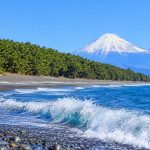
Miyazaki is one of Japan’s three great surf regions (alongside Ichinomiya in Chiba and Tokushima on Shikoku). The prefecture hosted the 2019 ISA World Surfing Games at Kisakihama (木崎浜), and world-class breaks cluster along this stretch of coast — Kisakihama, Shirahama and the Aoshima Point among them.
Why is September the real peak?
- 1. Summer southerly winds ease off, and offshore (land-to-sea) winds become far more frequent. That grooms the wave face to glass.
- 2. Tropical lows and typhoons south of Japan push long-period swell onto the coast, producing head-high to overhead surf.
- 3. The water sits around 26°C — a spring suit is enough for a full-day session.
There is an old surfing line about how “surfers smile when the typhoon comes” — this is exactly why. September is when Miyazaki’s local surf shops (HOOK, Real and others) are busiest. Beginner lessons (two hours, about ¥5,000-7,000 / US$34-47) book out fast in this month, so reserve well in advance.
An important safety note. Post-typhoon swell is a festival for experienced surfers, but the same water is genuinely dangerous for casual visitors. Every year, the cliff walks along the Nichinan Coast and the rocky reef around Aoshima produce fatalities from rogue waves. Do not let your guard down even 2-3 days after a typhoon has passed. Stay in monitored swimming areas with lifeguards on duty.
🚨 Four Things to Watch in September — Typhoons, UV, Jellyfish, Rip Currents
Four specific risks deserve extra attention in September Miyazaki.
1. What to do if a typhoon approaches. Once you are within 200-300 km of the storm, the airport, JR trains, coastal roads and outdoor resort facilities may close. During that window:
- Sections of National Route 220 along the Nichinan Coast can close.
- Takachiho Gorge boat rentals are suspended when water levels rise.
- Convenience stores and supermarkets sell out of water and instant food quickly — stock up in advance.
- Flight cancellations and diversions at Miyazaki Airport (KMI) are more frequent — do not book your outbound flight for the very last slot with no buffer.
2. UV is still summer-grade. Miyazaki’s September UV index runs 7-8 (very high). Even though the latitude is north of Okinawa, coastal reflection makes it feel harsher. Bring SPF 50+ / PA++++ sunscreen, a wide-brim hat, and UV-blocking sunglasses. Reapply frequently after being in the water.
3. Jellyfish appear from early September. These are not deadly like Okinawa’s box jellyfish, but stings still swell and hurt. Cover up with a rash guard and water leggings — that is the honest fix.
4. Rip currents are a real risk. Miyazaki’s surf coast has strong currents, and any beach without lifeguards carries elevated rip-current danger. Swim only at monitored beaches like Aoshima, Shirahama or Kisakihama. If you get caught, swim parallel to the shore rather than fighting straight back in — that is the international standard for escaping a rip.
✈️ Reaching Miyazaki from Tokyo, Osaka, Fukuoka & International Gateways
Miyazaki Airport (KMI) is a smaller regional hub, so most international travelers arrive via a domestic connection. There are three practical routes: a domestic flight from Tokyo or Osaka, a JR limited express from Fukuoka, or a short domestic hop from Fukuoka or Kagoshima.
From Tokyo (Haneda / Narita)
| Route | Time | Notes |
|---|---|---|
| JAL / ANA from Haneda | ~2h flight | Roughly hourly departures — the fastest way in. |
| Solaseed Air from Haneda | ~2h flight | Miyazaki-based airline, often price-competitive. |
| Shinkansen + JR Nichirin | ~7h30m total | Tokyo → Hakata (Nozomi, ~5h) → Miyazaki (Nichirin, ~5h30m). Long, but mostly JR Pass-covered except Nozomi. |
From Osaka (Itami / Kansai)
- JAL / ANA from Itami: ~1h15m flight, several daily departures — the fastest way from Kansai.
- Shinkansen from Shin-Osaka to Hakata + JR Nichirin to Miyazaki: About 2h30m + 5h to 5h30m. A scenic option but slower than flying.
From Fukuoka — the main international gateway for Kyushu
Fukuoka Airport (FUK) is where most international flights into Kyushu land (from Seoul, Busan, Taipei, Shanghai, Bangkok, Singapore, and increasingly Europe/US via connection). From there:
- JR Limited Express Nichirin (にちりん): Hakata → Miyazaki via Kokura and the Nippo Main Line — about 5h to 5h30m, ¥6,470 (roughly US$43) one way in reserved seating. Fully covered by the nationwide JR Pass and the JR Kyushu Rail Pass. Long but scenic, running down Kyushu’s east coast.
- Domestic flight from Fukuoka (FUK) to Miyazaki (KMI): About 45-50 minutes on JAL, ANA or Oriental Air Bridge. Convenient when JR trip time is a dealbreaker.
- Overnight bus “Fenix”: About 12 hours, ¥4,000-6,000 (US$27-40). A budget option some travelers use to save a hotel night.
Direct international flights to Miyazaki (KMI)
Miyazaki Airport has a small international terminal with limited direct routes:
- Seoul (Incheon) — Jeju Air runs 3-4 flights per week (about 1h40m). Verify schedule seasonally.
- Taipei — seasonal / charter service only.
- All other origins should route via Fukuoka, Tokyo or Osaka.
The JR Pass angle
If your itinerary already includes multiple regions of Japan, the nationwide JR Pass covers the JR Nichirin from Hakata to Miyazaki, plus the Shinkansen up to Hakata (Sakura service; Nozomi and Mizuho are excluded, but Sakura is a fine substitute). A Tokyo → Kyoto → Fukuoka → Miyazaki → Kagoshima loop is a strong 10-14 day rail route.
Getting from Miyazaki Airport into the city (Kyushu’s shortest transfer)
- 🚆 JR Miyazaki Airport Line: The airport station is directly connected to Terminal 2F. Airport → Miyazaki Station takes about 10 minutes, ¥360 (roughly US$2.40), running every 15-30 minutes.
- 🏖️ Seagaia Resort: About 20 minutes / 15 km by car from the airport. Taxi is ¥4,500-5,000 (US$30-34). The resort also runs a free shuttle by reservation.
- 🚗 Rental car: Pickup counters are lined up right outside the terminal. A car is basically mandatory if you plan to drive the Nichinan Coast, visit Takachiho, or reach Ebino.
⚠️ Miyazaki’s quiet superpower: Kagoshima Airport sits 30 km from the city, but Miyazaki Airport is 10 minutes from downtown and 20 minutes from Seagaia. Even a late-arrival flight leaves you plenty of time for check-in and dinner. International visitors often overlook this — it is the shortest airport-to-resort transfer of any major Kyushu destination.
👉 Reserve a rental car in English: GO!GO!TOUR Miyazaki rental cars
🗺️ 4-Day Miyazaki Itinerary — City, Nichinan Coast, Takachiho, Seagaia
The classic Miyazaki independent-traveler itinerary is a 4-day loop: city center → Nichinan Coast drive → Takachiho Gorge → Seagaia Resort. In September, the key is to swap outdoor and indoor plans flexibly based on the daily typhoon forecast.
Day 1 — Arrival → Miyazaki city (Jingu · Heiwadai Park · Nishitachi)
- 12:00 Arrive at Miyazaki Airport (KMI) — via Fukuoka connection or direct from Tokyo/Osaka.
- 13:00 JR Airport Line 10 minutes → Miyazaki Station, hotel check-in.
- 14:30 Miyazaki Jingu (宮崎神宮) — a high-ranking Shinto shrine dedicated to Emperor Jimmu, the legendary first emperor of Japan.
- 16:00 Heiwadai Park (平和台公園) — home to the 1940 “Tower of Peace” (about a 30-minute walk from the shrine).
- 19:00 Dinner in Nishitachi (西橘), the main nightlife district — try chicken nanban (Miyazaki’s signature fried-chicken dish with tartar sauce) or Miyazaki wagyu beef.
Getting around: Skip the rental car on Day 1 — the city is easier by JR and taxi. If you are staying at Seagaia, the resort shuttle is your friend.
Day 2 — Nichinan Coast (日南海岸) drive (Aoshima · Udo · Moai)
- 08:00 Pick up rental car (airport or city branch).
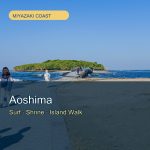
- 09:00 Aoshima Shrine (青島神社) — on a small island connected by a bridge, ringed by the “Devil’s Washboard” (鬼の洗濯板) rock formations. A famous spot to pray for love and relationships.
- 11:00 Coffee stop at Horikiri Pass (堀切峠) — palm-lined coastal viewpoint, great for photos.
- 12:00 Udo Jingu (鵜戸神宮) — a vermilion shrine tucked inside a cliff-side cave. Try tossing an “undama” luck-stone into the target on the rocks below.
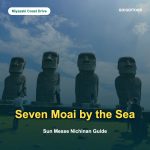
- 14:00 Sun Messe Nichinan (サンメッセ日南) — the only site in the world with seven officially-sanctioned Moai replicas approved by Easter Island.
- 16:00 Optional: Obi Castle (飫肥城) samurai town.
- 19:00 Return to Miyazaki city for dinner.
Getting around: Total drive is about 130 km / 6-8 hours. Start early — the afternoon sun angle is better for photos on the coast heading south. An ETC card rental for the tolls is worth it.
Day 3 — Takachiho (高千穂) Gorge (mythology village · kagura)
- 07:00 Drive via the Kyushu Chuo Expressway — about 3 hours one way.
- 10:00 Arrive at Takachiho Gorge. Rent a rowboat (¥5,100 per boat / 30 minutes / advance reservation strongly recommended — roughly US$34) to row right up to the base of Manai Falls (真名井の滝).
- 12:00 Lunch — local nagashi somen (chilled noodles flowing down bamboo).
- 13:30 Amano Yasukawara (天安河原) — the mythological cave where the sun goddess Amaterasu is said to have hidden.
- 15:00 Takachiho Shrine (高千穂神社).
- 20:00 Yokagura (夜神楽) performance — a nightly abridged version of the traditional sacred dance-drama that recounts local mythology (¥1,000, 20:00-21:00 daily at Takachiho Shrine).
- Stay overnight in Takachiho, or drive 3 hours back at night.
Getting around: If a 6-hour round-trip drive feels heavy, spend one night at a Takachiho minshuku. In the mountains, daytime hits ~23°C but dawn drops to ~12°C — pack a light long sleeve and fleece.
Day 4 — Seagaia Resort (golf / water park) → airport
- 09:00 Check out → Seagaia Resort (20 minutes by car).
- 10:00 Half-round of golf at Tom Watson Golf Course (9 holes, 3 hours, reservation only) or spend the morning at the resort water park.
- 13:00 Buffet lunch at the resort.
- 14:30 Head to Miyazaki Airport (30 minutes).
- 16:00+ Fly home or onward.
Getting around: Golf bags can be loaded onto the resort-airport shuttle, so club rental is a solid choice if you don’t want to fly with your own set.
👉 Explore more Japan activities: GO!GO!TOUR activity catalog
👕 What to Pack for September in Miyazaki — Scene by Scene
The packing challenge in September is Miyazaki’s dual climate: high-summer at the coast, early autumn in the Takachiho mountains. Layering is the answer.
| Scene | Tops | Bottoms | Essentials |
|---|---|---|---|
| Coastal resort (Miyazaki city · Nichinan · Seagaia) |
T-shirt + linen overshirt | Shorts / light dress | SPF 50+, sunglasses, wide-brim hat, light cardigan for evenings |
| Water activities (surf · SUP · snorkel) |
Rash guard (long sleeve preferred) | Water leggings | Spring suit (rentable at surf schools), water shoes, dry bag |
| Takachiho / Ebino highlands | Long-sleeve base layer + light fleece / packable down | Light long pants | Rain jacket, hiking shoes, headlamp (for yokagura night walk) |
| City sightseeing (shrines · Heiwadai · Nishitachi) |
T-shirt + light shirt overlay | Light long pants / jeans | Folding umbrella, wet wipes, comfortable walking shoes |
Common essentials for everyone
- 🌂 Ultra-light rain poncho — convenience-store umbrellas snap in typhoon winds.
- 💧 500ml+ of water on you at all times and an oral rehydration drink (Japan’s OS-1 is easy to find at pharmacies); 1L+ for water activities.
- 🦟 Insect repellent — mosquitoes stay active through late September.
- 🕶 UV-blocking sunglasses — coastal reflection is strong.
🍶 September Events & Seasonal Food in Miyazaki
Key September events in Miyazaki (2026)
- UMK SEAGAIA JAM NIGHT 2026 — September 12 (Sat) at the Seagaia Event Square. An outdoor jazz and rock festival, descendant of the historic “JAZZ IN” series.
- Aoshima Gourmet Meguri (青島グルメぐり) — Sep 27 to Oct 19. A ¥2,000 ticket (5 × ¥500 coupons) lets you sample 23 participating shops around Aoshima. Pair it with a visit to Aoshima Shrine.
- Takachiho Yokagura (夜神楽) — nightly 20:00-21:00 (¥1,000).
- Note: The Miyazaki Jingu Grand Festival is in late October, and the Dunlop Phoenix golf tournament is in late November — no September events.
What to eat while you are here
- Miyazaki Wagyu (宮崎牛): A5 black-hair wagyu, three-time overall champion at the “Wagyu Olympics” (2007, 2012, 2017). “Miyachiku (ミヤチク)” direct restaurants serve full courses at ¥6,000-12,000 (US$40-80).
- Chicken Nanban (チキン南蛮): Miyazaki’s local dish — fried chicken bathed in sweet vinegar sauce and topped with tartar. Invented in Nobeoka. The original at “Ogura (おぐら)” starts around ¥1,100 (US$7-8).
- Kanpachi and tuna sushi: The Kuroshio fishing grounds land some of Japan’s best. Try “Kaisen Ichiba Hinode” near Miyazaki Port.
- Imomaki (芋巻き): A tropical sweet potato mochi, a genuine Miyazaki specialty.
- New-crop shochu (新焼酎) season: Miyazaki is Japan’s largest producer of honkaku shochu (traditional distilled spirit, usually from sweet potato or barley). Famous labels like “Kuro Kirishima (黒霧島)” and “Daiyame (だいやめ)” run “new shochu fairs” at izakaya in September and October.
📅 When Exactly to Go — Avoid Silver Week
- Early September: Late August through the first week of September is Japan’s summer-school-holiday tail-end, so flights and hotels stay pricey. Prices ease sharply from around September 5th.
- Mid-September weekdays: Flights and hotels are 30-40% cheaper than July or August. Offshore-wind probability climbs for surfers. This is the value sweet spot for southern Kyushu.
- Silver Week (Sep 19-23, 2026): Japan’s autumn holiday cluster — Respect for the Aged Day and the Autumn Equinox. Domestic travel spikes, and Miyazaki (with its smaller seat supply) sees particularly sharp price jumps. Book 3+ months ahead if your dates fall here.
- Late September, post-Silver Week (from Sep 24 onward): Typhoon risk drops, prices drop, and the weather is genuinely pleasant. Note that Japanese school excursion groups also start booking now, so hotels can stay firm — reserve early.
The overall winner is a mid-September weekday, or the weekdays right after Silver Week (from Sep 28). You still get surf, the Nichinan Coast and Takachiho at their best, with flights and hotels near the year’s low point.
Frequently Asked Questions (FAQ)
Q1. How dangerous are typhoons in Miyazaki in September?
Approach frequency is roughly the southern-Kyushu average (2-4 per year with 30-40% falling in September), but Miyazaki’s east-coast location means the pattern shifts between “direct wind hit” and “lee-side torrential rain” depending on the storm track. Airport, JR and coastal road closures happen fairly often. Line up flexible-cancellation flights, travel insurance with trip disruption cover, and a rental-car company that waives fees on flight-cancellation certificates. From around September 21st onward, conditions settle down noticeably.
Q2. Can beginners surf in Miyazaki?
Yes. Miyazaki is one of Japan’s three great surf regions, and local surf shops (HOOK, Real and others) run beginner lessons year-round. A two-hour lesson runs ¥5,000-7,000 (US$34-47) including board, wetsuit and instruction, typically at beginner-friendly spots like Aoshima or Shirahama. September has the highest offshore-wind probability of the year, which is why it is the true peak — reserve at least two weeks in advance. Beginners should always start with a school, and post-typhoon waves are off-limits for anyone still learning.
Q3. How do I reserve a boat at Takachiho Gorge?
Two tracks: online advance reservation (up to 3 days in advance) plus same-day numbered tickets handed out on-site from 7:00 am. During Silver Week, weekends and late September, morning sell-outs are common, so use the Takachiho Tourism Association’s official website to book in advance. A boat costs ¥5,100 (about US$34) for 30 minutes, up to 3 passengers. Boats are suspended when water levels rise after typhoons — check the official social media the day before you go.
Q4. How long from Miyazaki Airport to a resort?
This is genuinely the shortest airport-to-resort transfer in Kyushu. Airport → JR Miyazaki Station takes 10 minutes (¥360, roughly US$2.40) · Airport → Seagaia Resort takes 20 minutes (taxi ¥4,500-5,000, US$30-34). Kagoshima Airport is 30 km outside the city; Fukuoka Airport is close to downtown but Kyushu’s southern half is still an hour+ away by shinkansen. Miyazaki’s late-arrival friendliness — dinner, check-in, all still doable — is one of its underrated strengths.
Q5. Can you really swim in Miyazaki in September?
Water temperature is not a problem. The sea off Miyazaki sits at 26-27°C in September — still ideal for swimming, SUP and snorkeling. However, jellyfish (kurage) start appearing from early September, so a rash guard and water leggings for coverage are smart. Because the surf coast has strong currents, rip-current incidents are a real risk — stick to monitored beaches like Aoshima, Shirahama and Kisakihama. Do not let your guard down for 2-3 days after a typhoon, and avoid cliff walks and reef zones during that window.
Q6. Miyazaki vs Kagoshima — which is better in September?
It depends on what you want. Surfing, resort golf, a quieter subtropical vibe favors Miyazaki. Sakurajima volcano, Ibusuki sand baths, Kirishima Shrine, and more flight options favors Kagoshima. On sheer access, Miyazaki’s 20-minute airport-to-resort hop wins outright, but Kagoshima has more direct international flights (especially from Korea) and generally cheaper fares. Repeat visitors often combine both with an open-jaw ticket: fly into Kagoshima, out from Miyazaki (or vice versa).
Q7. What are the key packing points for September Miyazaki?
The core rule is “T-shirts on the coast, light long sleeves in Takachiho“. Miyazaki city, Nichinan Coast and Seagaia are comfortable in a T-shirt plus linen overshirt, but once you climb to Takachiho Gorge (elevation 350 m), daytime is ~23°C and dawn drops to ~12°C, so a light fleece or packable down vest matters. For water activities, layer up with a rash guard and water leggings (jellyfish + UV protection in one). Add an ultra-light rain poncho for typhoon squalls and a headlamp for the yokagura evening walk.
Q8. What is the smoothest way to reach Miyazaki from abroad?
For most international travelers, the answer is: fly into Tokyo (Haneda / Narita), Osaka (Kansai / Itami) or Fukuoka, then connect. From Tokyo it is a 2-hour flight on JAL, ANA or Solaseed Air. From Osaka it is 1h15m on JAL/ANA from Itami. From Fukuoka — the main international gateway to Kyushu — you have two choices: the JR Nichirin limited express (~5-5h30m, ¥6,470 / US$43, covered by the JR Pass) or a 45-50 minute domestic flight. Direct international flights to Miyazaki itself are limited (Jeju Air from Seoul 3-4x weekly, and occasional Taipei charters), so a connection is the standard play.
Wrapping up
September in Miyazaki lives at an unusual balance point — peak typhoon season, peak surf season, and the last of summer resort weather all in one month. The 370 mm of rain has weight, but 156 hours of sunshine keep the daylight bright, and 26°C water, offshore surf winds, the Nichinan Coast palm trees and the mysterious Takachiho Gorge all deliver the essence of southern Kyushu at once. Manage the typhoon risk with flexible bookings and simple safety practices, and you unlock a value-priced southern Kyushu escape with the shortest airport-to-resort transfer in the region.
Miyazaki September checklist
- Avg 24.7°C / high 28.5°C — still swimmable
- Rainfall 370 mm (year’s 2nd-highest) / sunshine 156h — “typhoon squalls, sun in between”
- Kyushu’s east coast, directly exposed to typhoons — book flexible
- Real surf peak (offshore + long-period swell) — reserve schools 2 weeks ahead
- UV 7-8 · jellyfish · rip currents — rash guard, monitored beaches only
- Takachiho mountains — light long sleeves + fleece, boat reservation in advance
- Access: Haneda 2h, Itami 1h15m, JR Nichirin from Hakata ~5-5h30m (¥6,470 / US$43)
- Airport → resort: 20 min — Kyushu’s shortest transfer
- Avoid Silver Week (Sep 19-23) → mid-September weekdays or right after are best
📌 Planning Your Miyazaki Trip with GO!GO!TOUR
Miyazaki’s surf, the Nichinan Coast drive, Takachiho Gorge and the Seagaia resort — southern Kyushu really only asks two things of you: a bit of homework, and a flexible itinerary. GO!GO!TOUR handles the logistical side in English so first-time visitors can spend more energy on the actual trip.
- 🚗 Compare and book a Miyazaki rental car — English booking, airport pickup, and English-speaking support on the ground in Japan.
Climate figures in this article are based on the Japan Meteorological Agency (JMA) Miyazaki Observatory 1991-2020 climatological normals. Typhoon, flight and event information varies with season and operator schedule. Fare and price ranges are indicative for September 2026 — always check the latest information on the operator’s official website before booking.