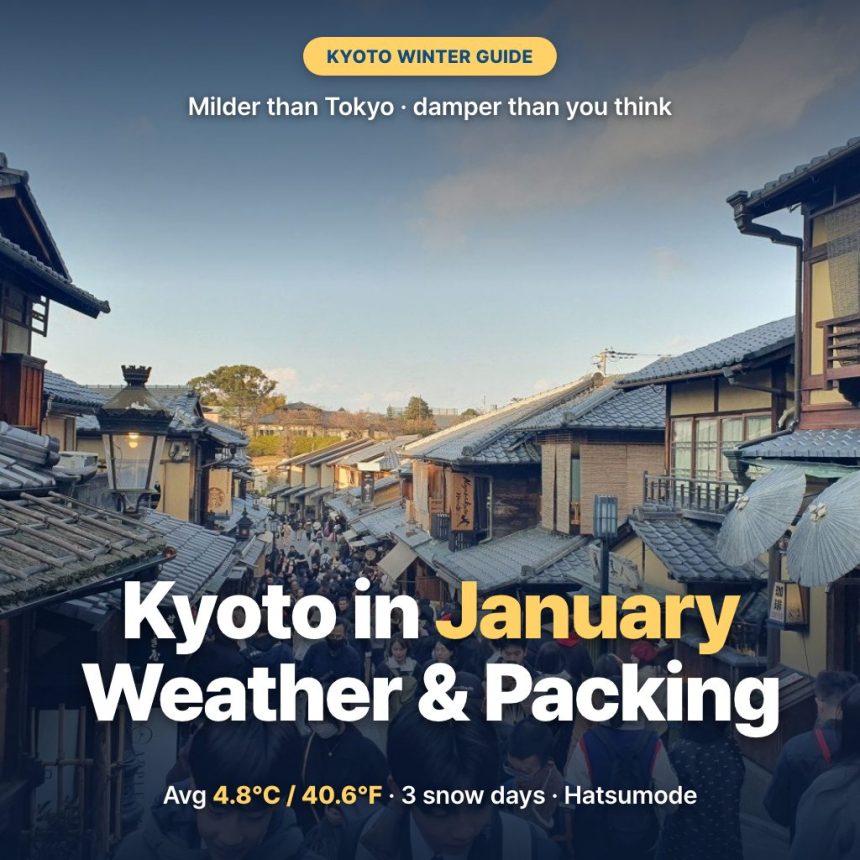
Kyoto in January — Milder than Tokyo, but the basin damp still bites
If you are flying into Kansai this January, one number matters more than the “average temperature” you googled: humidity.
Kyoto sits in a mountain basin, so the same 40°F feels colder than the same reading in Tokyo, Osaka or even Nagoya. The moisture creeps in through your coat around dusk, especially inside temple grounds where the stone floors hold the cold.
This guide is written for travelers coming from North America and Europe who already know Kyoto is beautiful in winter — but want the practical layer: what to pack, whether you will actually see snow, how packed Hatsumode really gets, and which days to fly for the lowest fares.
Getting around greater Kansai (Osaka, Kyoto, Hyogo) is easiest with a car in January when trains get slammed by New Year traffic. Check availability at GO!GO!TOUR Kansai rental cars (Osaka · Kyoto · Hyogo) before you fly.
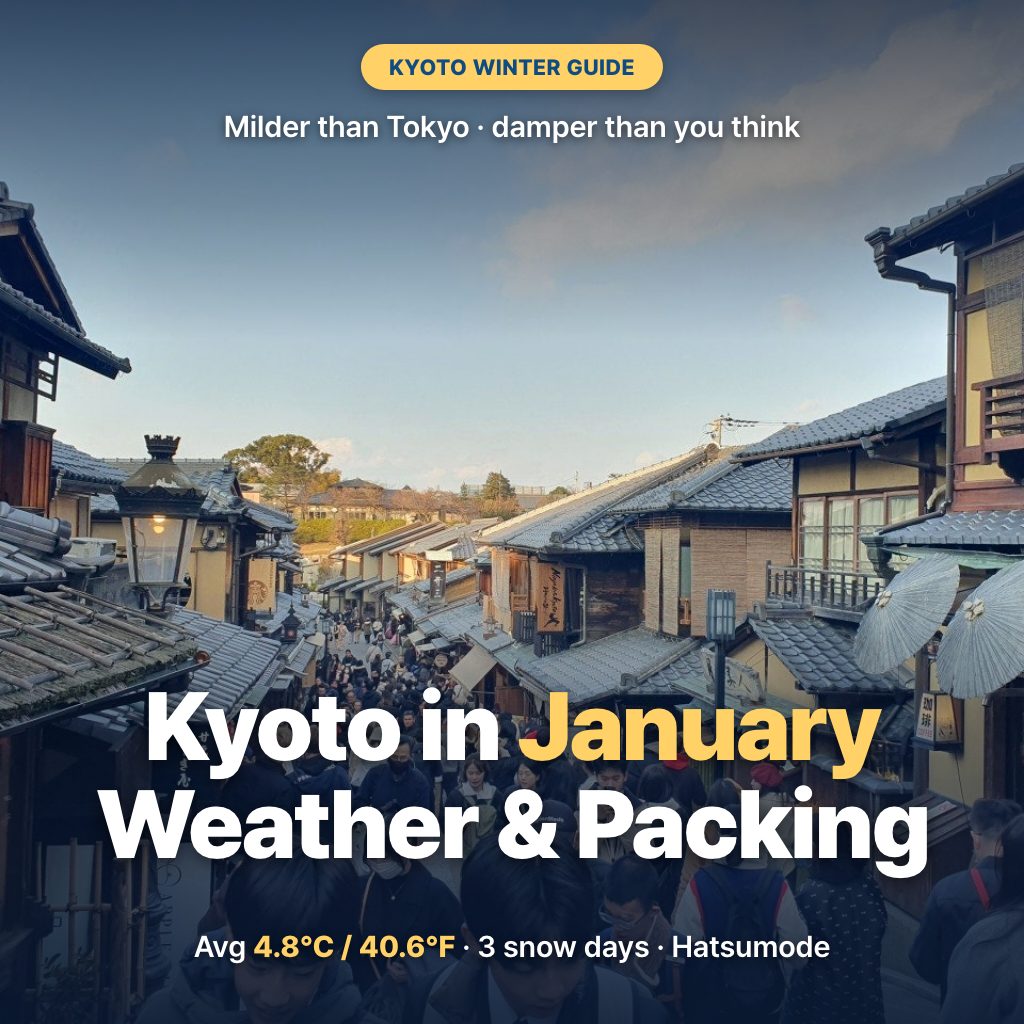
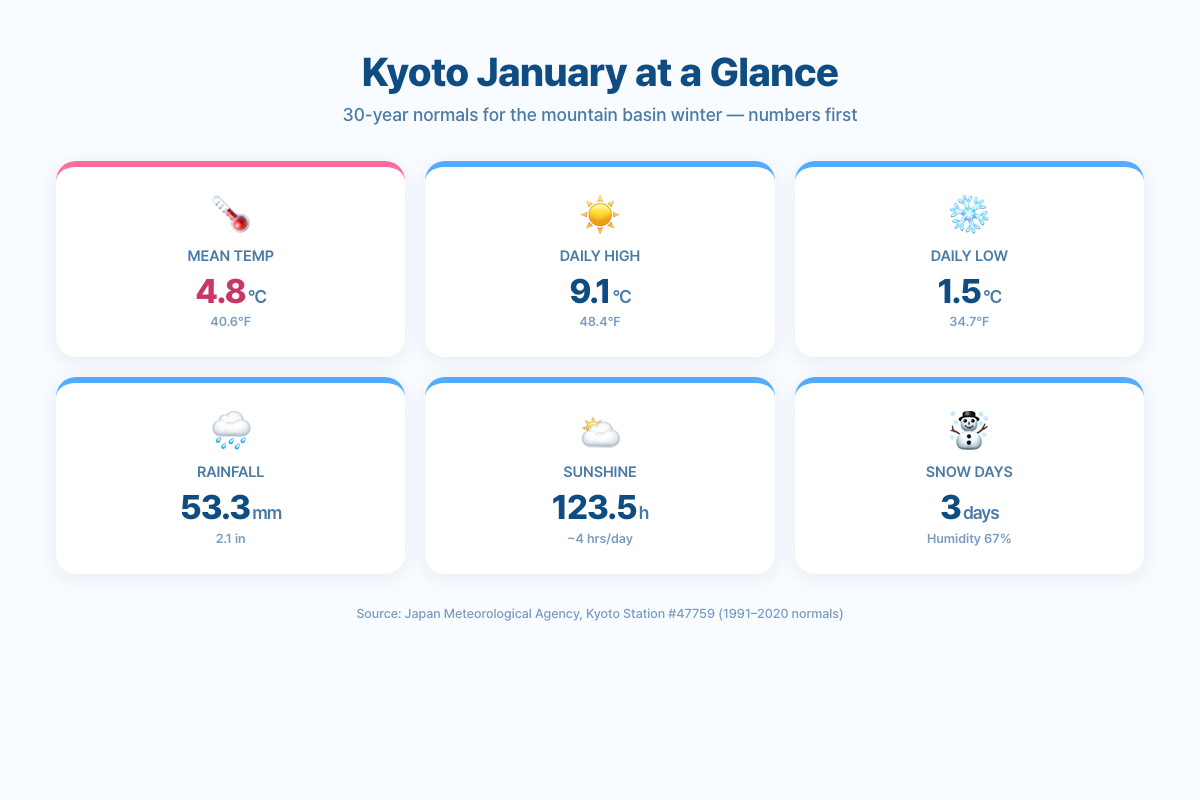
Kyoto January weather at a glance
These are the official 30-year normals (1991–2020) from the Japan Meteorological Agency, Kyoto station #47759.
| Metric | Kyoto January normal | Fahrenheit |
|---|---|---|
| Mean temperature | 4.8°C | 40.6°F |
| Average daily high | 9.1°C | 48.4°F |
| Average daily low | 1.5°C | 34.7°F |
| Rainfall | 53.3 mm | 2.1 in |
| Sunshine hours | 123.5 hrs | ≈4 hrs/day |
| Relative humidity | 67% | — |
| Snow days | 3 days | — |
On paper this looks mild — warmer than New York or Chicago in January by a wide margin.
But the basin effect matters. Radiational cooling at dawn (roughly 7–9 a.m.) can drop the city center 1–2°C (2–4°F) below those averages, and the 67% humidity means it feels considerably colder than the same temperature in, say, Denver.
January and February are the coldest months of the Kyoto year.
Does it actually snow in Kyoto in January?
Short answer: occasionally, but rarely enough to accumulate downtown.
The 3-day snow average from JMA includes flurries that melt on contact. The Kyoto city tourism board’s official English guide states plainly that “snow falls occasionally but accumulates only rarely.”
When a cold front does hit, downtown can pick up a few centimeters, but the reliable snowscape shots — the ones you have seen on Instagram — mostly come from northern Kyoto (Rakuhoku): Kifune Shrine, Kurama, and Ohara. These sit at higher elevation, run 2–4°C colder than the city, and see meaningful accumulation several times each January.
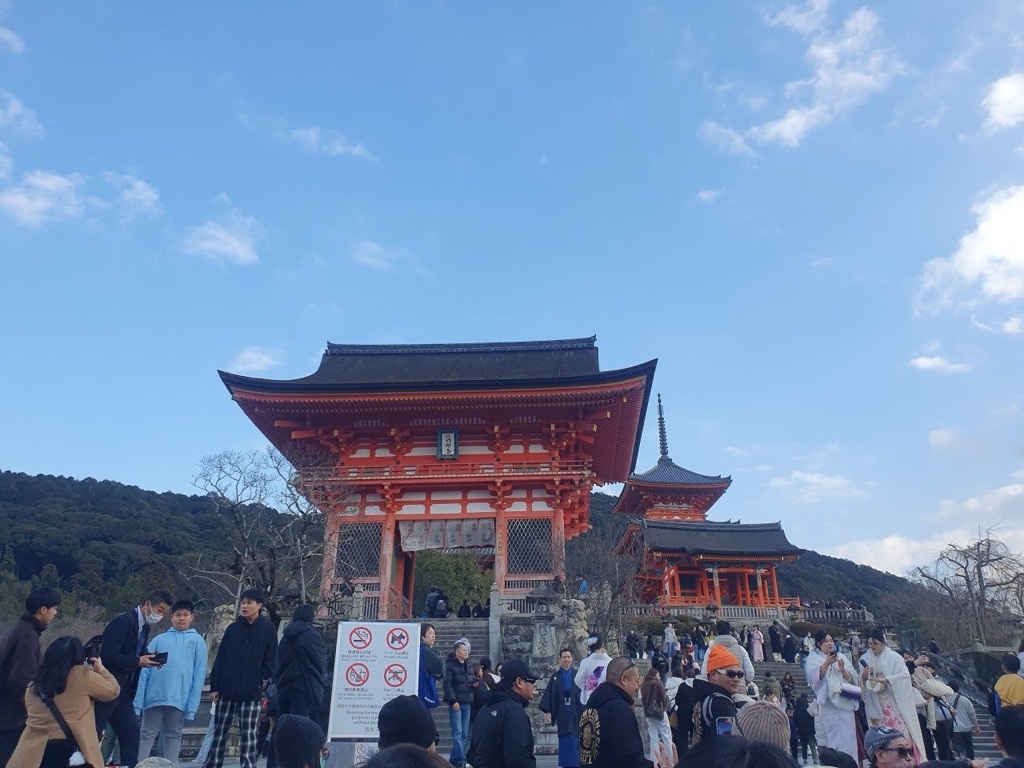
If getting a snowy shrine photo is a priority for your trip, budget one day for a Rakuhoku excursion. The famous Kifune Shrine snow illumination happens on select evenings — check the shrine’s official schedule before you go.
Warning: those roads get icy fast. Pack proper footwear and add buffer time to your itinerary.
What to pack — the practical layering system
Kyoto trains, hotels and shops run heat aggressively. If you show up with a single heavy parka you will be roasting indoors within ten minutes.
The system that actually works for winter Kyoto:
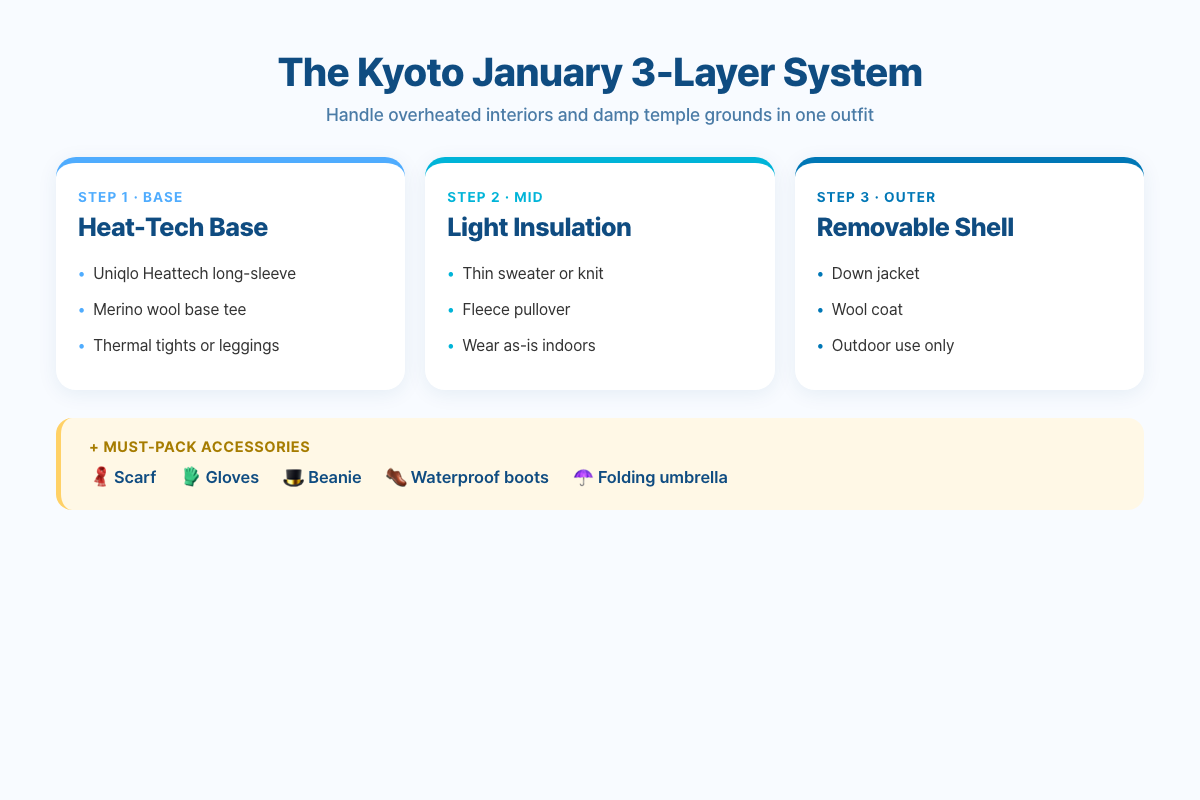
- Base: Uniqlo Heattech long-sleeve (or Merino wool base) — thin, wicks sweat
- Mid: Light sweater or fleece — this is what you wear indoors
- Outer: Down jacket or wool coat — outdoor only, easy to remove
- Accessories: Scarf, gloves, beanie — add hand warmers for Rakuhoku day
Footwear matters more than most guides admit. Temple grounds have stone stairs and wooden verandas that get slick with morning frost. Waterproof boots with real grip are worth the space in your suitcase, especially if you plan to visit Kiyomizu-dera or Fushimi Inari at dawn.
Also non-negotiable: a folding umbrella. With 53.3mm of rain across roughly 9–10 rain days, a 3–4 day trip has a high probability of catching at least one wet day.
Skip the cotton tourist “I heart Kyoto” hoodie you were tempted to buy at the airport. Cotton retains moisture, which is exactly the wrong property here.
Hatsumode — the biggest month at Kyoto’s shrines
Hatsumode (the New Year’s first shrine visit) turns Kyoto into a completely different city for the first week of January.
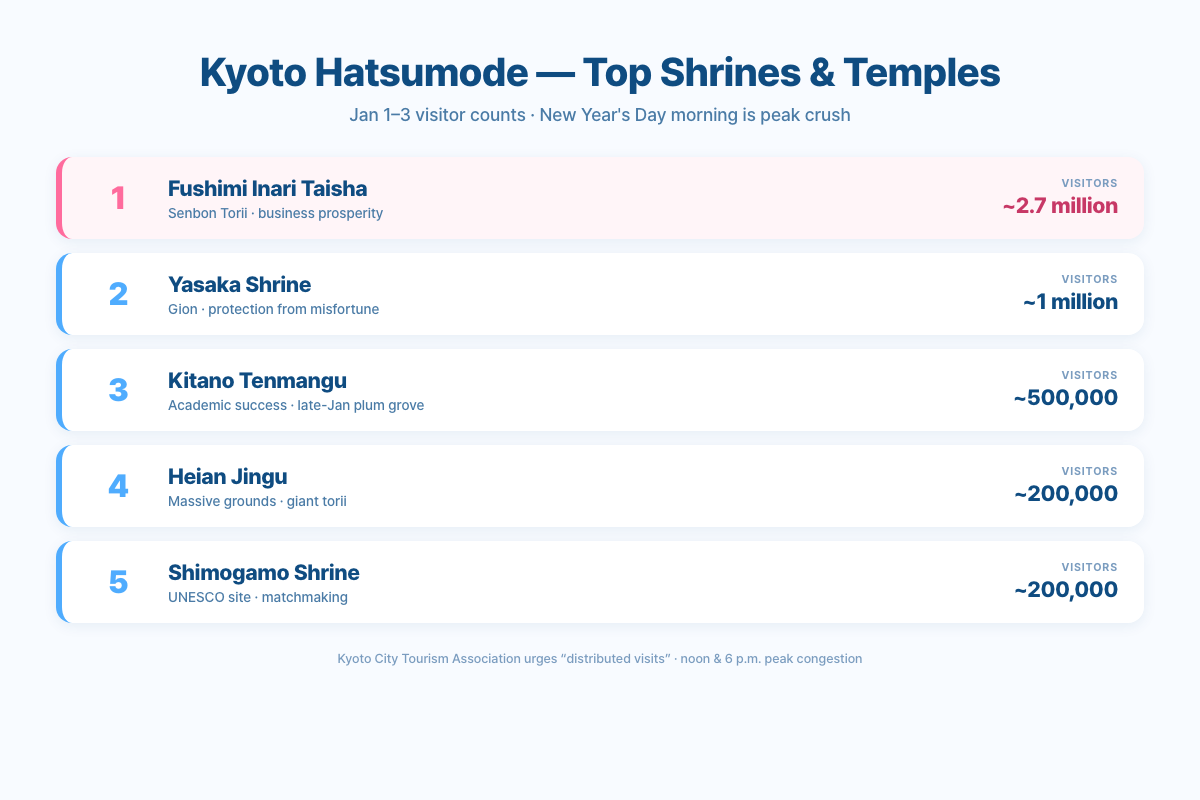
■ Top Hatsumode spots — visitor numbers
| Shrine / Temple | January visitors | Note |
|---|---|---|
| Fushimi Inari Taisha | ≈2.7 million | Senbon Torii, business prosperity |
| Yasaka Shrine | ≈1 million | Gion, protection from misfortune |
| Kitano Tenmangu | ≈500,000 | Academic success, plum grove opens late Jan |
| Heian Jingu | ≈200,000 | Massive grounds, giant torii |
| Shimogamo Shrine | ≈200,000 | UNESCO site, matchmaking |
| Kiyomizu-dera | Top 10 | Shushoe rite Jan 1–7 |
Fushimi Inari alone pulls in 2.7 million visitors in the first week. The city government publishes an official “distribute your visit” advisory — this is not exaggeration.
Peak crush is January 1 morning. If you land on that date, expect 60–90 minute waits at major shrines.
■ 2026 confirmed traditional events
- Jan 3 (Sat) 1:00 p.m. — Yasaka Shrine “Karuta Hajime Shiki”: Kimono-clad “Karuta Princesses” perform a classical hyakunin isshu card match
- Jan 4 (Sun) 1:30 p.m., ~90 min — Shimogamo Shrine “Kemari Hajime”: Heian-era courtly ball game with players in period costume shouting “Arya” and “O”
- Jan 8–12 — Kyoto Ebisu Shrine “Toka Ebisu Taisai”: Jan 10 is the main day, prayers for business prosperity
- Jan 18 (Sun) 9:00 a.m.–3:30 p.m. — Sanjusangendo “Toshiya” archery event & “Yoji no Okaji” ritual: About 2,000 newly-of-age women archers participate. Sanjusangendo is free to enter on this day. The Yoji no Okaji uses willow branches to sprinkle holy water for health
These are not tourist reenactments — they are living rituals that have run for centuries. Show up early, stay quiet, and photography rules vary by event (check on-site signage).
Plum blossoms — is January too early?
Mostly yes. The famous Kitano Tenmangu plum grove doesn’t open to the public until around February 1, and peak bloom runs February 13 through early March.
Late January visitors can spot a few early-blooming trees — “Kanko-bai” and “Wakon-bai” varieties — but the full grove experience requires a February return trip.
For 2026, the shrine is planning a special art installation: photographer Mika Ninagawa × EiM collective’s “Garden of Light and Flowers,” featuring roughly 1,200 crystals hung from plum branches. Timing follows the plum grove opening, so watch the official schedule.
The San-ga-nichi shutdown — the trap for foreign visitors
This is the single most common mistake first-time January visitors to Japan make: January 1–3 (san-ga-nichi) are Japan’s biggest holidays, and independent restaurants, ramen shops, izakayas and small cafes largely shut down.
Every year travelers report wandering for hours at dinnertime because they assumed a big city like Kyoto would have plenty open.
What stays open reliably:
- Chain cafes and fast food (Starbucks, McDonald’s, Yoshinoya)
- Convenience stores (7-Eleven, FamilyMart, Lawson)
- Department store restaurant floors and hotel restaurants (reserve ahead)
Kyoto media publishes annual “open during san-ga-nichi” lists. If you are visiting Jan 1–3, book dinner reservations before you fly. Do not wing it.
The Kyoto Tourism Association also notes that peak crowding hits around noon and 6 p.m. Shifting your day one hour earlier cuts wait times significantly.
When planning your route, our Kyoto model course guide maps out days that dodge the san-ga-nichi crush.
Flights and hotels — Jan 4 is the price cliff
The strongest budget lever for January Kyoto travel is your departure date.
| Dates | Airfare trend | Conditions |
|---|---|---|
| Dec 29 – Jan 3 (Japan New Year) | Peak season | Top 3 Japanese holiday, most independent shops closed |
| Jan 4 onward – before Lunar New Year | Sharp drop | Low season begins, shops normal |
| Mid-Jan through late Feb | Yearly low | Except plum blossom peak and Lunar New Year |
Shifting your departure by a single day — from Jan 3 to Jan 4 — often cuts fares in half and dramatically widens your restaurant options.
Best value combo: fly out Jan 4 or later on a Tuesday or Wednesday, build in a Rakuhoku day for snow photos, keep the trip to 3–4 nights.
Kansai Airport to Kyoto — winter transit tips
Kansai International Airport (KIX) to central Kyoto is about 75–80 minutes on the Haruka limited express train.
Winter mornings and evenings occasionally see delays from heavy rain, strong winds, or (rare) snow. If you arrive during san-ga-nichi, prep two things in advance:
- Confirmed transport plan — Haruka reserved seat or limousine bus
- A vetted list of restaurants open your first night
Traveling in a group of 3+ with luggage, or planning to hit Osaka and Hyogo alongside Kyoto? A rental car often beats juggling multiple JR passes. Check Kansai rental cars (Osaka · Kyoto · Hyogo) for pickup right at KIX.
One caveat: Rakuhoku mountain roads and Kyoto’s narrow alley grids can stress first-time drivers in Japan. If you are sticking to central Kyoto, Haruka + subway is usually more relaxed.
FAQ — Kyoto in January
Q. How cold does Kyoto actually feel in January?
A. Averages read mild (4.8°C / 40.6°F), but the basin humidity (67%) and morning radiational cooling make it feel roughly like a damp 30°F day in New York or London. Layer light and stay dry — do not overpack a Chicago-style parka.
Q. Will I see snow in Kyoto?
A. Downtown, probably not much — 3 snow days average and most don’t accumulate. For real snowscapes, add a day trip to Rakuhoku (Kifune, Kurama, Ohara), which sits 2–4°C colder and gets meaningful snow several times each January.
Q. Should I avoid January 1–3?
A. Only if you dislike crowds and depend on independent restaurants. If you want to experience Hatsumode — the busiest, most alive week at Japanese shrines — it’s spectacular. For food-focused trips, arrive January 4 or later.
Q. Is Kyoto January family-friendly?
A. Yes, with proper layering. Kids feel dawn cold more sharply, so pack thicker base layers, warm socks, and hand warmers. Waterproof shoes and a compact umbrella are essentials for the whole family.
Q. When are flights to Kansai cheapest in January?
A. First and second week of January, Tuesday or Wednesday departures, avoiding the Dec 29–Jan 3 New Year peak. Fares can drop 40–50% versus the holiday window.
Bottom line — Beat the damp cold and dodge the shutdown, and January Kyoto is unbeatable value
One line summary: “January Kyoto is milder than Tokyo but damper — pack layers, arrive January 4 or later, book dinner ahead, and add one Rakuhoku day for snow.”
Quick checklist to keep in your phone notes:
- Layers: Heattech base + fleece mid + down/wool outer. Scarf, gloves, waterproof boots, folding umbrella
- Snow shots: Downtown low odds → build in a Rakuhoku (Kifune/Kurama/Ohara) day
- Dates: Jan 4+ Tue/Wed departures for cheapest fares and open restaurants
- Meals: San-ga-nichi = reserve ahead only; chains/konbini/depachika reliable
- Rakuhoku day: Budget extra time for icy roads and mountain transit
January Kyoto is a paradox — festival crowds and hushed frost within the same city walls. Pick which side of it you came for, then plan the trip around that. That’s how you make winter Kyoto pay off.
Plan your Kansai trip with GO!GO!TOUR
Kyoto, Osaka, and Hyogo travel prep — all in one place.
- Kansai rental cars (Osaka · Kyoto · Hyogo) — pickup at KIX, spacious models for winter road trips
- Kyoto model course — post-san-ga-nichi itineraries
- Hotel booking — January prices swing wide, book early
- Japan eSIM — activate on landing, essential for maps and translation
- Discount coupons — rental car and activity savings

Have a warm, low-stress Kyoto winter — see you on the other side of Fushimi Inari.