Four Japan Destinations — The Fastest Way to Choose Is to Split Them by Budget and Vibe
“I want to travel to Japan — where should I go?” is one of the questions we hear most often. In practice, most first-time and second-time visitors are choosing between the same four cities: Tokyo, Osaka, Fukuoka, and Okinawa.
The catch is that these four destinations offer completely different kinds of trips. Tokyo is urban trend-hunting, Osaka is food plus easy day trips, Fukuoka is value plus hot springs, and Okinawa is beaches and driving. Picking based only on “I heard X is nice” is how travelers end up in a city that doesn’t match their style.
This article is the same “4-city profile + 3-night 4-day budget for 2” comparison we walk through with customers when they ask us where to go first. It should be especially useful if you are choosing your first Japan trip, or you have already been once and want a different region for the next one.
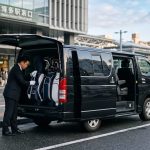
GO!GO!TOUR is an Okinawa specialist, and we also handle rental cars across Japan. If driving yourself isn’t ideal — larger groups, families, seniors — we can also help arrange a private charter car (chauffeured car service) through our partner network. Tell us the region, party size, and travel style, and we’ll match the transport option that fits. Start with our activity category page to see what we currently handle.
The Comparison at a Glance — 3 Nights, 4 Days, 2 Adults
Here is the full side-by-side. Prices are approximate 2-person totals in US dollars, blending peak and off-peak averages. Flight time is shown as a Seoul (Incheon) departure example — actual duration will vary with your origin.
| Item | 🗼 Tokyo | 🏯 Osaka | 🍜 Fukuoka | 🏝 Okinawa |
|---|---|---|---|---|
| Main Vibe | Trends, shopping food, theme parks |
Food, Kyoto day trip Universal Studios |
Value, food nearby hot springs |
Ocean, resort scenic drive |
| Flight time (from Seoul) | ~2h 20m | ~1h 40m | ~1h 20m | ~2h 15m |
| Getting around | Subway, transit | Subway, day passes | Bus, subway (walkable) |
Rental car essential |
| Flights (2 pax) | US$370-520 | US$300-445 | US$220-370 | US$300-445 |
| Hotel (3 nights) | US$335-520 | US$260-410 | US$185-300 | US$220-445 |
| Food | US$185-260 | US$165-240 | US$150-210 | US$165-225 |
| Local transport | US$60-90 | US$52-90 | US$37-60 | US$110-165 (car + fuel) |
| Sightseeing, entry | US$110-185 | US$90-150 | US$60-110 | US$60-135 |
| Extras, shopping | US$75-110 | US$60-90 | US$52-75 | US$37-75 |
| Total for 2 | US$1,150-1,650 | US$925-1,370 | US$740-1,110 | US$890-1,410 |
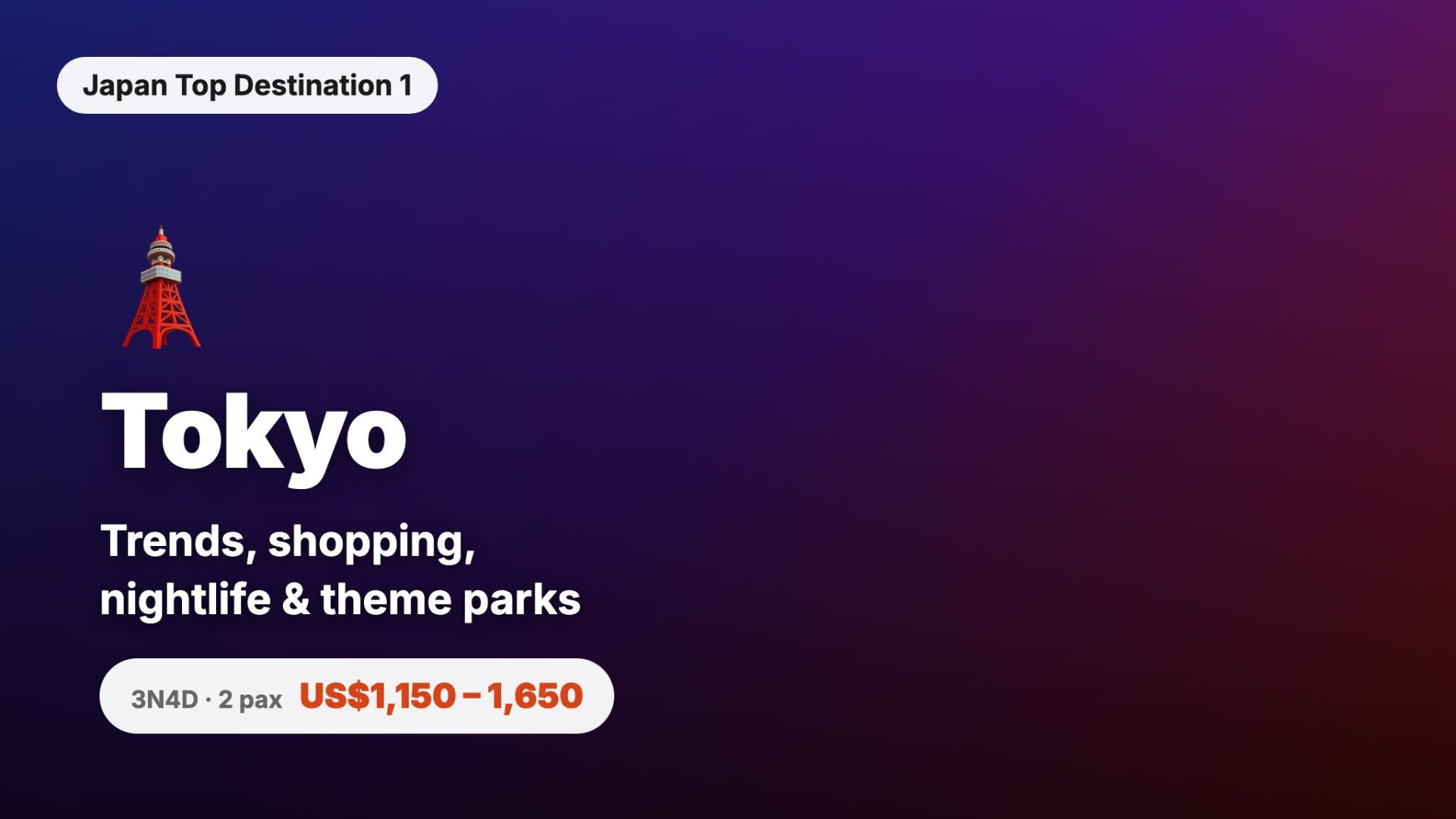
🗼 Tokyo — The Global Megacity Where Japan’s Latest Trends Land First
Tokyo is the city where you can feel “the latest current of Japan” at full concentration. Between Shibuya, Shinjuku, Ginza, Asakusa, and Odaiba, you can stay inside the city for four days and still feel rushed — the sightseeing, food, and shopping are all stacked densely in the same core.
Best if you are into:
- Trends, shopping, night views, and theme parks (Tokyo Disney, Ghibli Museum)
- Urban travel — the “walk, buy, eat” style
- Anime, idol, or subculture pilgrimages
Things to watch for:
- Hotels and general prices are the highest of the four. Central Shinjuku or Shibuya rooms routinely hit US$150+ per night in peak season.
- Subway lines are dense and confusing. First-time visitors often burn out on multiple daily transfers.
- Tokyo Disneyland and DisneySea add roughly US$90-105 per day for two on top of your base budget. Plan for it.
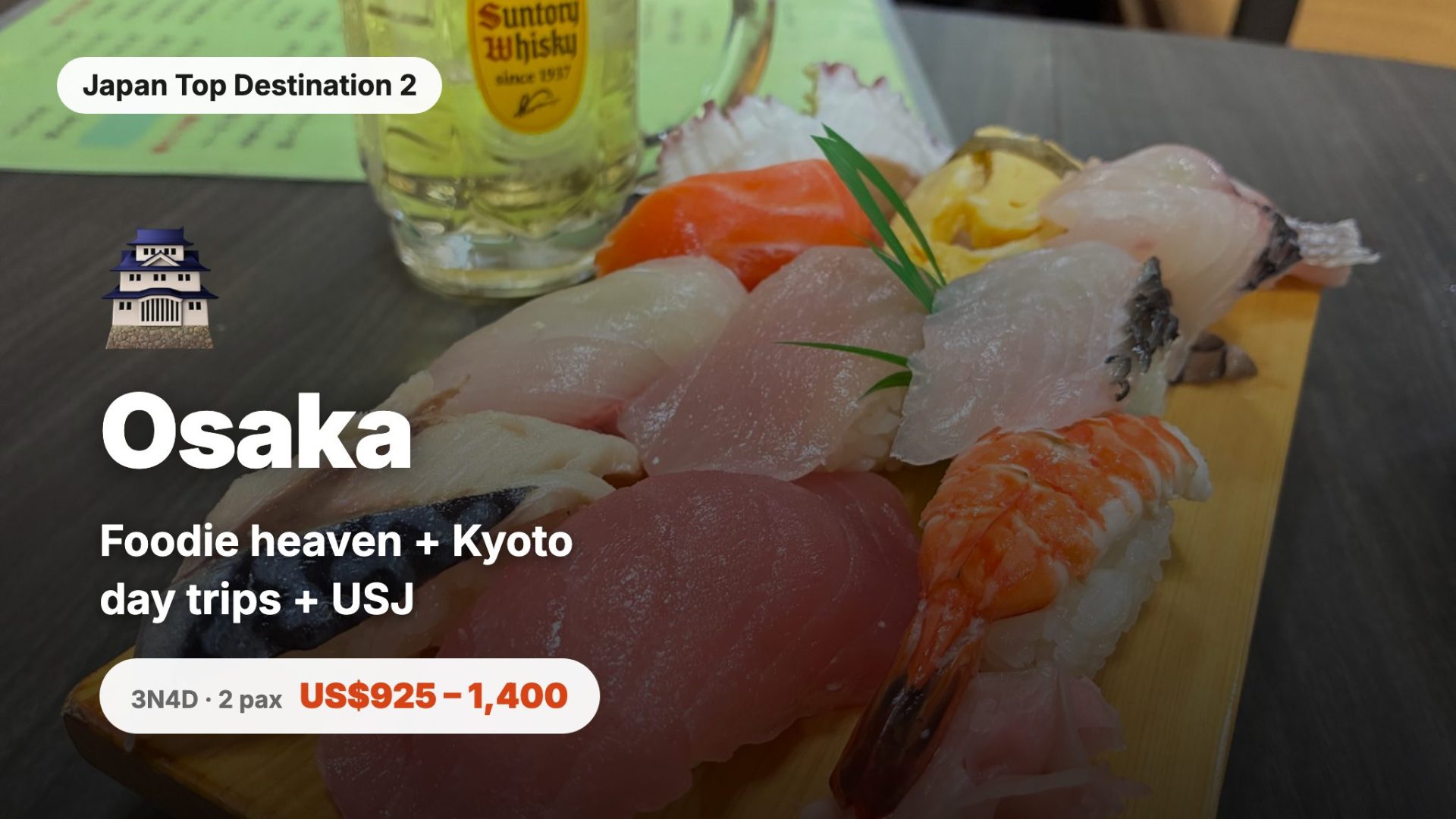
🏯 Osaka — Japan’s Kitchen, Plus Easy Day Trips to Kyoto and Nara
Osaka is the city where you get street food plus easy day trips out to Kyoto, Nara, and Kobe. Dotonbori and Shinsaibashi bring the late-night eating culture, and Universal Studios Japan (USJ) sits inside the same trip. It is the destination we recommend most often for a first Japan visit.
Best if you are into:
- Food as the anchor of the trip — takoyaki, okonomiyaki, kushikatsu, yakiniku
- Day trips to Kyoto (京都), Nara (奈良), and Kobe (神戸)
- Universal Studios Japan as a headline day
Things to watch for:
- Popularity means crowds. Peak-season Dotonbori and USJ are seriously packed.
- USJ Express Passes are a separate line item — plan for roughly US$60-110 per person on top.
- For families or groups who want a private car around the Kansai region, we can arrange a private charter car (chauffeured car service). If you would rather self-drive, our Kansai rental car page lists what we handle in the region.
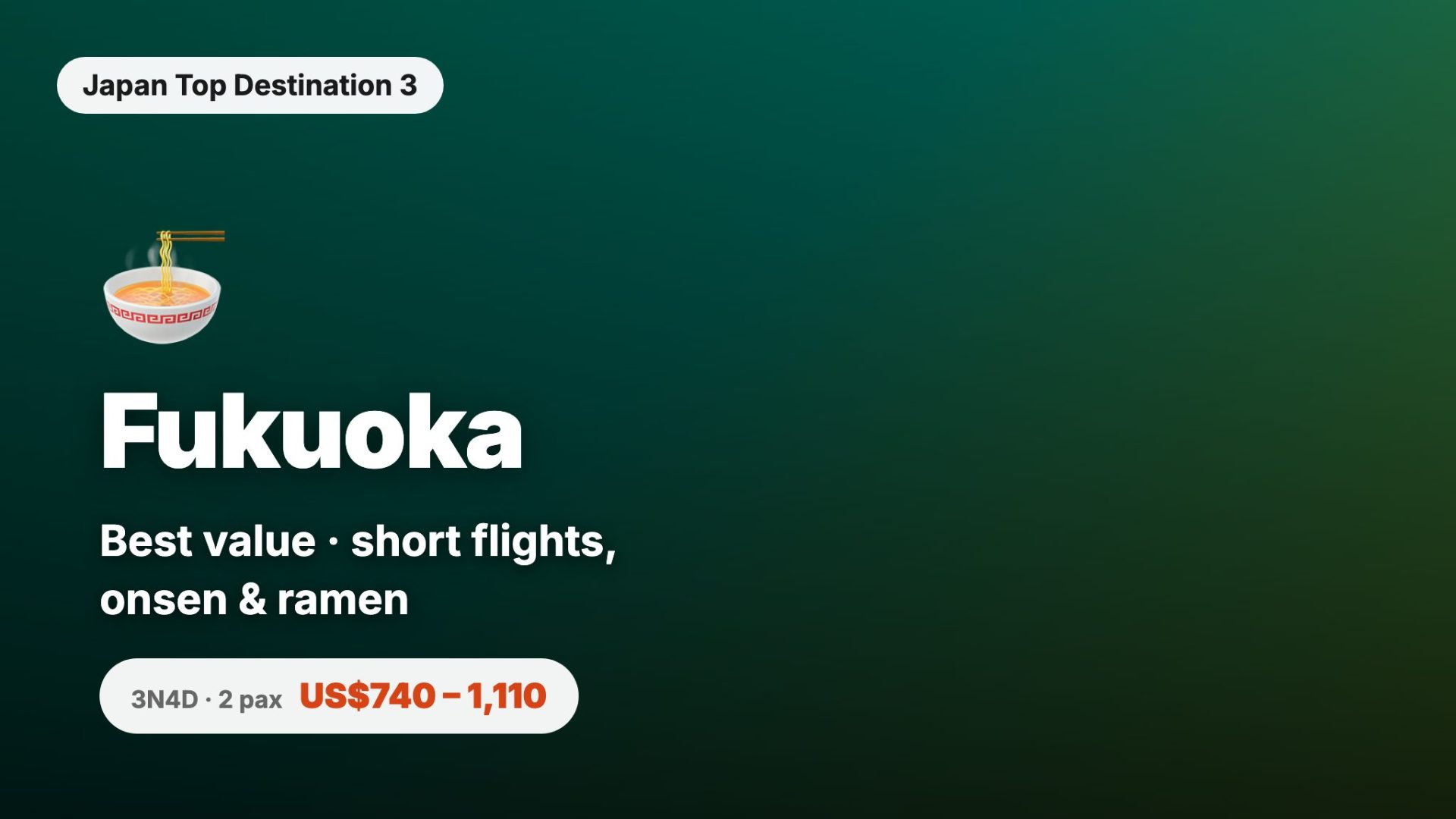
🍜 Fukuoka — Best Value of the Four, Perfect for a Quick Getaway
Fukuoka has the shortest flight and lightest budget of the four. It is 1h 20m from Seoul, and cheap flights start well under the other three. That makes it the go-to for a short-and-sweet Japan trip — Hakata and Nakasu for food, plus Yanagawa, Yufuin (由布院), and Beppu (別府) for the classic Kyushu hot-spring towns.
Best if you are into:
- Short trips (2N3D or 3N4D) with a value focus
- Hot springs, healing, and traditional ryokan as the centerpiece
- Kyushu food — tonkotsu ramen, motsunabe, mentaiko
Things to watch for:
- The in-city sightseeing volume is thinner than Tokyo or Osaka. To fill four days well, plan at least one day trip to Yufuin, Beppu, or Yanagawa.
- Yufuin and Beppu are easiest via JR or highway bus — a rental car is not required.
- For families or groups touring the Kyushu hot-spring towns together, our Fukuoka rental car page lists what we handle locally. We can also arrange a private charter car (chauffeured car service) on request.
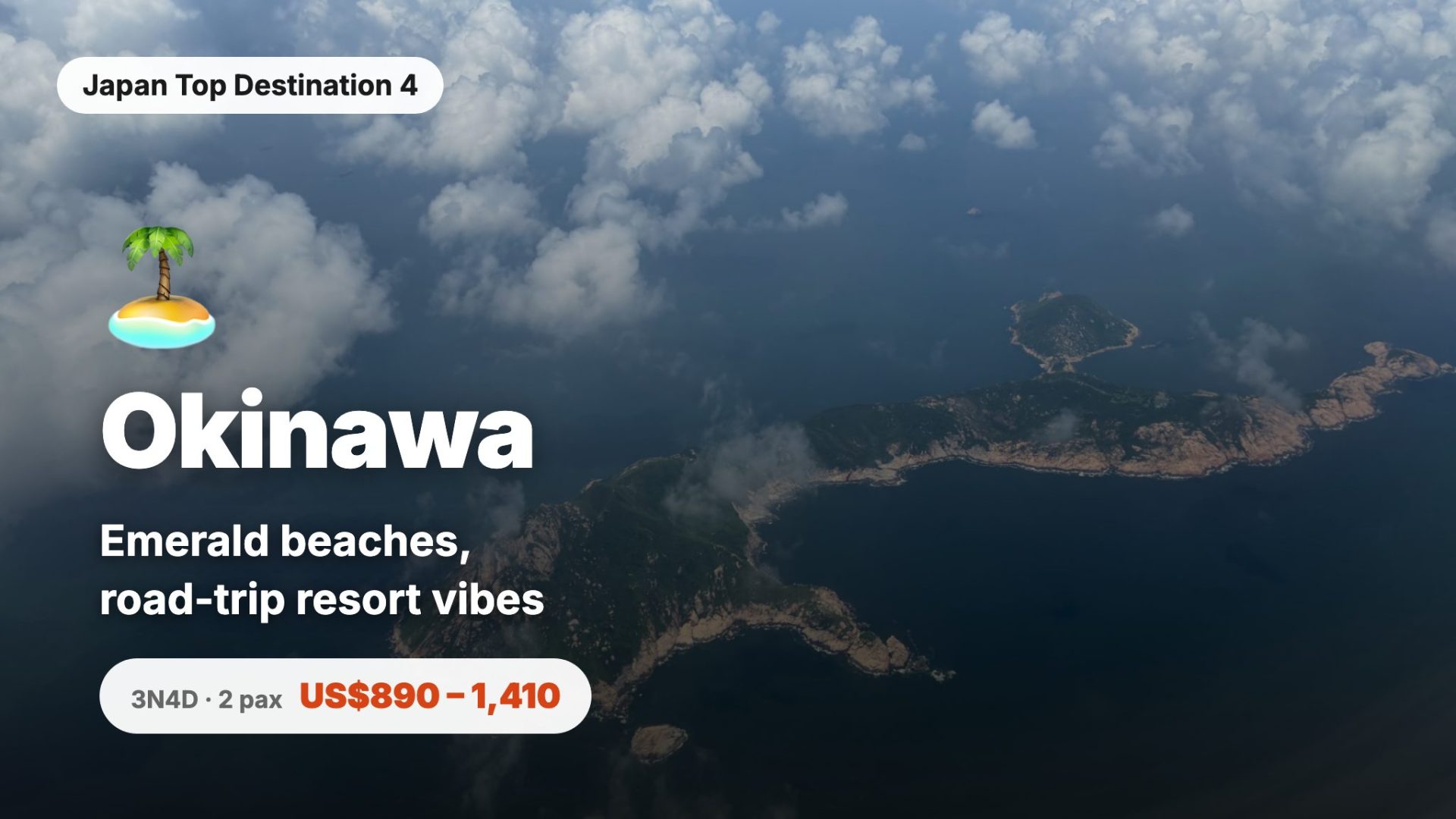
🏝 Okinawa — Emerald Water and a Full-Day Coastal Drive
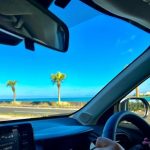
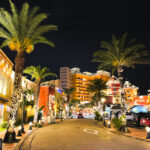
Okinawa runs on a completely different current from the other three. It is the “Hawaii of Japan” — a region built around beaches, resorts, and driving. Outside downtown Naha, almost every headline attraction (Churaumi Aquarium, Kouri Bridge, the coastal viewpoints) sits off the monorail and bus network, so a rental car is effectively required.
Best if you are into:
- Beaches and marine activities (snorkeling, diving, SUP)
- Scenic drives — Churaumi Aquarium, Kouri Bridge, Cape Manzamo
- Trading city sightseeing for a “resort plus nature” reset
Things to watch for:
- Peak-season price swings are the biggest of the four. July-September and the year-end holidays can push flights and hotels to double the off-season rate.
- A rental car is required, so bring an International Driving Permit (IDP).
- Typhoon season (August-September) carries flight-cancellation and tour-cancellation risk. Check the forecast before departure.
Okinawa rental cars & activity planning
→ Find Okinawa activities by category
One-Line Recommendations by Purpose
| Your goal | Pick | Why in one line |
|---|---|---|
| Cheapest possible Japan trip | Fukuoka | Lowest flights and hotels of the four, plus the shortest flight time |
| First time in Japan | Osaka | Food, day trips to Kyoto/Nara, and USJ — a full “Japan starter pack” in one city |
| Shopping, city energy, theme parks | Tokyo | Trends, Disney, Ghibli, night views — the definitive urban trip |
| Ocean, resort, self-drive | Okinawa | Japan’s Hawaii — freedom to roam the coast with your own rental car |
3 Ways to Trim Your 3N4D Budget
- Book in the off-season — Compared to peak season (July-September, year-end, Golden Week, cherry blossom), off-season flights and hotels run 30-50% lower. If your dates are flexible, April-June and October-November are the sweet spot.
- Sleep one stop away from the headline station — Instead of Shinjuku try Shin-Okubo, instead of Dotonbori try south of Namba, instead of Naha’s Kokusai-dori try Miebashi or Asahibashi. One stop off often saves US$20-35 per night.
- Use eSIM instead of pocket Wi-Fi — Pocket Wi-Fi rentals run around US$4-6 per day, whereas an eSIM plan for the same 3N4D typically costs less than half and works simultaneously across multiple phones in your party.
Frequently Asked Questions
Q. First time in Japan — Tokyo or Osaka?
We usually recommend Osaka first. Tokyo’s scale and complex transit often leave first-timers feeling stretched thin. Osaka packs food and shopping into a tighter core and lets you extend into Kyoto and Nara, so a 3N4D itinerary fills up naturally. Many travelers save Tokyo for their second Japan trip.
Q. Can I do 3N4D in Okinawa without a rental car?
Technically possible, but we don’t recommend it. Naha city, Kokusai-dori, Shuri Castle, and parts of American Village are covered by monorail and buses — but the signature destinations (Churaumi Aquarium, Kouri Bridge, Cape Manzamo, the northern coast) have very weak public-transit access. “Going without a rental car” and “only seeing half of Okinawa” end up meaning the same thing.
Q. Fukuoka — 2N3D or 3N4D?
If you are staying in the Fukuoka city core, 2N3D works. If you want to add Yufuin (由布院), Beppu (別府), or Yanagawa (柳川), go 3N4D. Yufuin and Beppu are 2-3 hours each way, so an overnight there gives you room to breathe.
Q. How big are Okinawa’s peak vs. off-peak price swings?
The biggest of the four. Flights in the deep off-season (February, May, October-November) can be half the peak rate (late July through late August, year-end holidays). Resort hotels that run US$225 per night in peak can drop to US$90-110 in the off-season. If your dates are flexible, May and October-November are the best combination of value and weather.
Q. If I want to visit all four eventually, what order should I go in?
The order we usually suggest is Osaka → Fukuoka → Okinawa → Tokyo. Learn the “basics of Japan travel” in Osaka, then a short hot-spring reset in Fukuoka, a resort break in Okinawa, and finally Tokyo for the full city-trend experience. Some travelers slot Okinawa in second — that also works.
Wrapping Up — Once You Know What Kind of Trip You Want, the Destination Decides Itself
Here it is in one line.
Best value and short getaway → Fukuoka. First trip and food → Osaka. Trends and shopping → Tokyo. Ocean, resort, and driving → Okinawa.
“Where in Japan should I go?” is really the same question as “what do I actually want to do on this trip?” Once you put budget, flight time, transport, and vibe on the same table, the answer usually shows up faster than expected.
GO!GO!TOUR is an Okinawa specialist that also handles rental cars across Japan. Whichever of the four you land on, we can help with the car. If self-driving isn’t ideal — families, seniors, larger groups — we can also arrange a private charter car (chauffeured car service) through our partner network.
Plan your ground transport with GO!GO!TOUR
Hope this comparison helps you pick your region. Whichever one you choose, we’ll take it from there on the ground transport.