Oita Rental Car — One car for Beppu, Yufuin and Kuju in Japan’s onsen kingdom
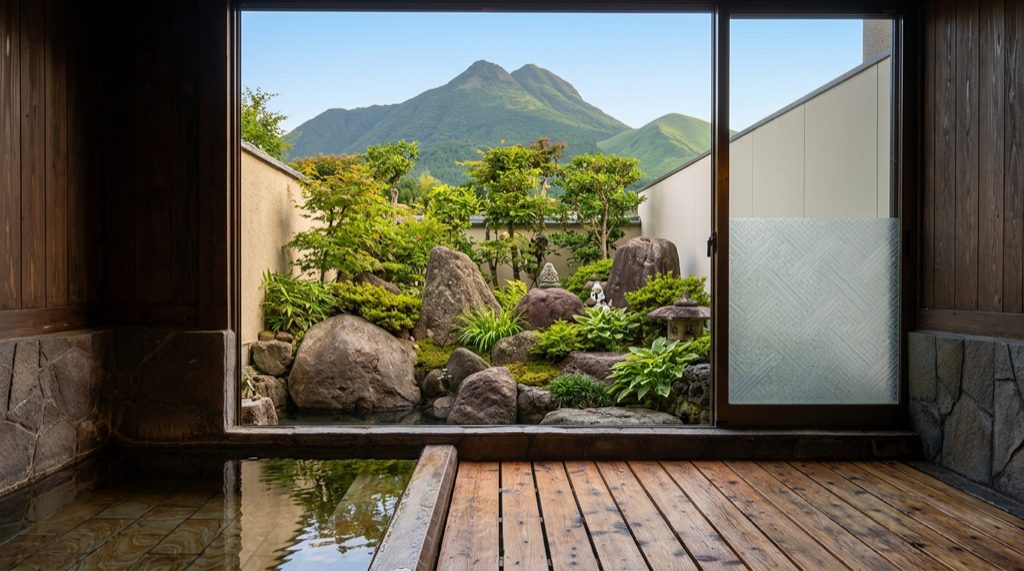
We at GO!GO!TOUR usually start every Oita (大分) itinerary with the rental car conversation. Oita ranks No.1 in Japan for both number of hot spring sources and total hot spring flow — the “Onsen Prefecture” tagline is not marketing, it is statistics. The real appeal, as pictured above, is opening the morning in a private open-air bath with Mount Yufu framed in the doorway — travelling Kyushu while quite literally soaking in it.
Straight to the point — for Oita, a rental car is basically non-negotiable.
Beppu (別府) and Yufuin (由布院) town centres do have public transport, but the moment you widen the map to Kuju (九重), Usa Shrine or Nakatsu (中津), your itinerary collapses without a car. On our Oita rental car search page you can filter by Oita Airport (OIT) or Oita Station pickup and compare our GO!GO!TOUR group inventory with the big direct-booking chains side by side.
This guide walks through it in four beats — what cars cost what, why book with us, how English-speaking support works on the ground, and where to actually drive.
Oita Rental Car Rate Table — Real Cars, Real 48-Hour Prices
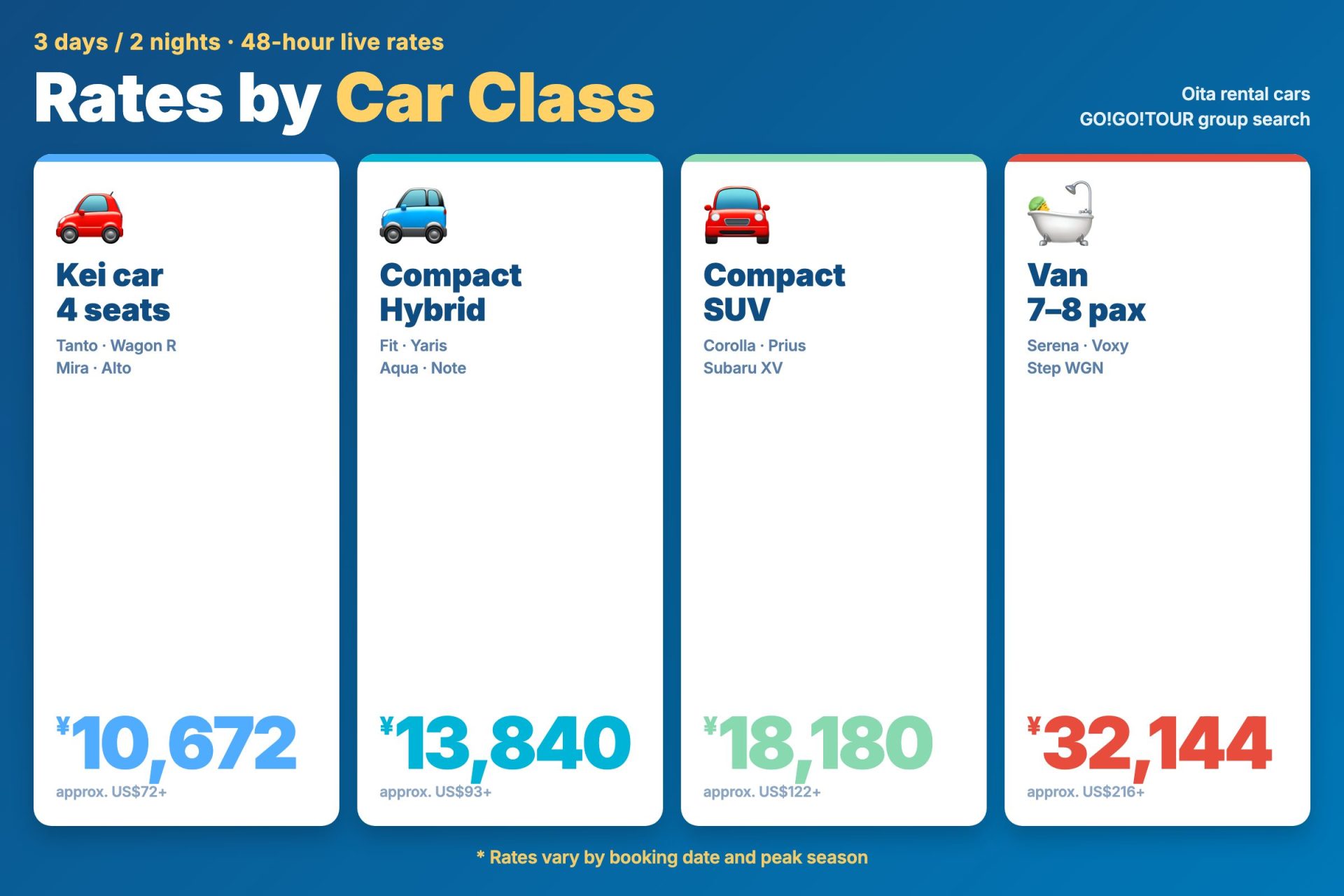
Let’s start with the numbers. The table below shows actual 2-night / 48-hour rates for cars we currently carry through the GO!GO!TOUR group, lined up next to the standard published rate at a major direct-booking chain (full-coverage insurance included).
| Class | Representative Models | GO!GO!TOUR Group | Major Chain (standard rate) | Savings |
|---|---|---|---|---|
| Kei car (4-seat) | Tanto, Wagon R, N-BOX, Mira, Alto | ¥10,672 | from ¥20,643 | approx. ¥9,970 off |
| Compact (5-seat) | Fit, Yaris, Note, Demio | ¥12,432 | from ¥21,484 | approx. ¥9,050 off |
| Hybrid compact | Aqua, Fit HV, Note e-Power | ¥13,840 | from ¥22,000-ish | approx. ¥8,000 off |
| Semi-mid sedan | Corolla, Subaru Impreza | ¥18,180 | from ¥21,484 | approx. ¥3,300 off |
| Hybrid mid-size | Prius | ¥23,900 | from ¥30,000-ish | approx. ¥6,000 off |
| Premium van | Alphard | ¥70,870 | from ¥85,000-ish | approx. ¥14,000 off |
Note: rates are for a 48-hour (2-night) rental at the time of research and may shift with exchange rate and high-season surcharges. The chain column shows the lowest bracket of the standard published rate with full-coverage insurance.
At a glance —
- Kei and compact cars save roughly ¥5,000 per night. Two nights is about ¥10,000 saved, three nights ¥15,000 — that’s a nice dinner covered by the rental savings alone.
- Hybrid compacts and the Prius stack fuel savings on top of already-lower rental rates, which really pays off on wider Kyushu routes.
- The Alphard premium van — the go-to for families or small groups wanting comfort — comes in around ¥14,000 cheaper than the chain rate.
For couples and pairs, the kei car at ¥10,672 is the sweet spot. Families of three or four should look at a compact or hybrid compact. If you’re travelling with lots of luggage or need child seats, plan around the van tier.
Why Book Through GO!GO!TOUR — The Perks Actually Listed on the Search Results
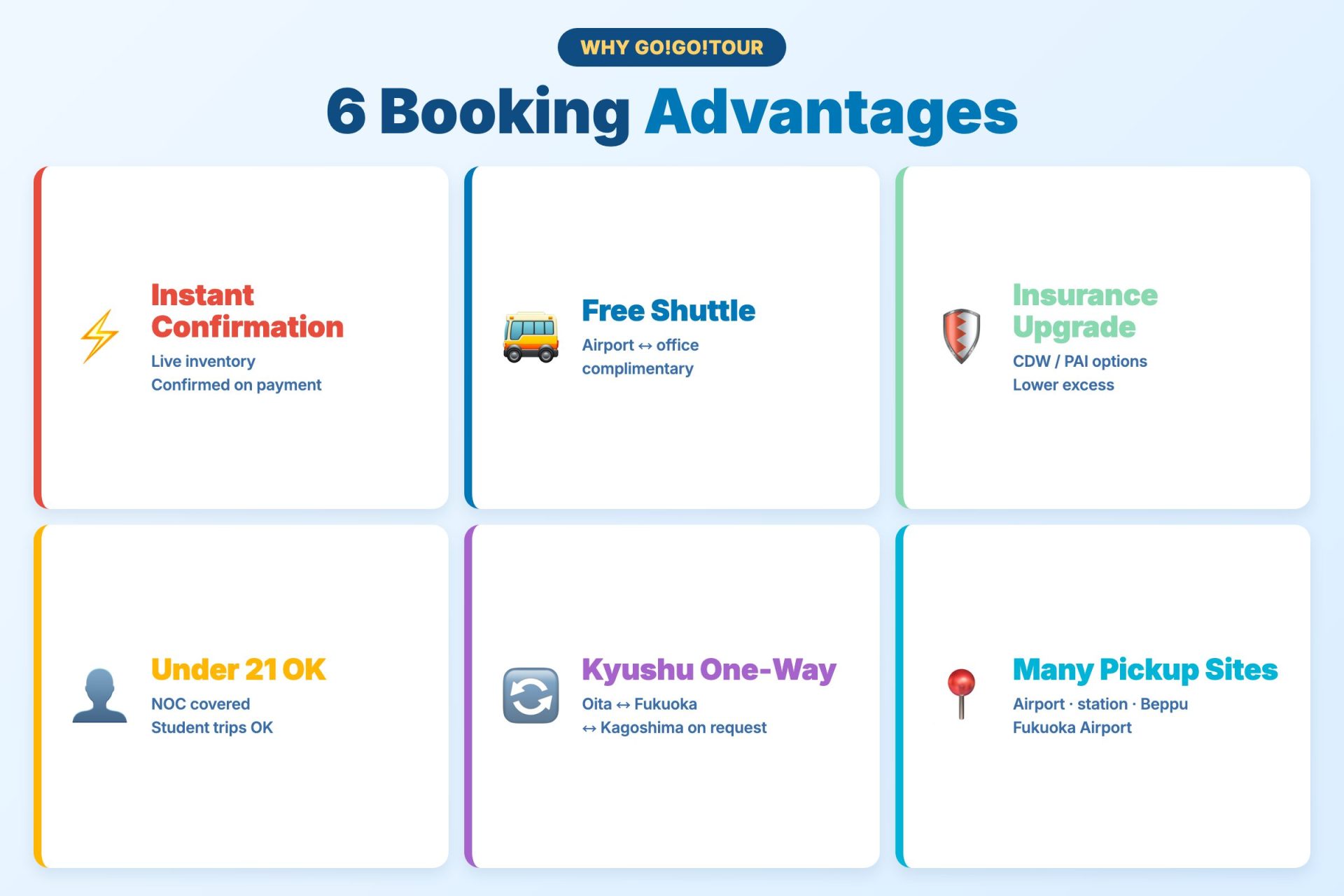
Straight from the product page filters, here’s what you actually get —
- Instant confirmation — GO!GO!TOUR group inventory is live-linked, so payment locks in the reservation immediately. Handy when you’ve already grabbed a peak-season flight and need to bolt the rental car on after.
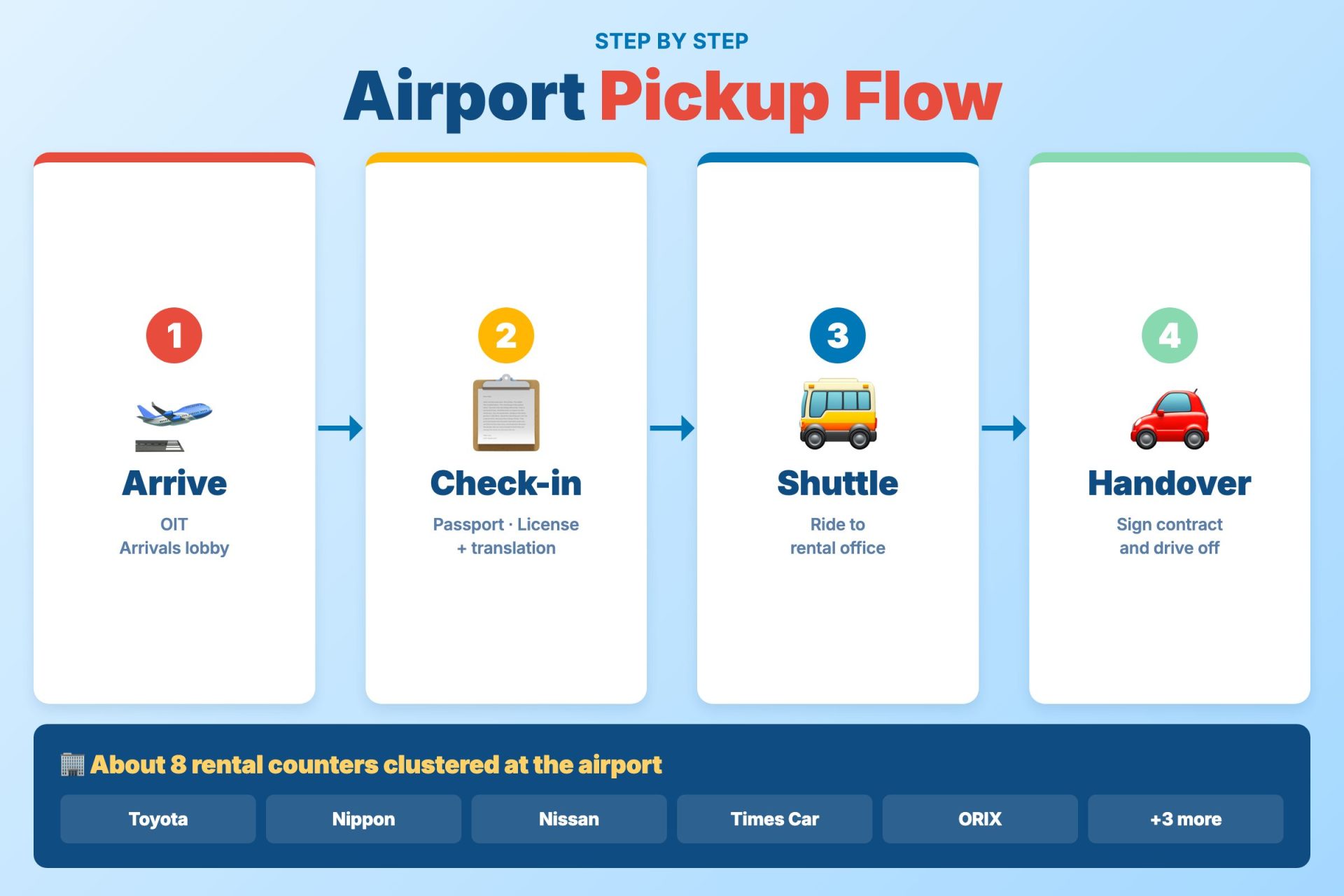
- Free airport shuttle — complimentary airport-to-branch shuttle. Land at Oita Airport, check in at the counter, hop on the shuttle to the branch, sign for the car.
- Optional CDW & personal accident insurance — add-on cover to reduce out-of-pocket risk if anything happens.
- Under-21 NOC add-on available — younger drivers accepted, useful for university student trips.
- Kyushu-wide one-way return consultation — Oita to Fukuoka to Kagoshima axes on request. Pairs nicely with open-jaw flights like “Into Fukuoka, out of Oita”.
- Multiple pickup locations — Oita Airport, Oita Station, Beppu Station, plus Fukuoka, Nagasaki, Miyazaki and Kagoshima airports across the wider Kyushu network.
- Payment and equipment — credit cards accepted, non-smoking cars, ETC card rental (paid), Japanese-language navigation, rear camera, most vehicles under 2–5 years old.
- Verified customer reviews — GO!GO!TOUR group averages 5.0 on the search results page.
The free airport shuttle matters more than it sounds — Oita Airport sits out on a peninsula tip, so the “land, get to town, then find the counter” flow is awkward for first-timers. Handling paperwork at the airport counter and letting one shuttle carry you to the branch takes that friction out.
On-the-Ground Support in Japan — One Channel for Accidents, Changes and Questions
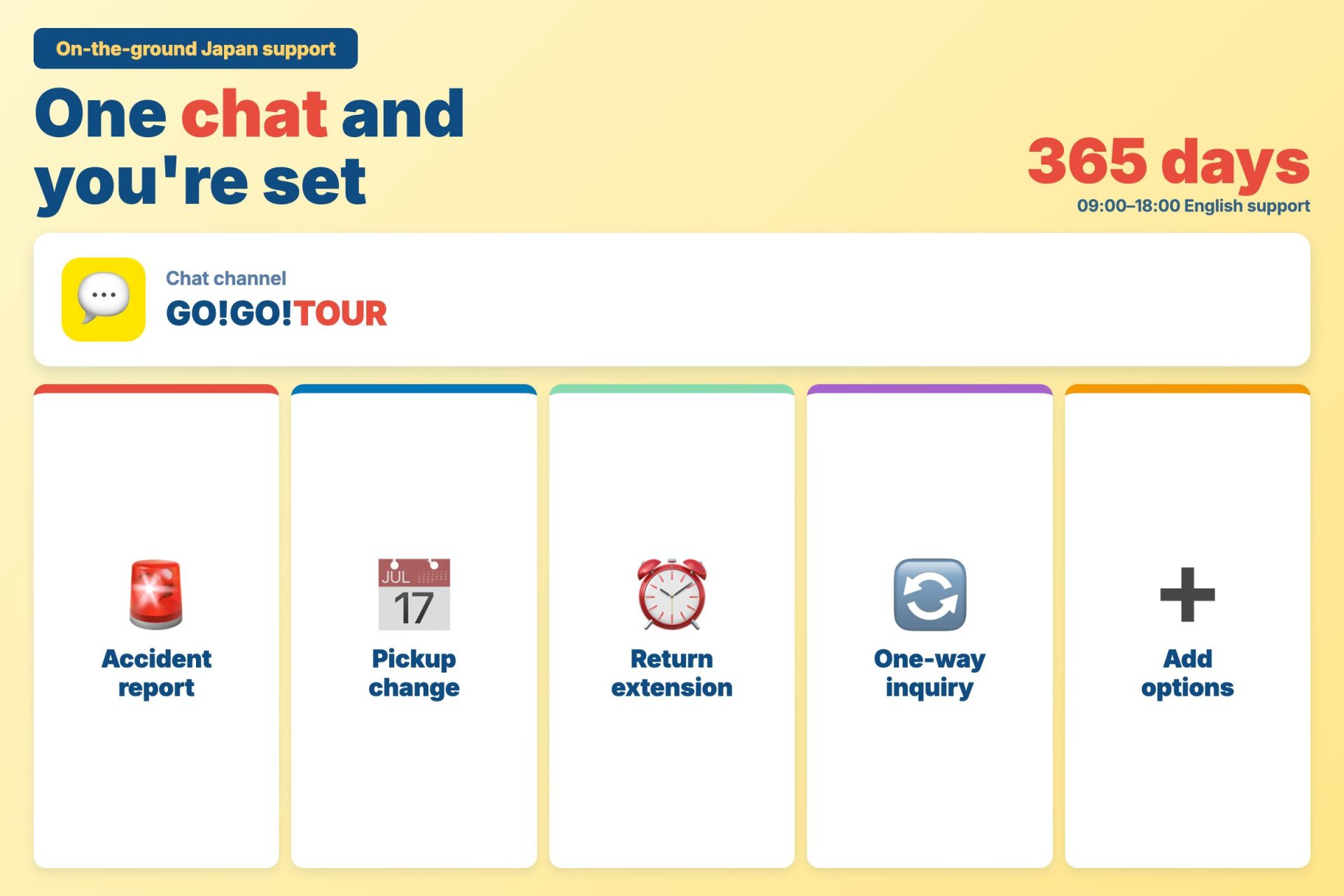
The genuinely scary part of a self-drive trip is “an accident happens and my Japanese isn’t good enough”. Our answer is that GO!GO!TOUR runs a Japan-based office that handles support in English — you just report the situation to us and we take it from there.
- Company: smartbox Inc.
- Japan office: 2-12-4 Tomari, Naha, Okinawa (2nd floor)
- Travel business registration: Okinawa Prefectural Governor Registered Travel Service Handling Agent No. 18 (formally licensed)
- English support hours: 365 days, 09:00–18:00 JST via email and the GO!GO!TOUR support channel
What we handle —
- Initial intake for accidents and vehicle trouble (flat tyres, no-start, parking scrapes) and liaison with the rental car company on your behalf
- Rescheduling pickup time or extending drop-off when your flight is delayed or cancelled
- Consultation for one-way returns at a different branch
- Extending your booking into other Kyushu cities (Fukuoka, Nagasaki, Kagoshima and so on)
- Adding child seats, ETC cards or studless winter tyres
Cold-calling a rental car company in Japanese is a real barrier for most travellers. Send us the situation in English and our Japan-based staff will talk to the rental company for you. Same coverage whether you’re in Oita, Beppu or Yufuin.
Contact via GO!GO!TOUR customer support — reach out through our main site for the current support channels.
Getting to Oita — Current Flight Options
Direct flights into Oita (OIT) are limited. From Seoul-Incheon (ICN), Jeju Air (7C) operates the only scheduled non-stop, at roughly 1 hour 40 minutes to 2 hours in the air. From most other international origins there is currently no direct route, so travellers typically connect via Fukuoka (FUK) or Tokyo.
Summer schedules tend to add frequencies. As a reference point, the winter schedule has run “Incheon 11:05 → Oita 13:00 / Oita 14:00 → Incheon 15:45” once daily. Schedules change season by season and airline by airline, so always confirm on the carrier’s official site at booking time.
If you’re flying from further afield, the most practical routings are:
- Connect through Fukuoka (FUK), pick up a car there and drive about 2 hours to central Oita
- Fly into Kitakyushu (KKJ) and drive down
- Or the classic “Fukuoka In + Oita Out” open-jaw, which often shortens the overall driving
At Oita Airport (OIT) — What to Do Once You Land
Oita Airport sits at the tip of the Kunisaki (国東) Peninsula in Ajimu Bay. The domestic arrivals lobby holds counters for about eight rental companies — Toyota Rent a Car, Nippon Rent-A-Car, Nissan Rent-A-Car, Times Car, Orix and others all in one row. With a booking in hand, present passport and licence documents at the counter and take the shuttle bus to the branch where you’ll pick up the car.
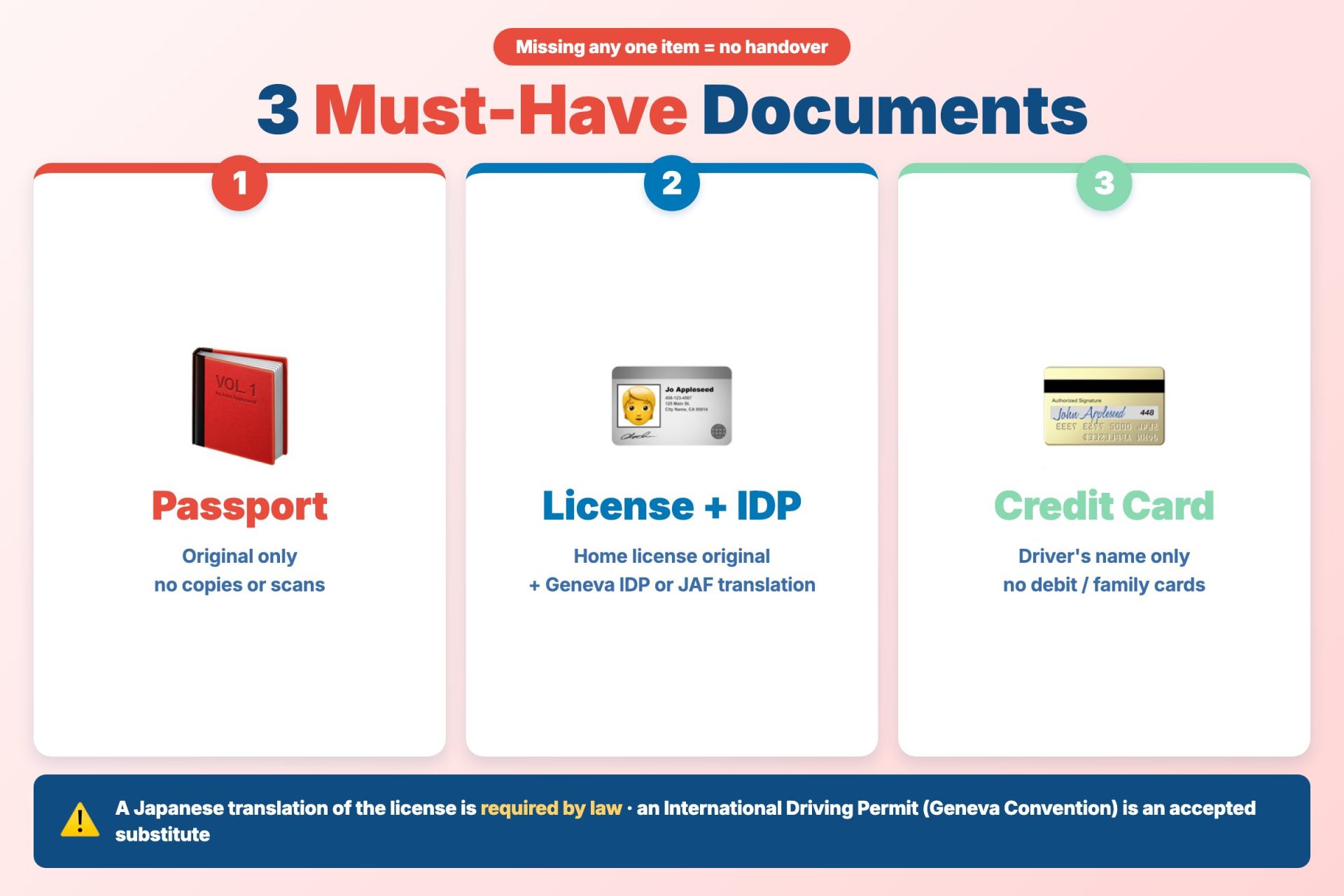
Three things you must bring —
- Passport (original)
- Home-country driver’s licence + either a valid Japanese translation of your licence (required for drivers from a handful of countries such as Korea, Taiwan and a few others), or an International Driving Permit (1949 Geneva Convention format — this covers most travellers from the US, UK, Australia, EU and others)
- A credit card in the primary driver’s name
Booking through GO!GO!TOUR lets you compare multiple rental companies under the same Oita Airport pickup filter, so it’s easy to spot “same car class, cheaper here” differences.
Also — do not forget the KEP (Kyushu Expressway Pass). This is a flat-rate toll pass for expressways in Kyushu, sold as a foreign-tourist-only option that you add at the time of rental booking. The route we’re covering — Beppu, Usa, Nakatsu, Kuju — leans heavily on expressways, so this pass genuinely reduces the toll bill.
Drive Times from Oita Airport to Each Spot
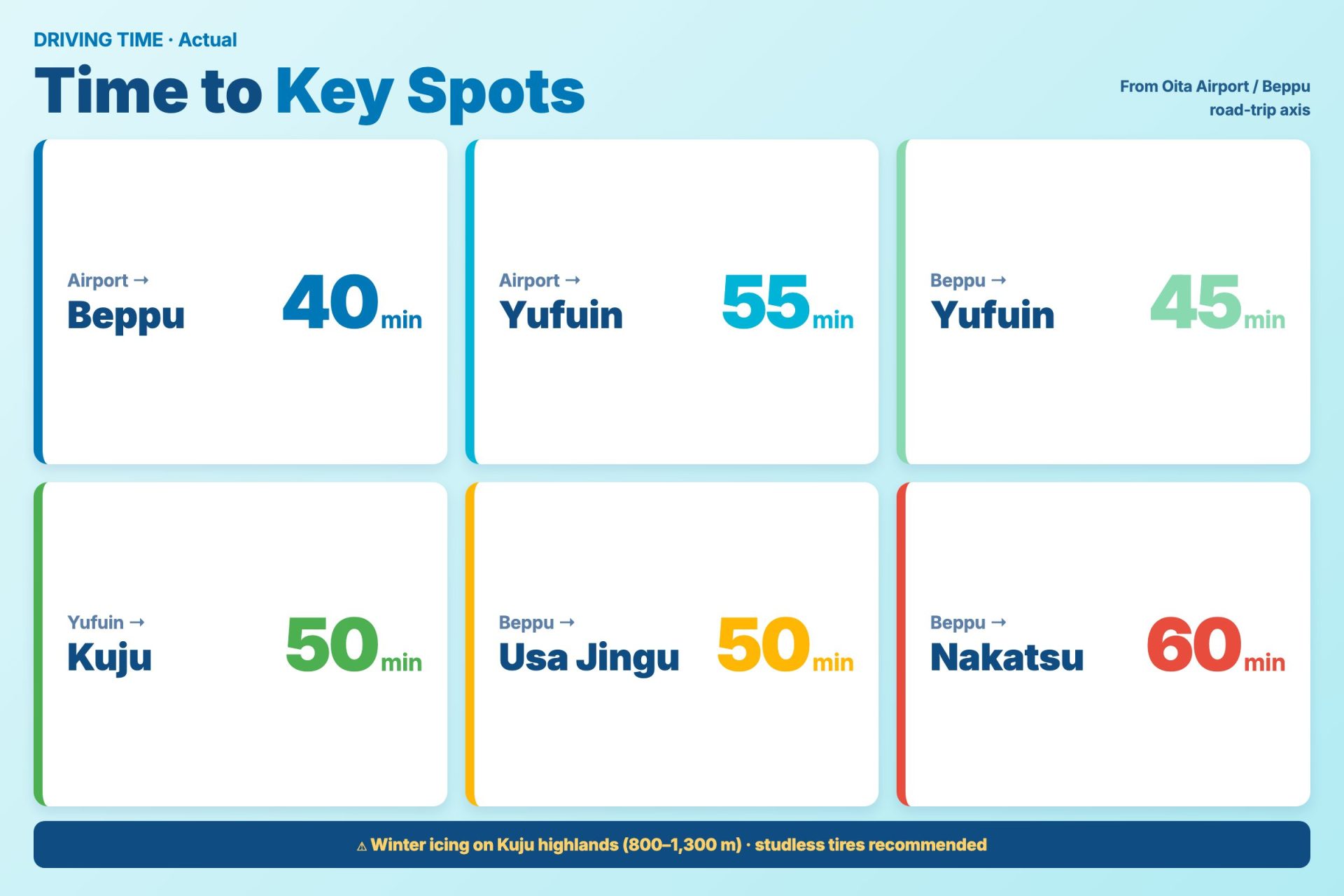
Here are the key drive times to build your itinerary around —
| From → To | Route | Time |
|---|---|---|
| Oita Airport → central Beppu | Airport Road, Higashi-Kyushu Expressway | approx. 40 min |
| Oita Airport → Yufuin | Hayami IC to Yufuin IC (expressway) | approx. 50–55 min |
| Beppu → Yufuin | Prefectural Route 11 or via Yufuin IC | approx. 45 min |
| Yufuin → Kuju Yume Suspension Bridge | Yamanami Highway | approx. 40–50 min |
| Beppu → Usa Shrine | Higashi-Kyushu Expressway, Usa IC | approx. 50 min |
| Beppu → Nakatsu | Higashi-Kyushu Expressway | approx. 50 min – 1 hr |
One caveat — Prefectural Route 11 between Beppu and Yufuin is a classic scenic drive that connects into the Yamanami Highway, but it fogs up so often that locals nickname it “Fog Hell”. For rain, night driving, or first-timers, take the Yufuin IC expressway detour instead.
In winter (December–February), the Kuju highlands sit at 800–1,300 m elevation and can see snow and black ice. Confirm the studless tyre option is available at booking time.
Beppu Hell Tour — Can You Do All Seven “Hells” in a Day?
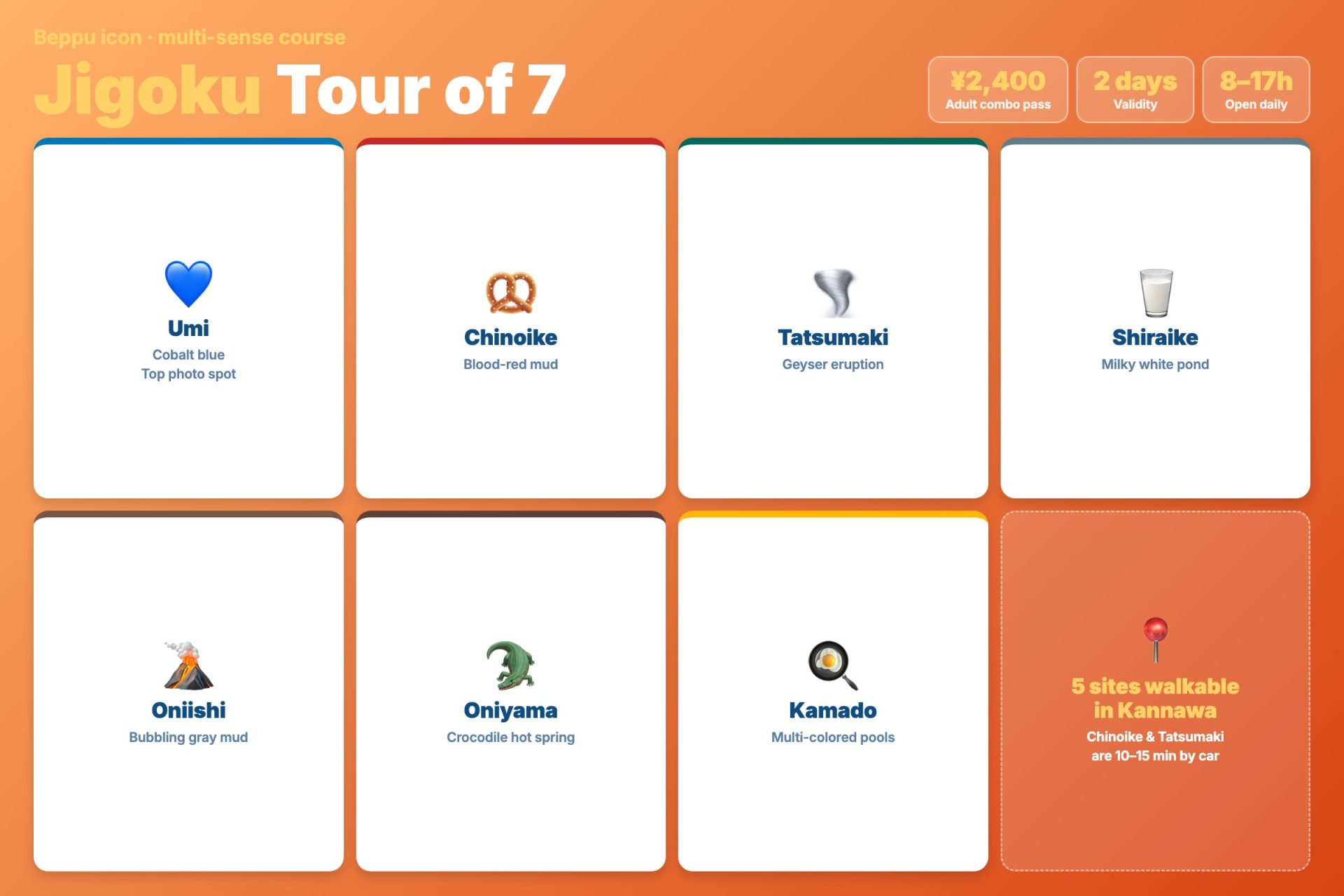
Beppu’s signature attraction, the “Hell Tour” (地獄めぐり), currently runs to seven hells. Older English information sometimes lists eight because that was true for a while — but the current official count from the Beppu Hells Association is seven.
The seven —
- Umi Jigoku (海地獄) — cobalt-blue boiling pond, the money shot
- Chinoike Jigoku (血の池地獄) — red clay hell, Shibaseki area
- Tatsumaki Jigoku (龍巻地獄) — geyser, Shibaseki area
- Shiraike Jigoku (白池地獄) — milky-white hot pond
- Oniishibozu Jigoku (鬼石坊主地獄) — grey mud bubbling in bald-monk shapes
- Oniyama Jigoku (鬼山地獄) — crocodiles bred on onsen heat
- Kamado Jigoku (かまど地獄) — several different colours and temperatures at one site
Combined admission and hours —
- Adults (high school and up): ¥2,400 / elementary and middle school: ¥1,200
- Groups of 20+: ¥2,000
- Ticket is valid for 2 days from purchase
- Hours: 8:00–17:00, open year-round
Five hells (Umi, Shiraike, Oniishibozu, Oniyama, Kamado) cluster in the Kannawa (鉄輪) area — park once and walk between them. Chinoike and Tatsumaki are 10–15 minutes away by car in the Shibaseki (柴石) area.
Yufuin — Morning Mist Over Kinrin Lake and Yunotsubo Street
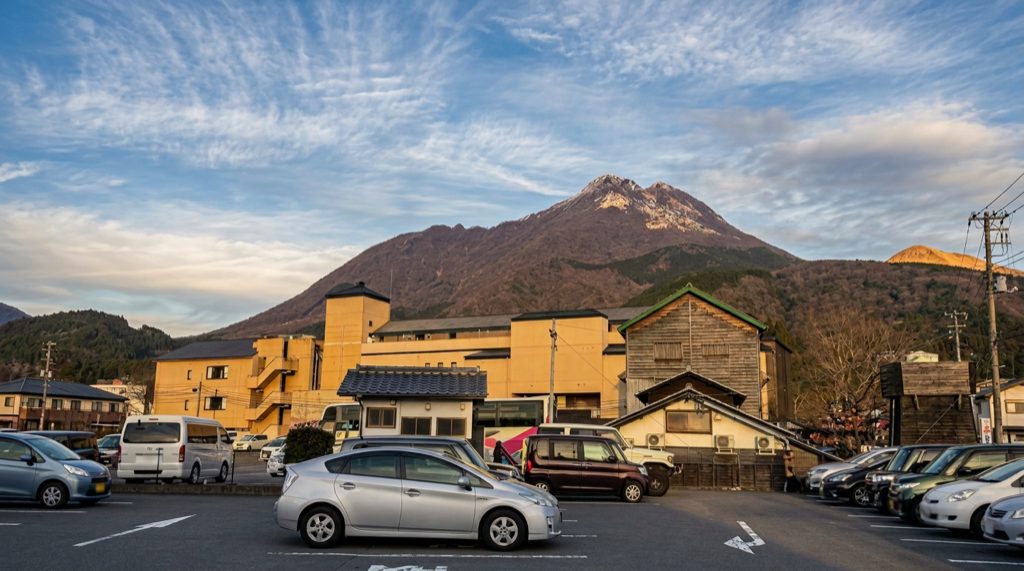
Yufuin is the sort of town where you can look up from almost any lane and see Mount Yufu (1,583 m) filling the sky. As in the photo above, the two peaks rising over the low ryokan rooftops are the signature Yufuin composition. Park near Kinrin Lake, walk on foot, and this backdrop follows you wherever you go.
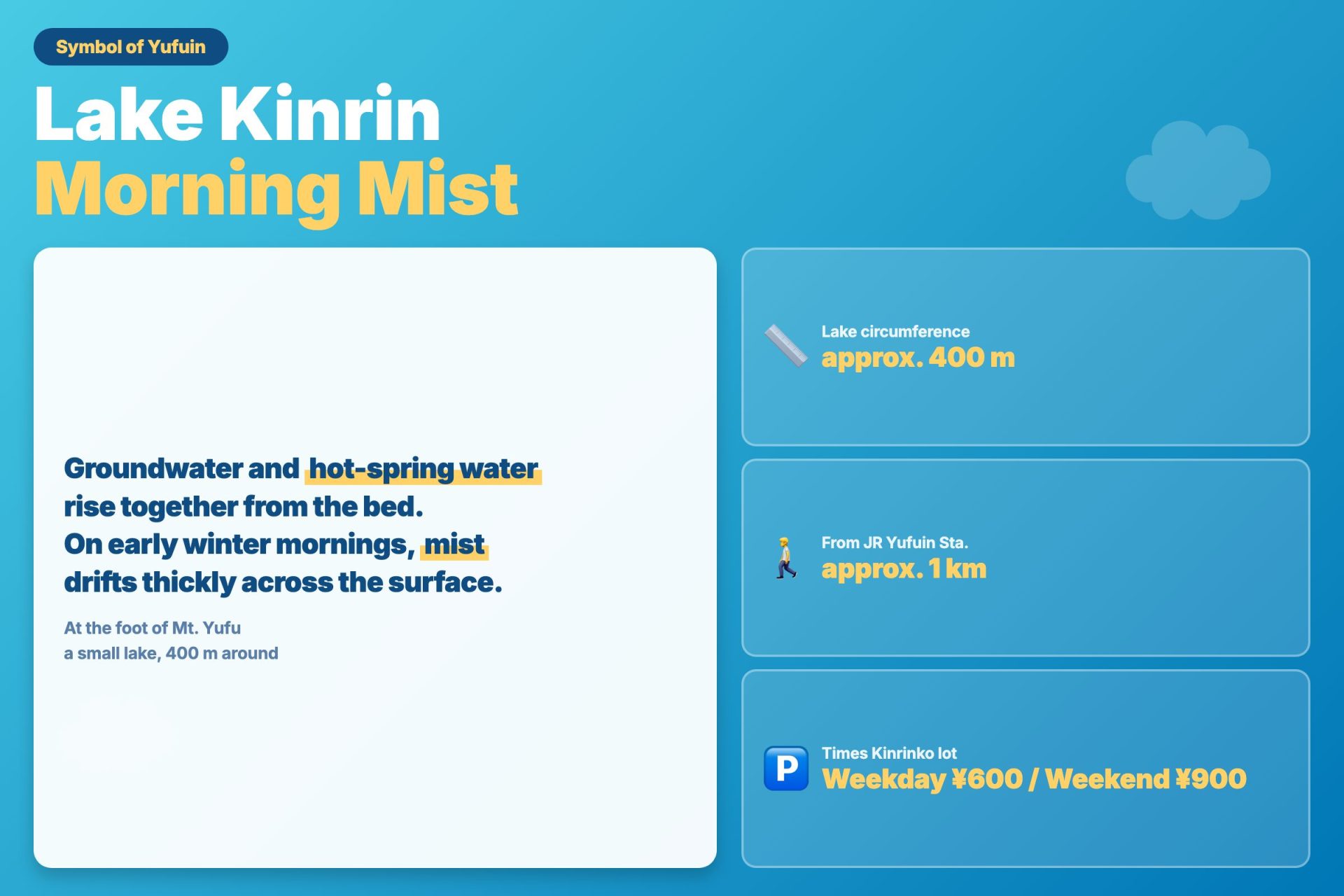
The symbol of Yufuin is Kinrin Lake (金鱗湖) — a small lake about 400 m in circumference at the foot of Mount Yufu. Because groundwater and hot spring water both bubble up from the bottom, cold winter mornings produce the famous scene of mist drifting off the surface.
Yunotsubo Street (湯の坪街道), the walking road leading to the lake, runs about 1 km from JR Yufuin Station and is lined with sweets shops, croquette stalls and craft stores. There is almost no parking on the street itself, so —
Use one of the paid parking lots around JR Yufuin Station or Kinrin Lake. For reference, Times Yufuin Kinrinko caps at around ¥600 on weekdays and ¥900 on weekends and holidays. Lots fill up fast from around 10 a.m. on peak-season weekends, so arrive early or park near the station and walk in.
Kuju “Yume” Grand Suspension Bridge — Japan’s Tallest Pedestrian Bridge
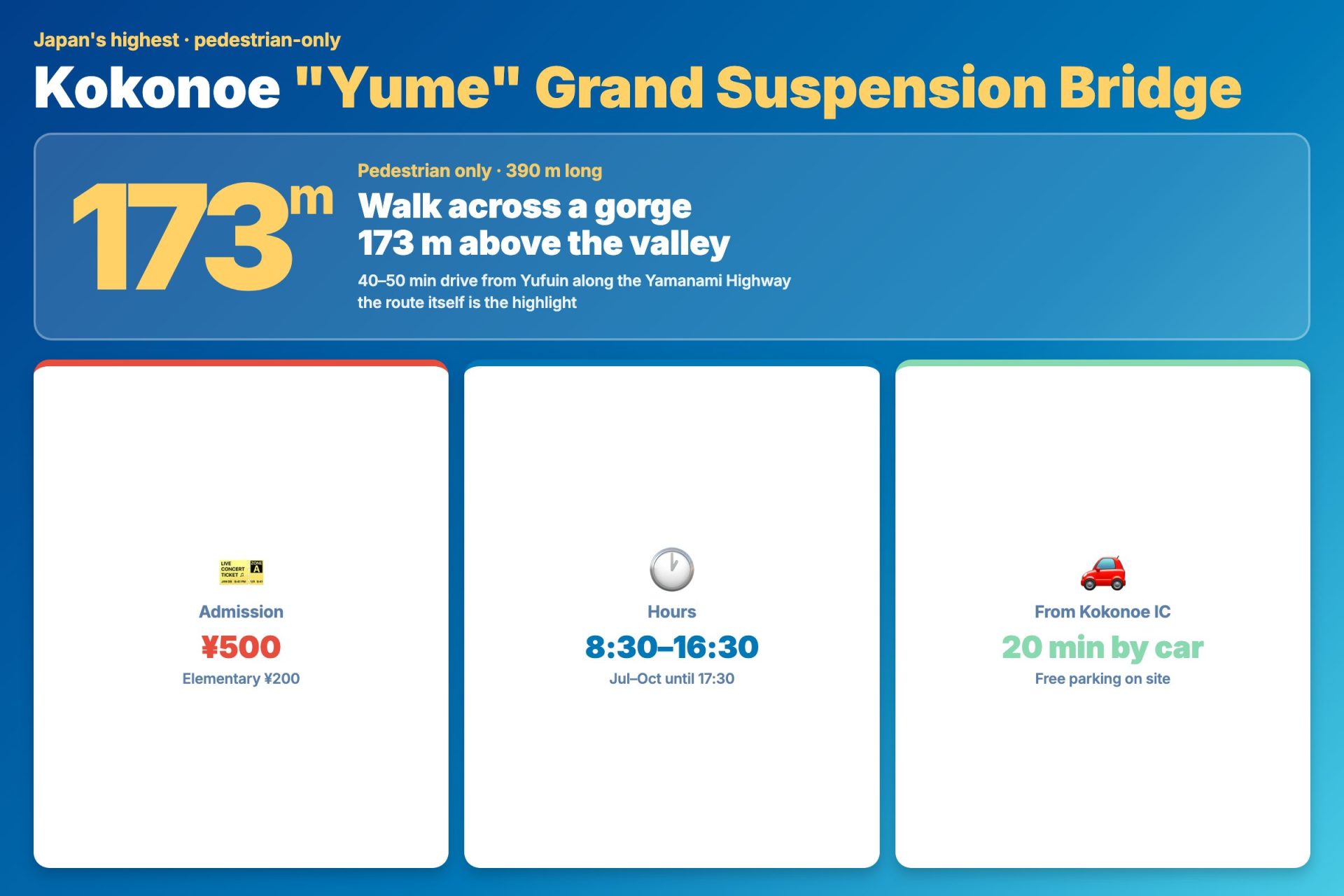
The Kuju “Yume” Grand Suspension Bridge is 390 m long and 173 m tall — the tallest pedestrian-only suspension bridge in Japan.
- Admission: middle school and up ¥500 / elementary ¥200 / preschool free
- Hours: 8:30–16:30 (gates close 17:00) year-round; 8:30–17:30 in July–October (gates close 18:00)
- Open year-round but closed for strong winds, heavy rain, dense fog or snow
- About 20 minutes by car from Kuju IC on the Oita Expressway; free parking on site
Admission and hours can be revised, so confirm on the official page before you go. The 40–50 minute drive up the Yamanami Highway from Yufuin is itself half the point of visiting.
Usa Shrine, Takasakiyama and Nakatsu — Spots You Can Only Reach by Car
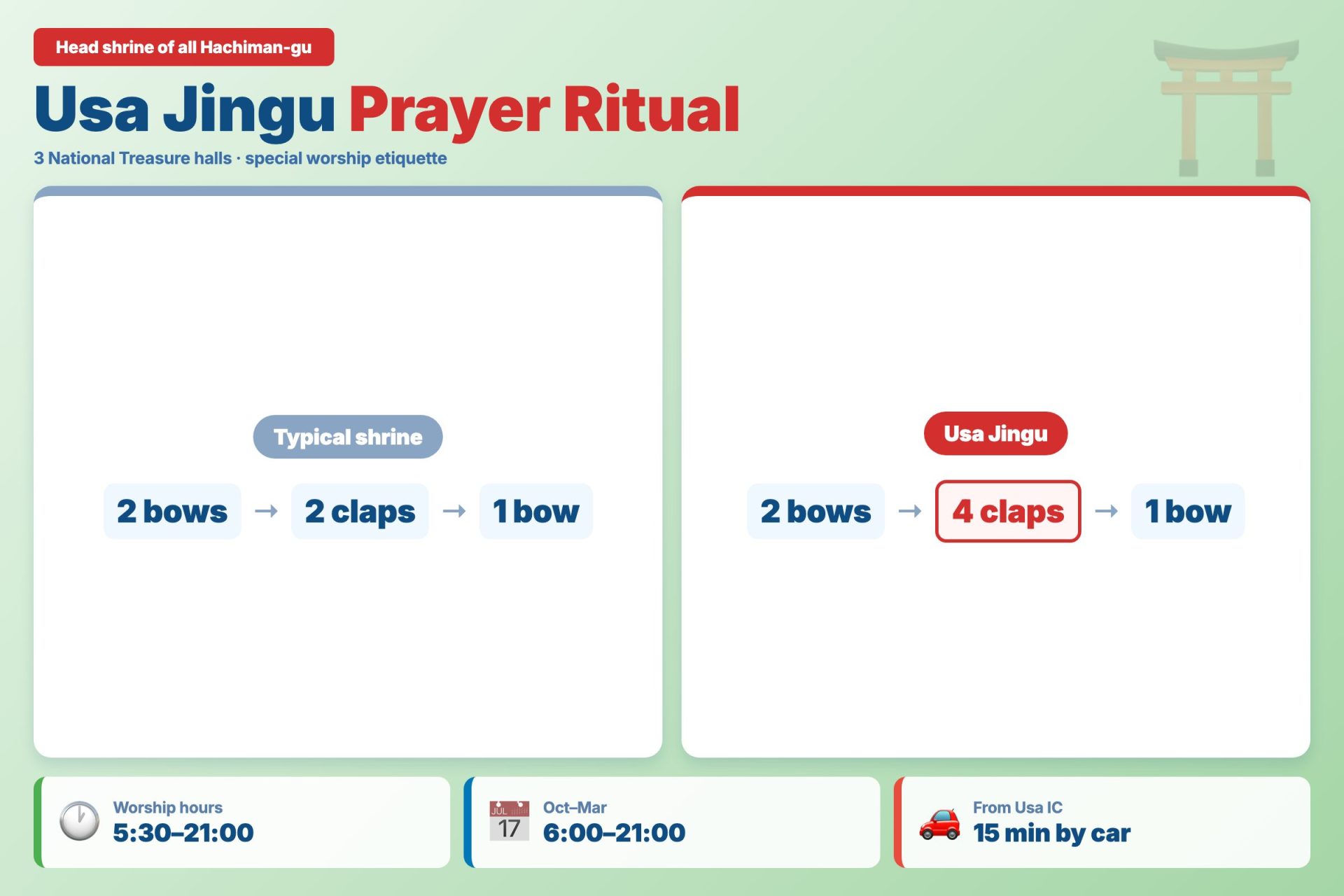
Usa Shrine (宇佐神宮) is the head shrine of the roughly 40,000 Hachiman shrines across Japan, founded in 725. Its three main halls are National Treasures.
- Worship hours: 5:30–21:00 (6:00–21:00 October–March)
- Treasure hall: 9:00–16:00, closed Tuesdays
- About 15 minutes by car from Usa IC
There’s one quirk. Most Japanese shrines use “two bows, two claps, one bow” — here the long tradition is “two bows, four claps, one bow”. It throws people off on a first visit. Just follow the signboard at the worship hall.
Takasakiyama Natural Zoological Garden (高崎山自然動物園) sits on a 628 m mountain on the Beppu-Oita boundary, home to about 900 wild Japanese macaques. Groups B and C take turns coming down to the feeding plaza twice a day for the “sweet potato scramble” — a favourite with kids.
- Hours: 9:00–17:00 (last entry 16:30), open year-round
- Admission: adults ¥520 / high school ¥250 / elementary and under free
- “Sarukko Rail” monorail: round trip ¥110 adult / free for elementary and under
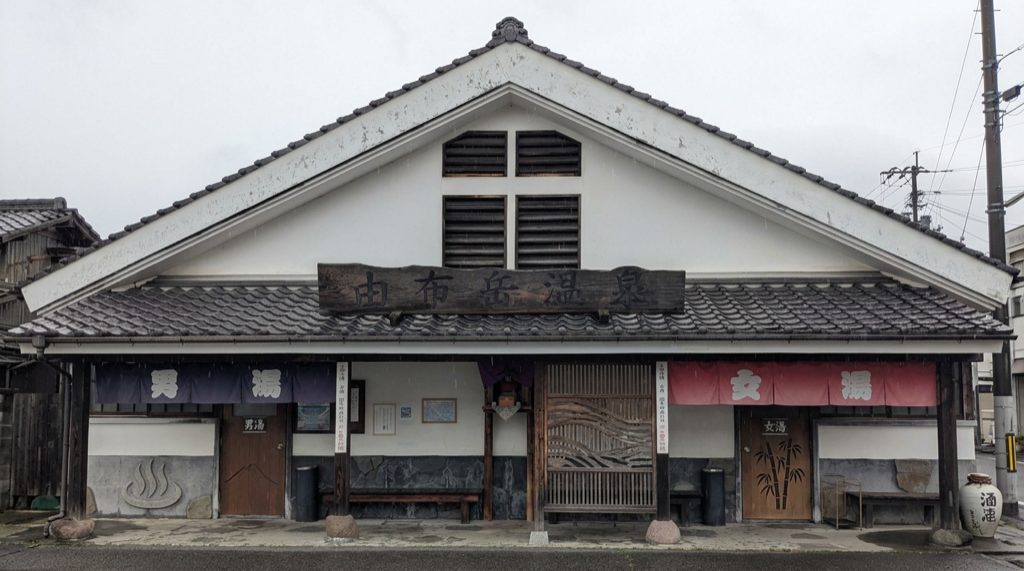
The Nakatsu (中津) area is anchored by Nakatsu Castle (中津城, one of “Japan’s three water castles”), the childhood home of Fukuzawa Yukichi (the face on the ¥10,000 note), and the karaage (fried chicken) shops that make Nakatsu the acknowledged “holy land of karaage”. As pictured above, around the castle you still find lanes of white plastered walls and tiled roofs from the old castle-town district — a quick stop-and-stroll is enough to feel the atmosphere. It sits about 50 minutes to an hour from Beppu on the Higashi-Kyushu Expressway, which makes it a clean half-day extension.
South of Nakatsu, Yabakei (耶馬渓) is one of Japan’s three great autumn foliage spots, famous for Ao no Domon (青の洞門) — a tunnel a monk named Zenkai chiselled through by hand over 30 years.
Three Model Courses — Pick by Trip Length
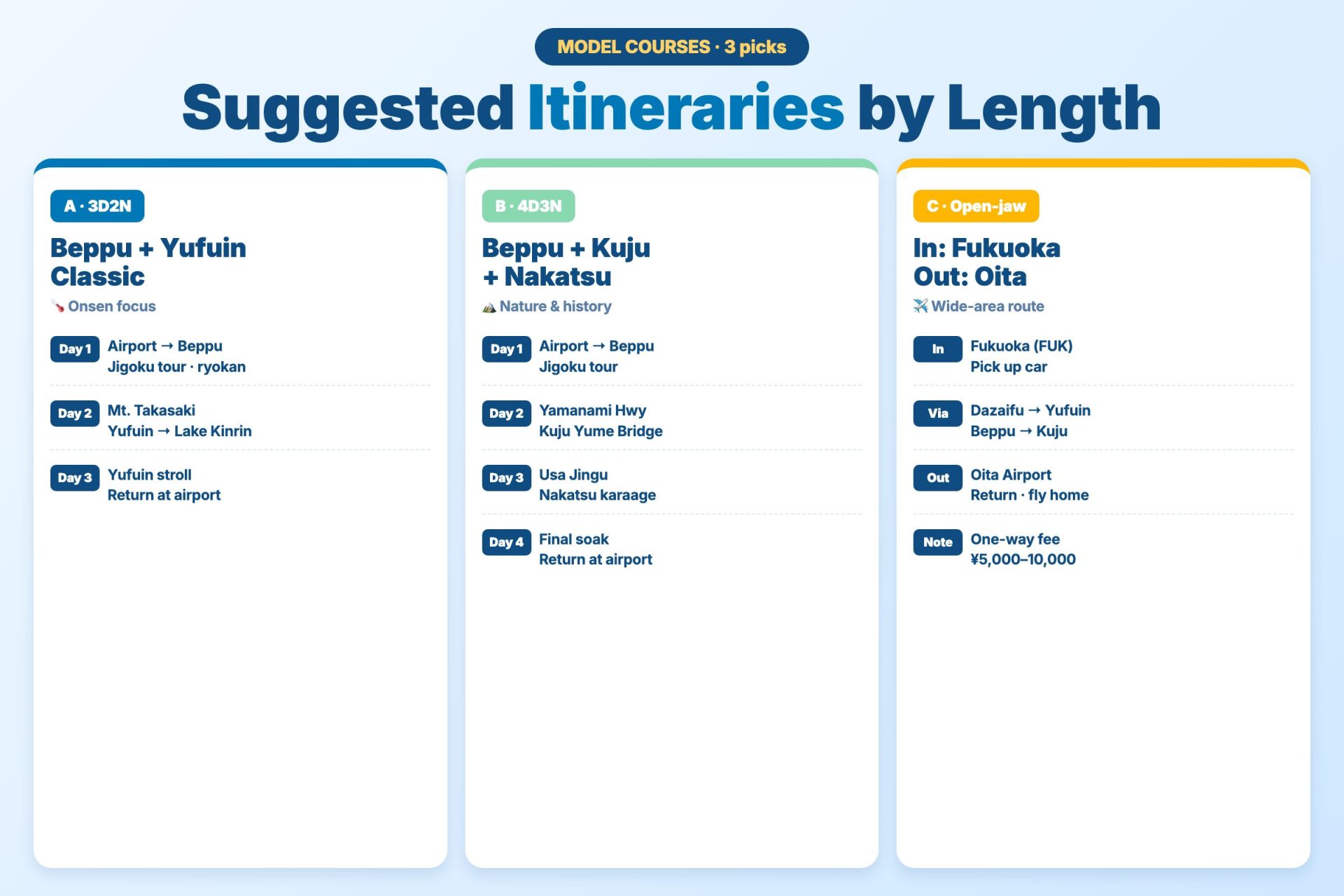
Once the car is in your hands, the order of stops matters. Three courses that work well —
A. 3-Day “Beppu + Yufuin” Classic Course
- Day 1: Land at Oita Airport, pick up car, drive to Beppu (40 min), Hell Tour of all 7 (3–4 hrs), stay overnight at a Beppu onsen ryokan
- Day 2: Takasakiyama Zoo, Umitamago Aquarium, drive to Yufuin, walk Kinrin Lake and Yunotsubo Street for sweets, overnight at Yufuin ryokan
- Day 3: Morning walk in Yufuin, Yufuin IC to airport, return car
B. 4-Day “Beppu + Kuju + Nakatsu” Extended Course
- Day 1: Airport, Beppu Hell Tour, Beppu overnight
- Day 2: Beppu, half-day in Yufuin, Yamanami Highway, Kuju “Yume” Bridge, Kuju highlands overnight
- Day 3: Kuju, Usa Shrine, Nakatsu Castle and Fukuzawa Yukichi’s old house, Nakatsu karaage for dinner, Beppu overnight
- Day 4: Final Beppu onsen, return car at airport
C. “Fukuoka In + Oita Out” Open-Jaw Course
- Fukuoka (FUK) arrival, pick up car, Dazaifu, Yufuin, Beppu, Kuju, return at Oita Airport
- Pairs with an open-jaw ticket (any carrier that offers Fukuoka in / Oita out on your side of the world)
- One-way return fees of ¥5,000–10,000 may apply depending on the rental company — confirm at booking time
Whether you frame the trip as “onsen-focused” or “nature-and-history extended”, the routing changes completely. Our recommended model course catalogue has region-by-region itineraries you can reference while planning.
Trip Prep Tips — eSIM and Hotels
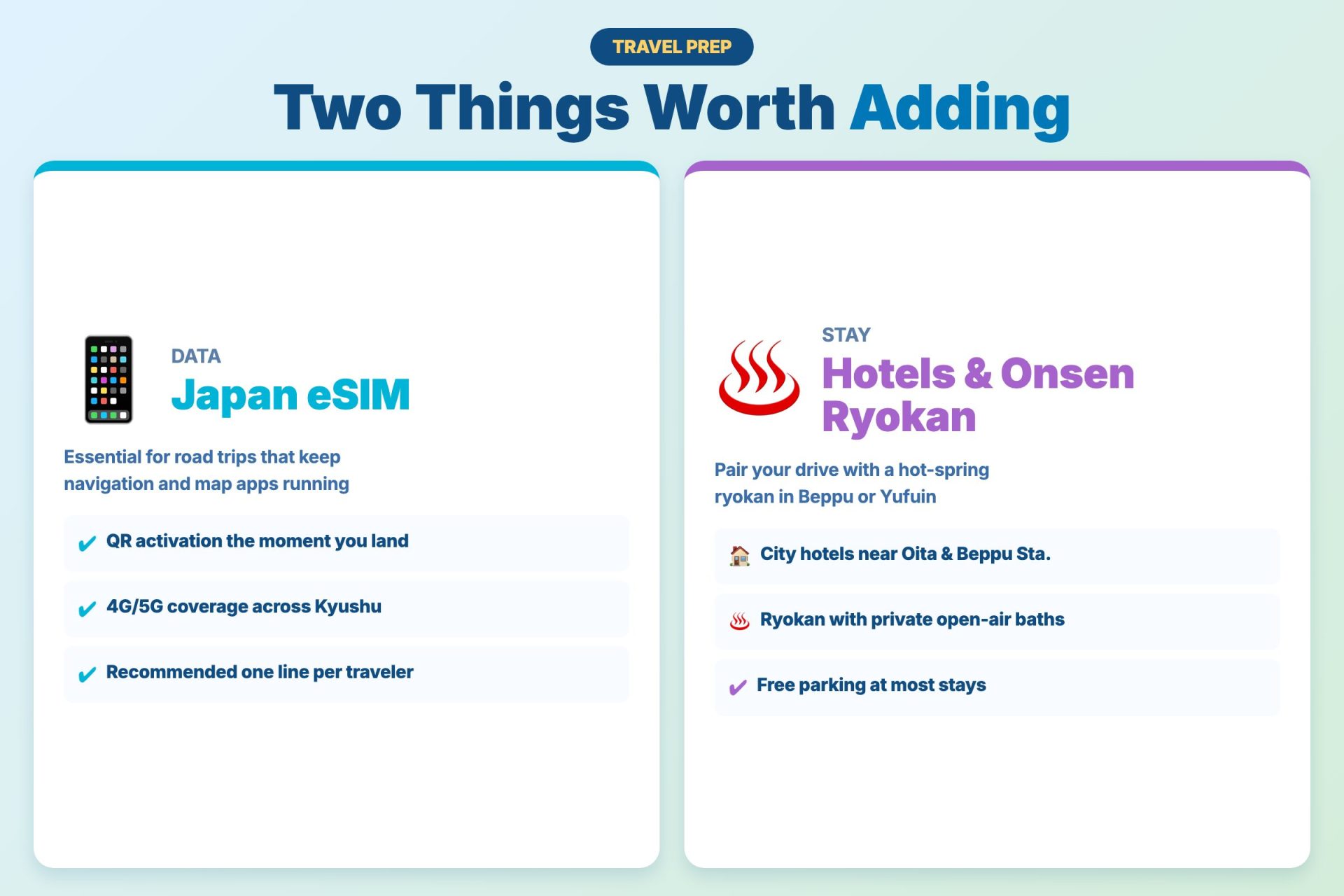
You’ll be running navigation and map apps the whole time you drive, so instead of paying roaming charges, pick up a Japan eSIM in advance. Our Japan eSIM booking page delivers a QR profile you can activate the moment you land at the airport.
Where you sleep also shapes the trip. Beppu is best for the classic hot spring resort experience with rooms of scale; Yufuin gets you the quiet ryokan-and-Mount-Yufu morning. If you’re planning the “Beppu + Yufuin” classic course, splitting one night at each side is a common move. Browse options at our hotel booking page — filter by area and see rates alongside the rental car in one place.
Frequently Asked Questions
Q1. Do I need to book my Oita rental car in advance?
A. Strongly recommended for peak season and weekends. Oita Airport has eight rental counters, but popular car classes sell out right after the morning flights land. Our GO!GO!TOUR group inventory offers instant confirmation, which is a real advantage in peak season, and we send the documentation checklist (including licence-translation guidance where applicable) with your booking so the day-of process is smooth.
Q2. Can I fly directly to Oita from outside Korea?
A. Direct flights into Oita (OIT) are limited. From Seoul-Incheon, Jeju Air runs the only scheduled non-stop. From most other origins, the practical routings are to connect via Fukuoka or Tokyo, or fly into Fukuoka and drive about 2 hours. There is currently no scheduled direct route from Busan (Gimhae).
Q3. What car class works best for a family of four in Oita?
A. With 2–3 suitcases, a hybrid compact (Aqua, Fit HV, Note e-Power at ¥13,840 / 48 hrs) balances fuel economy and parking convenience. With 4+ suitcases or child seats, a compact minivan (Sienta at ¥17,400 / 48 hrs) or an 8-seater van (¥26,800–32,144 / 48 hrs) gives more breathing room.
Q4. What do I do if there’s an accident or I’ll miss the return time?
A. Contact GO!GO!TOUR support. We staff English support 09:00–18:00 JST, 365 days, and our Japan-based team liaises with the rental company on your behalf. For overnight or early-morning incidents, first call the 24-hour rental company number posted in the vehicle, then message us the next morning with the situation so we can help with the follow-up.
Q5. Can I drive to Yufuin or Kuju in winter?
A. Yes, but the Kuju highlands (800–1,300 m elevation) can get snow and ice in December–February — confirm the studless tyre option is available when you book. Prefectural Route 11 between Beppu and Yufuin also fogs in often, so use the Yufuin IC expressway detour for rain or night driving.
Q6. Can I pick up in Fukuoka and return in Oita?
A. Most major rental companies allow it, though a one-way fee of ¥5,000–10,000 may apply. GO!GO!TOUR handles Kyushu-wide one-way return consultation — reach us through the support channel to work out the details.
Wrapping Up — Oita’s Onsen, Nature and Food, All Linked by One Car
Oita stacks the powerhouse onsen brands of Beppu and Yufuin on top of the Kuju highlands and Nakatsu’s food scene — a region you can only fully enjoy with a rental car.
The essentials again —
- GO!GO!TOUR group line-up from ¥10,672 for a kei car, ¥13,840 for a hybrid compact, up to ¥32,144 for a van (all 48-hour rates)
- Booking perks: instant confirmation, free airport shuttle, optional insurance, under-21 NOC add-on, Kyushu one-way return consultation
- On-the-ground support: English intake 09:00–18:00 JST, 365 days — accidents, pickup changes, return extensions all handled
- Direct Incheon–Oita is Jeju Air only; other origins connect via Fukuoka or Tokyo; no Busan direct
- Bring passport, home-country licence with Japanese translation or an International Driving Permit, credit card in the driver’s name
- Beppu Hell Tour: ¥2,400 adult, ticket valid 2 days; Kuju Yume Bridge ¥500
- For winter Kuju, confirm the studless tyre option
If you’re planning Oita, the natural place to start is comparing options on our GO!GO!TOUR Oita rental car search page.
Search Oita rental cars (prefecture code 44)

Because in Oita, the list of things you want to do always outgrows the days you have.