Sunayama Beach Miyakojima — A Hidden White Bay Revealed by Climbing a Sand Dune
If a single beach earns the bucket-list label on Miyako Island, it’s Sunayama Beach (砂山ビーチ). Just 15 minutes by car from Hirara town, this stretch of brilliant white sand is hidden behind an actual sand dune — and you only see the turquoise bay the moment you climb to the top. That short walk-up reveal is the experience that sets Sunayama apart from every other Okinawa beach.
This Sunayama Beach Miyakojima guide is written for foreign visitors arriving in Miyako Island for the first time. Inside you’ll find how to reach Sunayama Beach, where to park, the famous arch rock, swimming safety, the best photo timing, and how to pair this beach with the rest of a Miyako day trip. Practical, English-language, written from a first-person visit rather than a generic tourism page.
👉 You’ll need a rental car. Public transit doesn’t reach Sunayama Beach, and parking is right next to the dune. GO!GO!TOUR Miyako Island rental car offers English support, transparent pricing, and pickup at both Miyako and Shimojishima airports.
Quick Facts at a Glance
The single-screen overview most foreign travelers want before locking in a date.
| Item | Details |
|---|---|
| Spot name | Sunayama Beach (砂山ビーチ — “Sand Mountain Beach”) |
| Location | 沖縄県宮古島市平良荷川取 (Nikadori, Hirara, Miyakojima City, Okinawa) |
| Admission | Free, 24 / 7 — public beach, no gate |
| Parking | Free lot (about 30 cars) — fills up by 10:00 on sunny weekends |
| Showers / Restrooms | Basic rinse shower and restrooms near the parking lot (seasonal operation) |
| Recommended stay | 60 – 120 minutes for a full visit |
| Best light | 10:00 – 14:00 on a clear day with light wind for peak Miyako Blue |
| Swimming | Possible, but no lifeguards. Rip currents and falling rocks are real risks |
| Snorkeling | OK in calm conditions; coral starts about 30 – 50 m offshore. Fins recommended |
| Access | Rental car effectively required — bus and taxi are not practical |
Why “Sunayama”? The Story Behind the Sand Mountain
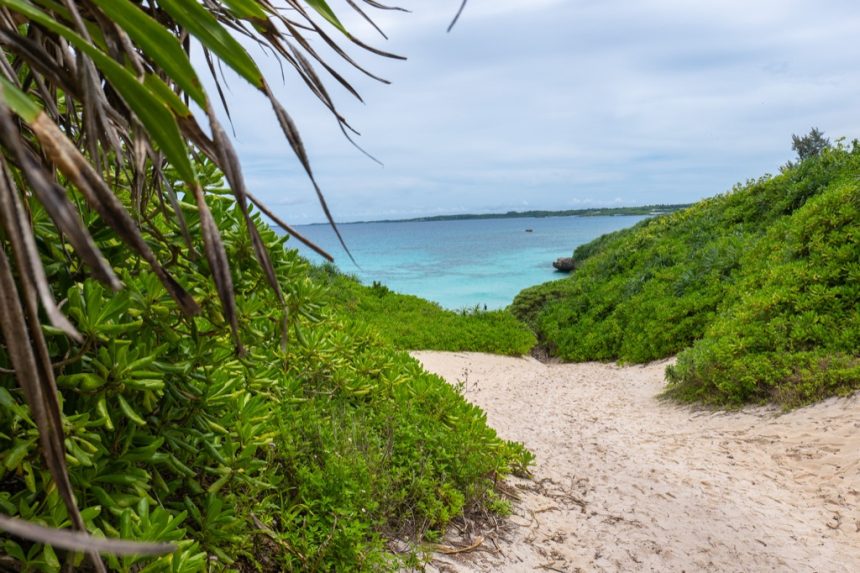
“Sunayama” literally means “Sand Mountain” in Japanese, and it’s a perfectly literal name. Between the parking lot and the sea sits an actual white sand dune. From the parking area you can’t see the ocean — only a wall of pale sand. You have to walk up and over the dune to reach the beach, and the reward is what every visitor remembers: the bay opens up suddenly, framed by tropical plants, with turquoise water spilling out to the horizon.
The sand itself is fine coral and shell, ground over millennia into a powder that feels cool underfoot even at midday. From the top of the dune, the water reads as a perfect gradient — emerald green at the shore, turquoise in the middle, deep blue toward the horizon.
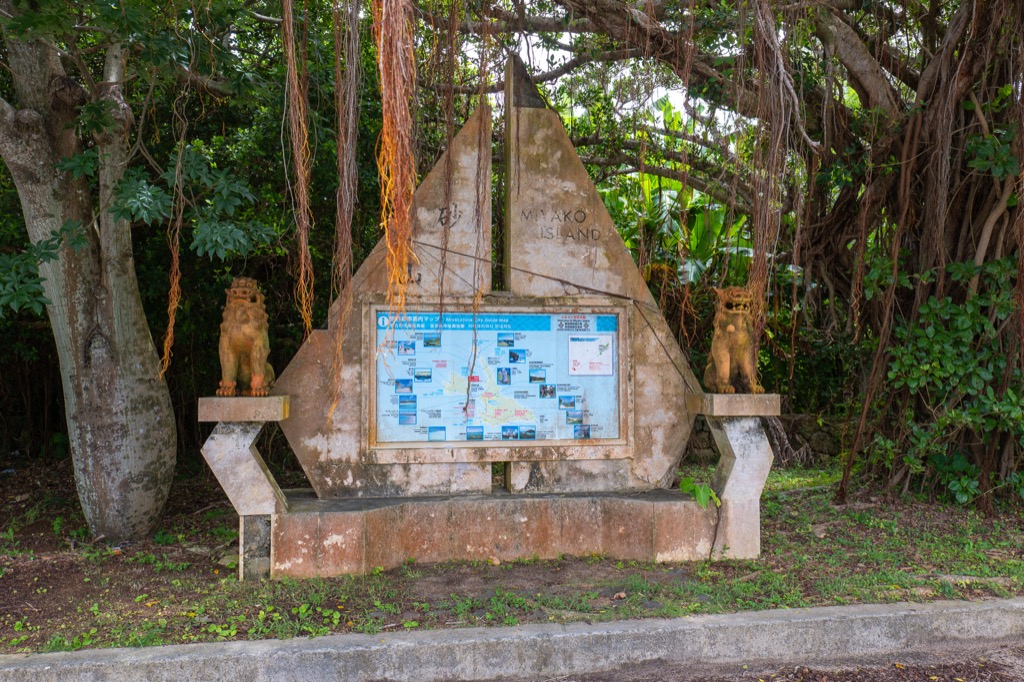
The parking entrance is marked by a Miyako welcome monument with two Shisa lion guardians — classic Okinawan symbolism — and a tourist map of the island. The walk from the parking lot to the top of the dune takes about 2 – 3 minutes, then another few seconds to descend to the sand.
How to Get to Sunayama Beach
Sunayama Beach is one of the most easily accessible scenic beaches on Miyako Island — about 15 minutes by car from central Hirara.
| From | Distance | Drive Time | Notes |
|---|---|---|---|
| Hirara (main town) | About 5 km | About 15 minutes | Most hotels and restaurants are here |
| Miyako Airport (MMY) | About 9 km | About 20 minutes | Best for travelers connecting via Naha on JAL or ANA |
| Shimojishima Airport (MMD) | About 22 km | About 35 – 40 minutes | Best for direct flights or Skymark from Tokyo / Kobe |
| Higashi-Henna Cape | About 40 km | About 70 minutes | Eastern tip — pair as an east-west day loop |
Miyako has effectively no public transportation between attractions, so rental car is the standard way to reach Sunayama Beach. The parking lot holds about 30 cars and fills up by 10:00 on clear weekends. Either arrive before 9:30 or after 14:00 for the most relaxed visit.
Want to compare local rental car operators first? See our companion guide: Shimojishima Airport rental car guide.
Also compare island-wide pricing before you book: our Miyakojima rental car price guide breaks down year-round costs and what to expect in peak season.
The Walk-Up Reveal — From Parking Lot to Beach
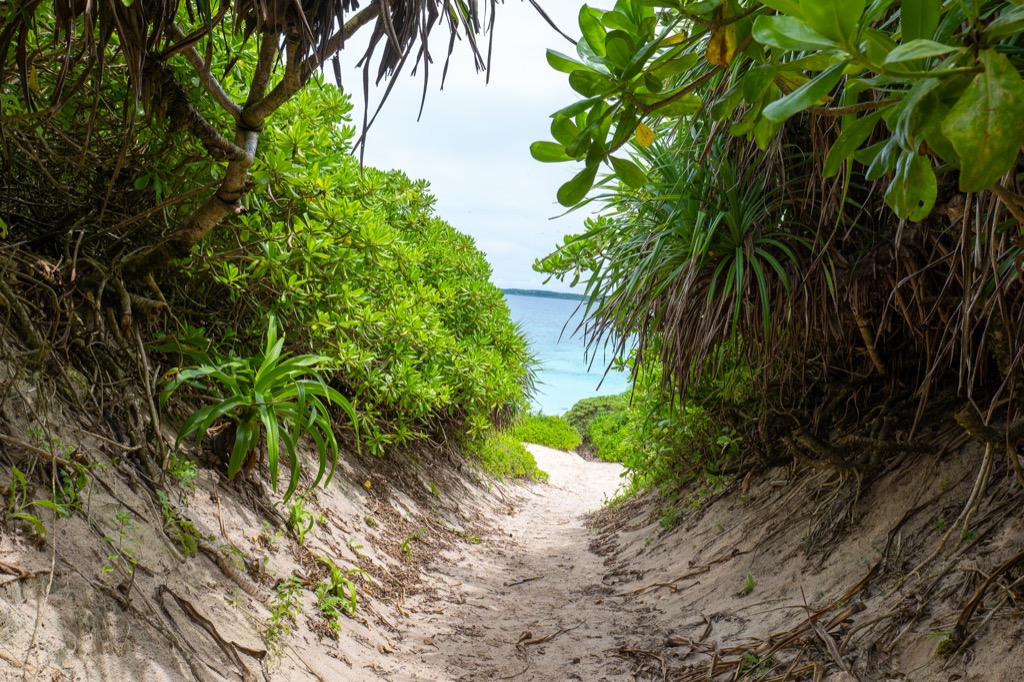
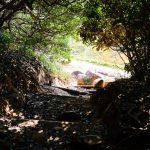
The path from the parking lot to the beach winds through a tunnel of Pandanus trees and Adan (screwpine). It’s short, but the green canopy and deep loose sand underfoot immediately set the tone — you’ve left the road behind and you’re walking into something special.
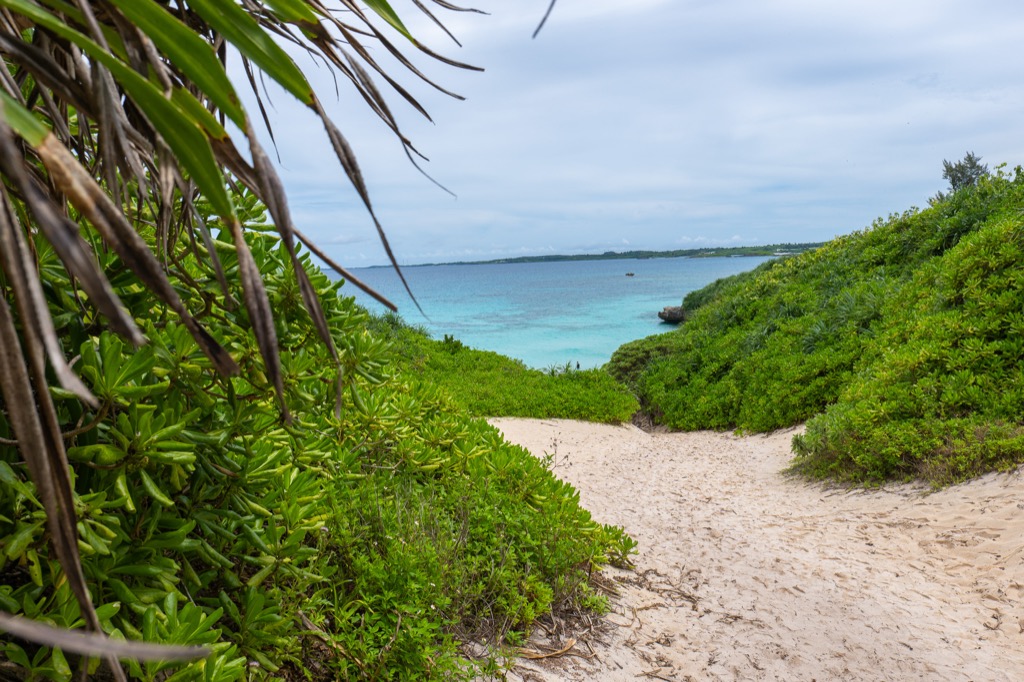
The top of the dune is the moment everyone remembers. The bay opens up below you in a single instant, framed by green vegetation on either side — this “first glimpse of Miyako Blue” is the photo and the memory that keeps visitors coming back. Take a beat at the top before you walk down. The view is better from up here.
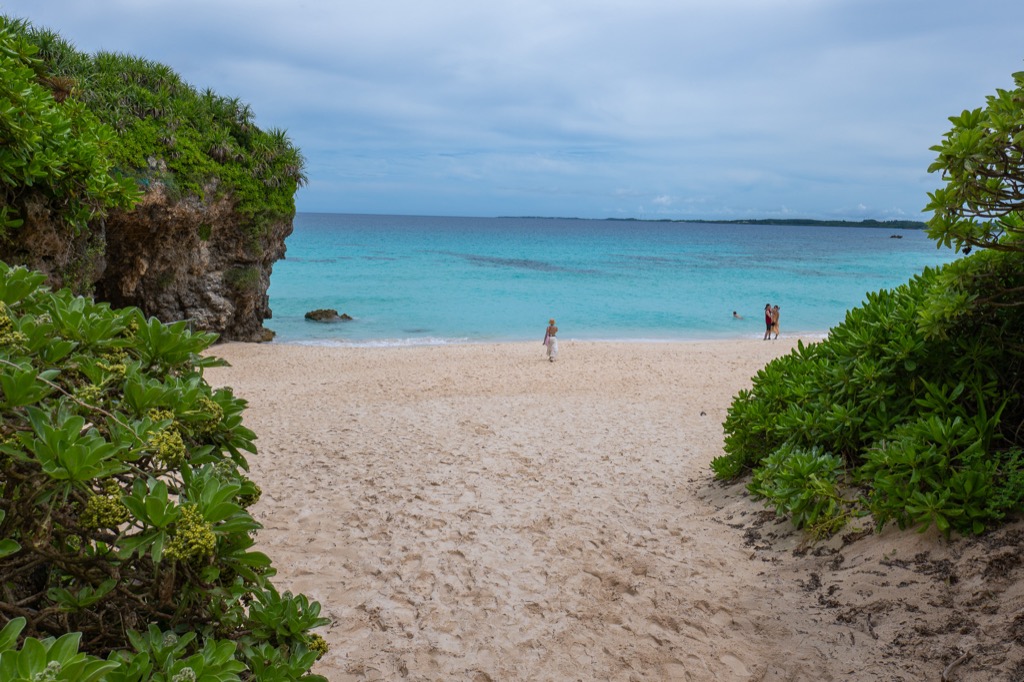
Down the other side, you reach a flat stretch of soft white sand. From here you can walk along the waterline, find a quiet spot for a towel, or just stand and look — the beach is rarely crowded enough to feel busy.
The Arch Rock — Sunayama’s Signature Photo
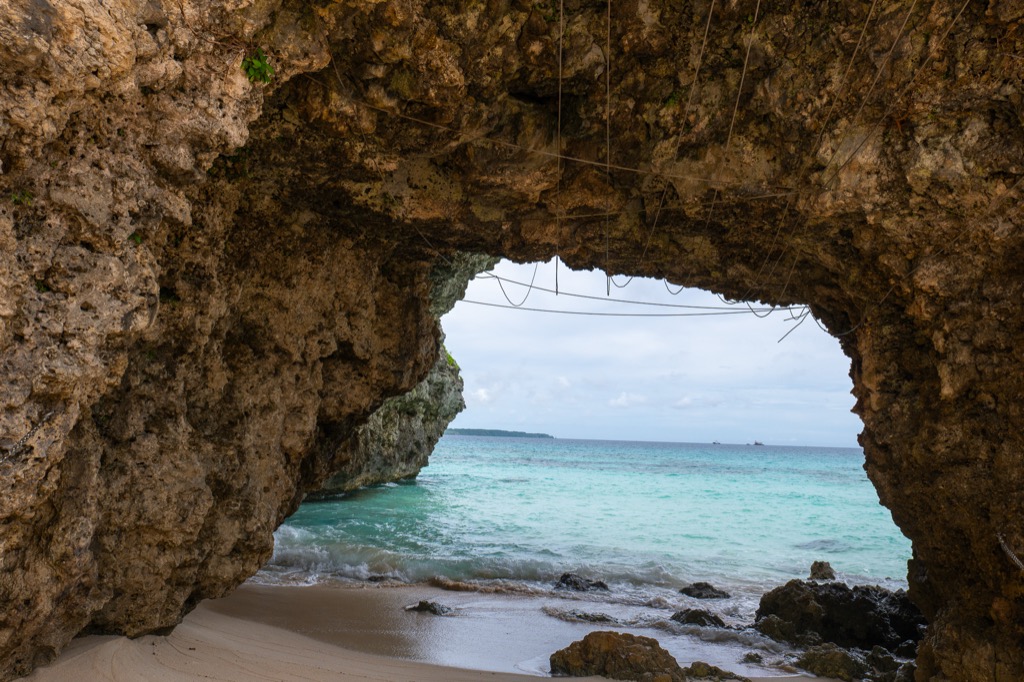
The centerpiece of Sunayama Beach is the natural arch rock set into the limestone cliffs that ring the bay. Carved by centuries of wind and waves, the arch frames a perfect picture of turquoise sea and sky behind it. It’s the single most photographed feature in this part of Miyako.
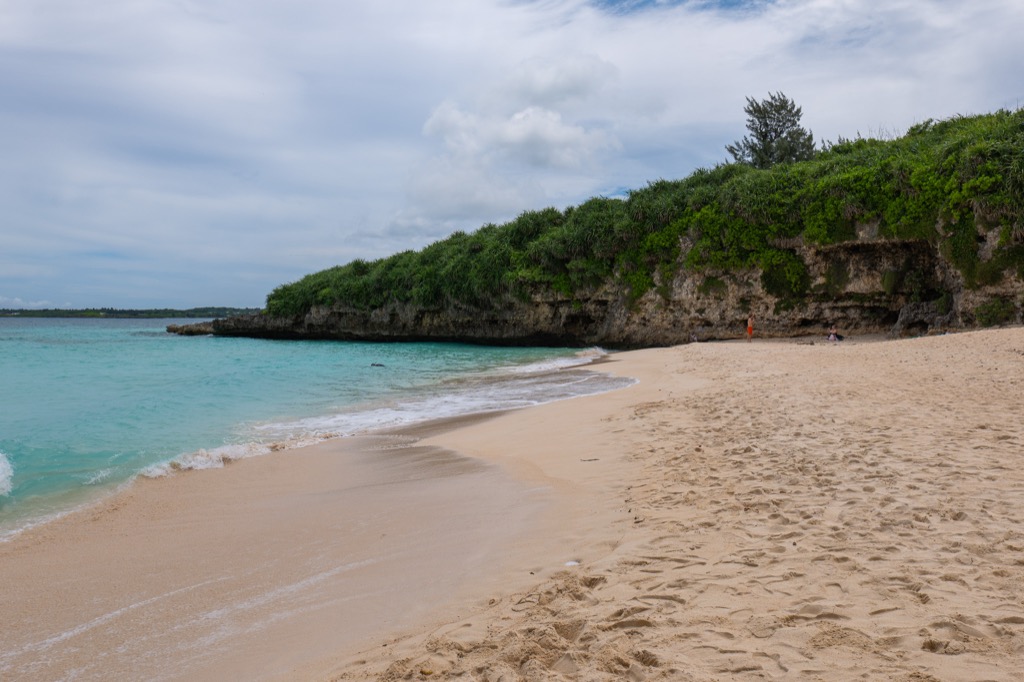
Around the arch, uplifted coral cliffs wrap the bay in dramatic vertical limestone walls topped with green vegetation. The combination — green above, white sand below, turquoise water in front — is what makes every angle of Sunayama Beach feel like a postcard.
⚠️ Safety note: Falling rock has been reported at the arch. Don’t stand or sit directly underneath for photos. A few steps back from the arch gives you a better composition anyway — the full structure fits in the frame and you stay out of any hazard zone.
Swimming and Snorkeling — How to Enjoy Sunayama Safely
Sunayama Beach is not an officially operated swimming beach. There are no lifeguards, no jellyfish nets, and no roped-off safe zones. Plenty of visitors still swim, but it pays to know the conditions before you wade in.
- Rip currents — Depending on wind, currents can pull you away from shore. Stay reasonably close in and don’t swim out alone
- Coral reef is offshore — Snorkelers need to swim 30 – 50 meters out to find the live reef. Bring fins, and ideally a snorkel buddy
- Falling rocks at the cliffs — Avoid resting directly under the limestone overhangs
- Box jellyfish season (May – October) — Habu kurage stings can be very serious. Wear a rash guard or skin suit during this window. No protective nets on this beach
- No lifeguards — Keep a close eye on children at all times
- Skip swimming on rough days — Strong wind or high surf? Photo-only day. The bay looks great even from the dune
If you want a real snorkel or beginner dive experience, a guided boat trip out to a healthy reef is far safer and more rewarding than swimming offshore from Sunayama alone. Browse Miyako-area marine activities to compare options.
Beach Geology — Caves, Cliffs, and How Sunayama Was Shaped
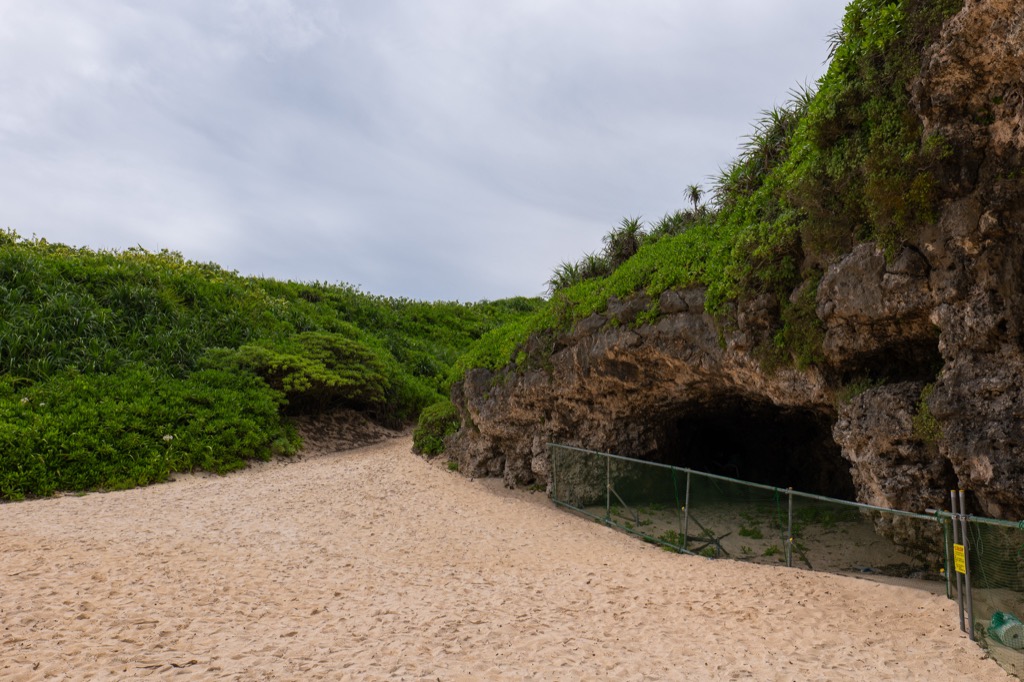
Walk along the base of the cliffs at low tide and you’ll see how the bay was shaped — eroded limestone caves and overhangs have been carved at sea level over thousands of years. Some openings are roped off for safety, but you can stand close enough to see the layers of ancient coral now exposed above the waterline.
This is also the part of the beach where you can find the most interesting shadow play in late afternoon. Just don’t linger directly underneath rock overhangs.
Best Time to Visit — Light, Color, and Crowds
Miyako Blue is most saturated under direct overhead sunlight — roughly 10:00 to 14:00 — on days with little wind and minimal cloud cover. After heavy rain or on windy days, churned sand can give the water a milky look. Plan with some flexibility if you can. The timing tips in this Sunayama Beach Miyakojima guide apply year-round.
| Season | What to expect |
|---|---|
| March – May (early summer) | Stable weather before the rainy season. Comfortable 25°C. Beach season officially opens late March |
| Late June – July | Peak summer beach season. Sea lily flowers bloom along the sand path edges |
| August – September | Hottest water and air. Typhoon watch. Early morning and late afternoon are most pleasant |
| October – November | Summer heat eases, water still warm enough to swim. Crowds thin out — best for quiet visits |
| December – February | Too cool for most swimmers (water around 20°C) but the bay still looks gorgeous. Great for walks and photos |
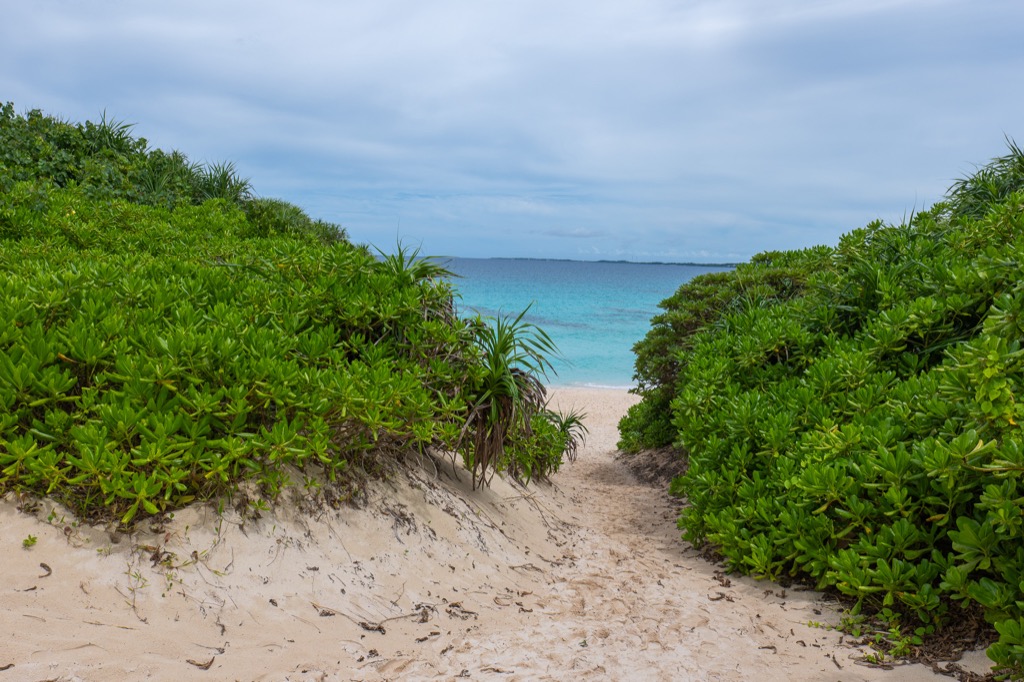
📷 Photo tip: Pause at the top of the dune and frame the bay with the green vegetation in the foreground — that’s the signature Sunayama shot. The arch rock photographs best in the morning, when side lighting gives the limestone texture and shadow depth.
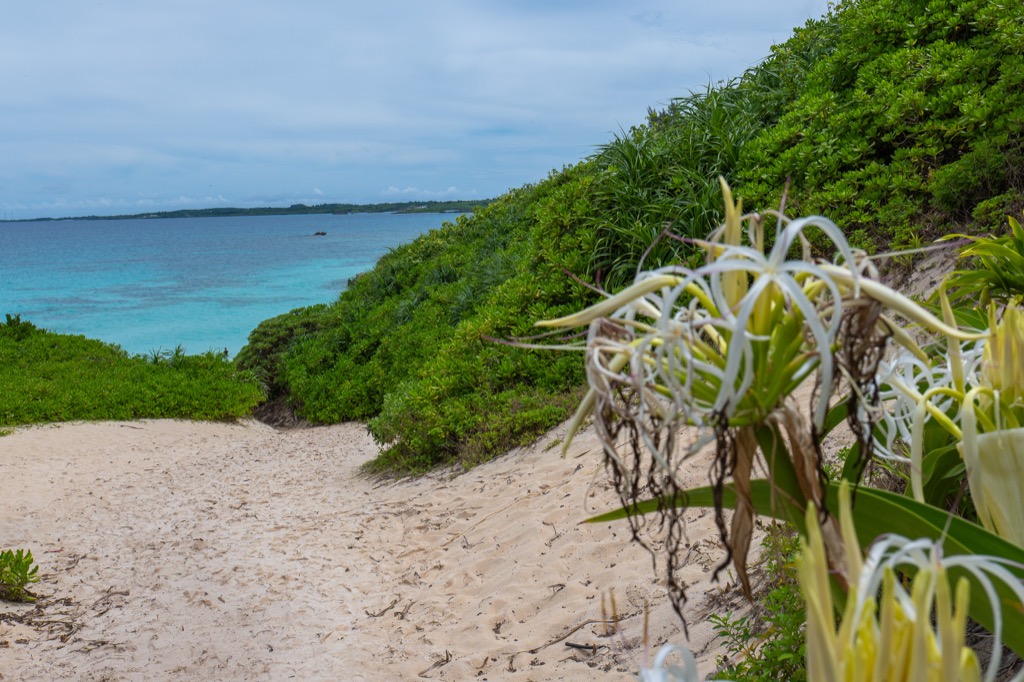
If you visit in late June or July, the native sea lilies (hamayu) along the upper sand are a beautiful seasonal detail — white flowers framing the path down to the water.
Practical Tips for Foreign Visitors
- Strong sunscreen (SPF50+, reef-safe) — Limited shade. Reef-friendly formulations protect coral health, which matters more here than at most beaches
- Sunglasses, hat, rash guard — Doubles as sun protection and jellyfish protection (May – October)
- Water shoes — Some shell fragments and small rocks on the entry. Better than bare feet
- Drinking water and snacks — No vending machines or shops within walking distance. Stock up in Hirara on your way
- Microfiber beach towel — Sand brushes off easily, packs small
- Camera cloth — Sand and salt mist will find your lens
- Trash bag — No bins on the beach. Pack out what you bring in
- Kids’ life vest — Even shallow water gets deep faster than you expect with surf. Ask your hotel about rentals
- Cash for parking-area shops (if open) — Many small kiosks are cash-only
Pair Sunayama Beach With the Rest of Your Miyako Day
Sunayama is close to Hirara, so it’s easy to combine with two or three other Miyako Island spots on a single day trip.
- Painagama Beach — Closest beach to Hirara, a popular sunset spot. About 10 minutes from Sunayama
- Irabu Ohashi Bridge — Japan’s longest toll-free sea bridge, 3,540 meters. About 20 minutes from Sunayama. Read our full Irabu Bridge guide / Driving Across Irabu Bridge
- 17END (Shimojishima) — Runway-end beach where landing aircraft pass overhead. About 35 minutes from Sunayama. Read our full 17END guide
- Toguchi Beach (Irabu) — Calm shallow water, ideal for swimming with kids. About 25 minutes from Sunayama
- Yonaha Maehama Beach — Often called Japan’s most beautiful beach. About 20 minutes south of Sunayama
A classic one-day loop: morning at Sunayama Beach → lunch in Hirara → afternoon drive across Irabu Ohashi Bridge and visit 17END → sunset at Sawada-no-hama Beach. Six to seven hours total, and one of the most rewarding day trips in Okinawa.
Comparing Miyako to other islands in Okinawa? Our Best Okinawa Outer Islands guide covers Miyako, Ishigaki, and day-trip options from the main island.
Planning your overall route? Our Miyako Island destination guide covers seasons, food, and area tips.
FAQ — Quick Answers for First-Time Visitors
Q. Is there an admission fee at Sunayama Beach?
No. Sunayama is a public beach with free 24/7 access. There’s no gate, ticket, or booking.
Q. Is parking free, and how busy does it get?
Parking is free in a lot for about 30 cars. On sunny weekends and holidays, the lot fills by 10:00. Aim for before 9:30 or after 14:00 for an easier arrival.
Q. Are there showers and restrooms?
Yes — basic rinse showers and restrooms near the parking lot, sometimes seasonal. For a real shower, plan to clean up back at your hotel.
Q. Can I swim and snorkel safely?
Swimming is possible but no lifeguards are on duty. Rip currents and offshore reef mean you should stay close in. For a real snorkel experience, take a guided boat trip to a healthier reef.
Q. When is jellyfish season?
May to October. Box jellyfish (habu kurage) stings can be serious. Wear a rash guard or skin suit during this window. The beach has no protective nets.
Caught bad weather? See our Miyako Island rainy day sightseeing guide for indoor and sheltered alternatives when the beach isn’t ideal.
Q. What’s the best time of day for photos?
10:00 to 14:00 for peak Miyako Blue. Early morning is best for quiet walks; the arch rock photographs best in the morning’s side light.
Q. Is it safe to visit with kids?
Yes with supervision. The water is shallow at first but no lifeguards, plus falling-rock cliffs and rip currents mean you should keep close watch at all times. Don’t let kids linger directly under the arch rock or cliff overhangs.
Q. Is the walk over the dune difficult?
Short but steep, with deep loose sand. Difficult for travelers with mobility issues or for strollers. Use a baby carrier instead of a stroller.
Q. Do I need a rental car?
Effectively yes. Public transit doesn’t reach Sunayama Beach, and taxi fares add up. A rental car from Miyako or Shimojishima Airport is the standard choice.
New to driving in Japan? Check our Japan rental car precautions guide — 8 rules every first-time driver in Japan needs to know.
Q. Do I need to know Japanese to drive here?
No. Major road signs include English on Miyako. Bring offline maps and a translation app for smaller signs, and you’ll be fine.
Wrap-Up — Climb the Dune, Stop at the Top, and Let Miyako Blue Find You
This guide walked you through how to reach Sunayama Beach, what to expect at the arch rock, swimming safety, the best photo timing, and how to pair this beach with the rest of a Miyako day trip. The walk-up reveal is what makes Sunayama stand out — plan to arrive when the light is right, take a moment at the top of the dune, and let the bay do the rest.
If you want to make the most of your day on Miyako Island, book a rental car with GO!GO!TOUR and start your morning at Sunayama Beach. Reserving early — especially May through October — keeps the rest of the day relaxed.
Quick checklist before you go:
- Free entry, free parking, 24 / 7 — no booking required
- Best light is 10:00 – 14:00 on a clear day
- Don’t stand directly under the arch rock or cliffs (falling rock risk)
- Swimming OK with caution — no lifeguards, watch for rip currents
- May – October: wear a rash guard (box jellyfish season)
- A rental car is essentially required
Book Your Miyako Rental Car with GO!GO!TOUR — English Support and Easy Pickup.
GO!GO!TOUR is locally operated in Miyako Island with English-speaking staff, transparent pricing, and pickup at both Miyako and Shimojishima airports. First-time visitors to Japan can complete the whole rental process — from booking to vehicle handover — entirely in English.
🚗 Miyako Rental Car — Search by Category
- 🚗 Kei-car (K) search — narrowest body, easiest for first-time Japan drivers
- 🚗 Compact (S) search — 2 – 3 travelers, hybrid options (Yaris, Aqua)
- 🚗 Mid-size / Wagon (M/W) search — 4 – 5 travelers with luggage
- 🚗 Minivan (V) search — 6 – 8 travelers, families and groups
🏝️ Miyako Island rental car landing page — vehicles, pickup locations, prices
🏖️ Miyako marine activities — snorkeling, diving, SUP
🍴 Miyako Island travel guide — spots, food, seasonal tips
🔗 Related guides — Pair Sunayama with these Miyako classics
- 📍 Irabu Ohashi Bridge Guide — Driving Japan’s longest toll-free sea bridge
- 📍 17END Shimojishima Guide — Where jets skim a turquoise sea
- 📍 Shimojishima Airport Rental Car Guide — Direct gateway to Miyako Island
- 📍 Miyako Island Weather Guide — Best time to visit by season

Climb the dune slowly. The first sight of Miyako Blue is worth waiting for 🌊🏖️