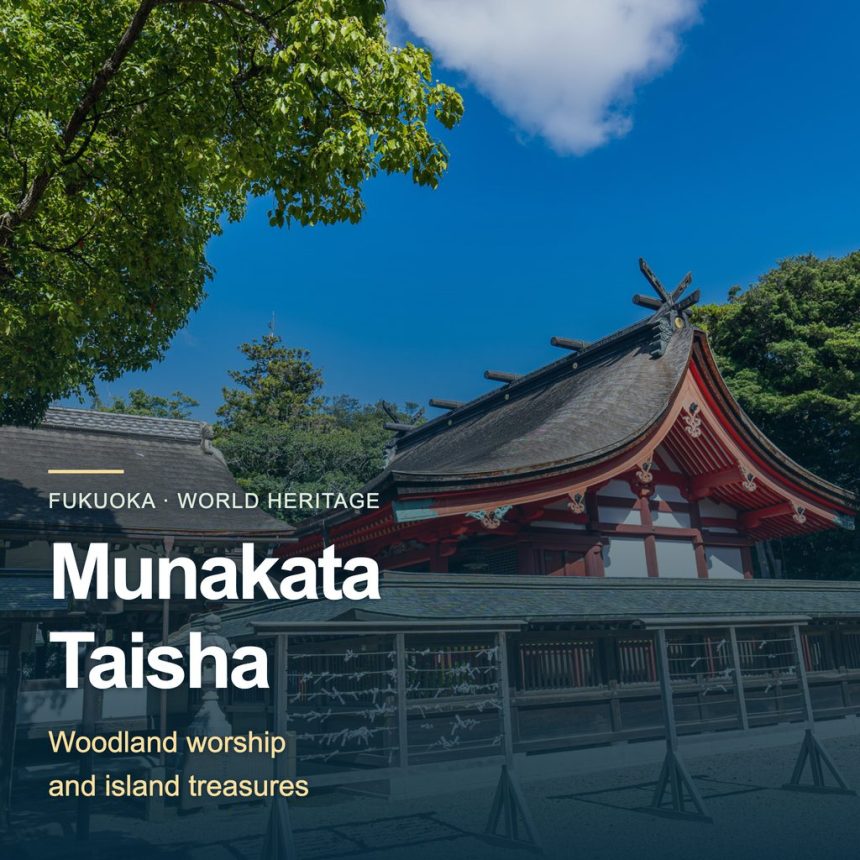
Munakata Taisha — a World Heritage day trip beyond central Fukuoka
You can visit Munakata Taisha’s mainland shrine, Hetsumiya, without taking a ferry. A train to Togo followed by a local bus brings you to its wooded grounds, where worship halls, an open-air ritual site and the Shimpokan Museum offer three different ways to understand this coastal region.
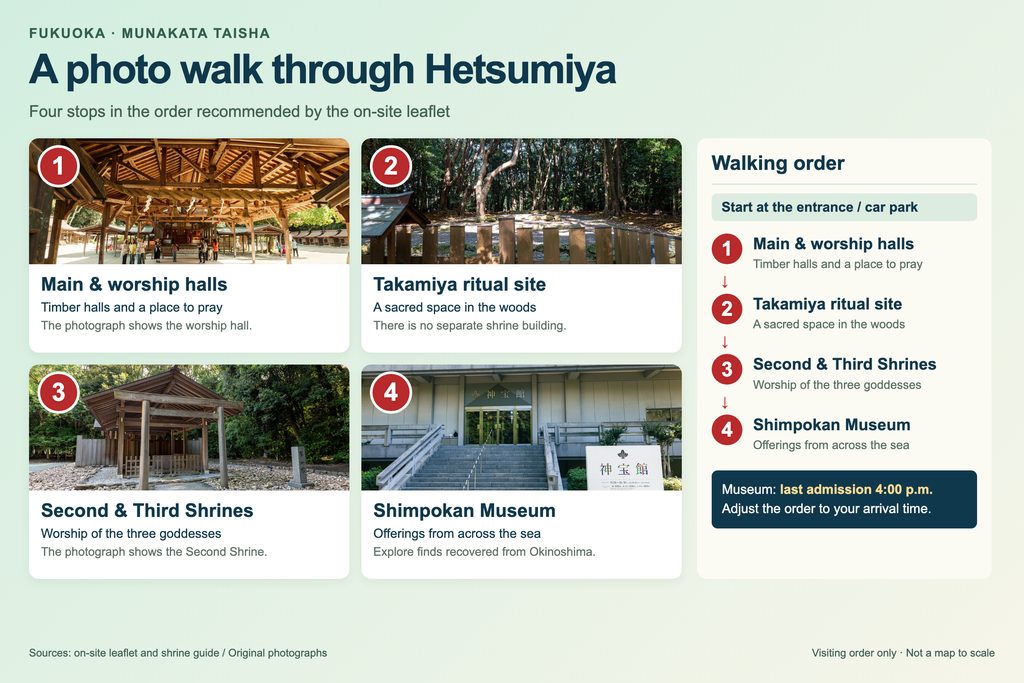
The photographs below follow a walk through Hetsumiya, using the route recommended in the on-site leaflet. Start with the mainland shrine if this is your first visit. Oshima requires a separate boat journey, while the sacred island of Okinoshima is closed to public landing.
Planning to explore more of the coast? GO!GO!TOUR’s Fukuoka rental car page lets you look for a car for your Fukuoka itinerary. A rental is especially useful when your day includes several places beyond the shrine.
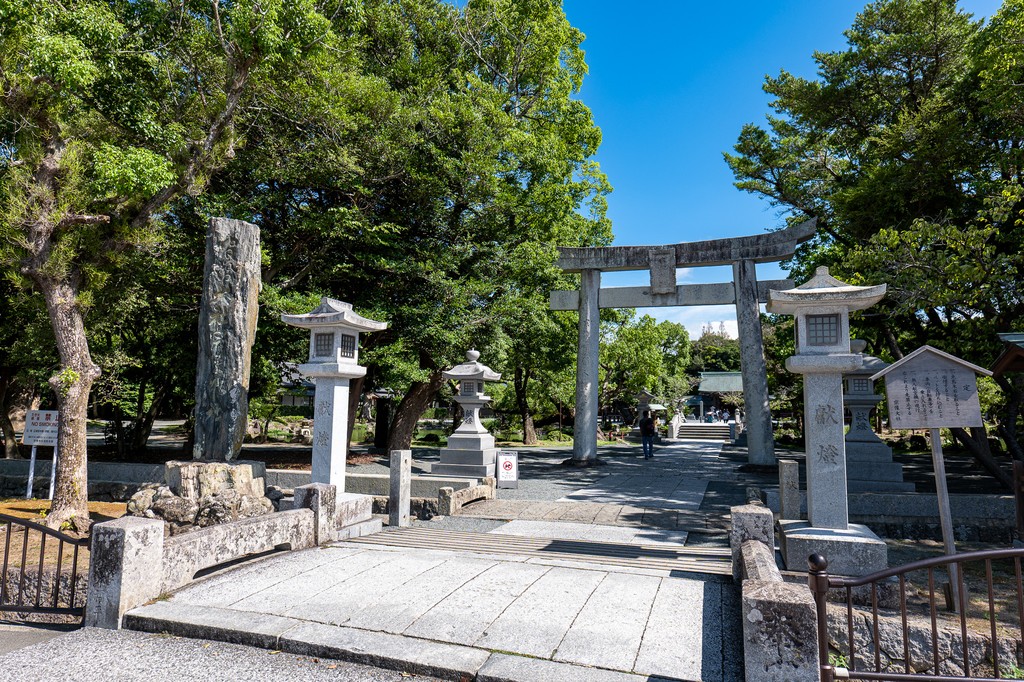
Train and bus or rental car: which works for your visit?
Public transport is a practical choice for a focused visit to Hetsumiya. Driving gives you more flexibility if you also want to explore the mainland tombs or make other coastal stops. Neither option changes the walking involved inside the shrine grounds.
| Your plan | Transport to consider |
|---|---|
| Hetsumiya and its museum | JR train to Togo, then a local bus |
| Shrine plus several mainland stops | Rental car, with free parking at Hetsumiya |
| Oshima as well as the mainland | A separate ferry itinerary; check sailing times before combining visits |
From Hakata Station, take the JR Kagoshima Main Line to Togo Station. A rapid service takes around 30 minutes, although the time depends on the train. Use the Munakata Taisha exit and continue to the Togo-ekimae bus stop.
Take a Nishitetsu route 1 bus serving Munakata Taisha-mae. The ride takes about 12 minutes, according to the city’s current access guide. Get off at Munakata Taisha-mae, close to the shrine. Check the destination before boarding and look up your return bus before starting the walk. Train and bus waiting times are additional.
The city’s public transport guide shows the station exit and local connections. It is in Japanese, so saving your station and stop names before departure can make the transfer easier.
By car, the shrine is approximately 20 minutes from Wakamiya Interchange or 25 minutes from Koga Interchange on the Kyushu Expressway. These are driving estimates from the exits, not total journey times from Fukuoka Airport or your hotel. Allow extra time for traffic and entering the car park.
Set your destination to Munakata Taisha Hetsumiya, 2331 Tajima, Munakata. When comparing rental options, check your collection location, return time and the costs of fuel, tolls and any optional coverage. You can browse Fukuoka rental car options through GO!GO!TOUR and choose around your actual travel dates.
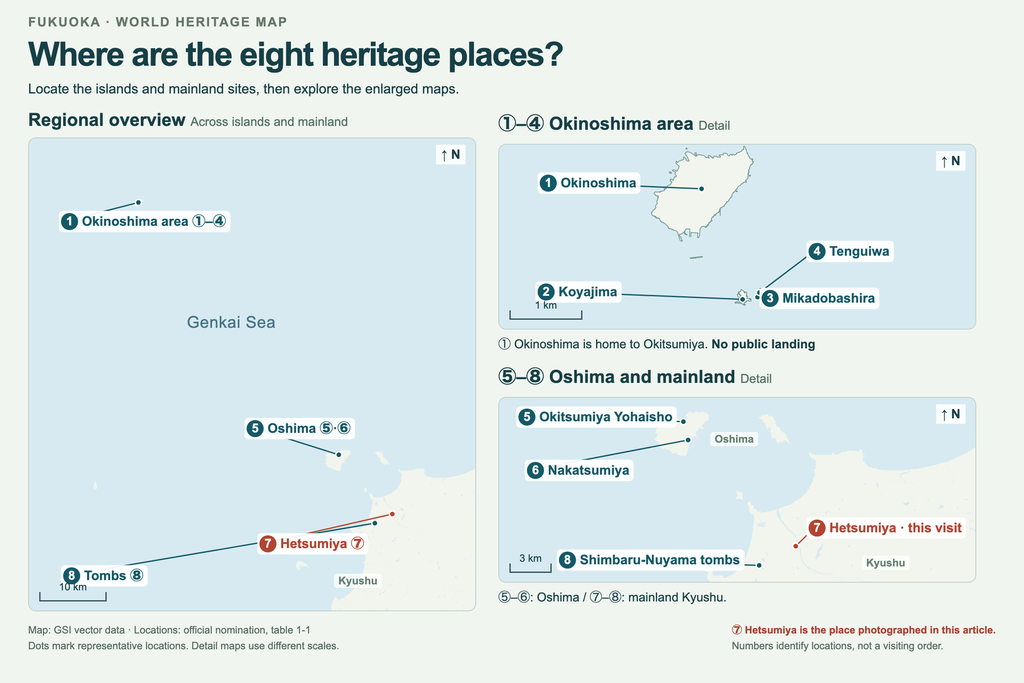
Where are the eight World Heritage places?
Munakata Taisha is the collective name for three shrines: Hetsumiya on mainland Kyushu, Nakatsumiya on Oshima, and Okitsumiya on Okinoshima. They are geographically separate. The World Heritage listing, inscribed in 2017, brings together eight places across the islands and mainland.
| Area | Places on the map |
|---|---|
| Okinoshima area | 1 Okinoshima · 2 Koyajima · 3 Mikadobashira · 4 Tenguiwa |
| Oshima | 5 Okitsumiya Yohaisho · 6 Nakatsumiya |
| Mainland Kyushu | 7 Hetsumiya · 8 Shimbaru-Nuyama Mounded Tomb Group |
The map numbers identify locations; they are not an itinerary. The photographs in this article focus on number 7, Hetsumiya. The tombs are elsewhere on the mainland, and the two Oshima sites are not inside Hetsumiya’s grounds.
A visit to the mainland shrine gives you access to part of the World Heritage site, not every place in the listing. This distinction is useful when deciding how much of your Fukuoka trip to set aside.
A walk through Hetsumiya in four stops
The leaflet’s recommended order is main and worship halls → Takamiya ritual site → Second and Third Shrines → Shimpokan Museum. Use it as a way to organize the visit, adjusting the order if you arrive close to the museum’s last admission time.
1. Look closely at the worship hall
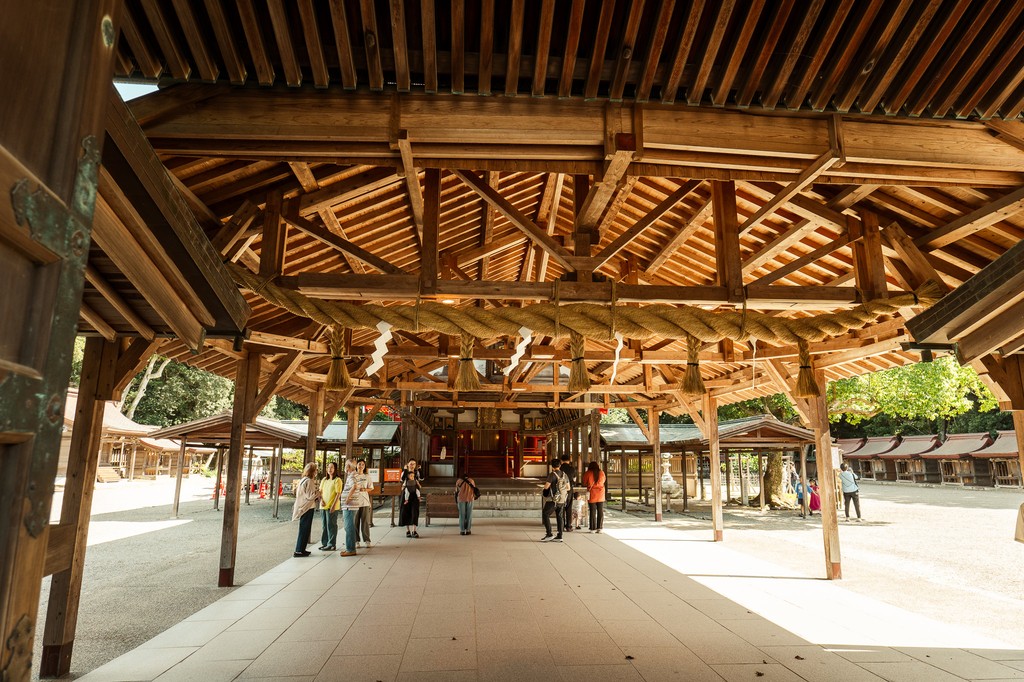
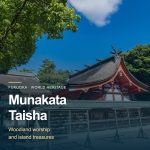
The open wooden structure in this photograph is the worship hall, or haiden. The main sanctuary stands behind it. Looking at the heavy timbers and the space where visitors offer prayers helps separate the building you can approach from the sanctuary beyond.
The present main hall was rebuilt in 1578 and the worship hall in 1590. Both are Important Cultural Properties. These dates describe the surviving buildings, rather than the beginning of worship at Munakata. Give yourself time to notice the rooflines before following the path toward the woods.
2. Follow the woodland path to Takamiya
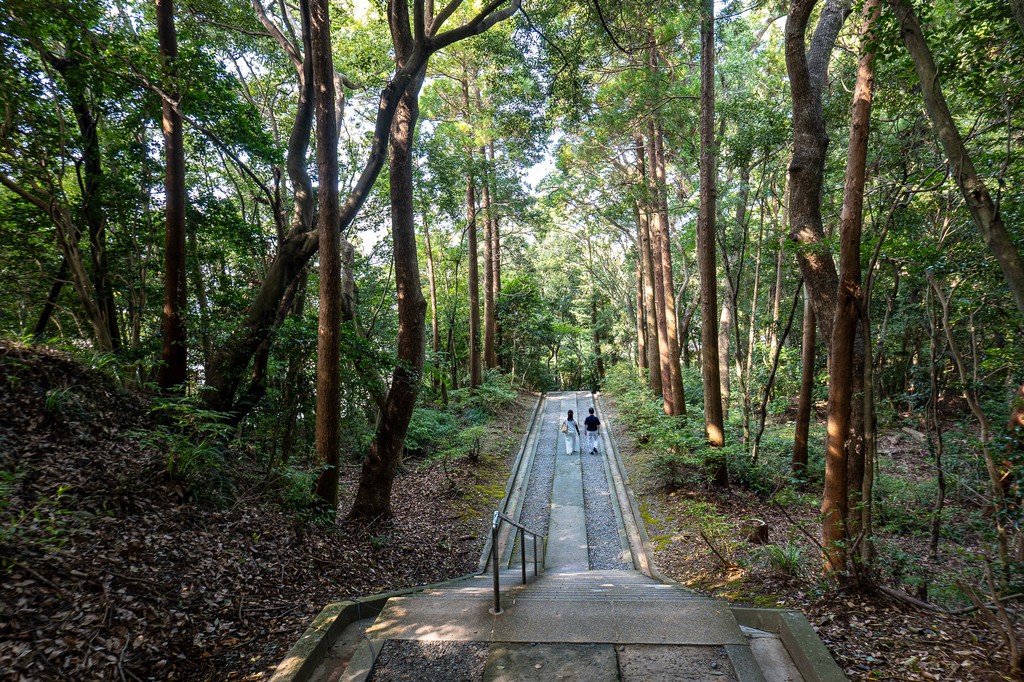
The walk becomes a different experience as you leave the main buildings and enter the trees. Steps lead through the wooded grounds toward Takamiya Saijo, the ritual site. Shoes suitable for steps and uneven paths are a sensible choice, particularly after rain.
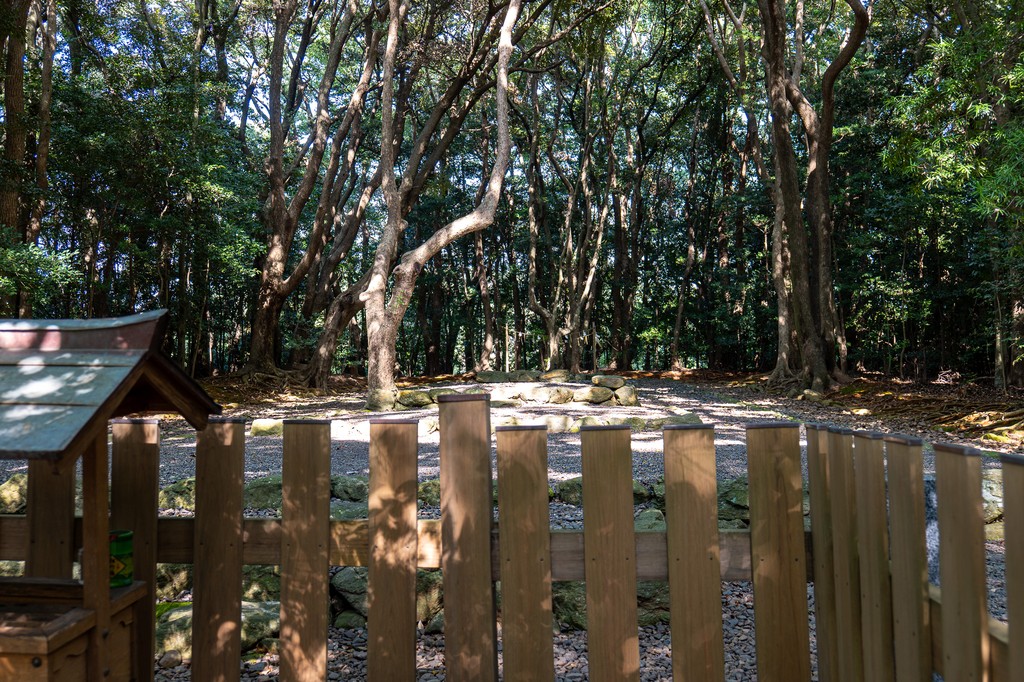
At Takamiya, the focus is an outdoor sacred space marked by stones and trees, rather than an enclosed shrine building. The shrine’s tradition associates this place with the descent of its goddesses. View the ritual area from the designated visitor space and follow the signs around it.
Takamiya is on the mainland. It is different from Okitsumiya Yohaisho on Oshima, where worshippers face the distant sacred island of Okinoshima. Similar references to ancient worship can make the names confusing; the location map helps keep the two visits separate.
3. Continue to the Second and Third Shrines
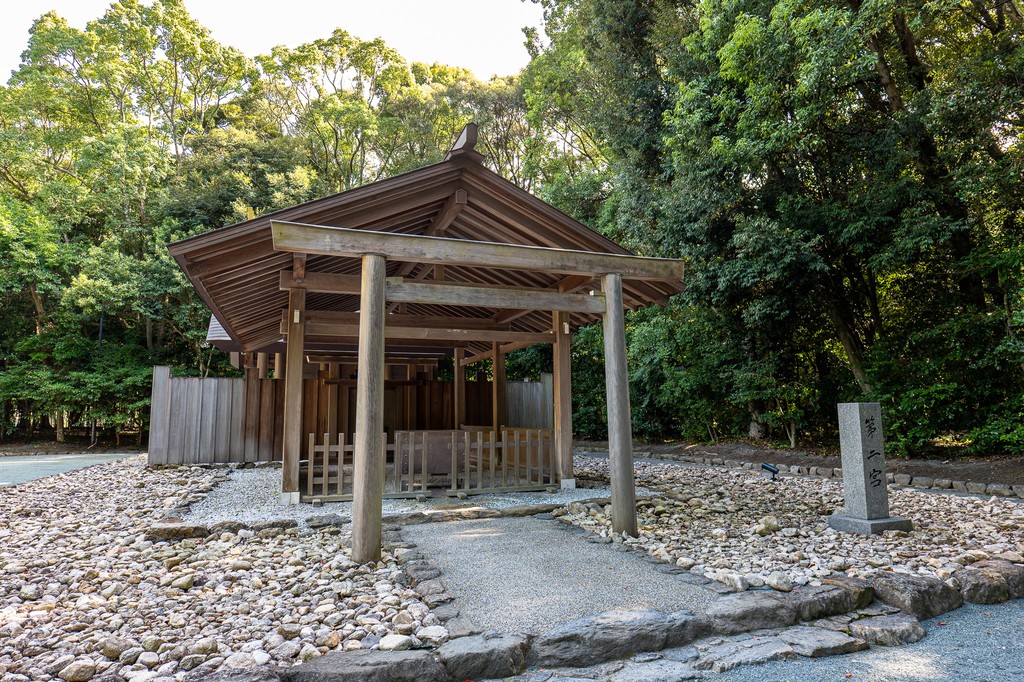
The photograph shows the Second Shrine. Together, the Second and Third Shrines bring the deities of Okitsumiya and Nakatsumiya into the mainland precincts. Their wooden buildings were transferred from Ise Jingu.
The on-site leaflet explains the significance of worshipping here alongside the main sanctuary: you can pay respects to all three Munakata goddesses within Hetsumiya. That religious connection does not mean you have physically visited all three island and mainland shrines.
4. Finish with the Shimpokan Museum
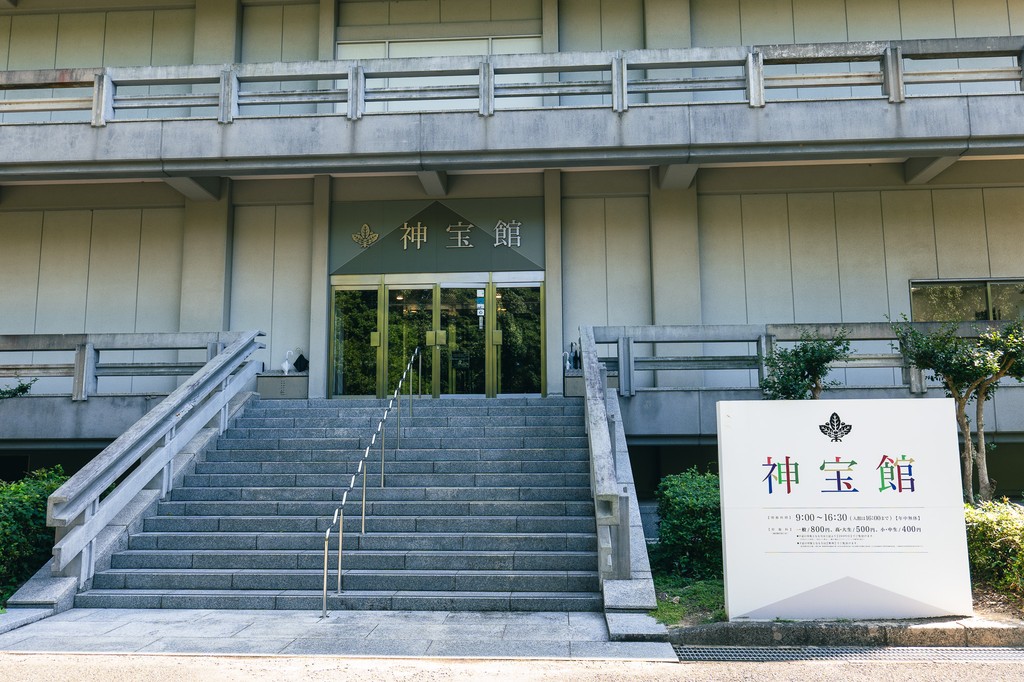
The museum brings the offshore story into reach. Its collection includes approximately 80,000 National Treasure objects recovered from Okinoshima, alongside other shrine treasures. That figure describes the collection, not the number of objects on display at any one time.
Objects deposited during rituals turn the sea-based history into something tangible. The leaflet highlights ornaments and other offerings; the displays let you move from the outdoor places of worship to the material traces of those practices. Check current exhibition information if there is a particular object you hope to see.
| Visit detail | Information |
|---|---|
| Shrine grounds and parking | Free |
| Museum admission | Adults ¥800 · high school/university students ¥500 · elementary/junior high students ¥400 |
| Museum hours | 9:00 a.m.–4:30 p.m.; last admission 4:00 p.m. |
| Usual opening schedule | Open year-round; check for temporary changes |
| Address | 福岡県宗像市田島2331 |
Details checked September 17, 2026. Consult the museum’s official English visitor information before traveling. Keeping the museum’s 4:00 p.m. admission deadline in mind makes it easier to pace the woodland walk.
The people behind the shrine’s modern preservation
Munakata-born businessman Sazo Idemitsu, founder of Idemitsu, supported restoration of the shrine and archaeological research on Okinoshima. The city museum documents this role in its account of Idemitsu’s connection with Munakata. His contribution belongs to its modern preservation story.
There is also a connection with former prime minister Taro Aso: the first torii was donated by his great-grandfather, Takichi Aso. The donor was Takichi, not Taro. These associations add another layer to the visit, alongside the shrine’s much older religious history.
Leave room in the day
For planning, allow around 90 minutes as a starting point for the shrine visit, then add time for a slower museum visit, photographs and transport connections. This is not a fixed walking time. The steps around Takamiya and time spent reading exhibits can change the pace considerably.
If you have a rental car, consider the mainland tomb group as a separate stop after Hetsumiya. If you choose Oshima instead, work from the ferry timetable and leave enough margin for the return journey. Okinoshima itself is not a sightseeing landing option.
Questions before you go
Can I visit without taking a ferry?
Yes. Hetsumiya is on mainland Kyushu and can be reached by train and bus or by car. Oshima needs a separate ferry trip.
Can visitors land on Okinoshima?
No. Okinoshima is closed to public landing. The mainland shrine and museum offer an accessible introduction to its history.
How much does a visit cost?
The shrine grounds and parking are free. Museum admission is ¥800 for adults, ¥500 for high school and university students, and ¥400 for elementary and junior high school students.
When is the museum’s last admission?
The museum opens from 9:00 a.m. to 4:30 p.m., with last admission at 4:00 p.m. Check for temporary changes before traveling.
How do I get there from Hakata?
Take a JR train to Togo, around 30 minutes by rapid service, then a Nishitetsu route 1 bus serving Munakata Taisha-mae, around 12 minutes. Allow additional time for connections.
What connects Taro Aso and Idemitsu to the shrine?
Taro Aso’s great-grandfather, Takichi Aso, donated the first torii. Idemitsu founder Sazo Idemitsu supported shrine restoration and archaeological research on Okinoshima.
Plan your visit — woodland worship, museum treasures and a wider coastal story
Hetsumiya works well as a focused trip from Fukuoka: begin with the halls, walk into the wooded ritual landscape and finish with the museum. Understanding where the other World Heritage places sit on the map makes the mainland visit more meaningful.
GO!GO!TOUR editorial team · Based on on-site photographs, visitor leaflets and official visitor information.