- Kagoshima in October — Cool, Dry, and Long Golden Days
- Kagoshima October at a Glance — Key Numbers
- Kagoshima Climate Across the Year — Where October Sits
- 🌀 Kagoshima Typhoons in October — Season Winding Down
- 🚨 October Kagoshima — Three Things to Watch: Ash, Day/Night Swings, School Excursions
- 🎷 October Events in Kagoshima — Jazz Festival & Ohara Matsuri Preview
- 🏔️ October Highlights — Kirishima Hiking & Ibusuki Sand Bath in Peak Form
- Reaching Kagoshima from Tokyo, Osaka, Fukuoka & International Gateways
- 🗺️ 4-Day Kagoshima Itinerary — City, Sakurajima, Ibusuki, Kirishima
- 👕 What to Pack for October in Kagoshima — Layering & Long Sleeves Morning/Evening
- 🍠 Seasonal Food in October Kagoshima — New Sweet Potatoes, New Shochu, Kurobuta Peak
- 📊 September vs. October — Which Is Better?
- Frequently Asked Questions (FAQ)
- Wrapping up
Kagoshima in October — Cool, Dry, and Long Golden Days
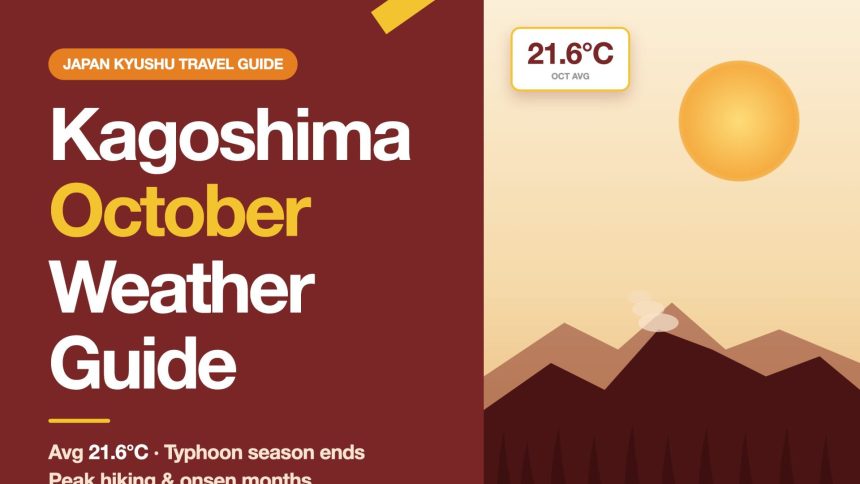
Short answer: October in Kagoshima (鹿児島) delivers average 21.6°C / highs 25.8°C / rainfall 104.6 mm (half of September) / 184 hours of sunshine, making it one of the theoretically best months to visit southern Kyushu. Typhoon approaches drop to just 0.5 per year on average — effectively the tail end of the season, so flight-cancellation risk plummets. This is also when hiking in Kirishima (霧島), the Ibusuki (指宿) sand baths, and the Kirishima onsen (Japanese hot-spring) villages all move into high season. The one caveat: Sakurajima (桜島) — the active volcano across the bay — enters its seasonal wind-shift, meaning downtown ash-fall increases. Events are strong too, with the KAGOSHIMA JAZZ FESTIVAL (Oct 17-18) and pre-events for the Ohara Matsuri (late October) both in play, while flights and hotels sit near their annual low now that peak summer is fully over.
Welcome! This is GO!GO!TOUR, your travel partner for independent trips across Japan. Kagoshima sits at the southern tip of Kyushu on the Satsuma Peninsula, and it is one of the very few cities in the world where an active volcano — Sakurajima — floats in the bay directly opposite the downtown skyline.
October in Kagoshima is the month when the last of the summer heat lifts and true early autumn arrives. Rainfall roughly halves versus September, typhoons effectively wind down, and mornings and evenings turn crisp — a combination that makes hiking, onsen, ferries and outdoor dining all click into place at once. For travelers deciding between September and October, this is the month where we can confidently say “October is the better bet.”
In this guide we cover Kagoshima’s October weather from the perspective of an international independent traveler — temperature, rainfall and UV, typhoon-season statistics, the Sakurajima ash wind-shift, October’s flagship events, Kirishima hiking, Ibusuki sand baths, a 4-day recommended itinerary, a September vs. October decision matrix, and a full FAQ.
Kagoshima October at a Glance — Key Numbers
Here is everything you actually need to pack for and plan around, compressed into one table.
| Item | Data | Quick note |
|---|---|---|
| Average temperature | Avg 21.6°C / high 25.8°C / low 18.0°C | Cool mornings and evenings, short-sleeve daytime |
| Rainfall & sunshine | Monthly 104.6 mm / 5.9 sunny hours per day | Roughly half of September; 5th sunniest month of the year |
| Humidity | Avg 67% (down 5 pts vs. September) | Comfort index rises sharply — great for activities |
| UV index | 5-6 (moderate to high) | About 30% weaker than summer, but SPF still recommended |
| Typhoon risk | Southern Kyushu 0.5 approaches/yr (season winding down) | Less than half of September’s 1.2 |
| Sakurajima ash | Seasonal wind shift — downtown ash-fall increases | Skip black shirts and white shoes |
| Hiking conditions | Kirishima best month of the year | Takachiho-no-mine and Karakuni-dake in season |
| Ibusuki & Kirishima onsen | High season begins | Post-sweat recovery feels great in the cool air |
| Signature events | Jazz Fest (Oct 17-18) + Ohara pre-events (late Oct) | Jazz weekend puts pressure on downtown hotels |
| Flights | Near annual lows | Summer peak and Japanese/Korean holidays are all over |
| Lodging trap | Late October = Japanese school-excursion peak | Book large Kirishima / Ibusuki ryokan 8 weeks out |
Internalize this table and you are most of the way to a well-planned October Kagoshima trip. Now the details.
Kagoshima Climate Across the Year — Where October Sits
Set October alongside the other 11 months on the JMA (Japan Meteorological Agency) Kagoshima station’s 1991-2020 climatological normals, and one thing jumps out: October sits at the most comfortable balance point between summer’s heat and winter’s chill.
| Month | Avg °C | High °C | Low °C | Rain mm | Sun h |
|---|---|---|---|---|---|
| Jan | 8.7 | 13.1 | 4.9 | 78.3 | 132.6 |
| Feb | 9.9 | 14.6 | 5.8 | 112.7 | 139.3 |
| Mar | 12.8 | 17.5 | 8.7 | 161.0 | 163.2 |
| Apr | 17.1 | 21.8 | 12.9 | 194.9 | 175.6 |
| May | 21.0 | 25.5 | 17.3 | 205.2 | 178.2 |
| Jun | 24.0 | 27.5 | 21.3 | 570.0 | 109.3 |
| Jul | 28.1 | 31.9 | 25.3 | 365.1 | 185.5 |
| Aug | 28.8 | 32.7 | 26.0 | 224.3 | 206.9 |
| Sep | 26.3 | 30.2 | 23.2 | 222.9 | 176.4 |
| Oct | 21.6 | 25.8 | 18.0 | 104.6 | 184.0 |
| Nov | 16.2 | 20.6 | 12.2 | 102.5 | 157.7 |
| Dec | 10.9 | 15.3 | 6.9 | 93.2 | 143.2 |
Source: JMA Kagoshima Observatory (station 47827), climatological normals 1991-2020.
October runs 4.2°C cooler than September (26.3°C) and 118 mm drier, without turning as chilly as November (16.2°C). The balance is dialed in exactly right for a “short sleeves + a light overshirt” wardrobe. It is still noticeably warmer than New York, London or Seoul in October, so pack early-autumn clothing rather than mid-autumn.
🌀 Kagoshima Typhoons in October — Season Winding Down
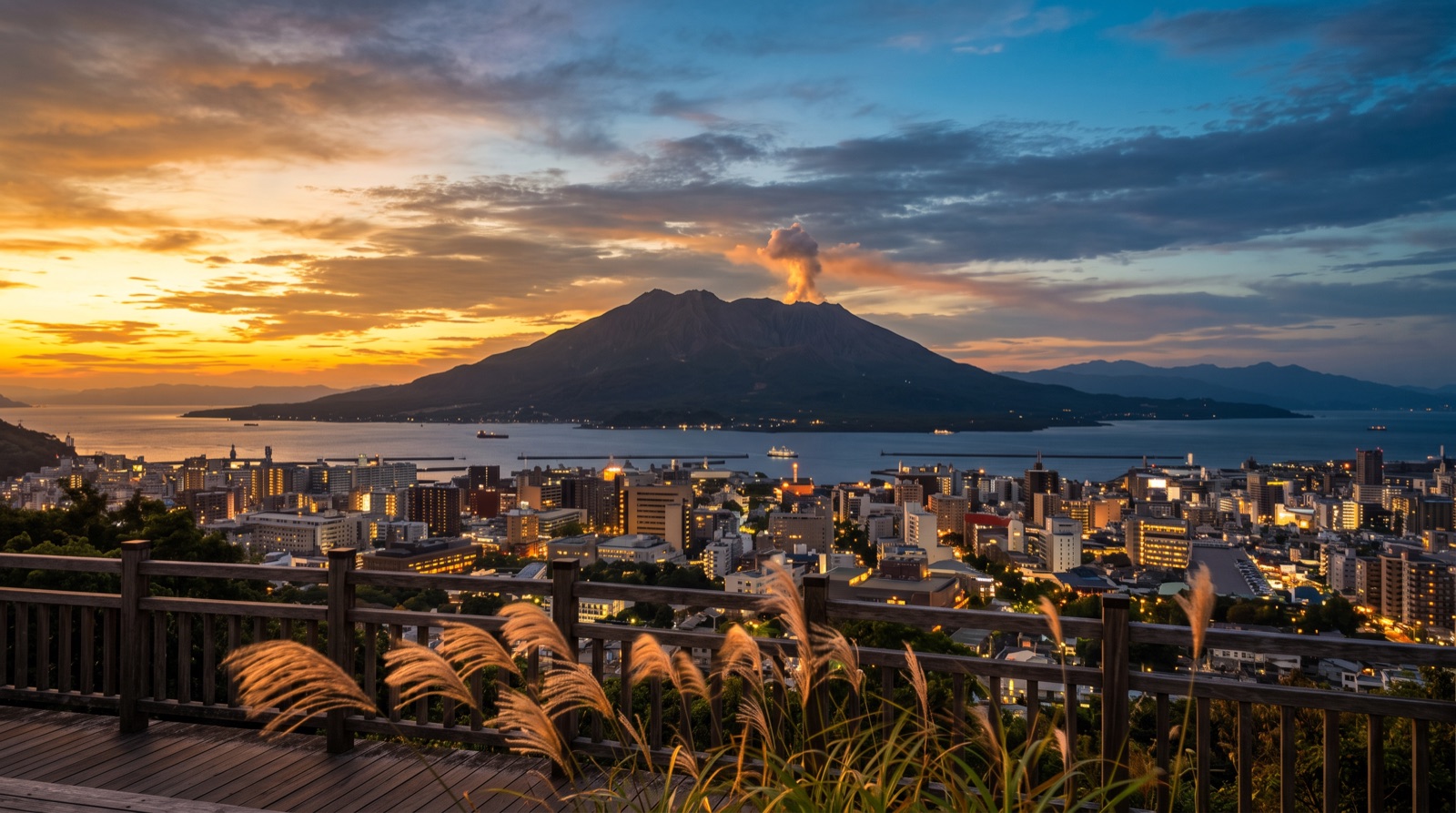
“Do I still need to worry about typhoons in Kagoshima in October?” is by far the most common question from travelers deciding between September and October. The honest answer: October is when southern Kyushu’s typhoon season effectively winds down.
Here are JMA’s 1991-2020 climatological normals for typhoon approaches to southern Kyushu, alongside the last five years of observed data.
Typhoon approaches to Southern Kyushu — September vs. October (Source: JMA)
| Region · Month | Jul | Aug | Sep | Oct | Nov |
|---|---|---|---|---|---|
| Southern Kyushu — 1991-2020 normal | 0.7 | 1.0 | 1.2 | 0.5 | 0 |
| Recent 5 years (2020-2024) — October observed | Effectively no direct impacts on southern Kyushu (0 in every year) | 0 | |||
Source: JMA typhoon climatological normals (1991-2020) + local disaster-prevention news for the last five years.
October drops to just 0.5 approaches — less than half of September’s 1.2, and recent years show essentially no direct impacts on southern Kyushu. Two reasons: first, the Pacific high pressure system retreats south-eastward, pushing typhoon tracks south of the Philippines and Okinawa. Second, the mid-latitude westerlies over Japan strengthen, so any typhoon that does approach tends to curve away toward the Sea of Japan and out to the northeast.
The practical takeaway: a September trip means actively managing typhoon-cancellation risk; an October trip means the season is basically over. That said, in the first ten days of October it is still worth booking flexible-cancellation flights as a small insurance policy.
🚨 October Kagoshima — Three Things to Watch: Ash, Day/Night Swings, School Excursions
Three specific things to prepare for when visiting Kagoshima in October.
1. Sakurajima volcanic ash — the wind shifts toward downtown
The direction ash falls from Sakurajima flips completely with the seasonal winds:
- Summer (Jun-Aug): south-easterly winds dominate → ash blows toward the Osumi (大隅) peninsula, so downtown stays relatively clean
- Winter (Dec-Feb): north-westerly winds dominate → ash concentrates over downtown
- October = the transition → strong eruptions increasingly leave a dusting on the city
How to prepare
- ✅ Skip black shirts and white shoes (ash marks stand out)
- ✅ Bring a mask, glasses (not contacts) and lens-cleaning wipes
- ✅ For rental cars, check windshield washer fluid and wipers, and ask about a car-wash option at return
- ✅ Check the ash forecast at 373news.com/lifestyle/sakurajima/forecast
2. Daily swing of 8-10°C — layering is essential
Mornings at 18°C and afternoons at 26°C means the winning combination is “T-shirt + light shirt or cardigan on top”. You will want long sleeves on the morning Sakurajima ferry, hiking in Kirishima, and evening strolls in Ibusuki; but a T-shirt is fine for midday in Tenmonkan (天文館), the downtown entertainment district. UV is about 30% weaker than summer but still index 5-6, so SPF for afternoon outdoor time is smart.
3. Late October = Japanese school-excursion peak
Late October through early November is Japan’s peak season for school excursions (修学旅行, shūgaku ryokō). Large ryokan (traditional Japanese inns) with 100+ rooms in Kirishima and Ibusuki frequently sell out even on weekdays, and on the Jazz Festival weekend (Oct 17-18) business hotels in Tenmonkan jump 1.3-1.5x normal rates. Book 8 weeks out if your dates are firm.
🎷 October Events in Kagoshima — Jazz Festival & Ohara Matsuri Preview
Beyond the “hiking and onsen season kicking off,” October in Kagoshima has an extra hook: two flagship events overlap this month.
1. KAGOSHIMA JAZZ FESTIVAL 2026 (Oct 17-18)
A sizable jazz festival held around Tenmonkan and the Waterfront area. Japanese and international artists perform, and there are plenty of free stages that travelers can drop into casually. Note that this weekend puts significant pressure on hotels near Tenmonkan — if your trip is built around the festival, book at least 6 weeks in advance.
2. Ohara Matsuri (おはら祭) preview period (late October)
Kagoshima’s signature street festival, Ohara Matsuri, is held every year on November 2-3 along a 1.48 km stretch of the Tenmonkan streetcar avenue (電車通り). From late October, paper lanterns (chōchin), rehearsals and yatai (street-food stall) setup start appearing around downtown, and the city’s “about-to-erupt” pre-festival buzz becomes a travel experience in itself. A trip from October 30 to November 3 gets you both the buildup and the main event.
3. Sengan-en (仙巌園) “Lanterns and Pinwheels” walk
Held sometime in October, though exact dates and light-up times are not confirmed. This is a local-flavor event where lanterns and pinwheels bearing the Shimazu clan’s marujūmon crest (a cross-in-circle mon associated with the samurai family that ruled the region for 700 years) are displayed near the Shoko Shuseikan and the Chikkeitei tea house. Re-check the Sengan-en official events page before you go.
🏔️ October Highlights — Kirishima Hiking & Ibusuki Sand Bath in Peak Form
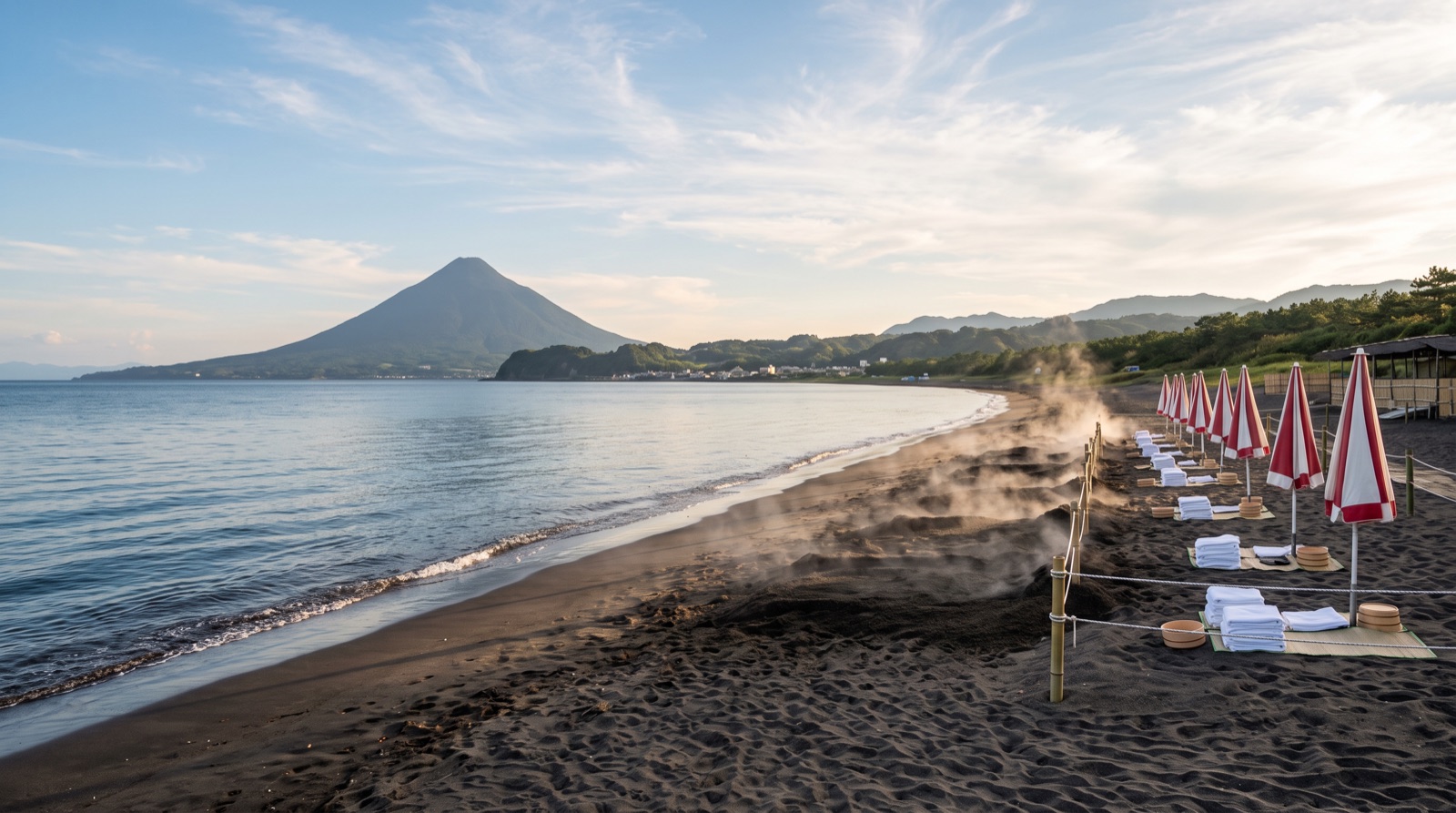
The real highlight of October in Kagoshima is the “Kirishima hiking + Ibusuki sand-bath” early-autumn combo. Both of these underperform in September (lingering heat and humidity) and lose their appeal in December (too cold). October lands precisely in the golden zone between the two.
1. Kirishima (霧島) hiking — the best month of the year
- Takachiho-no-mine (高千穂峰, 1,574 m): the mythological mountain where Ninigi-no-Mikoto (a grandson of the sun goddess Amaterasu) is said to have descended to earth. Round trip 4-5 hours, moderate hiking.
- Karakuni-dake (韓国岳, 1,700 m): the highest peak in the Kirishima range. Round trip 5-6 hours, with a panorama of southern Kyushu from the summit.
- Onami-ike autumn colors: broadleaf leaves start turning mid-to-late October (peak in early November).
- Warning: summit temperatures at dawn can drop to 5-10°C. Light hiking boots and a windproof jacket are essential.
2. Ibusuki (指宿) sand bath (砂むし, sunamushi) — peak post-sweat comfort
A genuinely rare geothermal experience: you lie in 55-60°C sand for about 10 minutes to sweat. In the cool of October’s 18°C mornings and evenings, you get the golden condition of “not overheating, just sweating out cleanly.” In midsummer, many people stagger out feeling drained by the heat — October is when it truly hits its stride.
- Saraku (砂楽) municipal facility: ¥1,100 (approx. US$7.50) per adult, includes yukata (a light cotton robe) and towel.
- Swimwear is not permitted — yukata only is the rule.
- Post-sweat, the cool October sea breeze pushes satisfaction to its annual high.
3. Kirishima onsen village — high season begins
Bookings at Kirishima Iwasaki Hotel and the Myoken (妙見) area ryokan fill quickly around now. With lowland mornings at 10-15°C, open-air baths (rotenburo) feel dramatically better than in summer. The variety of source springs — sulfur, carbonate and more — is among the finest in southern Kyushu.
Reaching Kagoshima from Tokyo, Osaka, Fukuoka & International Gateways
Kagoshima is a smaller regional hub than Fukuoka or Osaka, so most international travelers reach it via a connection. There are three practical routes: a domestic flight from Tokyo or Osaka, the Kyushu Shinkansen (Japan’s high-speed rail) from Fukuoka, or one of the limited direct international flights (mostly from other Asian cities).
From Tokyo (Haneda / Narita)
| Route | Time | Notes |
|---|---|---|
| JAL / ANA from Haneda | ~2h flight | Roughly hourly departures. Fewer options from Narita. |
| Shinkansen: Nozomi + Sakura | ~6h30m total | Tokyo → Hakata (Nozomi, ~5h) → Kagoshima-Chuo (Sakura, 1h20m). Scenic, low-stress, mostly covered by a JR Pass. |
From Osaka (Itami / Kansai)
- JAL / ANA from Itami: ~1h15m flight, several daily departures — the fastest option from Kansai.
- Shinkansen from Shin-Osaka: Nozomi/Mizuho to Kagoshima-Chuo in about 4 hours. The Mizuho service is direct with only a handful of stops.
From Fukuoka — the main international gateway for Kyushu
- Kyushu Shinkansen (Sakura / Mizuho): Hakata → Kagoshima-Chuo in as little as 1h20m — ideal for international arrivals via FUK. Hakata station is a 5-minute subway ride from Fukuoka Airport, so if your international flight lands there, this is by far the smoothest onward journey. Fully covered by both the nationwide JR Pass and the JR Kyushu Rail Pass.
- Domestic flight: also possible (about 55 minutes), but with airport transfers the Shinkansen is almost always faster door-to-door.
Direct international flights to Kagoshima (KOJ) — limited
Kagoshima Airport has a small international terminal. Direct routes are limited and change often, so verify before booking:
- Seoul (Incheon) — LCCs including Jeju Air, T’way and Air Busan operate several flights per week (~1h30-40m).
- Busan — Air Busan, 2-4 flights per week (~1h15-25m).
- Taipei — China Airlines runs a seasonal service; check by month.
- Shanghai / Hong Kong — occasional or seasonal only.
Limited international direct flights — connect via FUK or Tokyo if you are coming from Europe, North America, Australia or most of Southeast Asia.
The JR Pass angle
If your Japan itinerary hits two or more regions, the nationwide JR Pass covers every Shinkansen and JR train mentioned above (except the premium Nozomi and Mizuho services — Sakura is the JR-Pass-friendly alternative on the Kyushu Shinkansen). A Tokyo → Kagoshima → Kyoto rail loop over 7-14 days is one of the best-value uses of the pass, and the whole trip can be done without a rental car.
Getting from Kagoshima Airport into the city
- 🚌 Airport limousine bus to Kagoshima-Chuo station — about 40 minutes, approx. ¥1,400 (about US$9.50), every 15-20 minutes. The bus stop is right in front of international arrivals.
- 🚗 Rental car — pickup counters (Toyota, Nippon, Times, OTS and others) are a 2-3 minute shuttle ride from the terminal.
- 🚕 Taxi — about ¥8,000-10,000 (US$55-70) / 45 minutes; only competitive for parties of four or more.
- Heading straight to Ibusuki or Kirishima? A rental car is essentially mandatory (Ibusuki is about 1h20m by road).
⚠️ International visitors often overlook that Kagoshima Airport is not near downtown. The airport sits roughly 30 km northeast of the city, in Kirishima City — nothing like Fukuoka’s ultra-central airport that connects directly to the subway. Give yourself a relaxed arrival evening instead of trying to squeeze in an 8pm dinner reservation.
Note on Japanese holidays
Note that Silver Week (Japan’s cluster of public holidays around Sep 19-23) is already past by the time October begins, so early-month rates are calm. The pricing pressure to watch for in October is instead the Japanese school-excursion season in late October and early November, which drives up ryokan rates in Kirishima and Ibusuki (see the warning above).
👉 Reserve a rental car in English: GO!GO!TOUR Kagoshima rental cars
🗺️ 4-Day Kagoshima Itinerary — City, Sakurajima, Ibusuki, Kirishima
The standard Kagoshima independent-traveler itinerary is a 4-day loop: city center → Sakurajima → Ibusuki → Kirishima. In October, hiking and onsen conditions are both excellent, so the trick is to give the Kirishima day a bit of breathing room.
Day 1 — Kagoshima city center (Sengan-en · Shiroyama · Tenmonkan)
- 12:00 Arrive at Kagoshima Airport → airport limousine bus into the city (40 min, ¥1,400 / US$9.50).
- 13:30 Hotel check-in in Tenmonkan (天文館), the main downtown district → lunch (kurobuta ramen or a Satsuma-style set meal).
- 15:00 Sengan-en — the historic garden villa of the Shimazu (島津) clan. If the “Lanterns and Pinwheels” walk is running in October, factor it in.
- 17:30 Shiroyama (城山) observatory — early-autumn Sakurajima silhouette with the downtown skyline just starting to light up.
- 19:00 Dinner at an izakaya (Japanese-style pub) in Tenmonkan — kurobuta (black pork) shabu-shabu, kibinago (silver-stripe herring) sashimi, and any newly released shochu (a distilled Japanese spirit).
Getting around: A one-day pass (¥600) covering the streetcar and the City View sightseeing loop bus is the easiest way to get around downtown. A rental car in the city center is more hassle than help thanks to parking.
Day 2 — Sakurajima (桜島) half-day by ferry + Yunohira observatory
- 08:30 Kagoshima port ferry terminal → Sakurajima ferry (15 min, ¥200, 24-hour service, no reservation needed).
- 09:00 Island View sightseeing bus one-day pass (¥500) → Yunohira (湯之平) observatory (373 m, the closest publicly accessible viewpoint to the crater) → Arimura Lava Observatory.
- 12:00 Lunch — Sakurajima somen noodles + local loquat (biwa) soft-serve.
- 13:30 Ferry back → stroll along the Waterfront and Dolphin Port.
- 15:00 Ishibashi (石橋) memorial park or Yusentei residence.
- 18:00 Yaki-imo (roasted sweet potato) café in Tenmonkan — this year’s fresh October Satsuma sweet potatoes.
Day 3 — Ibusuki (指宿) sand bath · Lake Ikeda · Nagasakibana
- 08:26 Kagoshima-Chuo → limited express Ibusuki no Tamatebako (50 min, all reserved seats, fewer than 40 seats per train — book in advance).
- 09:20 Arrive Ibusuki → Saraku sand bath (¥1,100 / US$7.50) — October mornings deliver perfect sweat conditions.
- 12:00 Lunch — the local specialty ondamago-don (rice bowl with slow-cooked onsen egg).
- 13:30 Rental car or the “Ibusuki Sky” sightseeing bus to Lake Ikeda (池田湖) and Nagasakibana (長崎鼻) cape.
- 16:00 Healthy Land Tamatebako Onsen — outdoor bath with a view of Kaimondake (locally called “Satsuma Fuji” for its perfect cone).
- 18:30 Return to Kagoshima-Chuo.
Getting around: Beyond Ibusuki station, buses to Lake Ikeda and Nagasakibana are very infrequent. A half-day rental car (from about ¥6,000 / US$40) or the “Ibusuki Sky” sightseeing bus is the practical option.
Day 4 — Kirishima (霧島) shrine · hike or onsen → airport
Option A: Hike (relaxed schedule)
- 07:00 Rental car to the Takachiho-no-mine trailhead (~1h30m).
- 08:30-13:30 Takachiho-no-mine round-trip hike (light hiking boots and windproof jacket essential).
- 14:00 Day-use onsen in Kirishima (Maruo Onsen or Iodani).
- 16:00 Return rental car at Kagoshima Airport.
Option B: Shrine + onsen (standard schedule)
- 09:00 Rental car from downtown to Kirishima Shrine (~1h).
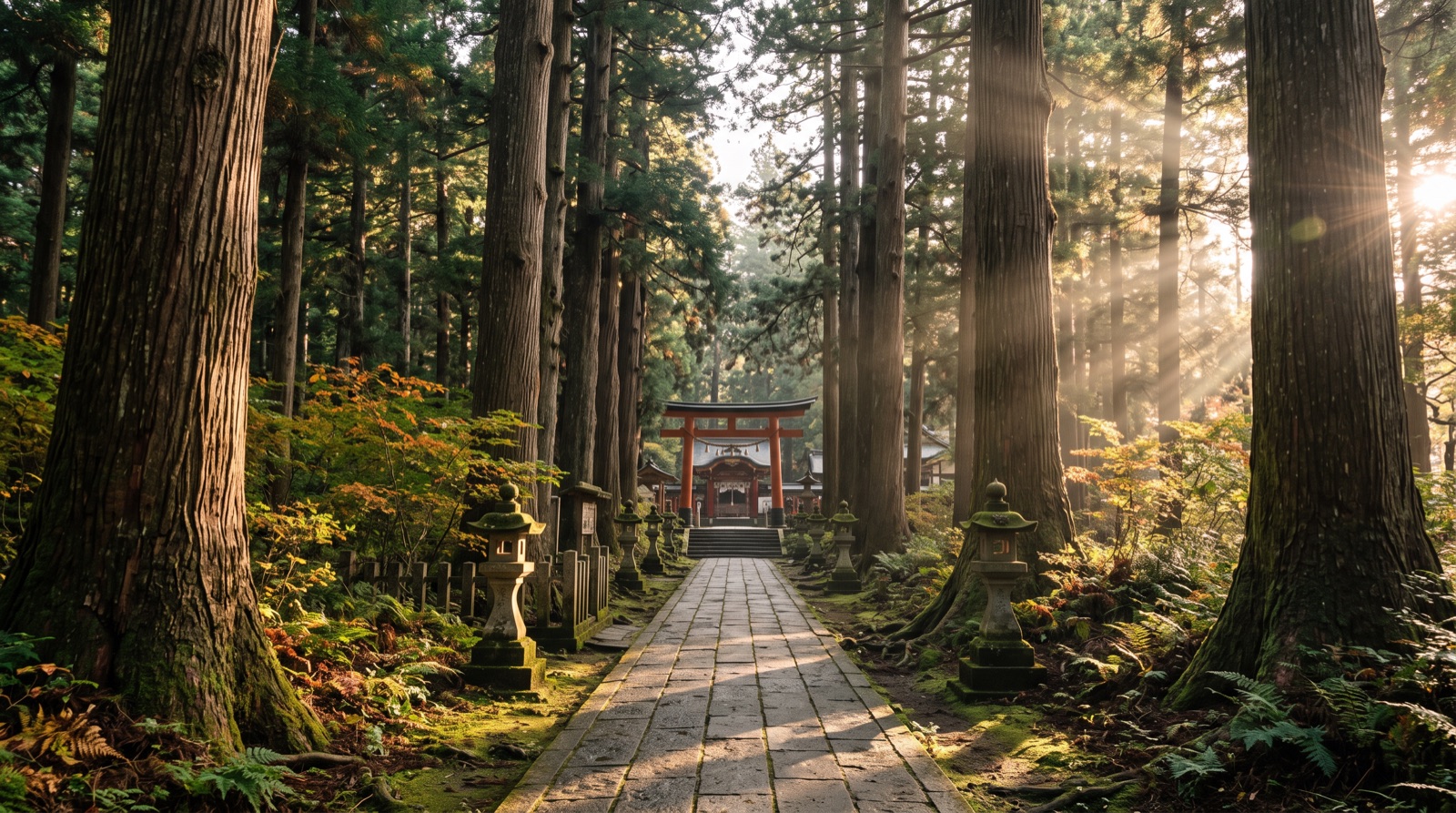
- 10:00 Kirishima Shrine visit and cedar-lined walking path.
- 11:30 Day-use onsen in the Kirishima hot-spring village.
- 13:00 Lunch — kuroushi (Kagoshima wagyu beef) set meal or another round of kurobuta shabu-shabu.
- 15:00 Return rental car at Kagoshima Airport.
Getting around: Day 4 is essentially rental-car only. The neat part is you can drop the car at the airport, so the loop closes cleanly.
👉 Reserve a rental car in English: GO!GO!TOUR Kagoshima rental cars
👕 What to Pack for October in Kagoshima — Layering & Long Sleeves Morning/Evening
The essence of October packing is “layering for an 8-10°C daily swing”. Scene by scene:
| Scene | Tops | Bottoms | Essentials |
|---|---|---|---|
| City sightseeing (Tenmonkan · Sengan-en) |
T-shirt + light shirt or cardigan | Lightweight long pants / jeans | Compact umbrella, SPF 30-50 sunscreen, wet wipes |
| Sakurajima (ferry + observatories) |
T-shirt + thin windbreaker | Long pants (ash + mosquitoes) | Mask, backup glasses, lens wipes, avoid black clothing |
| Ibusuki sand bath | Change of T-shirt + underwear | Shorts / lightweight long pants | Big towel, ziplock bag. No swimwear — the facility provides a yukata. |
| Kirishima hiking (Takachiho · Karakuni) |
Long-sleeve base layer + fleece + windproof jacket | Trekking pants | Light hiking boots, headlamp, gloves, rain jacket, 1L+ water, energy bars |
Common essentials for everyone
- 🌂 Compact umbrella — for passing showers (rainfall is low but sudden showers still happen).
- 💧 500ml+ of water on you at all times — 1L+ for hiking.
- 😷 Spare masks for ash-fall days.
- 🧢 Hat and sunglasses — UV index 5-6 is still meaningful in the afternoon.
🍠 Seasonal Food in October Kagoshima — New Sweet Potatoes, New Shochu, Kurobuta Peak
What to eat while you are here
- New-crop satsuma-imo (sweet potatoes): October is the harvest peak. Yaki-imo stalls, soft-serve and confectionery start advertising “new crop” (新物). “Karaimo Retro Kan” in Tenmonkan is a well-known spot.
- New-season shochu (新焼酎): distilled from this year’s fresh sweet potatoes, new shochu ships from late October through December. When you see “新酒入荷” (new brew in stock) on an izakaya sign, taste it immediately. Satsuma Shuzo, Kurose and Moriizo are the classic distilleries.
- Kagoshima kurobuta (黒豚) & kuroushi (黒牛): available year-round, but autumn brings peak fat and flavor. Kurobuta institutions like “Ajimori” and “Karen” fill up quickly — dinner reservations are a must.
- Satsuma-age (さつま揚げ): deep-fried fishcakes. Try them straight out of the fryer at “Agetate-ya” in Tenmonkan.
- Kibinago (きびなご) sashimi: silver-stripe herring plated in a chrysanthemum shape and dipped in vinegared miso — a classic Satsuma dish.
- New-crop rice, chestnuts, lotus root, taro: small set-meal restaurants (“koryōri”) celebrate autumn vegetables.
- Shirokuma (白熊) season winding down: the famous shaved-ice dessert is available year-round at Mujaki’s main shop, but seasonal izakaya menus transition to oden, motsu-nabe and chicken hotpot from October.
📊 September vs. October — Which Is Better?
For travelers choosing between September and October, the short answer is: if you lean active, October wins clearly. Category by category:
| Criterion | September | October |
|---|---|---|
| Typhoon risk | 1.2 approaches (high) | 0.5 approaches (low) |
| Rainfall | 222.9 mm | 104.6 mm (half) |
| Temperature comfort | Lingering summer heat + humidity | Comfortable (wins) |
| Hiking & trekking | Humid, uncomfortable | Peak season |
| Onsen feel | Still too warm | High season |
| Sakurajima ash in downtown | Low | Rising (transition) |
| Airfare | Silver Week spike | Near annual low |
| Events | Quiet | Jazz Fest + Ohara preview |
Verdict: for active independent travelers (hiking, onsen, food), October wins. Just factor in Sakurajima ash and book large ryokan early to avoid the late-October school-excursion crush.
Frequently Asked Questions (FAQ)
Q1. Are typhoons really no longer a concern in October?
Based on 30-year normals, southern Kyushu averages just 0.5 typhoon approaches in October — less than half of September’s 1.2. On top of that, the last five years (2020-2024) have essentially seen no direct impacts on southern Kyushu. With the Pacific high retreating south and the westerlies strengthening, storm tracks are pushed south of Japan or curve away to the northeast. In other words, the typhoon season is effectively over. That said, in the first ten days of October it is still worth booking flexible-cancellation flights as insurance.
Q2. Which is better, September or October?
For active travelers (hiking, onsen, food), October is the clear winner. Temperature -4°C, rainfall halved, typhoons over, humidity -5 points, airfare at annual lows, Kirishima hiking at its best, Ibusuki sand baths in high season — all of these land in October. The catches: Sakurajima ash actually shifts toward downtown now, and late October = Japanese school-excursion peak filling up ryokan. Book 8 weeks ahead to solve the second problem. September, if you can dodge typhoons, offers rock-bottom prices — so budget-first travelers might still pick late September.
Q3. Is Sakurajima ash actually worse in October?
More precisely: “downtown” ash increases because October is the wind-transition month. Summer south-easterlies push ash toward the Osumi peninsula, but by October north-westerlies gain strength, so a strong eruption is more likely to leave a dusting on the city. Standard precautions: skip black shirts and white shoes, bring a mask, glasses (not contacts), lens wipes, and ask about a car-wash option when returning your rental. Check 373news.com’s ash forecast every morning. Flight cancellations from ash are extremely rare — your itinerary itself is very unlikely to be disrupted.
Q4. Can beginners handle the Kirishima hikes?
Yes — Takachiho-no-mine (1,574 m) is a round-trip 4-5 hour moderate hike that most people with average fitness can do. But summit dawn temperatures drop to 5-10°C and the terrain is volcanic scree, so light hiking boots + a windproof jacket + gloves + a headlamp + 1L+ of water are essentials. Karakuni-dake (1,700 m) is a step up at 5-6 hours round trip and is better for experienced hikers. You need a rental car to reach the trailheads (public transport is very sparse).
Q5. Is October really the best time for the Ibusuki sand bath?
Local wisdom actually says “October is the real high season” for the sand bath. Sunamushi means lying in 55-60°C sand for 10 minutes to sweat, and in midsummer the ambient heat piles on top of the sand heat — many people stagger out drained. In October, morning and evening temperatures around 18°C deliver the golden state of “not overheating, just sweating out cleanly.” The cool sea breeze afterward makes a huge difference. Bring a change of underwear, a big towel, and a ziplock bag; yukata and standard towel are provided by the facility, and swimwear is not permitted, yukata only.
Q6. How cheap are October flights to Kagoshima?
October falls in the annual value window — the summer peak, Japan’s Obon, and neighboring Asian autumn holidays are all fully over. Direct routes from Seoul, Busan and (seasonally) Taipei drop noticeably, and domestic Japanese hops from Tokyo or Osaka also trend cheaper. The two exceptions to watch are the Jazz Festival weekend (Oct 17-18) and the Japanese school-excursion peak in the last week, when hotel rates climb even though flights stay soft. Adjust your dates if you can.
Q7. Do I really need to avoid Japanese school-excursion season?
“If you want a large Kirishima or Ibusuki ryokan, yes — absolutely.” Late October through early November is the peak of Japanese school excursions (shūgaku ryokō), and ryokan with 100+ rooms frequently sell out even midweek. Downtown Tenmonkan business hotels are less affected. Plan on booking at least 8 weeks ahead if you want a ryokan; 3-4 weeks ahead is fine for a city business hotel.
Q8. What are the key packing tips for October Kagoshima?
Two priorities: “layer for the 8-10°C daily swing” and “avoid dark colors so ash doesn’t show.” A T-shirt + light shirt or cardigan combo is the winning formula. Long sleeves for the morning ferry, Kirishima hiking and Ibusuki evenings; short sleeves are fine for midday Tenmonkan. For Sakurajima ash, skip black shirts and white shoes and bring a mask, glasses (not contacts) and lens wipes. Add a windproof jacket, hiking boots and gloves if you plan to hike.
Wrapping up
October in Kagoshima hits a golden five-way sweet spot: not hot, low rainfall, no typhoons, peak hiking + onsen, and near-bottom airfare. Rainfall of 104 mm, an average of 21.6°C, typhoon approaches of just 0.5 — cancellation risk plummets, and humidity at 67% pushes outdoor comfort to its annual peak. As long as you plan around the Sakurajima ash wind-shift and the late-October school-excursion crush on ryokan, you get to experience “true golden-season Kagoshima.”
Kagoshima October checklist
- Avg 21.6°C / high 25.8°C — T-shirt + light overshirt combo
- Rainfall 104.6 mm — half of September; a compact umbrella is enough
- Typhoon approaches 0.5/yr — season effectively over
- Sakurajima ash wind-shifts toward downtown — skip black shirts and white shoes, keep mask and glasses handy
- Kirishima hiking at its annual best — windproof jacket, hiking boots, gloves
- Ibusuki sand bath enters high season — post-sweat recovery is superb
- Jazz Festival Oct 17-18 — Tenmonkan hotels 6 weeks out
- Ohara Matsuri preview (late October) — pre-festival buzz in the streets
- New-crop sweet potatoes and new-season shochu appear — watch for “新酒入荷” signs
- Late-October Japanese school-excursion peak — large ryokan 8 weeks out
- Airfare near annual lows — great chance to snag off-peak fares
📌 Planning Your Kagoshima Trip with GO!GO!TOUR
Sakurajima, the Ibusuki sand bath, Kirishima Shrine, hiking — a southern Kyushu trip really only needs two things from you: a bit of homework and a flexible itinerary. GO!GO!TOUR handles the logistical side in English so first-time visitors can spend more energy on the actual trip.
- 🚗 Compare and book a Kagoshima rental car — English booking, airport pickup, English-speaking support on the ground in Japan.
Climate figures in this article are based on the Japan Meteorological Agency (JMA) Kagoshima Observatory 1991-2020 climatological normals. Typhoon activity and event schedules vary with season and organizer announcements. Fare and price ranges are indicative for October 2026 — always check the latest information on the operator’s official website before booking.