Nakijin Castle Ruins — Where 500-Year-Old Ryukyu Walls Curl Above the East China Sea
Hi, we’re GO!GO!TOUR, your English-language guide to Okinawa self-drive travel.
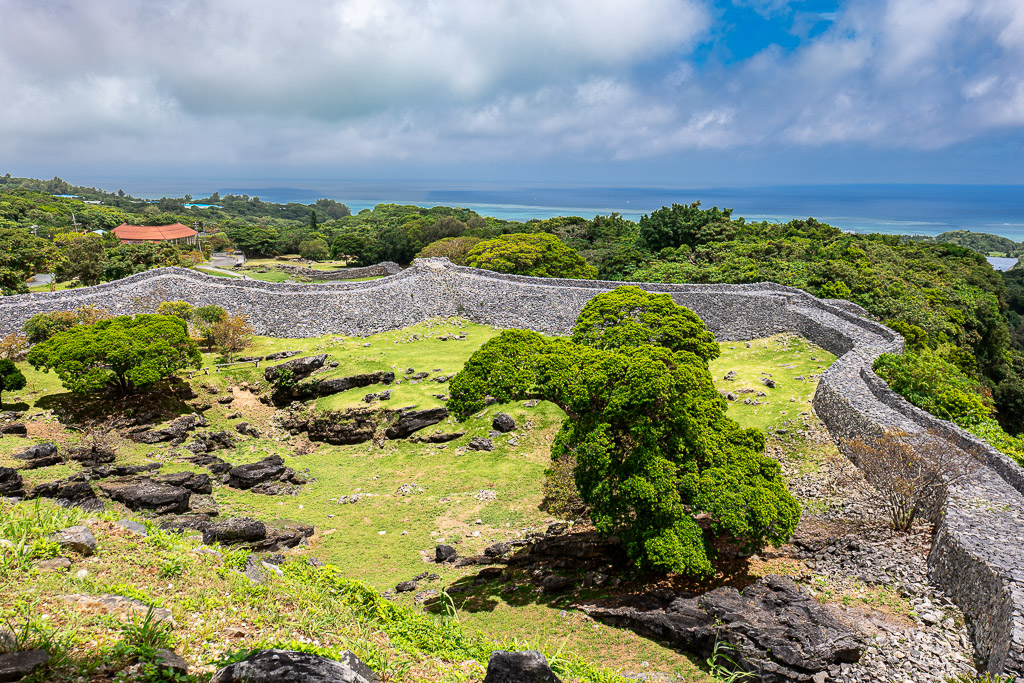
If the Churaumi Aquarium is Northern Okinawa’s crowd-pleaser, then Nakijin Castle Ruins (今帰仁城跡, Nakijin-jō) is its quiet showstopper — the one that ends up in most travelers’ favorite photo of the trip. Designated a UNESCO World Heritage Site in 2000 as part of the Gusuku Sites and Related Properties of the Kingdom of Ryukyu, this 14th-century fortress isn’t just a stack of old stones. Its stone walls flow along the ridge like a paper cutout, then drop toward the sea in a wide, unforgettable curve.
Nakijin is a 25-minute drive from Churaumi Aquarium, making it the natural companion stop on a Northern Okinawa day trip. If you haven’t sorted your ride yet, book with GO!GO!TOUR Okinawa car rental — English site, Naha Airport pickup, transparent pricing.
This guide is for English-speaking travelers who want the practical basics (tickets, hours, access, cherry blossom timing) plus a sense of what makes Nakijin’s photo composition so different from Shuri Castle or a Japanese castle on the mainland.
The Story — A Northern Ryukyu Capital that Fell in 1416

Nakijin Castle was the political center of the Hokuzan Kingdom, one of three rival kingdoms that carved up Okinawa in the Three Kingdoms Era (Sanzan) of the 14th century. Before Ryukyu was unified under Shuri, this 1.5-km stretch of walls above the Motobu Peninsula was its northern seat of power. It fell in 1416 to Chuzan forces but continued to function as a regional administrative center for centuries after.
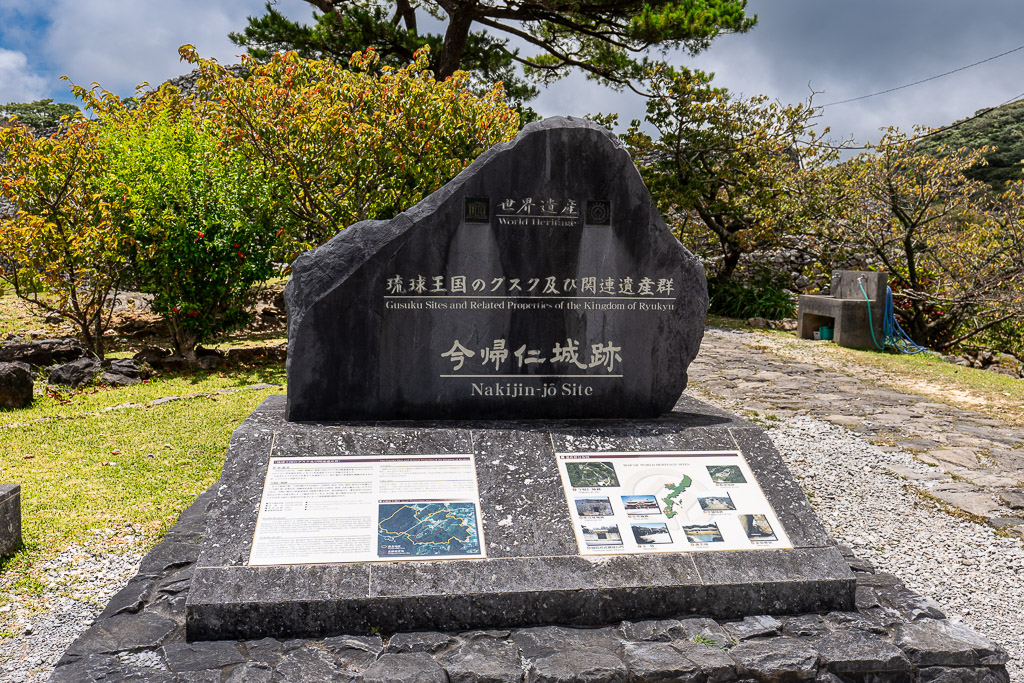
The 2000 UNESCO listing groups Nakijin with Shuri, Nakagusuku, Zakimi and Katsuren under “Gusuku Sites and Related Properties of the Kingdom of Ryukyu” — five castle ruins that together tell the story of an island kingdom none of us learned in school. Nakijin gets a lot less foot traffic than Shuri, which is exactly what makes the visit feel special.
Official site: https://nakijinjoseki-osi.jp/ (updates on hours, festivals, restoration work).
Getting There — 90 Minutes from Naha, 25 from Churaumi
Address: 5101 Nakijin, Nakijin Village, Kunigami District, Okinawa
From Naha Airport: approx. 1 hr 45 min by car (Okinawa Expressway + Route 505)
From Churaumi Aquarium: 25–30 minutes by car
Nakijin is one of those places where public transport just doesn’t work — bus routes exist on paper but require multiple transfers. A rental car is effectively the only way to visit, and the drive itself along Route 505 through village lanes and glimpses of the sea is part of the experience.
Tickets, Hours & Admission — Adult ¥1,000, Kids Under 12 Free
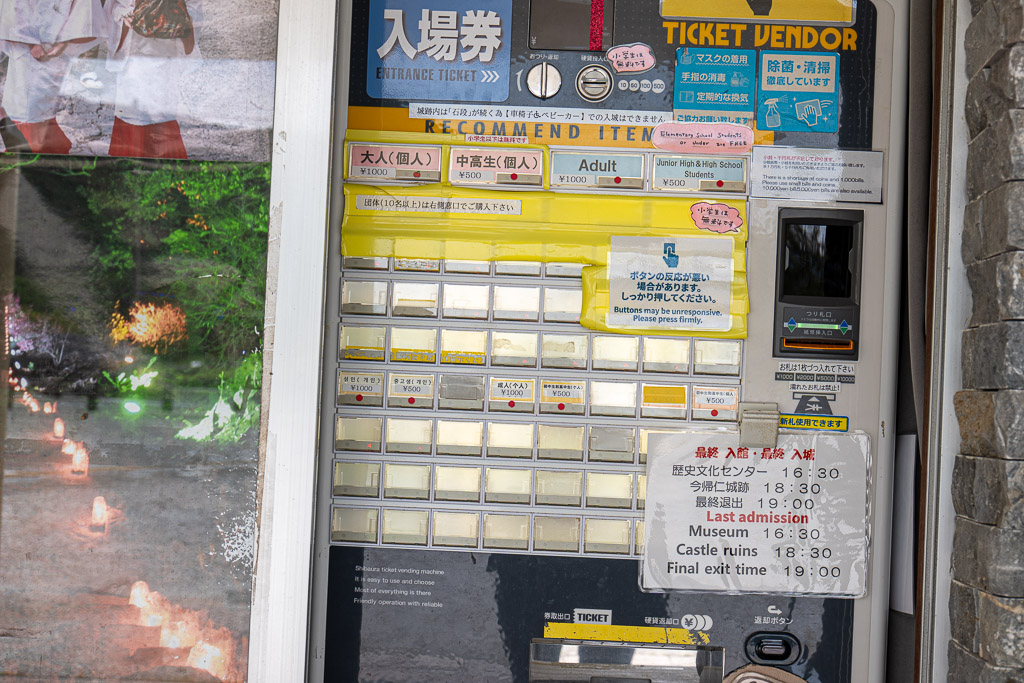
The ticket booth sits directly opposite the parking lot. There’s a manned window plus an English-friendly vending machine, so no queue anxiety.
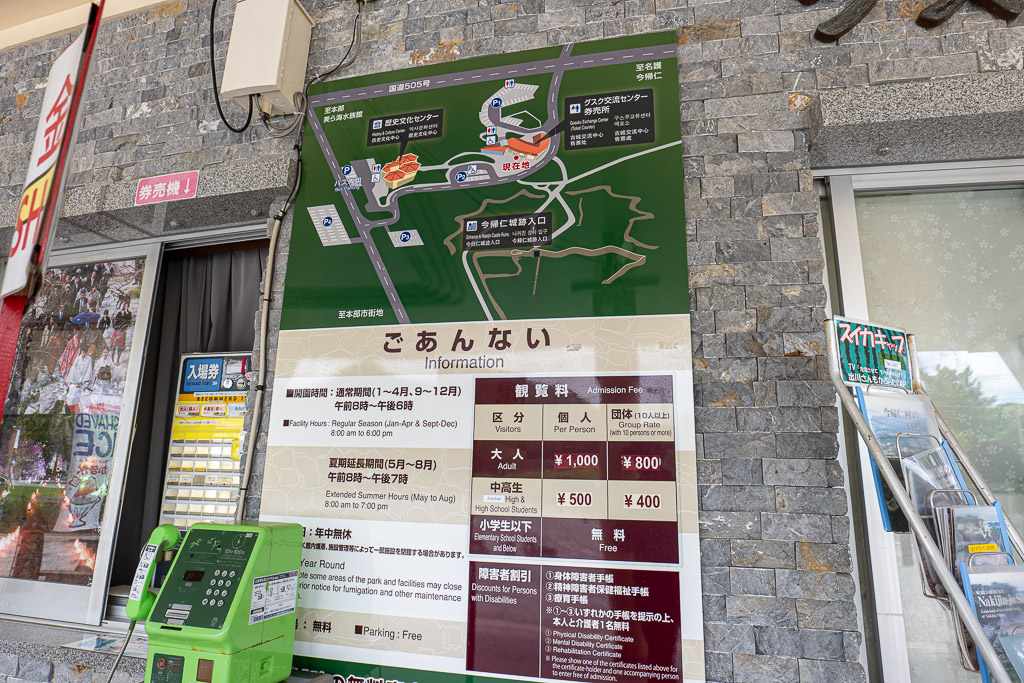
| Item | Details |
|---|---|
| Adult | ¥1,000 |
| Junior/High School Student | ¥500 |
| Elementary school and under | Free |
| Regular Season (Jan–Apr, Sep–Dec) | 8:00 AM – 6:00 PM |
| Extended Summer (May–Aug) | 8:00 AM – 7:00 PM |
| Closed | Open year-round (occasional maintenance closures) |
| Payment | Cash · Credit card · IC/QR codes |
| Parking | Free (approx. 320 spaces) |
(Prices and hours may change for special events. Check the official site before your visit.)
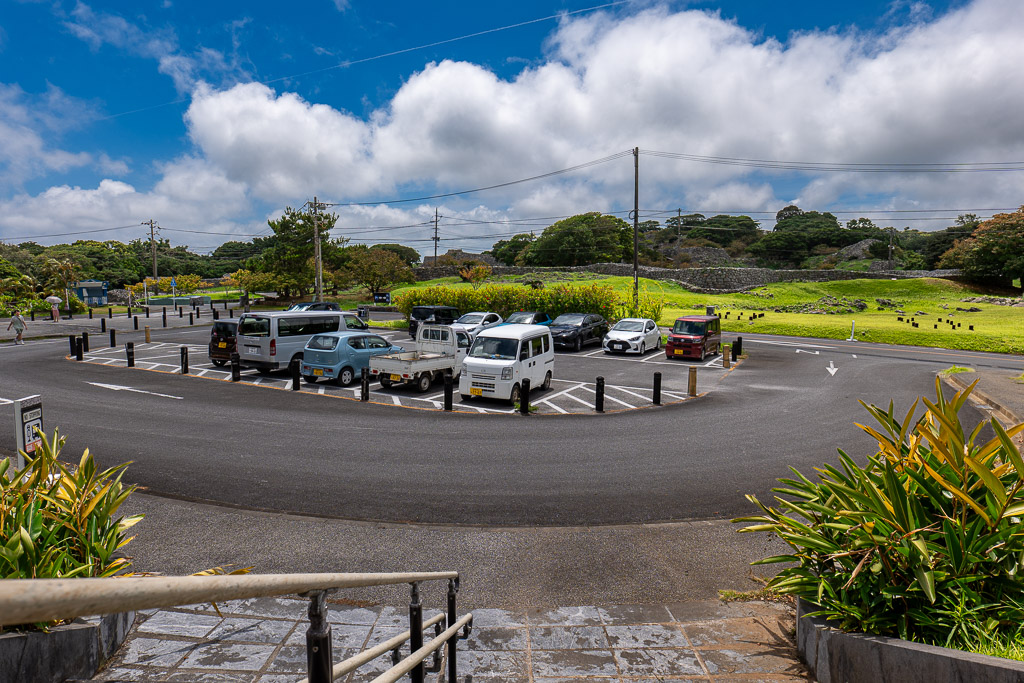
Parking is free and generous. During the annual Nakijin Gusuku Cherry Blossom Festival (late Jan – early Feb), lots fill up fast — arrive by 9:00 AM for the smoothest experience.
🚲 Renting a Bike or E-Scooter Nearby
Nakijin Castle itself is walk-only, but the surrounding Motobu Peninsula villages, Bise Fukugi Tree Road and Kouri Island are best explored by bike or e-scooter — genuinely fun and much more Okinawan than sitting in a car.
- Electric bicycle — from about ¥1,000/hour. Hills are easy, ideal for couples
- E-scooter — from about ¥1,500/hour. Great for narrow village lanes and quick village-to-village hops
- Regular bicycle — from about ¥500/hour. Cheapest option, plenty for short circuits
👉 Pair Nakijin with Bise Fukugi Tree Road by bike for a chill 90-minute route through Okinawa’s real village life.
Walking Through the Castle — Gates, Paths and Panoramas
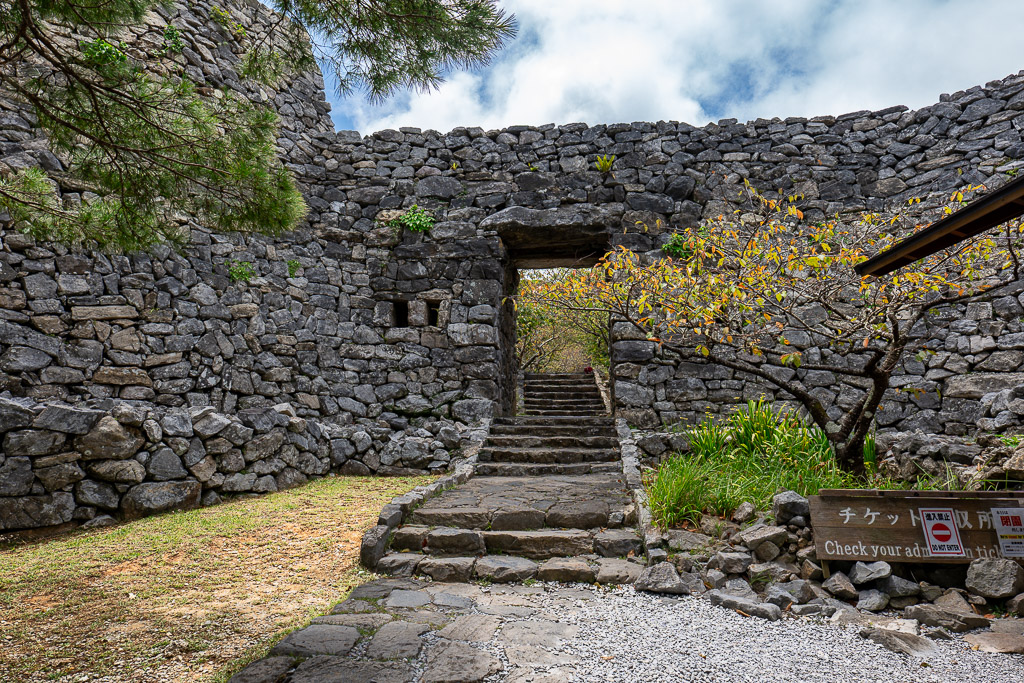
Past the ticket check, the first landmark is the Heiro-mon (平郎門, Main Gate). Duck under the arch of dry-stacked stone and you’re inside the fortress proper. This is the first photo spot everyone lingers at — the frame of stone plus the tree just outside the arch is a natural composition.
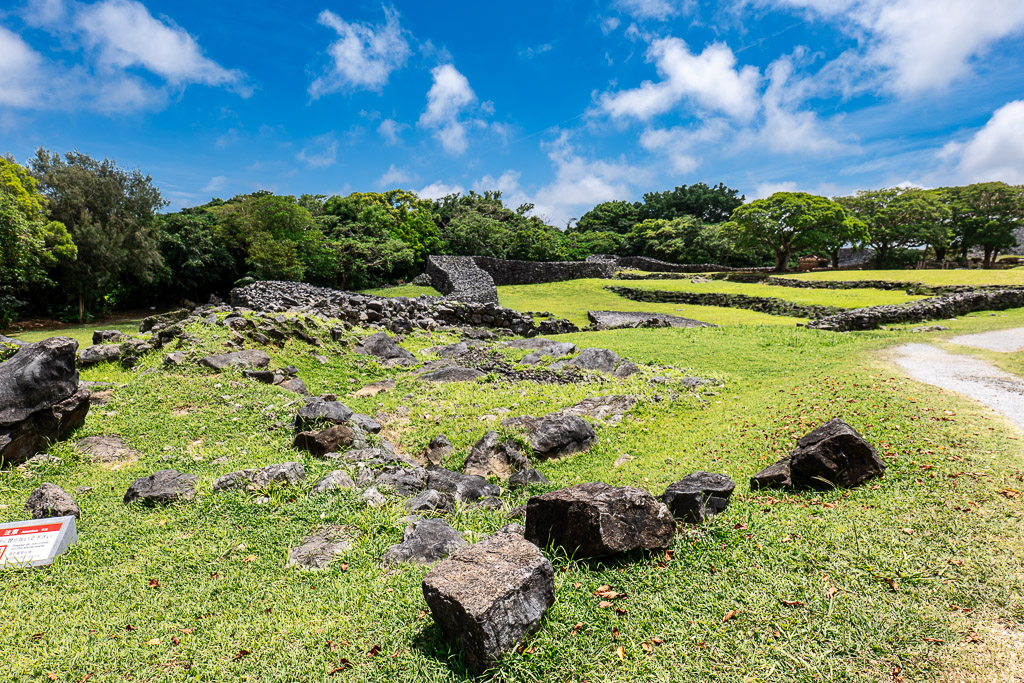
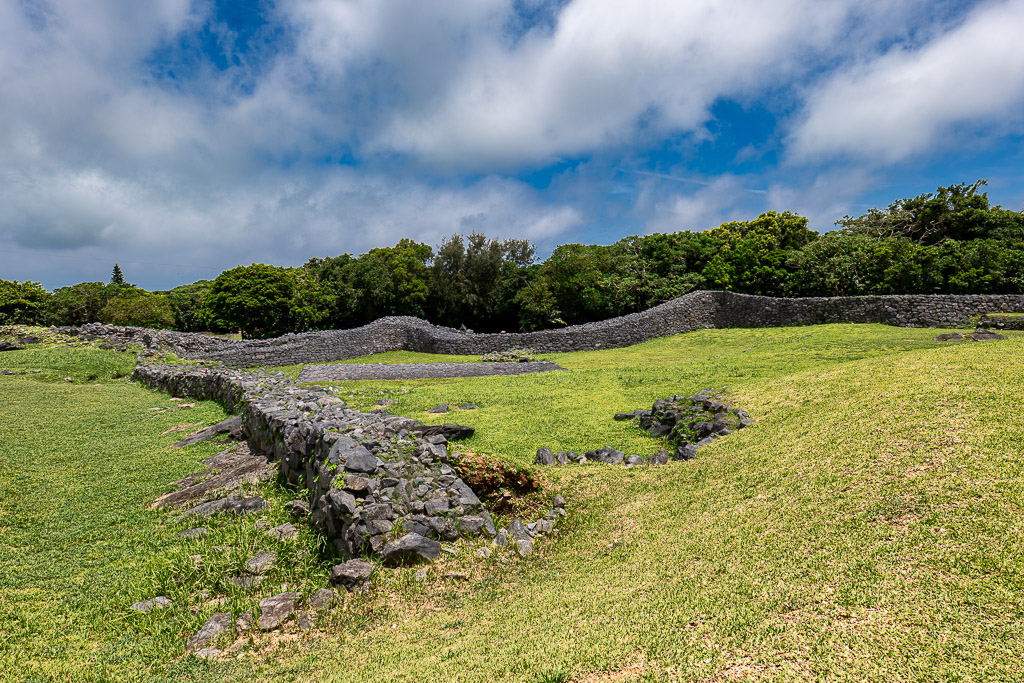
Beyond the gate, the path opens into a series of grass terraces, each once a functional enclosure of the castle — living quarters, guardhouses, sacred sites. What survives is the stone footprint, and it’s genuinely moving to walk from one to the next.
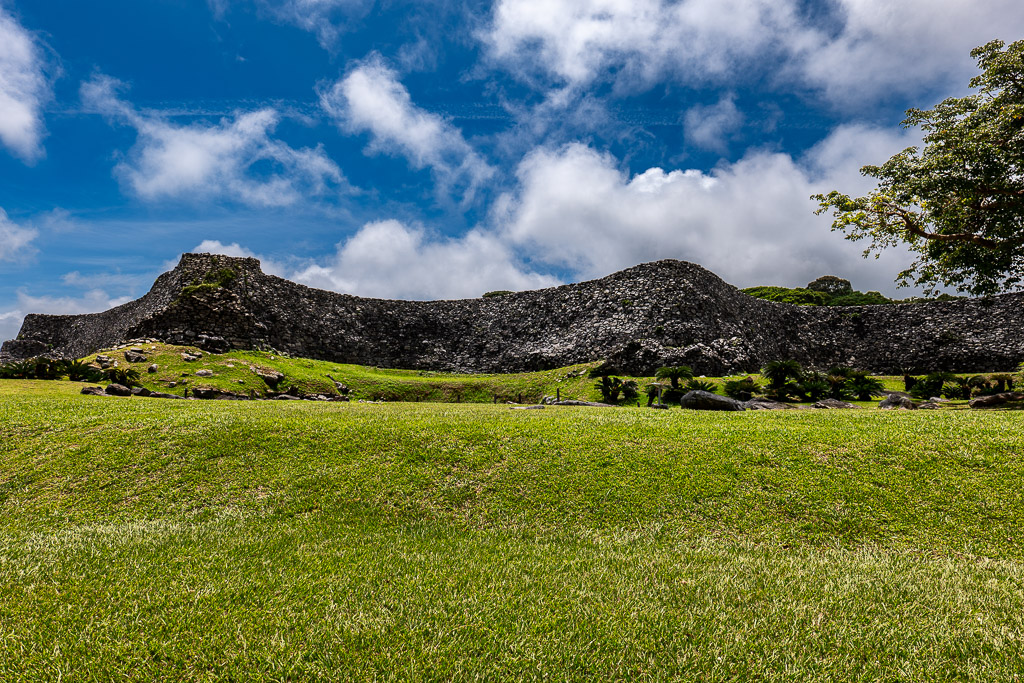
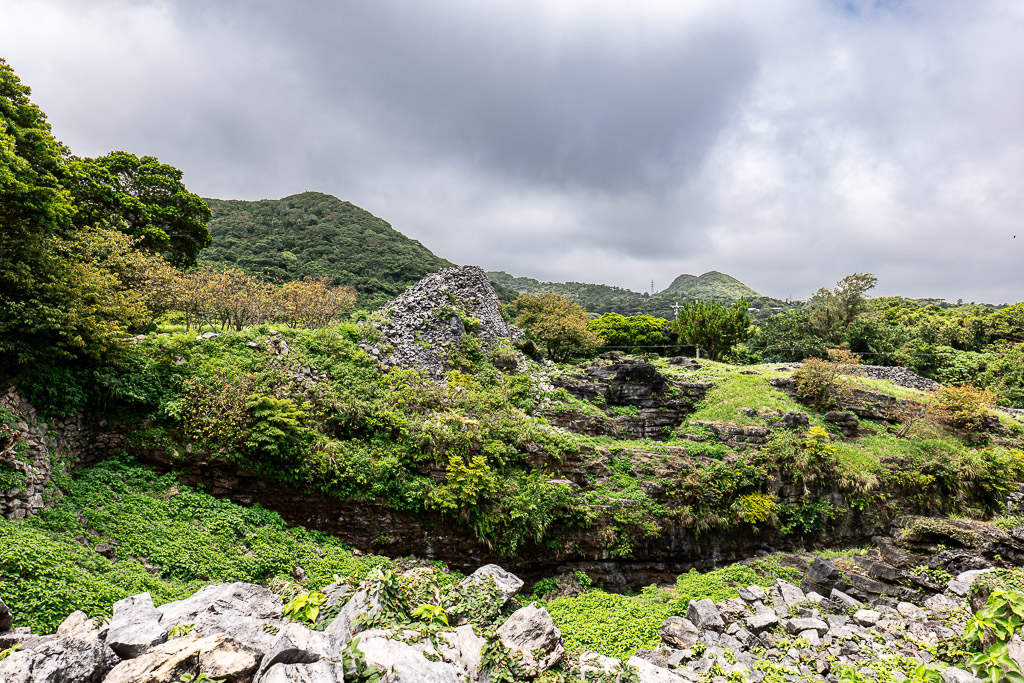
The walls themselves are Nakijin’s signature. Shuri’s walls are angular and precisely dressed; Nakijin’s are rough, wild, and curved, following the natural ridge line. It’s older, harder engineering — and looks it, in the best way.
📸 The Four Photo Spots Worth Setting Aside Time For
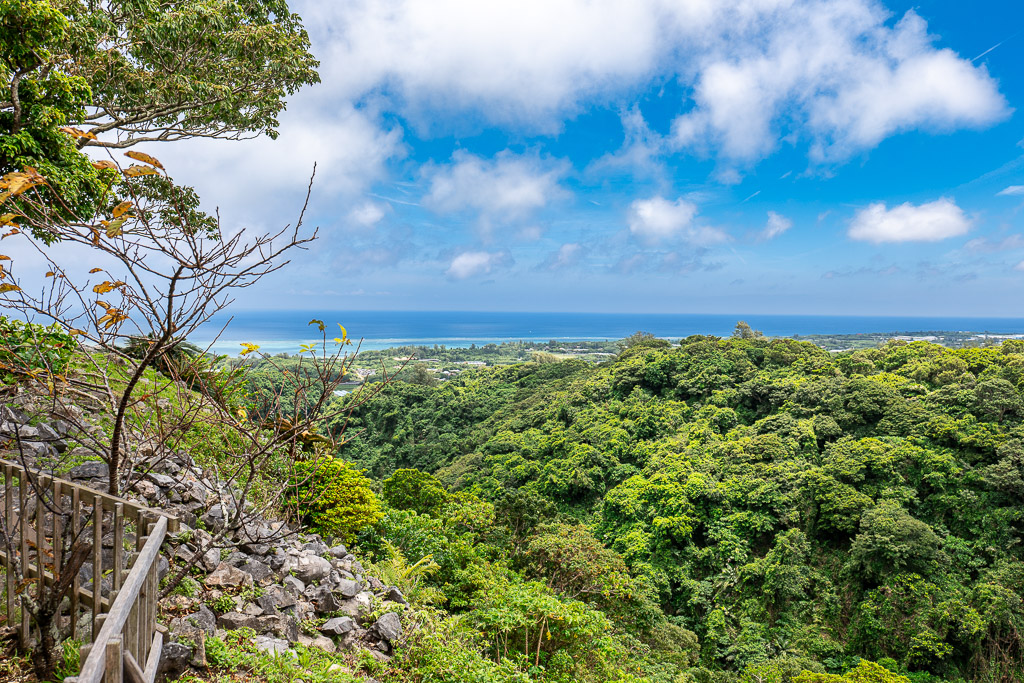
- The Panoramic Wall Shot (top of the ruins) — the walls sweeping down toward the ocean; this is the shot that lands in trip highlights
- The Heiro Gate Frame — stand just outside the arch and shoot through toward the interior stairway
- Low-Angle Wall Portrait — get right up against a wall, camera looking up. Blue sky + wild stone texture
- Cherry Blossom Path (late Jan – early Feb) — the walkway between wall and hillside is lined with vivid pink Kanhizakura (Taiwan cherry). Okinawa blooms first in Japan
👉 Best light: late morning (9–11 AM) for the walls; late afternoon (3–5 PM) for backlit cherry blossoms in season.
Sacred Spots Inside the Castle — Not Just a Ruin
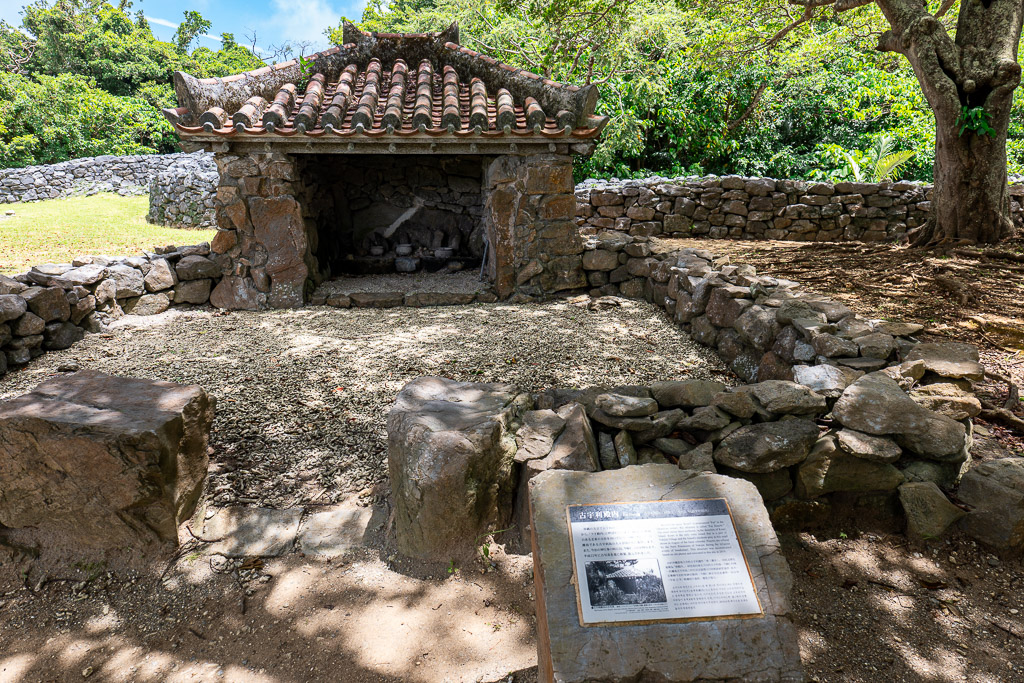
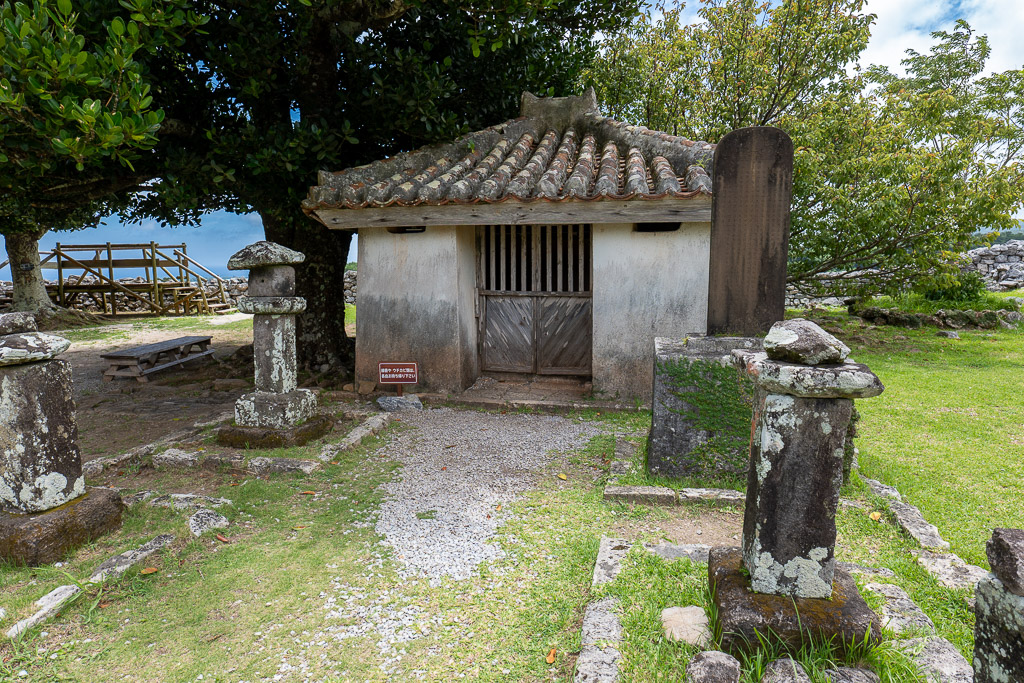
Nakijin was never a purely military site. Scattered through the enclosures are utaki (御嶽) — sacred groves and shrines central to indigenous Ryukyuan religion. The little red-tiled shrine tucked among the trees is still visited by locals today. Please pass quietly and skip flash photography.
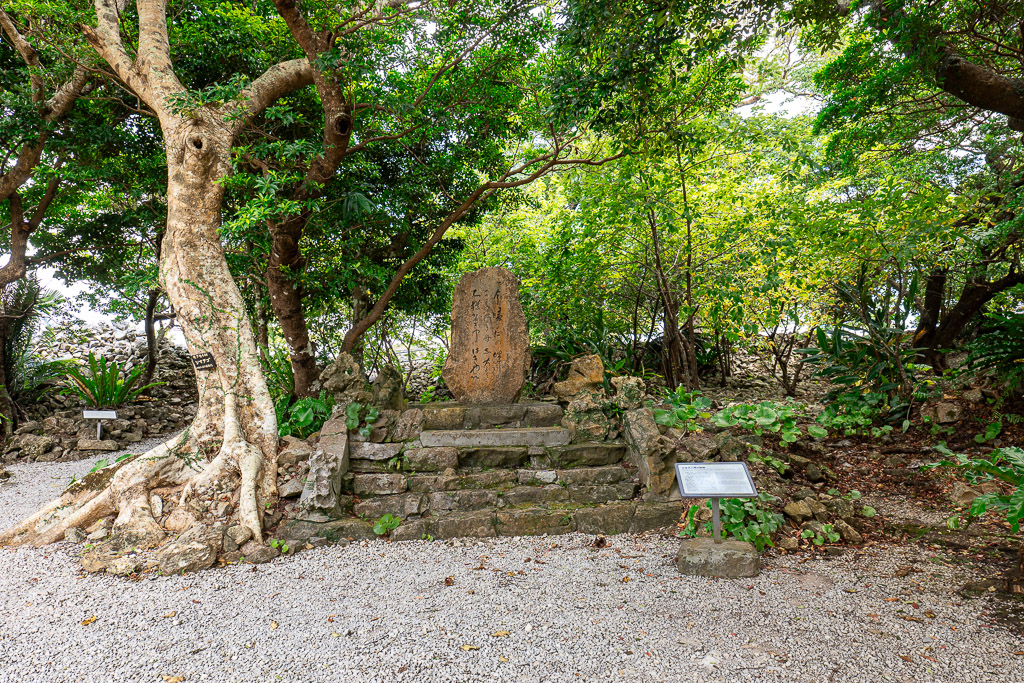
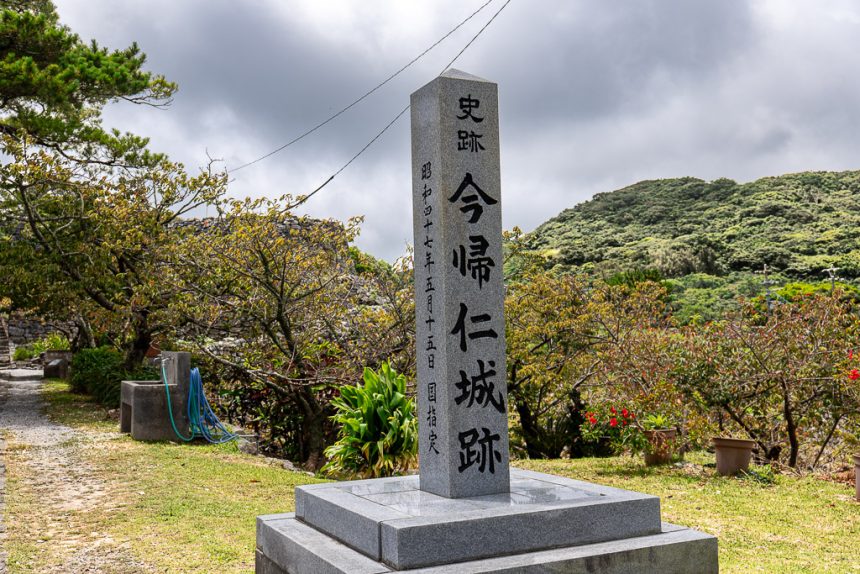
Weathered stone markers like this one are scattered across the paths — each carries a piece of local history, and the tree roots slowly claiming them are part of the atmosphere.
The Excavation Layer — Shigemamon Enclosure
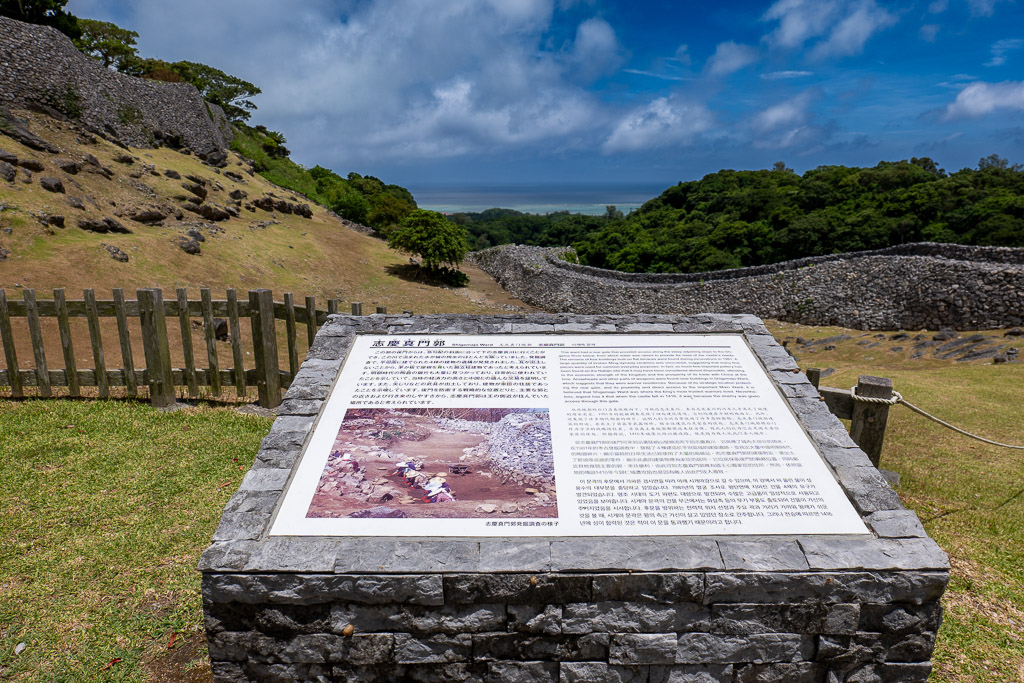
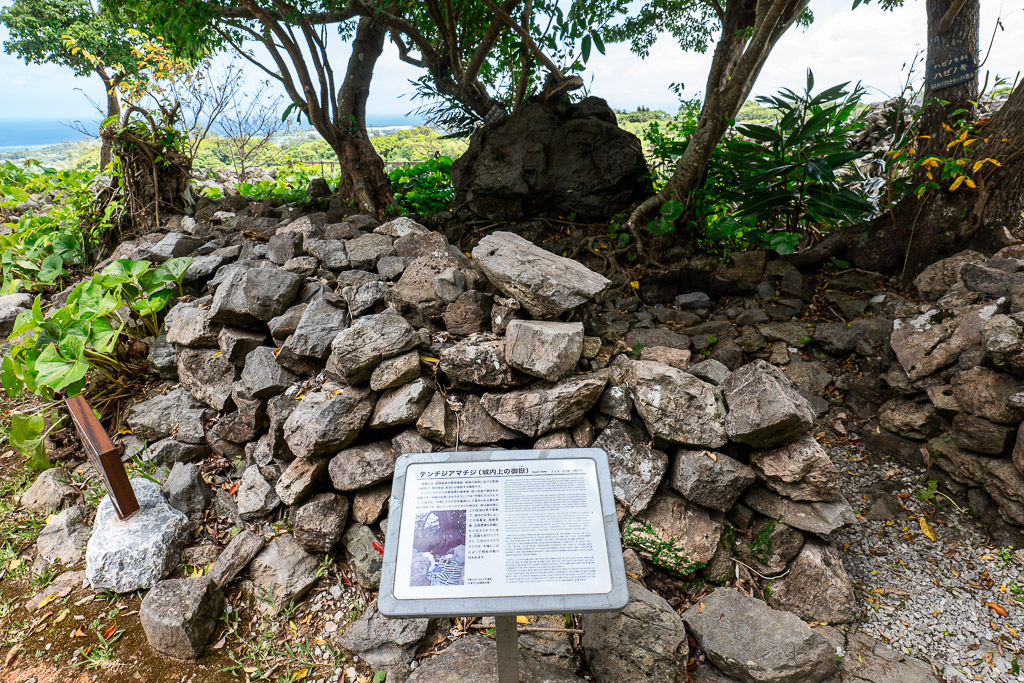
Deep inside the castle, the Shigemamon (志慶真門郭) enclosure is still being excavated. Wooden posts on the grass mark the foundations of former buildings, and English information panels explain what’s been found. It feels less like a tourist site and more like walking through a working archaeological project — which it kind of is.

Practical Tips
- Time needed — 1.5 to 2 hours is right for a proper visit including the panoramic wall walk; add 30 minutes if you’re serious about photos
- Footwear — comfortable walking shoes. Lots of uneven steps and slope. Skip flip-flops and heels
- Summer — very little shade on top. Bring sunscreen, a hat, and water. Morning visits are much more pleasant
- Cherry blossom — Late January to early February. Okinawa cherries (Kanhizakura) are vivid pink, not soft white. The night light-up during the festival is worth staying for
- Rain days — the stone stairs get slippery. If it’s pouring, swap Nakijin for Churaumi Aquarium
Combine with the Northern Okinawa Classics
Nakijin plugs neatly into the standard Northern Okinawa itinerary. Good combos:
- Okinawa Churaumi Aquarium — 25 minutes by car. The must-see aquarium of Japan
- Bise Fukugi Tree Road — 250-year-old windbreak canopy walk. 25 minutes by car
- Neo Park Okinawa — walk-in bird sanctuary, family favorite. 30 minutes by car
- Okinawa Pineapple Park — driverless carts through a pineapple field. 30 minutes by car
- Kouri Island (via Kouri Ohashi Bridge) — 15 minutes east, one of Okinawa’s most photogenic bridge drives
Morning at Nakijin → lunch in Motobu → afternoon at Churaumi → sunset at Bise Fukugi is a proven single-day rhythm. Flip Nakijin to afternoon if you’d rather beat aquarium crowds at opening.
FAQ
Q1. Do I need to book tickets in advance?
A. No. Walk-up tickets at the booth or vending machine are standard. During cherry blossom festival weekends (late Jan – early Feb) arrive early to avoid parking congestion.
Q2. Is the site stroller-friendly?
A. Only partially. The lower-plateau areas near the entrance and the paved paths are stroller-accessible, but reaching the panoramic wall viewpoints involves steps and uneven stone. For older grandparents with mobility concerns, plan to enjoy the lower enclosures and skip the top climb.
Q3. When exactly does the cherry blossom bloom?
A. Okinawa’s Kanhizakura (Taiwan cherry) blooms late January to early February — earliest in Japan. Peak varies by year with weather; check the official site’s SNS updates before you plan.
Q4. How long should I plan for a visit?
A. 1.5 to 2 hours is the standard. Add 30 minutes for a leisurely photo session or if you’re combining with the on-site Rekishi Bunka Center (Historical Culture Center) museum, which is included with the ticket.
Wrap-Up — The Ryukyu Castle That Feels Different from Every Other Castle in Japan
Nakijin Castle Ruins is not the biggest UNESCO site in Japan, and it’s not the most-photographed. That’s exactly why it works. The walls curve where the land curves. The sacred groves still get offerings. The archaeology is happening as you walk through it. Come in the morning, take your time, and leave with a photo you’ll actually print.
Pair Nakijin with Churaumi Aquarium and Bise Fukugi Tree Road for the classic Northern Okinawa full-day loop — and don’t forget that in late January the cherries here bloom before anywhere else in Japan.
Plan Your Northern Okinawa Day with GO!GO!TOUR

Ready to lock in the car? GO!GO!TOUR Okinawa car rental — English site, Naha Airport pickup, transparent pricing, and English-speaking phone support during your trip.
Planning to add ocean activities? Book Blue Cave snorkeling, diving and SUP tours — English-guided options at the most popular Okinawa spots.