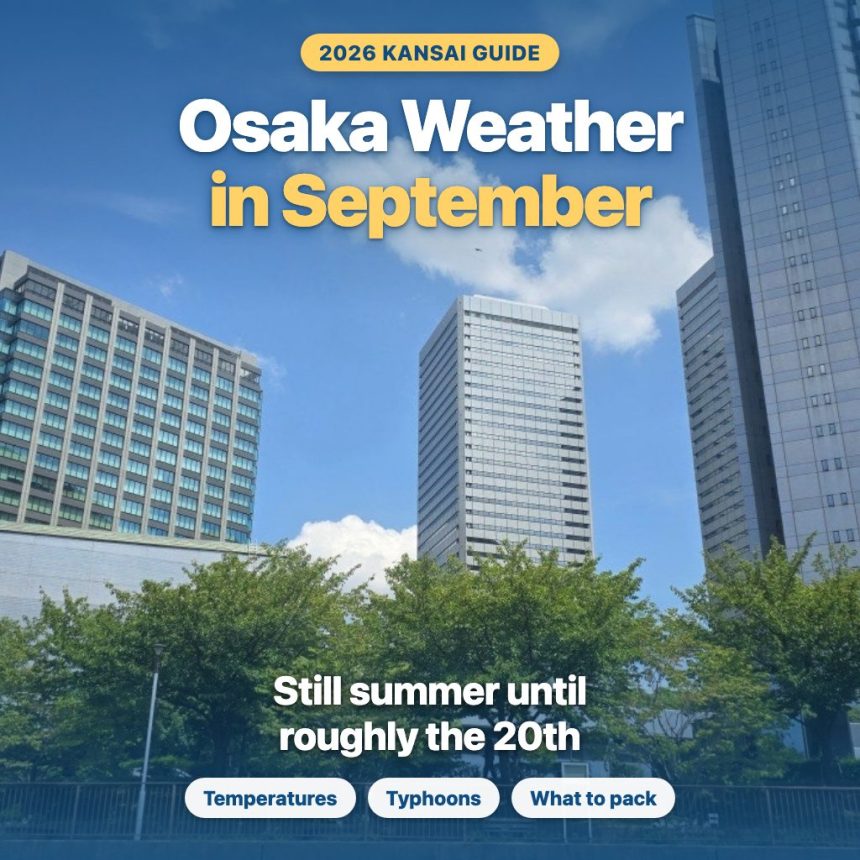
Osaka Weather in September — Still Summer Until Roughly the 20th, Then a Real Break
Short answer: September in Osaka is still summer. Daytime highs run 33–35°C (91–95°F) for the first twenty days, and only the last ten days cool off to around 27–31°C (81–88°F). Pack for August, not for autumn.
That single sentence solves about 80% of the packing mistakes travelers make here. The other 20% is typhoon season, which peaks this month.
Planning to move around Kansai on your own schedule? A Kansai rental car (Osaka, Kyoto, Hyogo) makes the hot hours far easier, because you spend them in air conditioning instead of on a platform.
Everything below comes from Japan Meteorological Agency 30-year normals (1991–2020) plus four years of day-by-day observations at the Osaka station, split into early, middle, and late September.
How hot is early September in Osaka (Sep 1–10)?
It is full summer. Not “late summer” — summer.
Here is what the Osaka observation station actually recorded over the last four years, averaged across the first ten days of the month.
| Year | Mean temp | Avg high | Avg low | Total rain |
|---|---|---|---|---|
| 2022 | 26.0°C / 78.8°F | 31.1°C / 88.0°F | 21.6°C / 70.9°F | 69.0mm / 2.7in |
| 2023 | 28.6°C / 83.5°F | 32.9°C / 91.2°F | 25.4°C / 77.7°F | 23.5mm / 0.9in |
| 2024 | 29.2°C / 84.6°F | 33.9°C / 93.0°F | 25.6°C / 78.1°F | 39.5mm / 1.6in |
| 2025 | 30.1°C / 86.2°F | 34.5°C / 94.1°F | 26.9°C / 80.4°F | 78.0mm / 3.1in |
Four years, four summers. In 2025, September 1–3 hit 35–36°C (95–97°F), and September 9 reached 35.6°C (96.1°F).
Now add humidity. September averages 67% relative humidity in Osaka, so 34°C feels considerably worse than the number suggests. Shade helps less than you expect. Moving air helps more.
The nights do not rescue you either. Overnight lows sat at 25–27°C (77–81°F) in 2023, 2024, and 2025 — what Japan calls a “tropical night.”
Plan around this, not against it:
- Do outdoor sightseeing before 11:00 or after 16:00
- Treat 12:00–15:00 as indoor time by default
- Carry a thin layer anyway, because trains and department stores run cold
Does mid-September cool down at all (Sep 11–20)?
No. And in some years it gets hotter.
| Year | Mean temp | Avg high | Avg low | Total rain |
|---|---|---|---|---|
| 2022 | 28.0°C / 82.4°F | 32.2°C / 90.0°F | 24.6°C / 76.3°F | 35.5mm / 1.4in |
| 2023 | 28.5°C / 83.3°F | 33.1°C / 91.6°F | 25.6°C / 78.1°F | 11.0mm / 0.4in |
| 2024 | 30.2°C / 86.4°F | 34.6°C / 94.3°F | 27.2°C / 81.0°F | 31.0mm / 1.2in |
| 2025 | 28.9°C / 84.0°F | 33.0°C / 91.4°F | 25.8°C / 78.4°F | 57.0mm / 2.2in |
Look at 2024: the mid-month average high (34.6°C / 94.3°F) beat the early-month average high (33.9°C / 93.0°F). The old guidebook line about “cardigan weather from mid-September” simply does not match recent data.
Mid-September is also the heart of typhoon season, which gets its own section below. If you are booking these dates, build your itinerary with one flexible day in it.
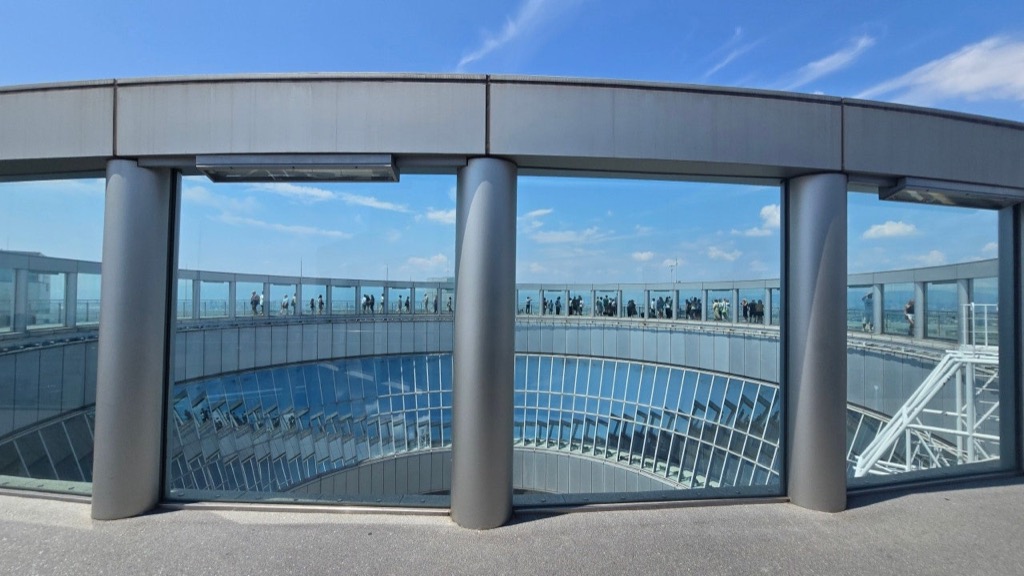
Is late September finally autumn (Sep 21–30)?
Partly. This is where the month genuinely turns — but only mornings and evenings.
| Year | Mean temp | Avg high | Avg low | Total rain |
|---|---|---|---|---|
| 2022 | 23.5°C / 74.3°F | 27.9°C / 82.2°F | 20.0°C / 68.0°F | 37.5mm / 1.5in |
| 2023 | 26.4°C / 79.5°F | 31.3°C / 88.3°F | 23.0°C / 73.4°F | 9.5mm / 0.4in |
| 2024 | 26.4°C / 79.5°F | 30.4°C / 86.7°F | 23.6°C / 74.5°F | 24.0mm / 0.9in |
| 2025 | 25.3°C / 77.5°F | 29.5°C / 85.1°F | 22.2°C / 72.0°F | 23.0mm / 0.9in |
Overnight lows drop to 20–23°C (68–73°F). That changes the trip completely. Evening walks along Dotonbori, the illuminated Osaka Castle, riverside strolls — all of it becomes pleasant instead of punishing.
But do not overcorrect. In 2023 and 2024, plenty of late-September days still climbed past 30°C (86°F), and on September 26, 2025 Osaka was forecast to approach 35°C (95°F) again.
Short sleeves stay the daytime default all month. One long-sleeve shirt or a light knit for after sunset is enough.
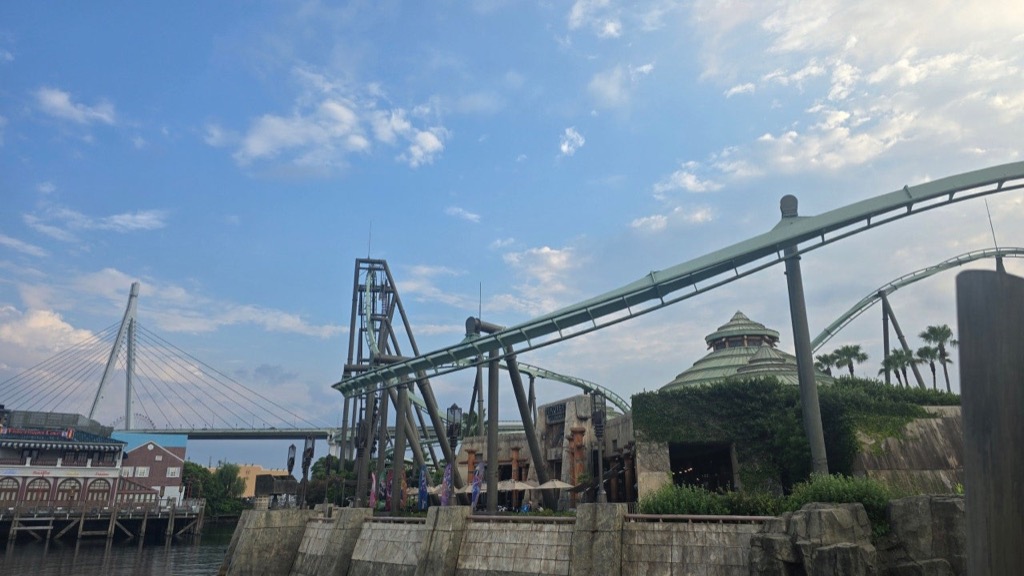
Why 2025 broke the old “September is autumn” rule
Recent years have not been normal, and it matters for your packing.
- September 2025 averaged 28.1°C (82.6°F) in Osaka — that is 2.9°C (5.2°F) above the 30-year normal of 25.2°C (77.4°F), and the second-highest such figure on record for mainland Japan.
- By September 1, 2025, Osaka had logged 41 days at or above 35°C (95°F) for the year, tying the 2024 record. It broke the record the very next day with 42.
- Osaka City did not see a single overnight low below 25°C (77°F) after July 20, 2025. An entire August without dropping below that line had not happened in 25 years.
So when you read an older article saying “September in Osaka is mild and pleasant,” treat it as describing a decade that has moved on.
Plan for a worst-case summer plus typhoon risk. If it turns out cool, that is a bonus — but do not build the trip on it.
What should you pack for Osaka in September?
Here is the whole month in one table.
| Period | Daytime highs | Daytime outfit | Morning & evening | Must-pack |
|---|---|---|---|---|
| Sep 1–10 | 33–35°C / 91–95°F | T-shirts, dresses, shorts, linen | One thin cardigan | SPF50+ PA++++, parasol, hat, sunglasses |
| Sep 11–20 | 32–35°C / 90–95°F | Same summer clothing | Thin shirt or cardigan | Folding umbrella or rain poncho, weather app |
| Sep 21–30 | 27–31°C / 81–88°F | Short sleeves, three-quarter sleeves | Light knit or long-sleeve shirt | One light jacket for night walks |
The full packing list, in the order you will actually reach for things:
- More T-shirts than you think. You will change once mid-day on hot days. This is not an exaggeration.
- One thin outer layer, every single day. Subways, department stores, and restaurants run their air conditioning around 22–24°C (72–75°F). The gap between a sunny street and a train car can approach 10°C (18°F).
- Sunscreen SPF50+ PA++++. Osaka’s UV index still sits in the “very high” band (6–7 and above) through September. Reapply every two hours.
- A hat with a real brim, and sunglasses.
- A parasol. Yes, really. Sun umbrellas are completely normal in Japan for all genders, and they work better than a hat. You can buy a decent one locally for very little at a variety store.
- A rain poncho, not just an umbrella. In typhoon winds an umbrella inverts and becomes useless. A poncho does not.
- Broken-in walking shoes. Osaka sightseeing routinely runs past 10,000 steps a day.
- A handkerchief or small towel. Many public restrooms have no paper towels or dryers. Locals all carry one.
- A handheld fan and cooling wipes. Cheap at any convenience store once you land.
What to leave at home: the full autumn wardrobe. Sweaters, boots, and heavy jackets are dead weight for at least 20 of the 30 days.
How risky is typhoon season, and what happens at KIX?
This is the part worth taking seriously, because it can affect your flights rather than just your comfort.
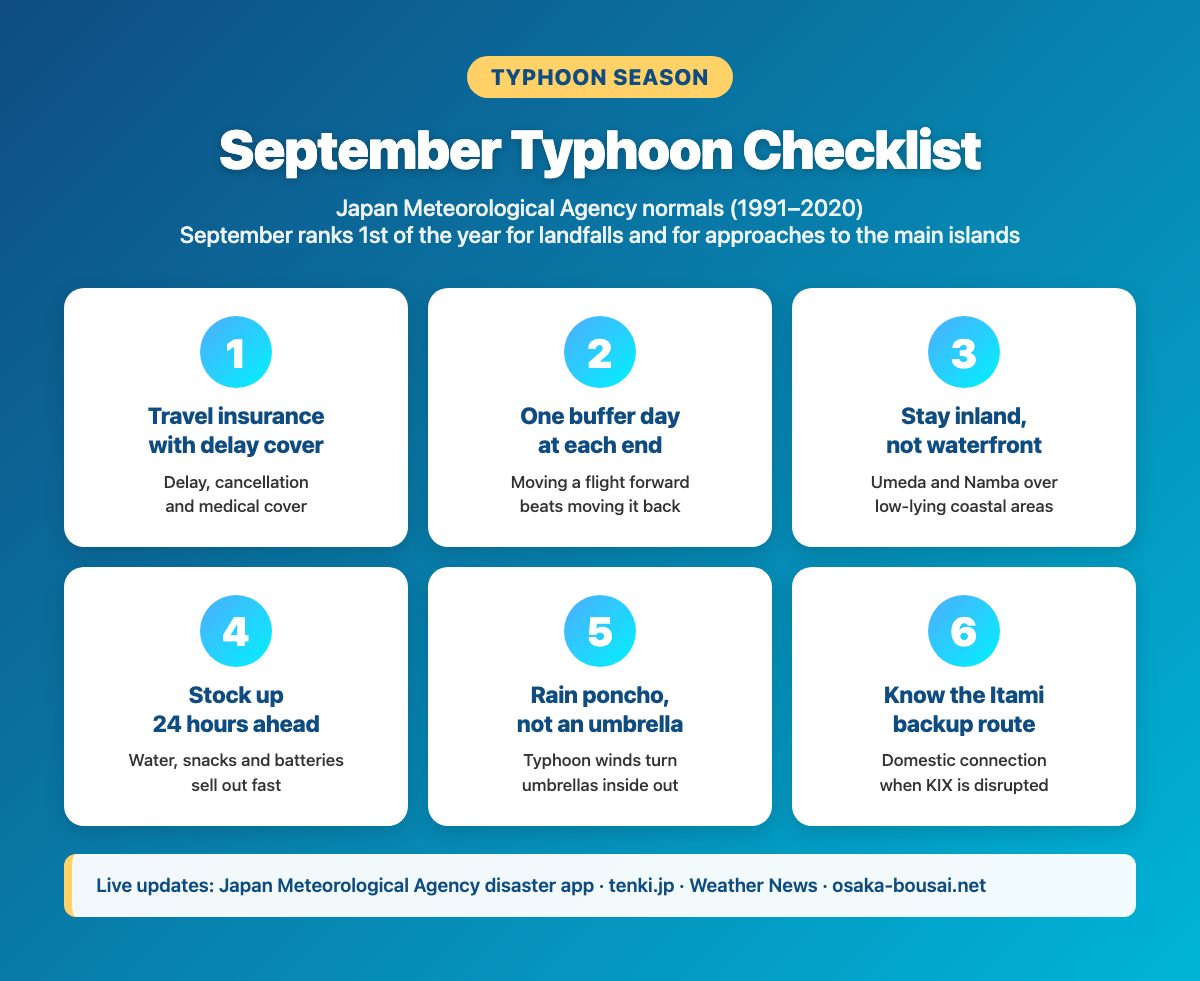
Japan Meteorological Agency typhoon normals (1991–2020) put September at the top of the calendar for the events that matter to travelers:
| Metric (September) | Average per year | Annual rank |
|---|---|---|
| Typhoons formed | 5.0 | 2nd (August: 5.7) |
| Approaches to Japan | 3.3 | Tied 1st |
| Approaches to the main islands | 1.9 | 1st |
| Landfalls | 1.0 | 1st |
August produces more storms, but many of them pass over Okinawa and southern Kyushu. September storms meet the westerly jet and get steered straight into the main islands. Approach statistics for the Kinki region — Osaka, Kyoto, Hyogo — also peak in September.
Two real cases explain why this is not theoretical.
Typhoon Jebi, September 4, 2018. It made landfall as the strongest storm to hit Japan in 25 years. A storm surge flooded the runway at Kansai International Airport. A moored fuel tanker broke loose and slammed into the connecting bridge, damaging the airport’s road link. Shinkansen and subway services stopped, hundreds of flights were canceled, and thousands of travelers were stranded at the airport.
Typhoon Shanshan, August 28 – September 1, 2024. Large-scale cancellations and delays on international routes at Kansai International Airport, right across the “still summer, should be fine” window at the start of the month.
What actually reduces your risk:
- Travel insurance with flight delay and cancellation cover — the single highest-value item on this list for a September trip. Check that the plan covers delay, cancellation, and overseas medical costs, since heat exhaustion is a real risk this month too.
- Build in one buffer day at each end of your itinerary. If a storm is forecast for your departure date, moving your flight forward by a day is usually easier than moving it back.
- Stay inland, not on the waterfront. Central districts like Umeda and Namba sit better than low-lying coastal areas.
- Stock up 24 hours before landfall. Convenience stores sell out of water, snacks, and batteries fast once a storm is confirmed.
- Know your backup airport. Itami Airport handles domestic routes and can serve as a connection when KIX is disrupted.
- Do not force your way to the airport during a storm. In 2018 the access bridge itself was out of service.
For live information, the Japan Meteorological Agency disaster app, tenki.jp, and Weather News all publish typhoon tracks, and Osaka Prefecture runs a real-time disaster site at osaka-bousai.net. Download at least one before you fly — a Japan eSIM keeps those alerts reaching you the moment you land.
How do you actually survive the heat all day?
The heat is manageable if you stop fighting it and start scheduling around it.
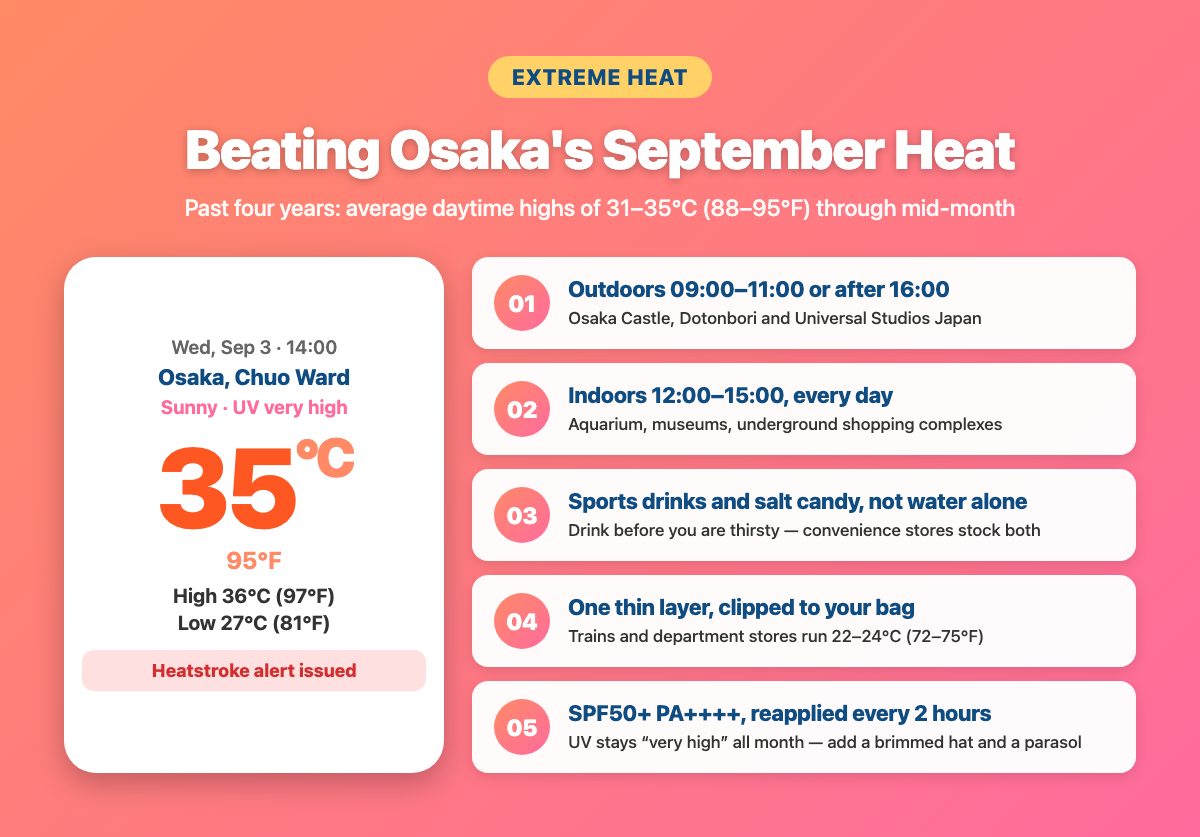
Split your day in two. Outdoor spots — Osaka Castle, Dotonbori, Universal Studios Japan — work best between 09:00 and 11:00 or after 16:00. The 12:00–15:00 block belongs indoors: an aquarium, a museum, or one of the big shopping complexes. Osaka is unusually good at this, since large sections of the city center connect underground.
Drink before you are thirsty, and add salt. Vending machines are on almost every block, and convenience stores stock sports drinks, salt candies, and pickled-plum candies specifically for this. Water alone is not enough when you are sweating through a shirt.
Respect the air conditioning gap. Trains, department stores, and restaurants often sit at 22–24°C (72–75°F). Keep your extra layer clipped to the outside of your bag so you can grab it in five seconds instead of digging.
Use transport as cooling. The subway and JR lines are air-conditioned, and so is a rental car. On a 35°C day, a 15-minute ride is a rest stop, not just transport.
Check the forecast twice a day. Afternoon downpours arrive fast in September and pass just as fast. Twenty minutes in a café often beats twenty minutes of soaked walking.
If you are combining Osaka with Kyoto, Nara, or Kobe, it is worth mapping the whole thing out first — our Osaka model itineraries already group the indoor and outdoor stops in a workable order.
How does September compare to the rest of the year?
For context, here is Osaka across all twelve months, using Japan Meteorological Agency 30-year normals (1991–2020) from the Osaka observation station.
| Month | Mean | Avg high | Avg low | Rainfall | Rainy days* | Humidity |
|---|---|---|---|---|---|---|
| January | 6.2°C / 43.2°F | 9.7°C / 49.5°F | 3.0°C / 37.4°F | 47.0mm / 1.9in | 6.5 | 61% |
| February | 6.6°C / 43.9°F | 10.5°C / 50.9°F | 3.2°C / 37.8°F | 60.5mm / 2.4in | 7.0 | 60% |
| March | 9.9°C / 49.8°F | 14.2°C / 57.6°F | 6.0°C / 42.8°F | 103.1mm / 4.1in | 9.8 | 59% |
| April | 15.2°C / 59.4°F | 19.9°C / 67.8°F | 10.9°C / 51.6°F | 101.9mm / 4.0in | 10.0 | 58% |
| May | 20.1°C / 68.2°F | 24.9°C / 76.8°F | 16.0°C / 60.8°F | 136.5mm / 5.4in | 10.4 | 61% |
| June | 23.6°C / 74.5°F | 28.0°C / 82.4°F | 20.3°C / 68.5°F | 185.1mm / 7.3in | 13.4 | 68% |
| July | 27.7°C / 81.9°F | 31.8°C / 89.2°F | 24.6°C / 76.3°F | 174.4mm / 6.9in | 13.4 | 70% |
| August | 29.0°C / 84.2°F | 33.7°C / 92.7°F | 25.8°C / 78.4°F | 113.0mm / 4.4in | 11.4 | 66% |
| September | 25.2°C / 77.4°F | 29.5°C / 85.1°F | 21.9°C / 71.4°F | 152.8mm / 6.0in | 12.3 | 67% |
| October | 19.5°C / 67.1°F | 23.7°C / 74.7°F | 16.0°C / 60.8°F | 136.0mm / 5.4in | 9.4 | 65% |
| November | 13.8°C / 56.8°F | 17.8°C / 64.0°F | 10.2°C / 50.4°F | 72.5mm / 2.9in | 7.2 | 64% |
| December | 8.7°C / 47.7°F | 12.3°C / 54.1°F | 5.3°C / 41.5°F | 55.5mm / 2.2in | 6.6 | 62% |
* Rainy days (1mm or more) come from Weather Spark’s reprocessing of Japan Meteorological Agency data — a single source. All other figures are JMA 30-year normals (1991–2020) for the Osaka station.
Two things stand out. September is Osaka’s second-wettest month after June, at 152.8mm (6.0in). And that headline mean of 25.2°C (77.4°F) is an average of a hot first half and a mild second half — which is exactly why splitting the month in three is the only useful way to read it.
FAQ — Quick answers about Osaka in September
Q. Is September a good time to visit Osaka?
Yes, especially the last ten days. Peak summer crowds and peak airfares have eased, and evenings turn genuinely pleasant after about September 20. The trade-off is typhoon risk, which peaks this month.
Q. What should I wear in Osaka in September?
Summer clothes, plus one thin layer. Short sleeves work as the daytime default all month. Add a light cardigan or long-sleeve shirt for strong indoor air conditioning and for evenings in the final ten days.
Q. How hot does Osaka get in September?
Highs of 33–35°C (91–95°F) through mid-month. The 30-year normal high is 29.5°C (85.1°F), but recent years have run far above that — September 2025 averaged 28.1°C (82.6°F), some 2.9°C (5.2°F) above normal.
Q. Will a typhoon ruin my trip to Osaka in September?
Probably not, but plan for it. September averages 1.9 approaches to Japan’s main islands and 1.0 landfalls, the highest of any month. Travel insurance covering flight delays plus a buffer day at each end cuts most of the practical risk.
Q. What happens if Kansai International Airport closes?
Your airline contacts you first with rebooking or refund options. Itami Airport can serve as a domestic backup route. In the 2018 Jebi typhoon the airport’s access bridge itself was damaged, so the safest move during an active storm is to stay put rather than travel to the airport.
Q. Do I need an umbrella or a rain poncho?
A poncho if a typhoon is forecast, an umbrella otherwise. Ordinary September showers are easy with a folding umbrella, but typhoon winds turn umbrellas inside out within seconds. Ponchos keep working.
Wrap-Up — Pack for August, Add One Layer, and Keep a Spare Day
One line for the whole month: September in Osaka is two summers and one short autumn, arriving in that order.
Days 1 through 20 are full summer with high humidity and real heat risk. Days 21 through 30 give you the mornings and evenings back. Typhoon season overlays all of it, and the fix is boring but effective — insurance, a buffer day, and an inland hotel.
If Kyoto, Nara, Kobe, or Wakayama are on your list too, a car changes the shape of the trip in September. Public transport in Osaka Prefecture is excellent, but hauling luggage between cities in 34°C heat is where energy goes to die.
▷ Plan your Osaka & Kansai trip with GO!GO!TOUR
- Kansai rental car (Osaka, Kyoto, Hyogo) — booking guide
- Kei cars (K) in Osaka Prefecture — easiest for narrow streets and tight parking
- Compact cars (S) — best for 2 to 3 travelers
- Midsize cars and wagons (M/W) — extra luggage space and long drives
- Minivans (V) — families and groups of 6 to 8
- Osaka model itineraries — indoor and outdoor stops in a workable order
- Japan eSIM — keep weather and typhoon alerts live from the moment you land
- Osaka hotels — inland districts like Umeda and Namba recommended
- Travel insurance — flight delay, cancellation, and overseas medical cover

Throw in one more T-shirt and one thin layer, and you are ready for almost anything September in Osaka can do.