- Okinawa Peace Memorial Park — Mabuni Hill's Place of Peace, History & the Korean Memorial
- Peace Memorial Park at a glance — quick reference table
- What is Peace Memorial Park? — Mabuni Hill, where the Battle of Okinawa ended
- Getting there — Why a rental car is the right answer
- ① Peace Memorial Museum — Understanding the Battle of Okinawa in one place
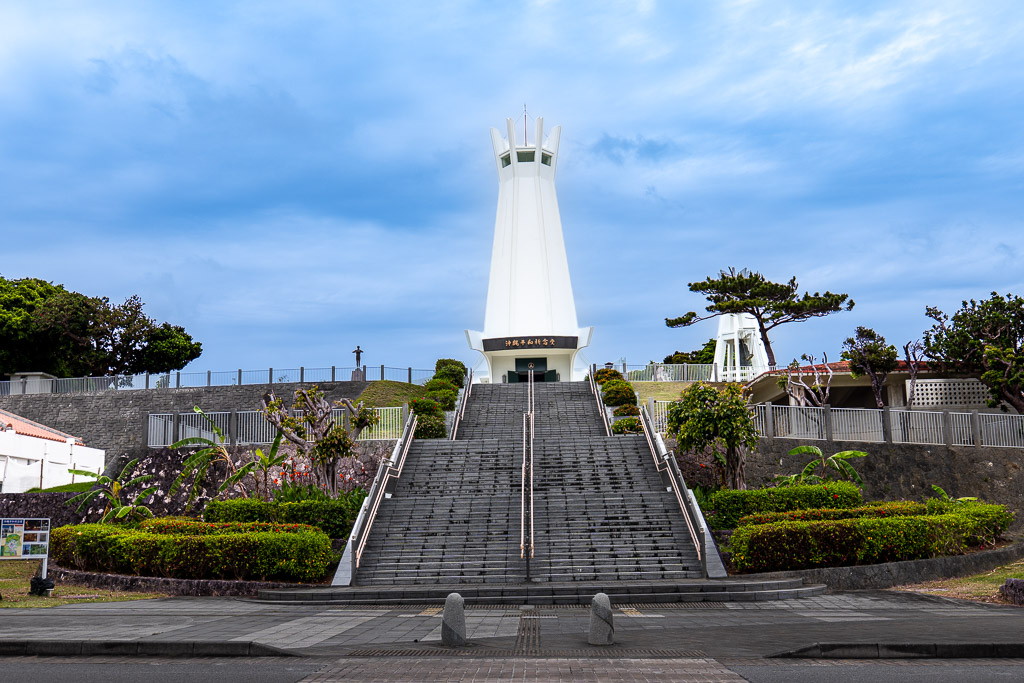
- ② Peace Memorial Hall — The white seven-sided tower housing the 7m Peace Statue
- ③ The Cornerstone of Peace — Every name inscribed, regardless of nationality
- ④ Korean Memorial Tower — Remembering Korean victims of the Battle
- ⑤ Mabuni Hill & the colonnade — Walking facing the southern sea
- Rental-car routes — 3 model itineraries including Peace Memorial Park
- Okinawa self-drive freedom — Rental car wins, every time
- Frequently Asked Questions (FAQ)
- Final thoughts…
Okinawa Peace Memorial Park — Mabuni Hill’s Place of Peace, History & the Korean Memorial
In one line: Okinawa Peace Memorial Park sits on Mabuni Hill in Itoman City, the site where the Battle of Okinawa ended in 1945. Inside you’ll find the Peace Memorial Museum (¥300, 9:00–17:00), the 7m Peace Statue at the Memorial Hall, the Cornerstone of Peace inscribed with 240,000+ names, and the Korean Memorial Tower . About a 1-hour drive south from Naha with free parking — the deepest cultural stop you can add to a southern Okinawa rental-car itinerary.
After the beach days and food crawls are sorted, most Okinawa travellers eventually feel like spending one day learning the island’s real story. The first place we recommend is Okinawa Peace Memorial Park in Itoman’s Mabuni district. The site of the last major battle of WWII in the Pacific has been turned into a beautiful, contemplative space — and is particularly famous for the Cornerstone of Peace , which inscribes the names of every person who died in the Battle of Okinawa regardless of nationality or side.
This guide walks you through the most efficient rental-car route around Peace Memorial Park from a self-guided traveller’s perspective — the museum, the memorial hall, the Cornerstone of Peace and the Korean Memorial — plus admissions, hours and parking.
To explore a meaningful southern Okinawa route in comfort, book your rental car the moment you land. English booking and transparent pricing make GO!GO!TOUR Okinawa Rental Car the easiest way to lock in your vehicle before you fill in the itinerary.
Peace Memorial Park at a glance — quick reference table
The essential information condensed into one table. Copy & paste straight into your trip notes.
| Item | Details | Quick note |
|---|---|---|
| Location | 444 Mabuni, Itoman City, Okinawa (〒901-0333) | About 1 hour drive south of Naha |
| Park entry | Free (full park open to walk freely) | Museum & Hall charged separately |
| Peace Memorial Museum | Adults ¥300 / Students ¥150 | 9:00–17:00 (last entry 16:30) |
| Peace Memorial Hall | Adults ¥450 / Jr-Sr High ¥350 / Elementary ¥250 | 9:00–17:00, houses 7m Peace Statue |
| Closed | Museum: Dec 29 – Jan 3 / Hall: Open year-round | Outdoor park & Cornerstone open 24/7 |
| Parking | Free (North / Central / South lots) | Rarely full on weekdays |
| From Naha | About 1 hour by car (~40 km via Route 331) | Far faster than public transport |
| Recommended stay | 2–3 hours (Museum + Cornerstone + Hall) | +30 min if including the Korean Memorial |
| Best time | Year-round / Avoid June 23 (Memorial Day ceremony) | Cloudy/rainy days work — museum is indoor |
With this table in mind, you’re already most of the way to a good visit. Now let’s go deeper.
What is Peace Memorial Park? — Mabuni Hill, where the Battle of Okinawa ended
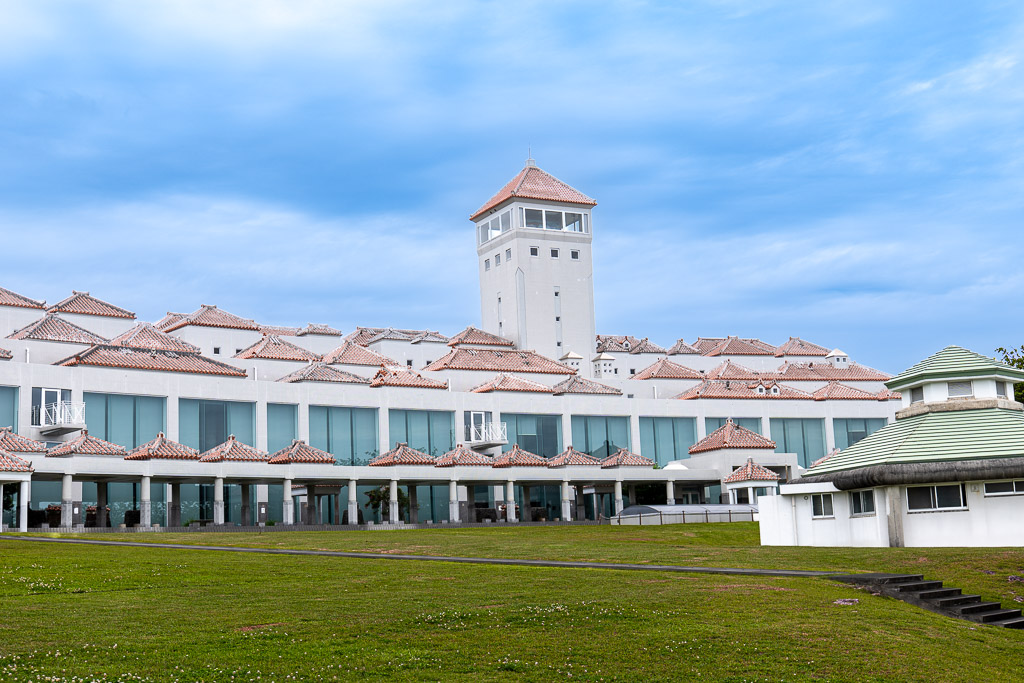
Okinawa Peace Memorial Park marks the place where organised combat in the Battle of Okinawa ended on 23 June 1945. Mabuni Hill held the final Japanese command post; after Okinawa reverted to Japan in 1972, the site was developed into a memorial space. It is less a regular park than a sacred ground for reflection on peace.
The park spans about 40 hectares (~56 football pitches), with the Peace Memorial Museum, Peace Memorial Hall, Cornerstone of Peace, National War Dead Cemetery and memorial towers from all 46 Japanese prefectures plus Korea, the US, the UK and others scattered throughout. Walking the whole site takes well over an hour; with the museum, plan 2–3 hours.
Each year 23 June is “Okinawa Memorial Day (Okinawa Memorial Day),” with a memorial ceremony at the Cornerstone of Peace. That day the entire park fills with mourners. On other days it is remarkably quiet — ideal for contemplation.
Getting there — Why a rental car is the right answer
Itoman’s Mabuni district sits at the southern tip of Okinawa’s main island. Even the last monorail (Yui-rail) terminus is an hour’s drive away, so public transport is a heavy time sink.
- Naha Airport → Peace Memorial Park: ~1 hour by car (~40 km via Route 331)
- Kokusai-dori / Naha City → Peace Memorial Park: ~1 hour by car
- Okinawa World (Gyokusendo Cave) → Peace Memorial Park: ~25 minutes by car — easy southern combo
- Himeyuri Tower → Peace Memorial Park: ~10 minutes by car — practically next door, always combine
Three parking lots (North, Central, South) are spread across the grounds, and all are free. Almost never full on weekdays. Central lot is best if your focus is the museum and Cornerstone; North lot is closest to the Korean Memorial.
Buses do reach the park — from Naha Bus Terminal take route 89 to Itoman Bus Terminal, then transfer to route 82 or 83. Total trip can hit 2–3 hours with hour-long gaps between buses, so unless you have a very flexible day, a rental car or taxi is hugely more efficient.
① Peace Memorial Museum — Understanding the Battle of Okinawa in one place
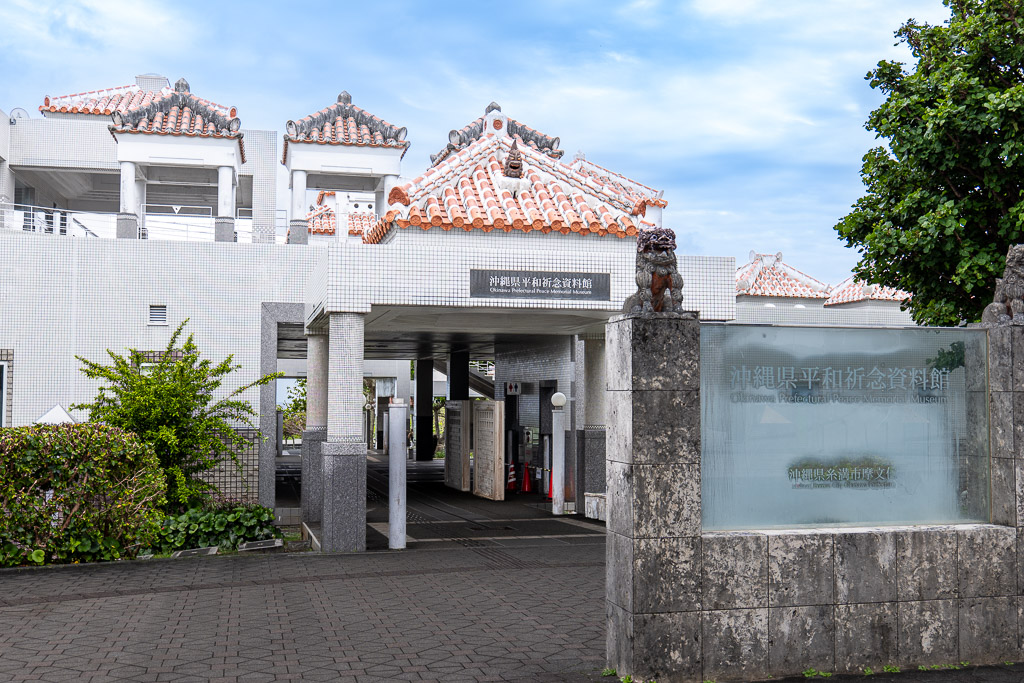
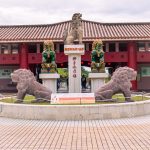
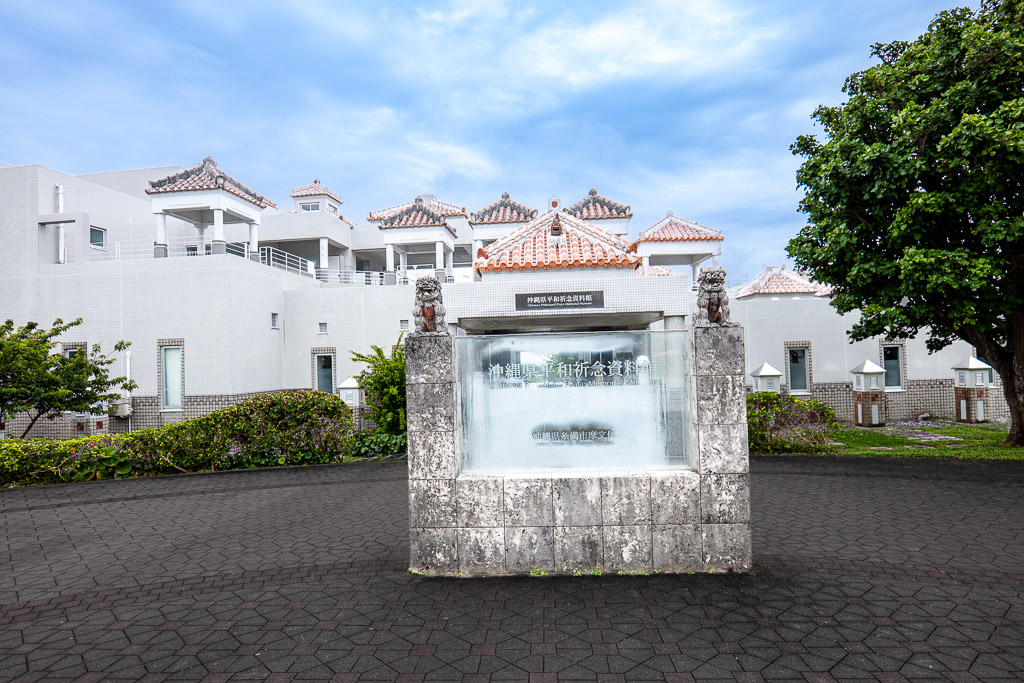
The heart of the park is the Okinawa Prefectural Peace Memorial Museum — white walls, Ryukyu red-tile roofs, and a pair of shisa (Okinawan lion) statues guarding the entrance. First opened in 1975, the museum was rebuilt in its current form in time for the 2000 G8 Kyushu-Okinawa Summit.
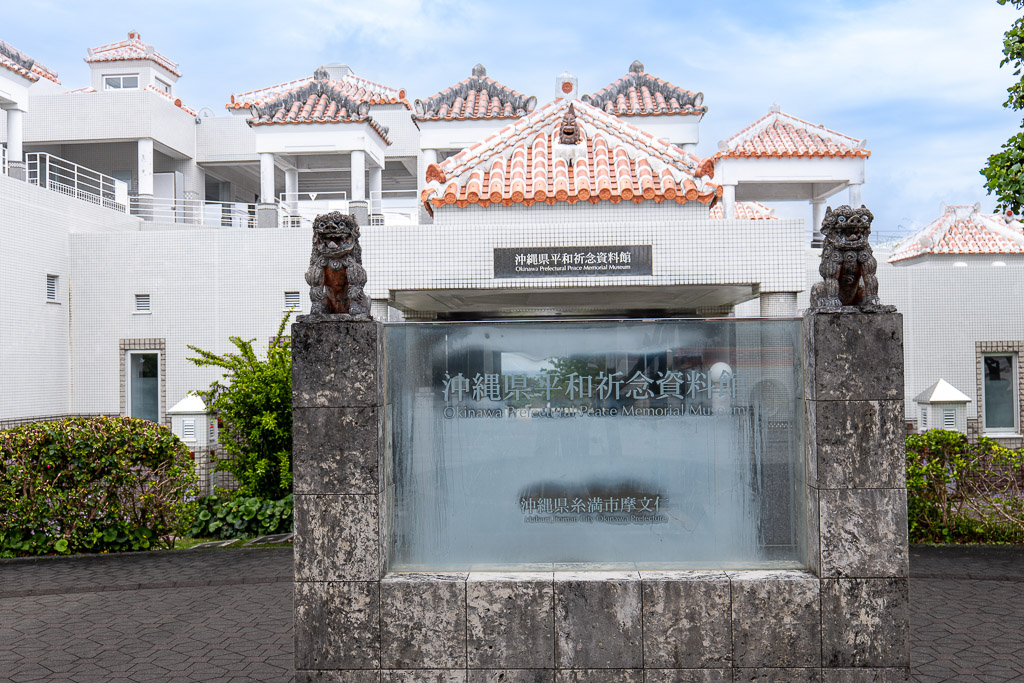
The bilingual nameplate at the entrance reads Okinawa Prefectural Peace Memorial Museum,” with shisa lions on each side standing guard. A popular photo spot before entering.
What to know before you visit
- Hours: 9:00–17:00 (last entry 16:30)
- Closed: 29 December – 3 January (open year-round otherwise)
- Admission: Adults ¥300 / Elementary, Junior, Senior High ¥150 (group discount for 20+)
- Languages: English audio guide and pamphlets available — essential for non-Japanese visitors
- Duration: 1.5–2 hours full / 1 hour quick
- Photography: Restricted in parts of the permanent exhibit — check signs
The exhibition follows: “Road to the Battle of Okinawa → The battle itself → Forced group suicides and civilian tragedy → Surrender and US occupation → Peace messages.” The “Typhoon of Steel” naval bombardment, the entanglement of soldiers and civilians, and individual stories within the catastrophe are presented through film, artefacts and testimony with great care.
Renting the English audio guide is highly recommended — the material is heavy, and hearing it in your own language makes a real difference in comprehension.
② Peace Memorial Hall — The white seven-sided tower housing the 7m Peace Statue
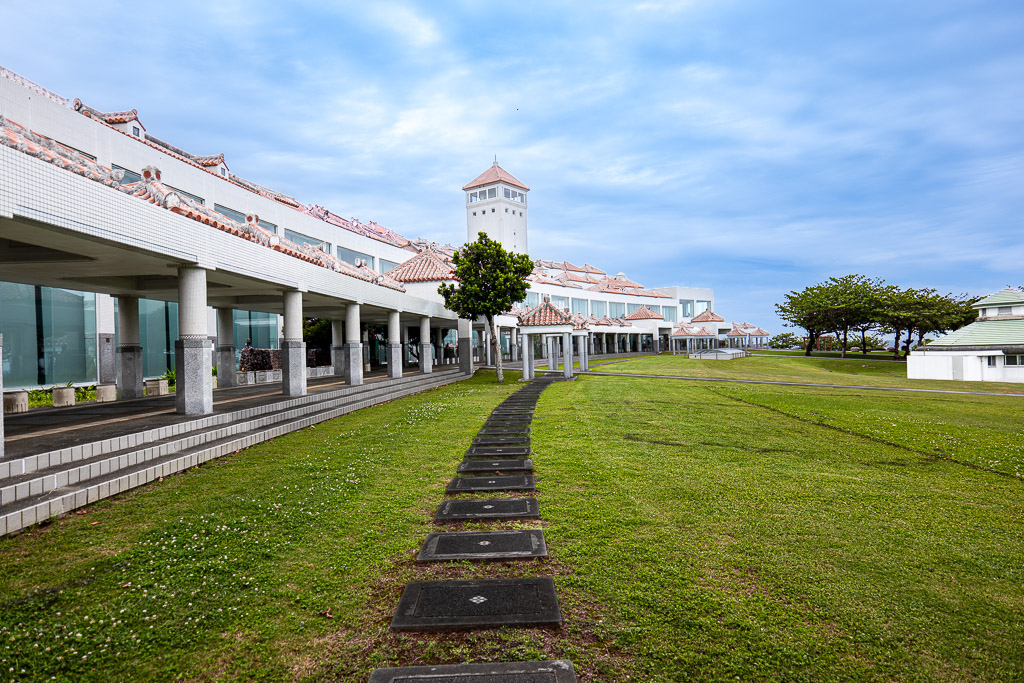
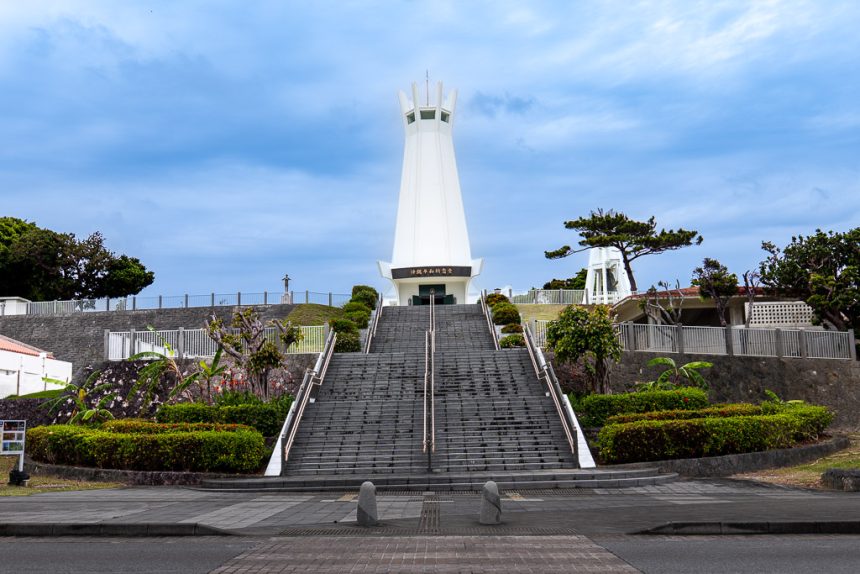
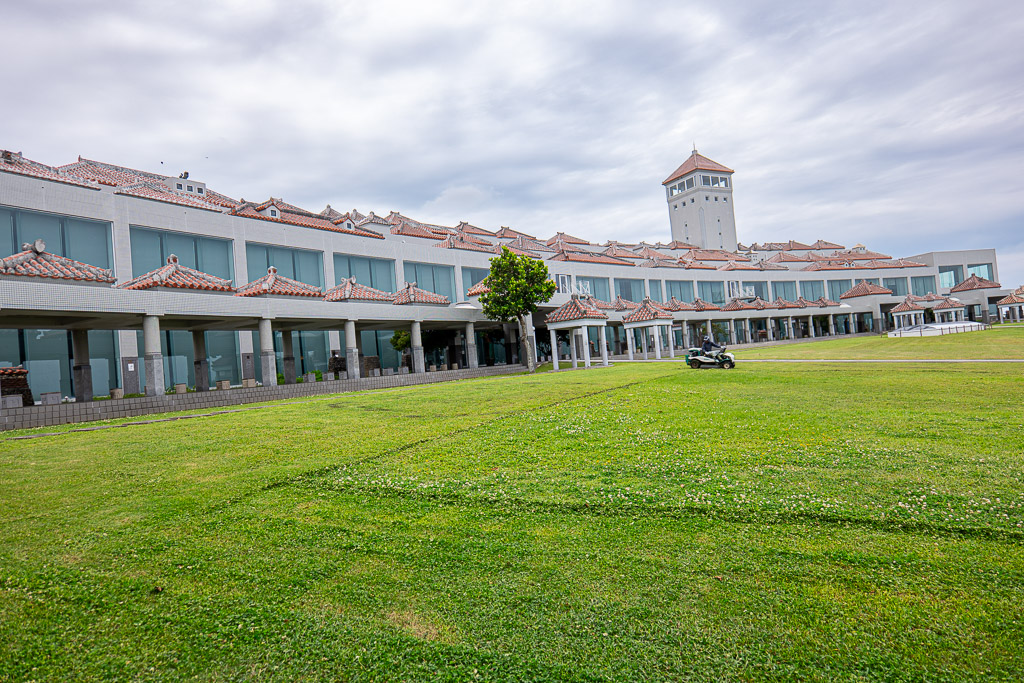
From the museum, a long grass colonnade leads you toward a white seven-sided tower in the distance — the Okinawa Peace Memorial Hall. Built in 1978, 45 m tall, with a distinctive geometric silhouette that has become the icon of Mabuni Hill.
Inside the Hall stands the Okinawa Peace Statue — approximately 12 m tall and 8 m wide, finished in natural urushi lacquer and gold leaf, completed over 18 years. The enormous seated figure, one hand raised in benediction, in soft chamber light is the single most memorable moment of a visit to the park.
What to know before you visit
- Hours: 9:00–17:00 (last entry 16:30)
- Closed: Open year-round (note: differs from the Museum’s closure period)
- Admission: Adults ¥450 / Jr-Sr High ¥350 / Elementary ¥250
- Duration: 30 minutes – 1 hour
- Operator: Okinawa Foundation (separate from the Museum)
The Hall is independently operated from the Museum, so tickets are purchased separately. If time is tight, prioritise Museum + Cornerstone of Peace first, and add the Hall when you have an extra hour.
③ The Cornerstone of Peace — Every name inscribed, regardless of nationality
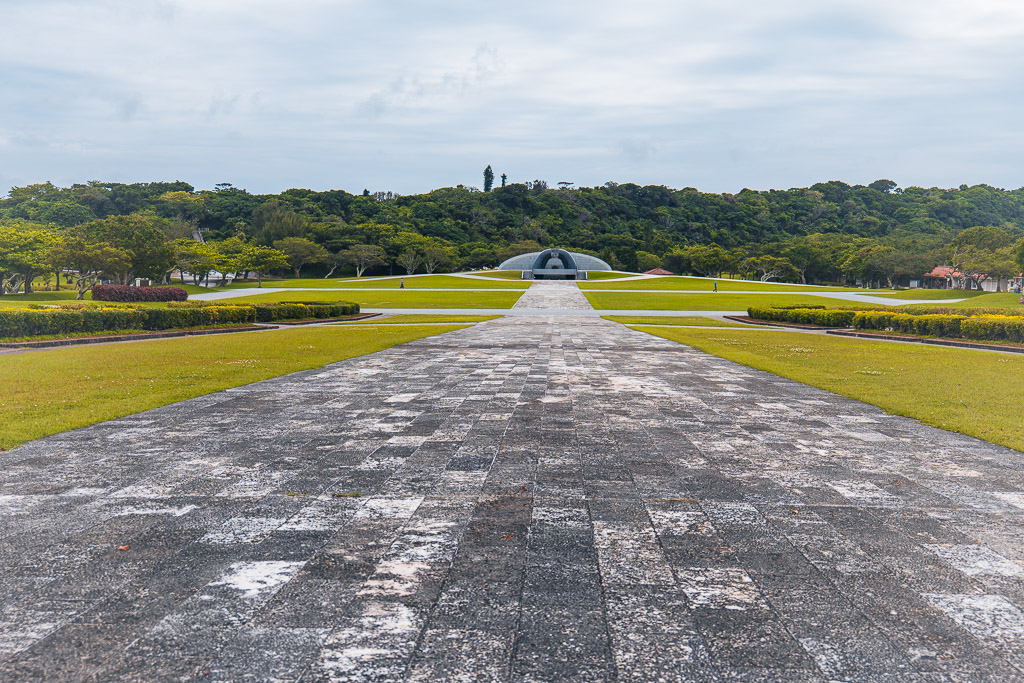
The most powerful place in the park is the Cornerstone of Peace. Built in 1995 to mark the 50th anniversary of the war’s end, it inscribes the names of every person who died in the Battle of Okinawa — Japanese and Okinawan, American, British, Taiwanese, Korean (both North and South), civilian and military, friend and foe — all together in one place.
Over 240,000 names are inscribed today, with newly confirmed names added each 23 June. The “every life equal” framing is unusual among war memorials, and it makes the walk among the panels surprisingly emotional. International visitors often pause for a long time at the panels for their own country.
The panels fan out toward the southern sea from Mabuni Hill. Walking between them, the endless rows of names naturally slow your pace. Taking the time to walk through, not just photograph, is the best way to receive the meaning of this place.
④ Korean Memorial Tower — Remembering Korean victims of the Battle
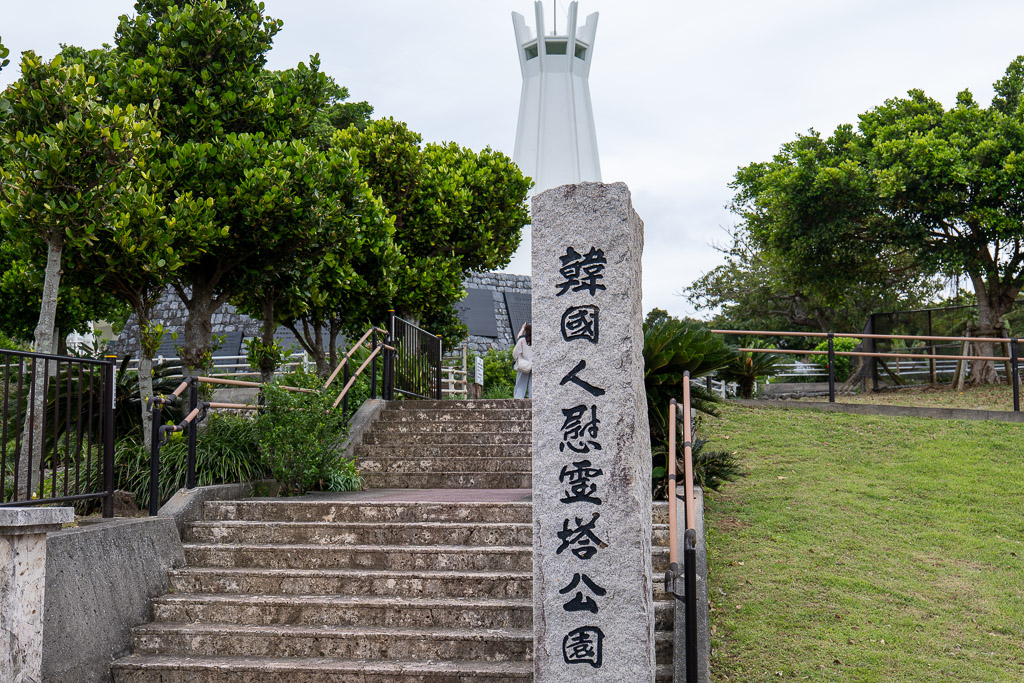
The Korean Memorial Tower was built on 15 August 1975, the 30th anniversary of Korea’s liberation. It commemorates more than 10,000 Korean soldiers, military attendants, and forced labourers killed in the Battle of Okinawa.
A large natural stone at the entrance bears the bold characters (Korean Memorial Tower Park), and from the steps behind you can see the white Peace Memorial Hall rising in the background. The story of Koreans forcibly mobilised to Okinawa during the war is one many visitors are not aware of, and this quiet corner of the park gives that history its space.
Location
- Northern section of the park (about 5 min walk from North Parking)
- ~5–10 minutes on foot from Peace Memorial Hall
- Free, open 24 hours
- US, UK and other foreign memorial towers nearby
Spending even 30 minutes among these memorials deepens what “Okinawa travel” means beyond the beaches and food.
⑤ Mabuni Hill & the colonnade — Walking facing the southern sea
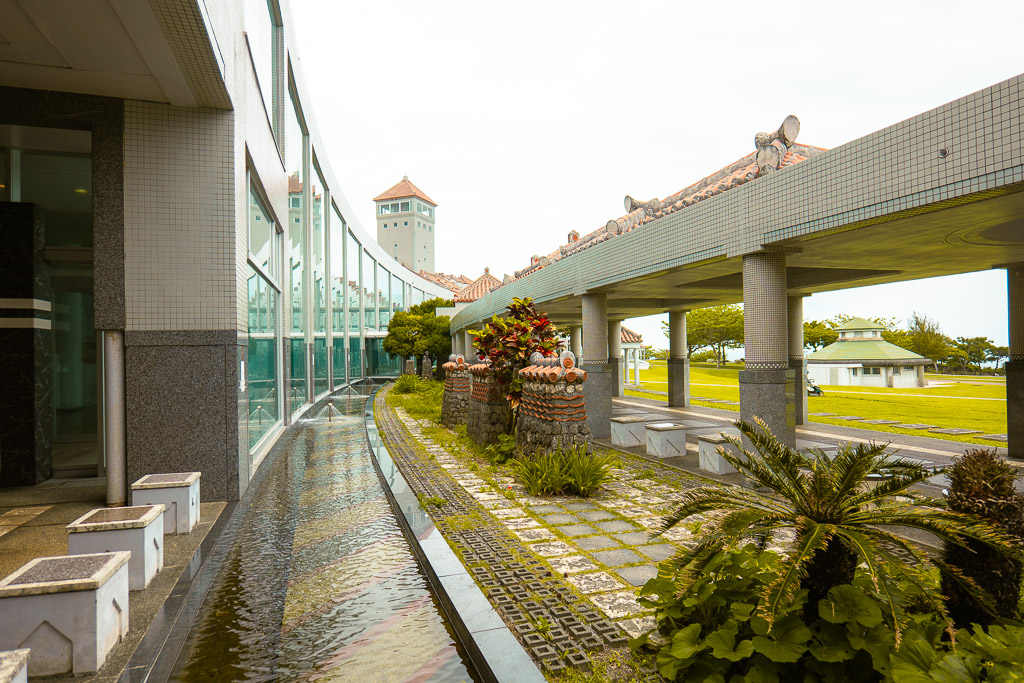
The long white colonnade beside the museum combines Ryukyu red tiles, white columns, and a reflecting water pool into a beautifully measured walking path. Even under midday sun there’s shade and an ocean breeze — a natural place to sit and think.
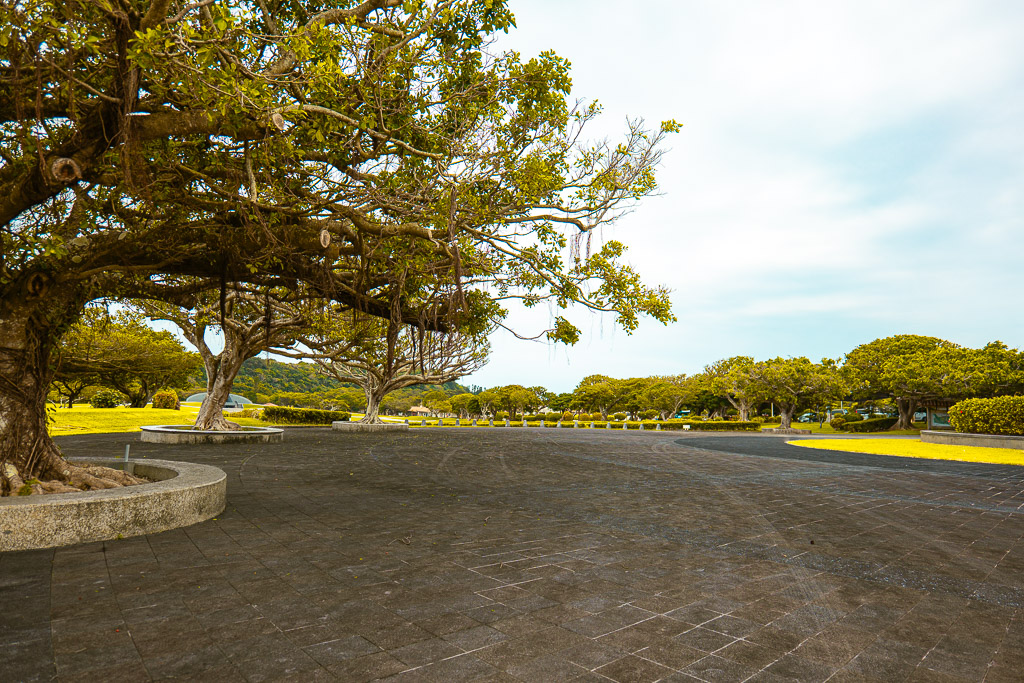
Old gajumaru (Banyan) trees stand over plazas in several places — their thick roots spreading across the ground show the distinctly Okinawan character of the landscape.
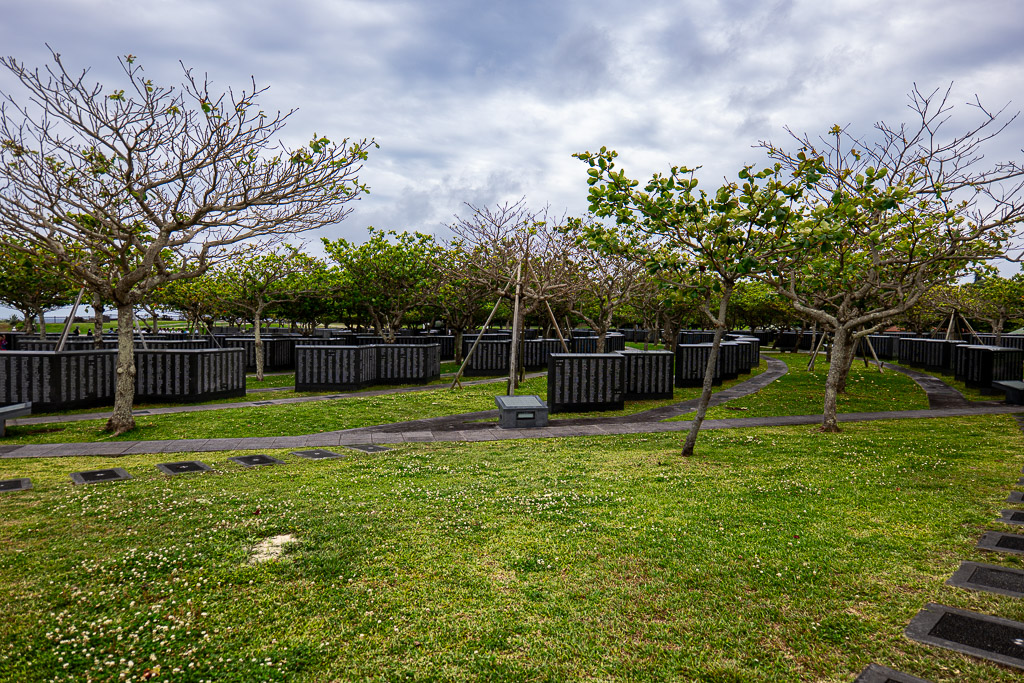
Across Mabuni Hill, memorial towers for each of Japan’s 46 prefectures are spread out. Each panel lists those mobilised from that region who died in the Battle of Okinawa — and on any given day you’ll see relatives and descendants visiting quietly.
Rental-car routes — 3 model itineraries including Peace Memorial Park
Peace Memorial Park is great on its own, but pairing it with other southern Okinawa sights creates the best half-day or full-day itinerary.
Route ① “Okinawa World + Peace Memorial Park + Himeyuri Tower” — Classic southern day
- Morning: Naha → Okinawa World (Gyokusendo Cave + Ryukyu Kingdom village, 2 hr)
- Lunch: Inside Okinawa World or in Itoman City
- Afternoon 1: Peace Memorial Park (Museum + Cornerstone + Korean Memorial, 2–3 hr)
- Afternoon 2: Himeyuri Tower & Himeyuri Peace Museum (10 min drive, 1 hr)
- Evening: Back to Naha → dinner on Kokusai-dori
Route ② “Senagajima + Peace Memorial Park” — Beach views to history in half a day
- Morning: Senagajima Umikaji Terrace (bright sea views, 2 hr)
- Lunch: At Senagajima or grab something to go
- Afternoon: Peace Memorial Park (3 hr)
- Evening: Back to Naha
Route ③ “Peace Memorial Park + Mabuni Cliff + Cape Kyan” — Southern tip scenery
- Morning: Peace Memorial Park (Museum + Cornerstone + Hall + Korean Memorial, 3 hr)
- Lunch: Itoman City or near Mibaru Beach
- Afternoon: Cape Kyan (Cape Kyan) Lighthouse → Mibaru Beach walk
- Evening: Back to Naha
Whichever route you choose, without a rental car everything takes twice as long. The south has no rail and infrequent buses — a rental car plus a little planning is what determines your trip satisfaction.
Okinawa self-drive freedom — Rental car wins, every time
Not just Peace Memorial Park — Churaumi Aquarium, Kouri Island, Senagajima, Zakimi Castle, Minatogawa Stateside Town and most signature Okinawa spots are far quicker by car. The southern Itoman area in particular sits “an hour beyond the monorail terminus,” where rental car is overwhelmingly the better option.
- ✅ English booking — done in a few clicks
- ✅ Naha Airport pickup & drop-off, with city and northern branches
- ✅ Transparent pricing, no surprise fees — insurance options explained in English
- ✅ English support for changes & questions — Japan-based English line
👉 Compare and book in English: GO!GO!TOUR Okinawa Rental Car
Related reading:
- 🚗 Okinawa Self-Guided Travel Hub — Food, sights & rental cars
- 🏖️ Okinawa Marine Activities — Snorkel, Dive, SUP
Frequently Asked Questions (FAQ)
Q1. Is there an entrance fee to the park?
The park itself is free. The Cornerstone of Peace, Korean Memorial and the prefectural memorial towers are all open to walk freely 24/7. The Peace Memorial Museum (¥300 adult) and Peace Memorial Hall (¥450 adult) are paid separately.
Q2. Is there an English audio guide?
Yes. The Peace Memorial Museum offers English audio guides and English pamphlets. Strongly recommended — the content is dense, and hearing it in your own language makes a significant difference. The Peace Memorial Hall also provides multilingual panels.
Q3. Is it suitable for children?
The park itself, with wide grass and walking paths, is fine for children. However, parts of the museum exhibit (civilian tragedy, forced group suicides) can be heavy for young children — for elementary-school-age kids and below, a parent walking through with them and adapting the explanation is recommended.
Q4. Can I visit on Memorial Day, 23 June?
The morning of 23 June holds a large memorial ceremony at the Cornerstone of Peace — general access may be restricted. For sightseeing, avoid the day. If you want to witness Okinawa’s day of remembrance in person, however, the experience itself is meaningful.
Q5. Can I go on rainy days?
The Museum and Hall are indoors and unaffected by rain; the colonnade is also covered. The Cornerstone of Peace and Korean Memorial are outdoors and need an umbrella. On rainy days, focus on Museum → colonnade → Hall as an indoor-first sequence.
Q6. Are there places to eat?
The park has small kiosks and vending machines but no major restaurants. Plan to eat in Itoman City (15 min by car) beforehand, or combine with restaurants at Okinawa World. Visiting outside lunch hours also gives you a quieter museum.
Final thoughts…
Peace Memorial Park is “the page that adds depth to an Okinawa trip.” After all the beaches and the food, hearing one true story about Okinawa changes how you feel about the islands on the flight home. International visitors often find the moments spent at the Cornerstone of Peace — looking for the names of their own country among the panels — the most lasting memory of the trip.
Final checklist:
- Itoman City, Mabuni — about 1 hr drive from Naha, free parking
- Park free / Museum ¥300 adult / Hall ¥450 adult
- Museum 9:00–17:00 (last entry 16:30), closed Dec 29 – Jan 3
- English audio guides & pamphlets available — strongly recommended
- 240,000+ names on the Cornerstone of Peace + Korean Memorial — don’t miss
- Parts of the museum heavy for young children — parental guidance advised
- 23 June Memorial Day = ceremony crowds — skip for sightseeing
📌 Self-guided Okinawa, supported end-to-end by GO!GO!TOUR