Hokkaido in September — The Sweet Spot Between Summer Green and Autumn Gold
September is the quiet secret of Hokkaido. The heat that lingered through August finally breaks, the tourist crowds of July–August thin out, and Japan’s northernmost island slips into a short, brilliant window where the fields are still green, the sky is deep blue, and the first hints of autumn color start to touch the mountain ridges. This guide walks you through what the weather actually feels like in September, exactly what to pack, and eight spots — every one of them pictured below — that show why September may be the best month to drive across Hokkaido. Understanding Hokkaido September weather before you go makes packing for this trip far easier.
Because so much of Hokkaido’s charm sits far from any train station — coastal cliffs, mountain passes, lavender-belt villages, drift-ice museums on the Okhotsk coast — a rental car is what turns a good trip into a great one. Book a Hokkaido rental car through GO!GO!TOUR and you’re free to chase blue skies, roadside soft-cream, and empty backroads at your own pace.
Hokkaido September Weather at a Glance — Temperatures by Region
Hokkaido is huge — the north–south spread is roughly 400 km — so Hokkaido September weather varies quite a bit between Sapporo, the Furano highlands, and the Okhotsk coast. Here’s what the numbers actually look like across the month.
| Region | Avg High | Avg Low | Rain (mm) | Feel |
|---|---|---|---|---|
| Sapporo | 22°C | 15°C | ~140 | Mild, breezy, showers possible |
| Hakodate (south) | 23°C | 16°C | ~150 | Warmest area, mildest nights |
| Furano / Biei | 22°C | 11°C | ~130 | Big day–night swing, crisp mornings |
| Abashiri (Okhotsk) | 20°C | 12°C | ~120 | Cool coastal breeze, clearer skies |
| Shiretoko / Shari | 19°C | 11°C | ~130 | Cool, misty peaks in early morning |
| Karikachi Pass (~640 m) | 17°C | 8°C | — | Sweater weather during the day |
Early September still holds some summer warmth — daytime often hits 24–26°C in Sapporo and the south. By the second half of the month, mornings can drop into single digits in the highlands, and late-September evenings in Shiretoko or Karikachi already feel like autumn. The day–night swing is the biggest surprise for first-time visitors — pack layers, not just a single jacket.
What to Wear — A Simple Layer Plan
Because the same day can start at 8°C and hit 24°C by noon, a rigid outfit doesn’t work with Hokkaido September weather. Think in layers, not single items.
- Base: Long-sleeve tee or thin merino top. Short sleeves also fine for midday in the south.
- Mid: Light knit, fleece, or sweatshirt — for mornings, evenings, and higher elevations.
- Outer: Windproof shell or light down/insulated jacket for Shiretoko, Karikachi, Daisetsuzan, and any coastal viewpoint.
- Legs: Long trousers most days. Jeans or chinos are perfect. Shorts only if you’re staying in Sapporo/Hakodate midday.
- Feet: Comfortable walking shoes or light hikers. Waterproof if you plan on Shiretoko Goko or waterfalls.
- Extras: Compact umbrella, a scarf or buff, and sunglasses — the September sun is soft but the sky is very bright.
A useful rule: if you’re driving from Sapporo to Furano, Biei, Sounkyo, or the Okhotsk coast in a single day, you’ll want both a t-shirt and a jacket in the car.
Rain, Typhoons, and Daylight: Hokkaido’s September Weather Risks
September is Hokkaido’s second-rainiest month after August, and it’s also the month when the tail end of Japan’s typhoon season can occasionally push north — one of the more unpredictable sides of Hokkaido September weather. That said, actual typhoon landfall in Hokkaido is rare — you’re much more likely to catch a few passing showers than a full storm. Check the latest forecast from the Japan Meteorological Agency the night before each drive and keep the itinerary flexible.
Daylight: Around 13 hours at the start of September, shrinking to about 11.5 hours by month’s end. Sapporo sunrise/sunset moves from roughly 5:00 / 18:15 on Sept 1 to 5:30 / 17:25 on Sept 30 — meaning golden hour comes earlier as the month rolls on, which is perfect for photographers.
Recommended Spots in September
These are the eight places pictured in this guide — chosen because each one shows a different face of Hokkaido in September, from a mountain pass with 100-km views to a fox exhibit that still feels arctic in the middle of autumn.
1. Karikachi Pass (Shintoku) — The View That Sold the Prairie
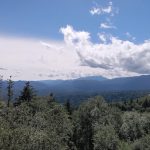
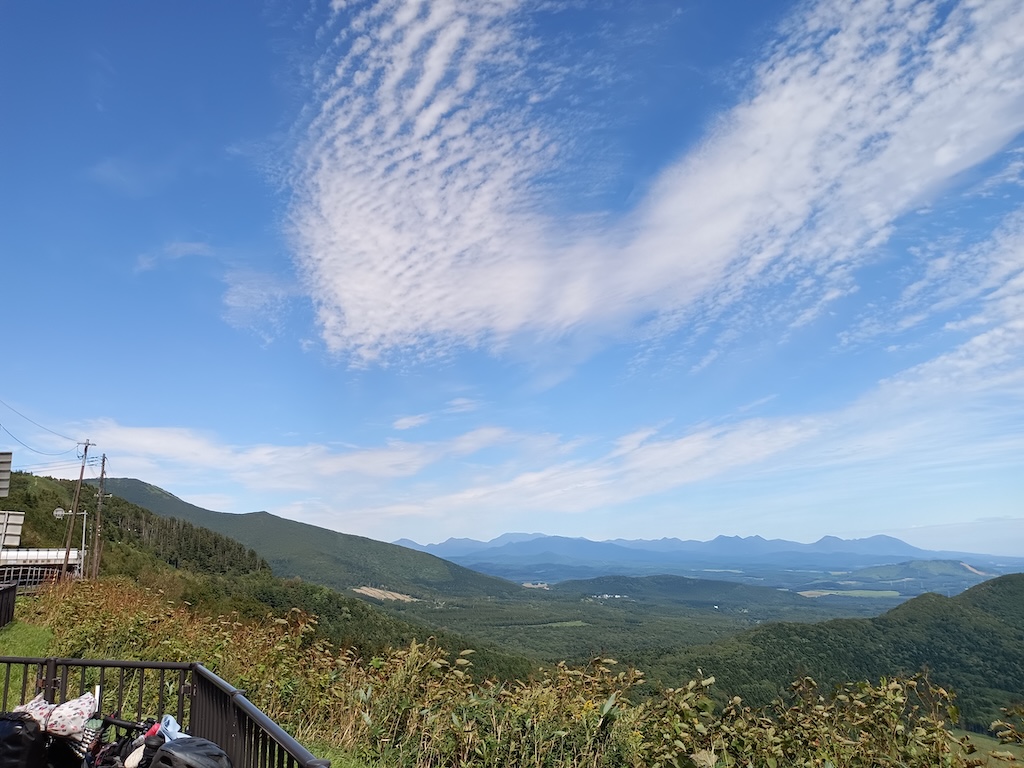
Karikachi Pass sits at around 640 m elevation on the border between the Sorachi and Tokachi regions. It’s one of the “three great views of Hokkaido,” and the moment you step out of the car on a clear September morning you’ll understand why — the Tokachi plain opens out below you like an emerald ocean stitched with hedgerows and silos. In September, cirrus clouds tend to feather across the sky exactly as in the photo above, and the layered mountain silhouettes to the east make it one of the most rewarding “coffee break” stops on any trans-Hokkaido drive.
The pass is on Route 38, right on the way between Furano/Tomamu and Obihiro — perfect for anyone doing a central-to-eastern Hokkaido loop. There’s a small rest stop with a viewing platform and vending machines. Bring a light jacket even at midday: the wind up here is steady and 5–6°C cooler than the plains below.
2. Iwamizawa Park — A Blue-Sky Playground Just Outside Sapporo
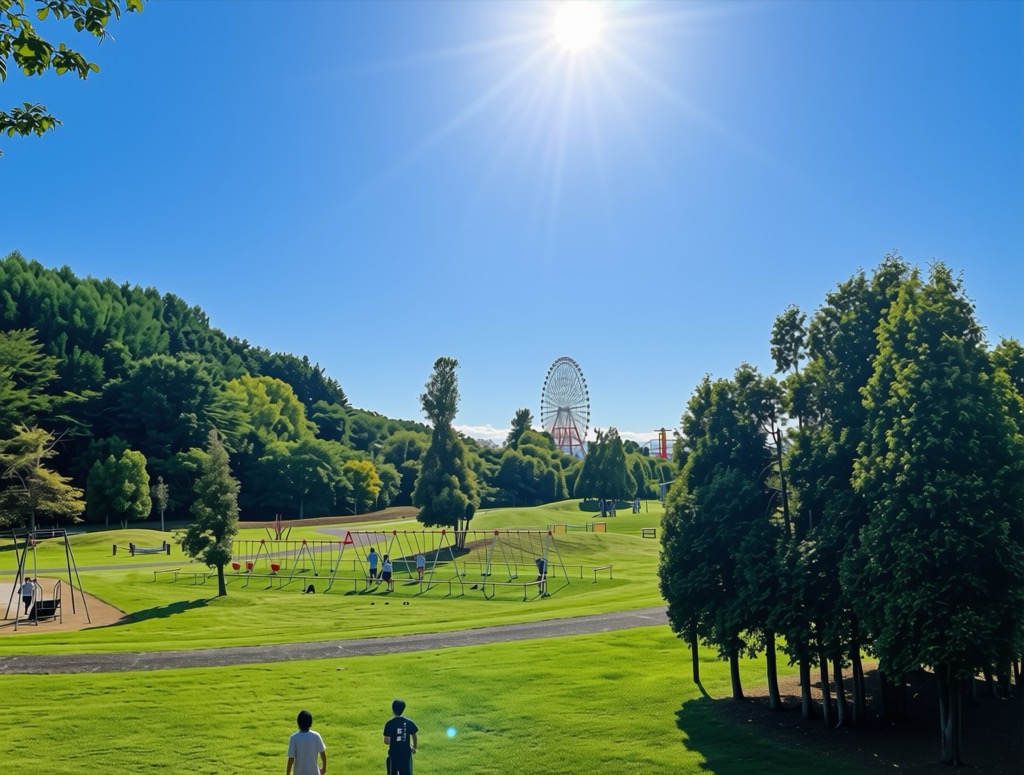
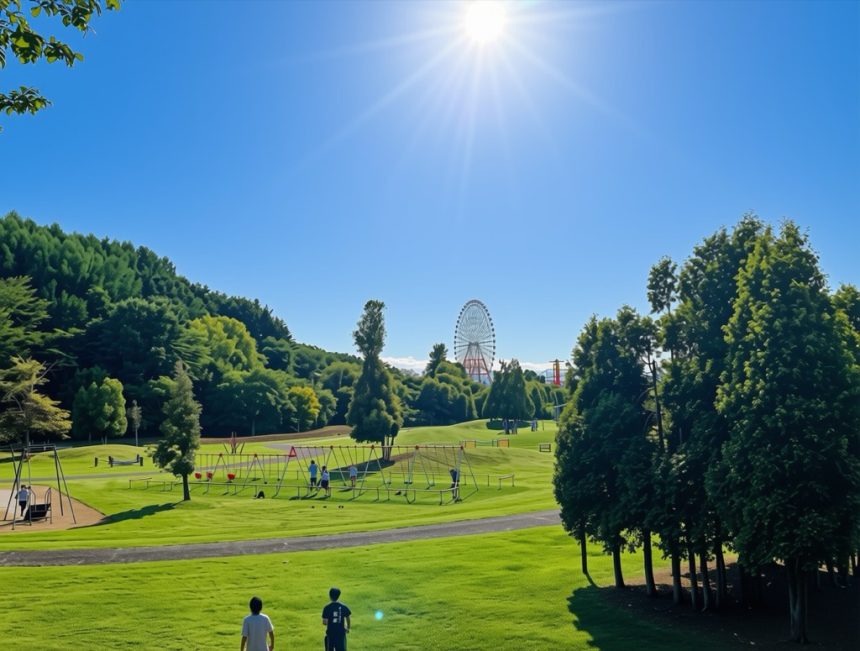
About 40 minutes northeast of Sapporo by car, Iwamizawa Park (岩見沢公園) is a wide green space that in September looks like something out of a picture book — mown lawns, a small ferris wheel, walking trails, a rose garden, and enough sky above your head to make you slow the drive down. If you’re basing yourself in Sapporo, this makes an easy half-day escape with kids or a gentle detour on your way to Furano.
Because Iwamizawa sits on the Sorachi plain, September afternoons here run a couple of degrees warmer than downtown Sapporo, so you’ll often be in short sleeves by midday. The park is largely free to enter, and there’s easy parking.
3. Sandan Falls (Ashibetsu) — A Rush of Water Through Green Cliffs
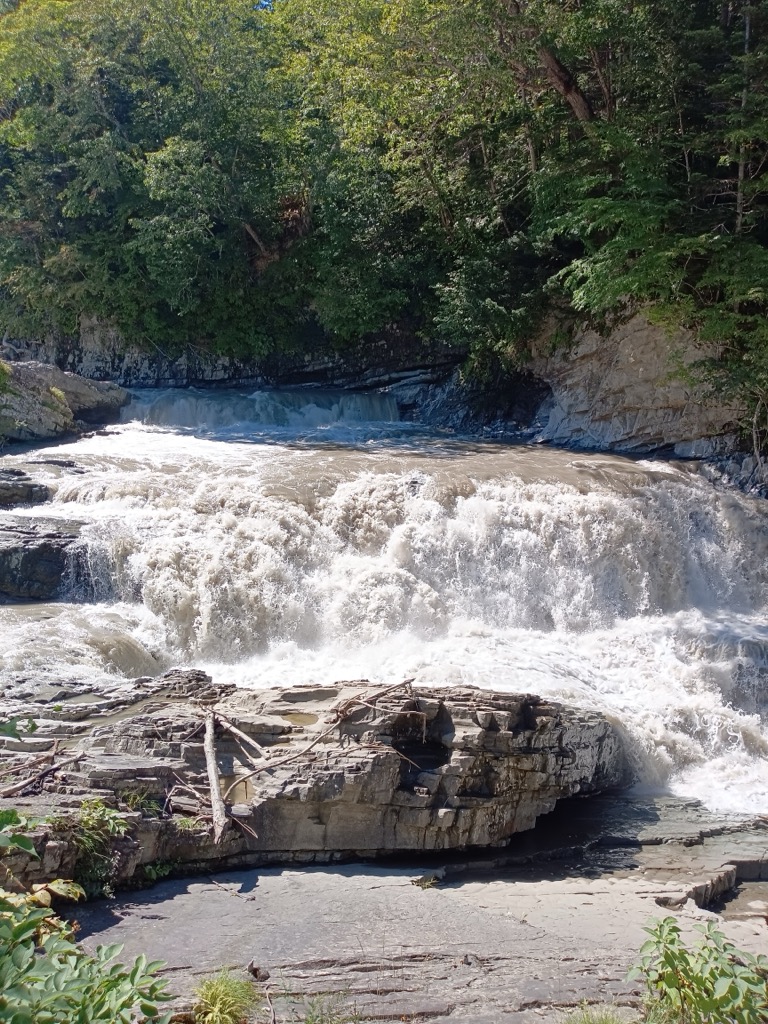
Sandan Falls (三段滝) — literally “three-step falls” — is tucked away on Route 38 between Ashibetsu and Furano, and it’s the kind of stop you’d miss entirely if you didn’t know to look for the sign. In September, the surrounding forest is still full green, the rock ledges are sun-warmed, and the water rushes over the three tiers loud enough to feel it in your chest. There’s a small parking area right by the road and a viewing deck a few steps down.
It’s a five-minute stop, but it’s the perfect leg-stretch between Sapporo and the Furano/Biei area. Wear grippy shoes — the wooden platform can be slick after rain, and September rain is a real possibility.
4. Ningle Terrace (Furano) — Fairy Tale Cabins in a September Forest
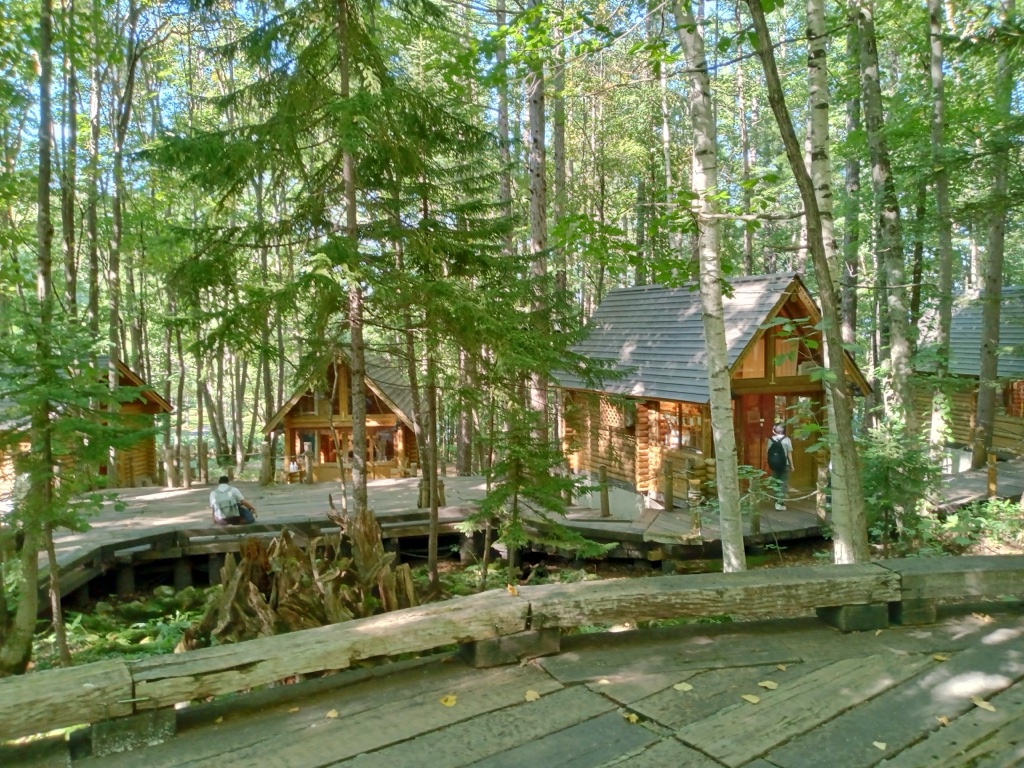
Ningle Terrace (ニングルテラス) is a cluster of fifteen tiny log-cabin craft shops raised on wooden boardwalks through the birch forest behind the New Furano Prince Hotel. In September, sunlight cuts diagonally through the trees, the boardwalks are dappled and cool, and each cabin — jewellery, glass, paper, wooden toys — glows warm from the inside. It’s one of the few “shopping” spots in Hokkaido that feels like part of the landscape rather than something bolted onto it.
Most cabins open in the afternoon (around 12:00) and stay open into the evening (around 20:45), so this is a natural sunset-and-after-dark stop. Bring a light jacket — the forest gets noticeably cooler than the surrounding streets once the sun drops.
5. Yuigadokuson (Furano) — Legendary Curry, Built for Cool Evenings
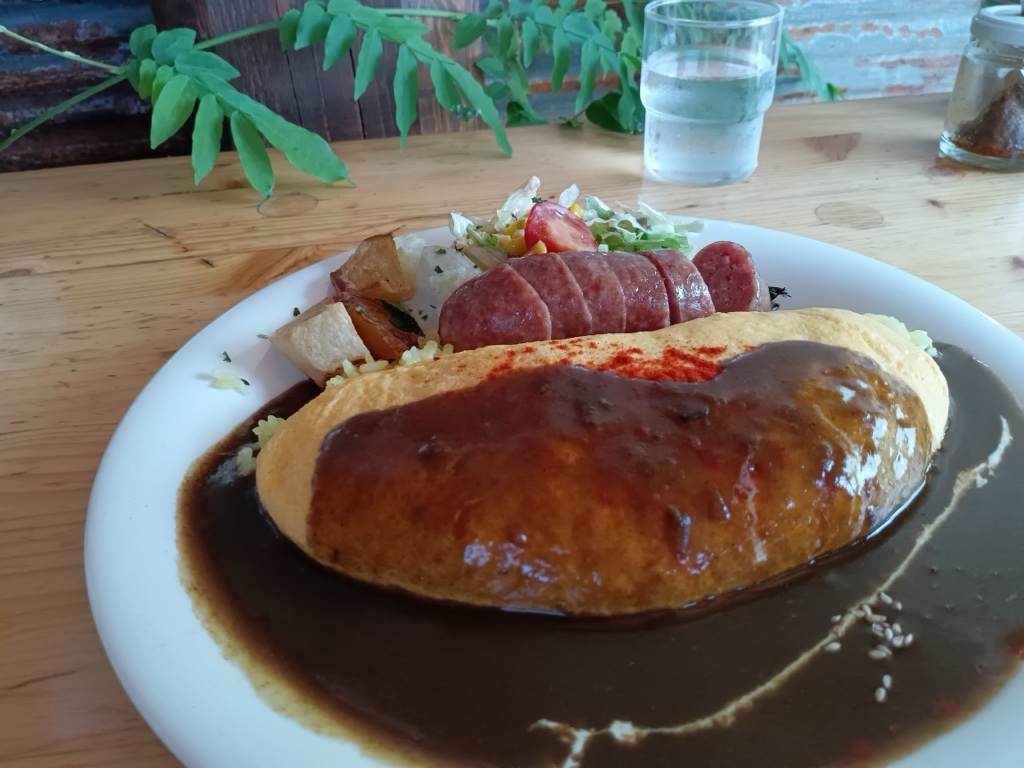
Furano’s most famous soup curry house, Yuigadokuson (唯我独尊), has been serving its signature dark, spice-forward curry sauce since 1974. The photo above is the classic “omelette rice + house sausage + curry sauce” combination — the sauce is deep, aromatic, and just spicy enough to warm you all the way through, which is exactly what you want after a September morning in the Furano hills.
The restaurant is right in central Furano, walkable from JR Furano Station. Expect a queue at lunchtime; the wait is worth it. Cash and card both accepted; parking is limited so a rental-car morning start is your friend.
6. Shiretoko Goko (Shari) — Five Lakes at the Edge of the World
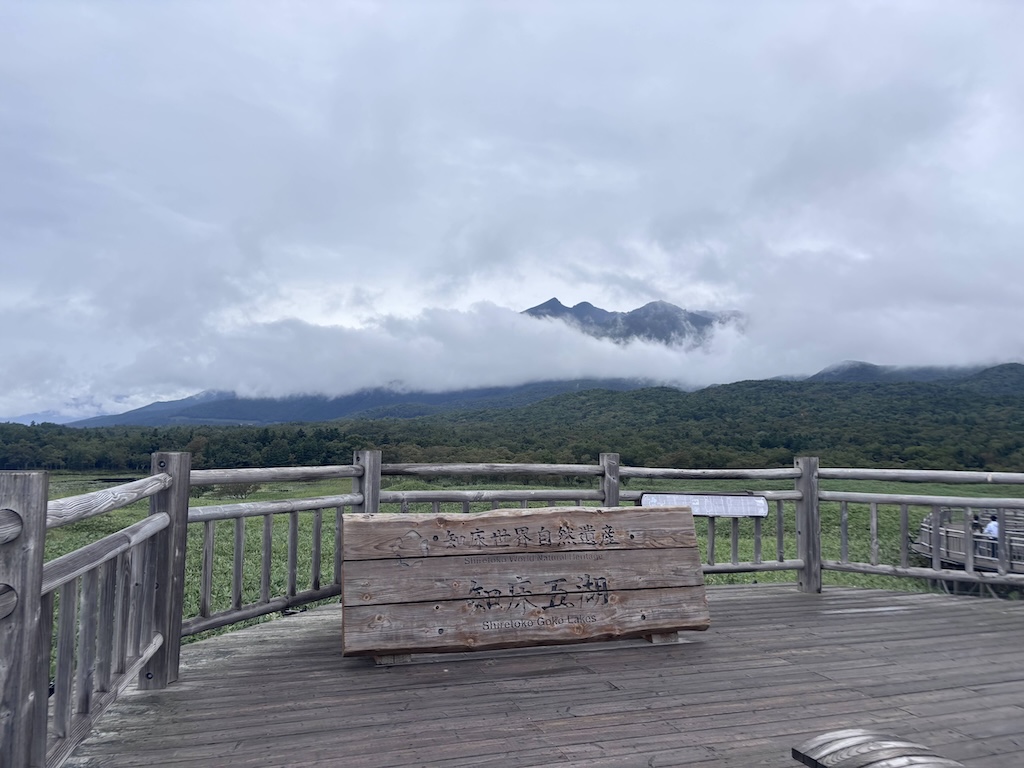
The Shiretoko Peninsula, a UNESCO World Heritage site, ends at the northeastern tip of Hokkaido — and Shiretoko Goko (知床五湖, “Shiretoko Five Lakes”) is where most first-time visitors get their real introduction to it. A raised wooden boardwalk lets you loop past all five lakes without ever stepping into brown-bear territory, and September is arguably the best month to walk it: the mosquitos are gone, temperatures are cool but comfortable (17–19°C by day), and low clouds often drape over the Shiretoko range exactly as in the photo above.
Access is via Route 334 from Utoro. From roughly late April to late November the boardwalk is open freely; the ground-level trail requires a paid guide during bear-active periods, which usually includes early September. Wear warm layers — the wind off the Okhotsk here is real.
7. Shari Town — Home-Style Set Meals, Potato Fields to the Sea, and Impossible Stars
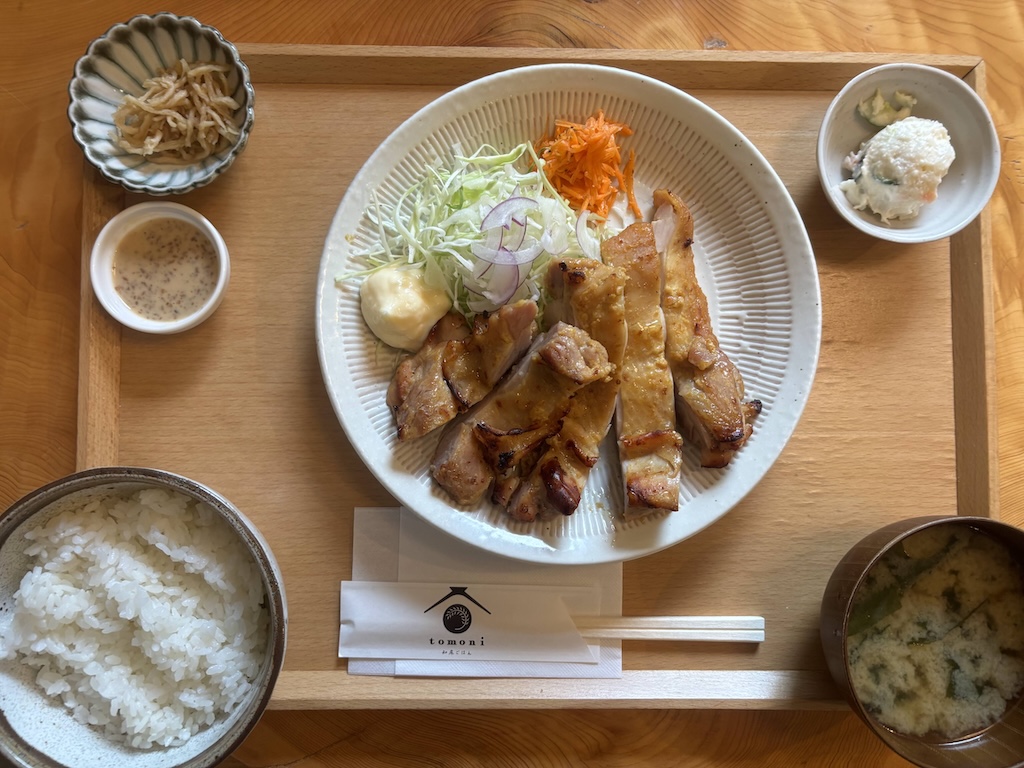
Shari (斜里町) is the town you drive through to reach Shiretoko, and it deserves more than a quick pass-through. In September, small local cafes and shokudo — like the one above — serve exactly the kind of grilled-chicken teishoku set meal that resets you after a morning of hiking: rice, miso soup, pickles, freshly grilled chicken with a savory glaze, and quiet.
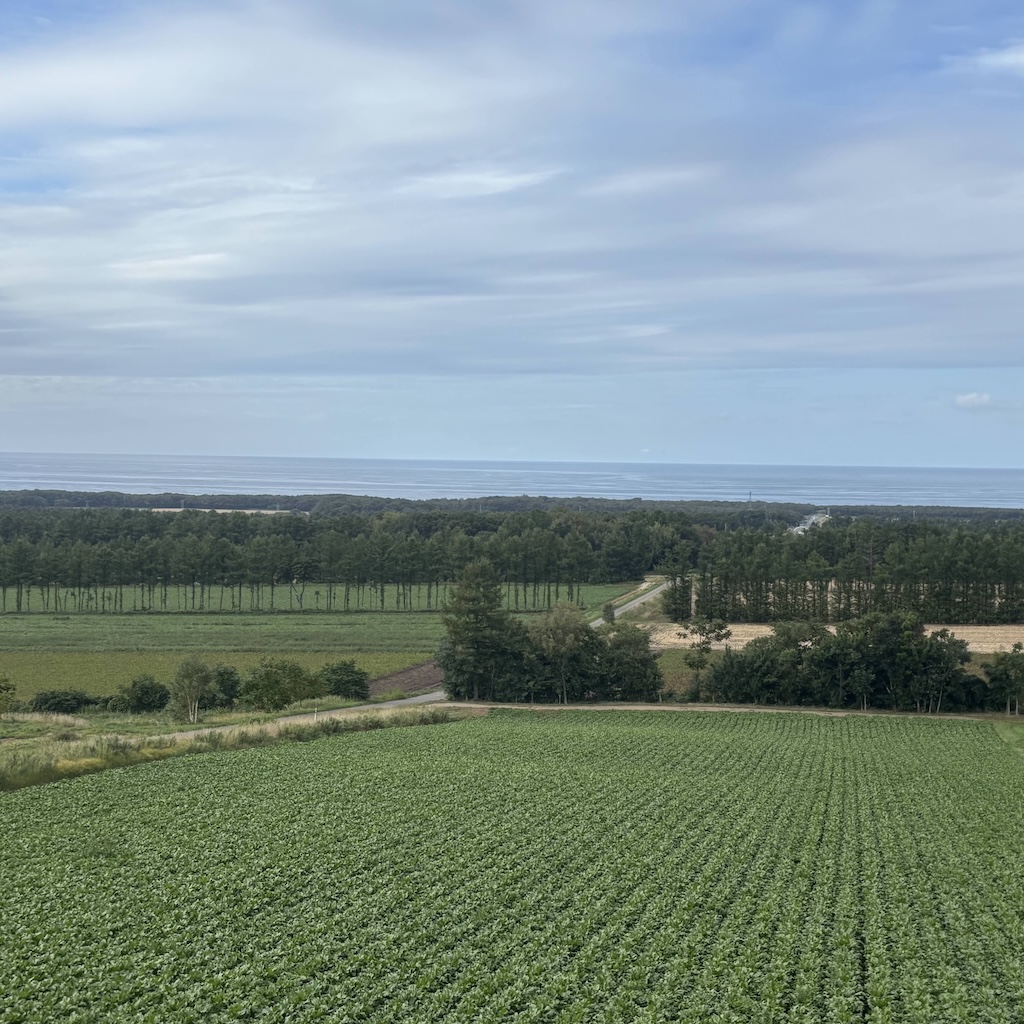
Drive a little inland along the coast and you’ll find something almost surreal: rolling rows of potato fields tumbling down toward the flat blue of the Okhotsk Sea. September is right at harvest — the smell of freshly turned soil and the tiny figures of farm machinery in the distance make this one of the most quietly photogenic parts of the whole island.
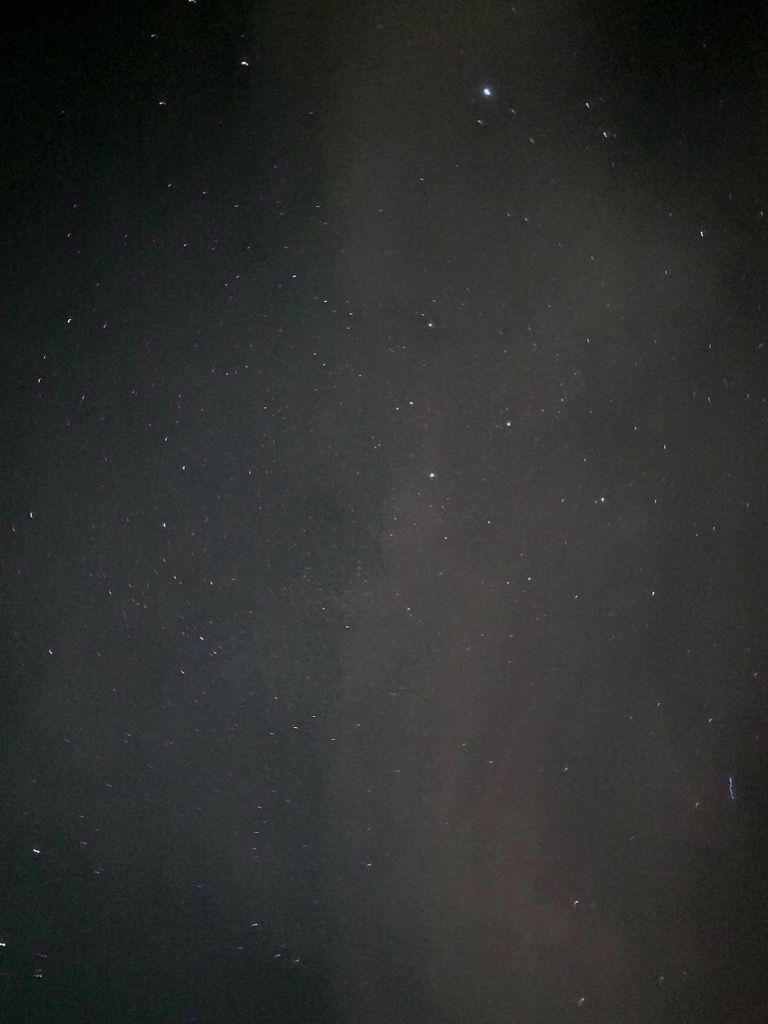
And after dark? Shari’s rural darkness gives you Milky Way conditions most travelers only dream of. September nights are cool but usually clear — throw on a fleece, drive five minutes out of town, and look up. This is the reason so many photographers keep coming back to eastern Hokkaido in autumn.
8. Abashiri — Coastal Woods, a Historic Prison, and a Drift Ice Museum
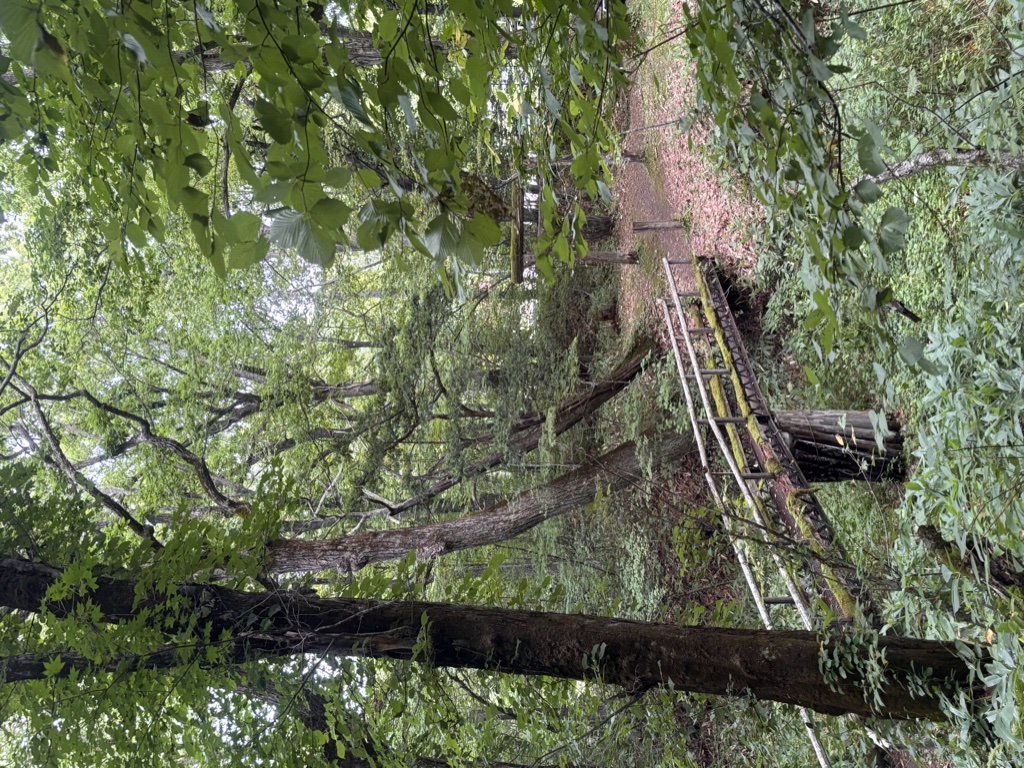
Abashiri (網走) is the gateway city for the Okhotsk coast, and it’s one of the most underrated stops in eastern Hokkaido. The forests around town — like the wooden walkway above — cool down early in September, and simply walking here for twenty minutes is one of the best ways to reset in the middle of a long drive.
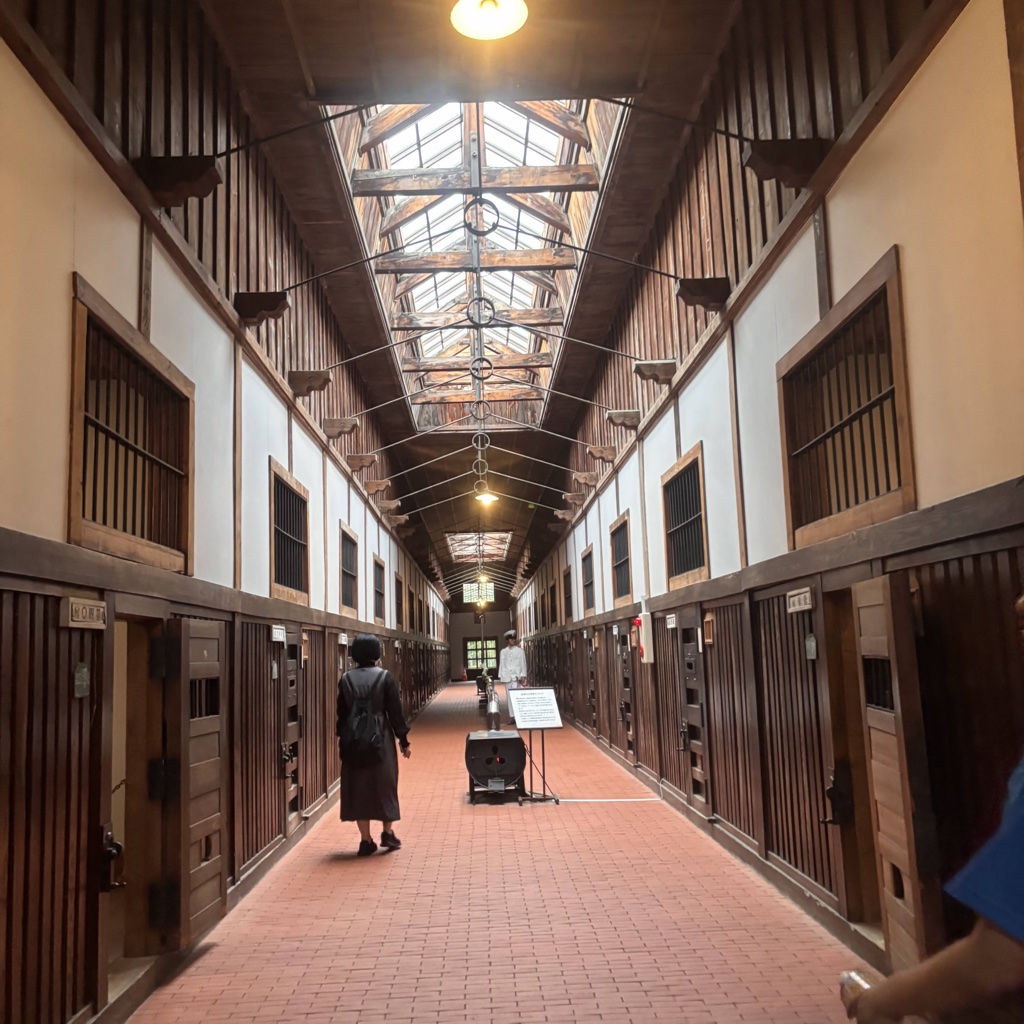
Abashiri Prison Museum (博物館 網走監獄) preserves the actual buildings of the former Meiji-era prison — the wooden cell-block hallway pictured above is one of the most atmospheric interiors on the island. It’s an open-air museum you can walk through freely, and it takes 1.5–2 hours to see properly. In September, the outdoor grounds are perfect walking weather.
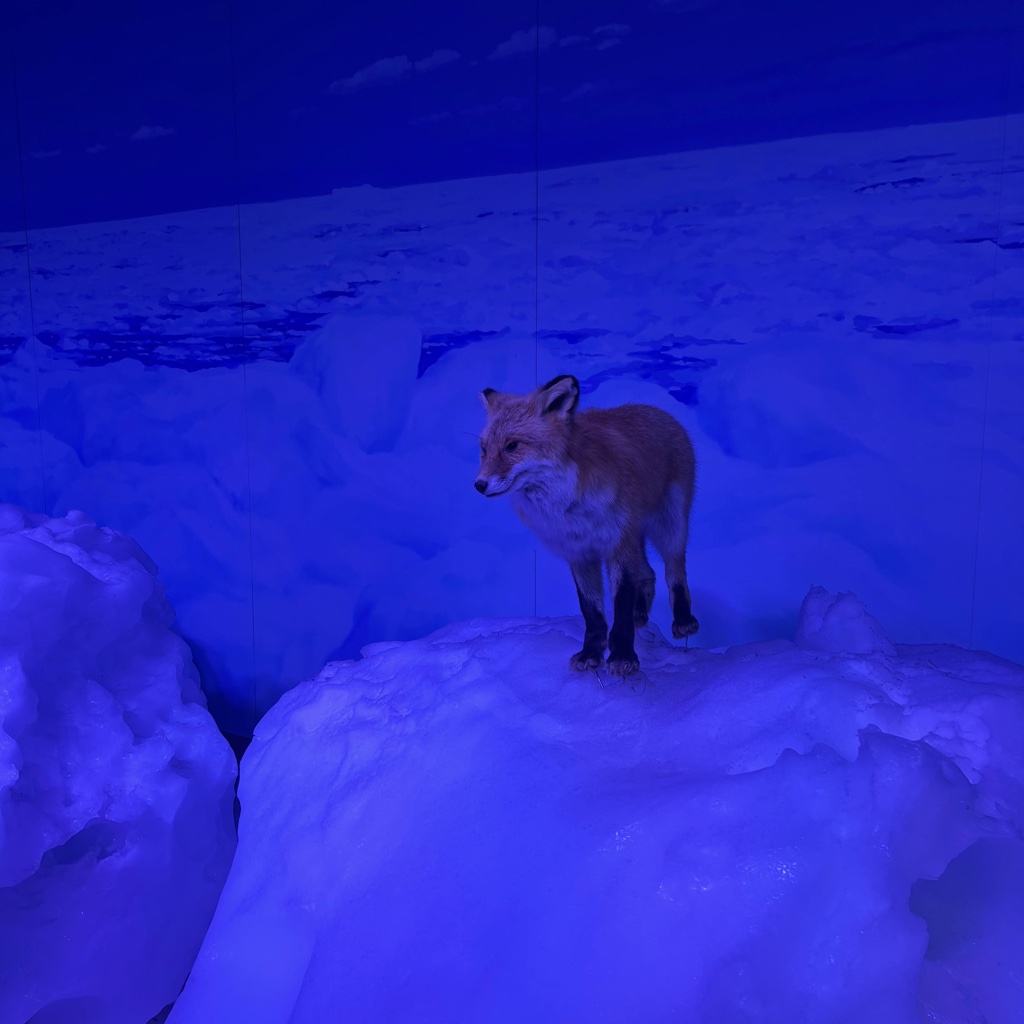
The Okhotsk Ryuhyokan (オホーツク流氷館) sits on top of Mt. Tento just outside Abashiri, and even in September — long after the real drift ice has melted — you can walk into a −15°C exhibit hall to see preserved ice and Okhotsk wildlife like the red fox pictured above. It’s a genuinely useful way to understand why this coast is so unlike anywhere else in Japan. Bring a light jacket for the cold room; they lend you a heavier one at the door.
Why a Rental Car Makes September Hokkaido Work
Almost every spot above sits well outside any train line, and the Okhotsk / Shiretoko side of the island in particular has very sparse public transport. In September, the added bonus of a car is flexibility around weather — if a front rolls in over Shiretoko, you can shift the day toward Abashiri or Furano without losing your plans.
- Reach the unreachable: Karikachi Pass, Sandan Falls, Shari’s coastal potato fields, and dark-sky spots are all near-impossible without a car.
- Chase the sun: September weather changes quickly across the island — a car lets you drive into the clear side.
- Save time: Sapporo → Furano is 2.5 hrs by car vs. 3.5+ by train with transfers; Abashiri → Shiretoko is a straight 60-min drive.
- Autumn in the mountains: Sounkyo, Daisetsuzan, and the Shikaribetsu area start turning color from mid-to-late September and need a car to reach at the right time.
For a comfortable, budget-friendly Hokkaido September road trip, book through GO!GO!TOUR Hokkaido Rental Car — English-friendly booking and pick-up at New Chitose Airport, Sapporo, Asahikawa, and other major hubs.
Plan the Drive — Suggested Model Course
If you’d like a ready-made itinerary that already threads these spots together, check the official Hokkaido model courses — they cover 3-day, 5-day, and grand-tour options that match the season perfectly:
👉 Hokkaido Model Courses — GO!GO!TOUR
And for regional info (Sapporo, Furano, Shiretoko, Abashiri, Hakodate…):
👉 Hokkaido Area Guides — GO!GO!TOUR
Stay Connected — Prepaid eSIM for Hokkaido
Rural Hokkaido has very good LTE coverage, but the moment you leave Sapporo and start following backroads through Furano or Shari, you’ll want reliable data on your phone — for navigation, translation, restaurant hunting, and last-minute weather checks. A prepaid Japan eSIM is the easiest fix: activate it before you fly and skip the airport SIM counter entirely.
👉 Japan Prepaid eSIM — GO!GO!TOUR
Save on the Trip — Coupons & Discounts
Before you finalize the booking, check the current coupon page — regular seasonal discount codes for rental car and eSIM are posted there, and September is when off-peak pricing kicks back in.
Q&A — Quick Answers About Hokkaido in September
Q. Is September a good time to visit Hokkaido?
Yes — many locals consider it the single best month. Summer heat is gone, the summer tourist rush has thinned, prices are lower than August, and early autumn color begins in the highlands by the last week.
Q. What’s Hokkaido September weather like in terms of temperature?
Roughly 15–23°C in Sapporo/Hakodate, 11–22°C in Furano/Biei, and 11–20°C in Shiretoko/Abashiri. Expect single-digit mornings in the highlands by late September.
Q. Do I need a jacket in September?
Yes — a light windproof or fleece is essential in the evenings and at high-elevation viewpoints (Karikachi, Sounkyo, Daisetsuzan, Shiretoko). Midday in Sapporo you’ll be in short sleeves.
Q. Does it rain a lot in September?
It’s the second-rainiest month after August (about 120–150 mm across the main cities). Rain rarely lasts a full day though — a compact umbrella and a windproof shell handle it.
Q. Are typhoons a concern?
Early-to-mid September can bring the tail end of typhoons drifting north from Honshu, but direct landfall on Hokkaido is uncommon. Check the forecast the night before each drive.
Q. Will I see autumn leaves?
The peak of red-yellow color starts in Daisetsuzan and Sounkyo from mid-September, then works its way south into October. Furano, Biei, and Shiretoko begin to color from the last week of September.
Q. Is Hokkaido easy to travel without a car?
Sapporo, Hakodate, and Otaru — yes. Furano, Biei, Shiretoko, Abashiri, and the whole eastern coast — a car is strongly recommended. Train and bus schedules in rural Hokkaido are sparse.
Q. What’s the daylight like in September?
About 13 hours at the start of the month, shrinking to 11.5 hours by month-end. Golden hour comes early in late September — plan photo stops before 5 PM in the last week.
Wrap-Up — September Is Hokkaido at Its Most Rewarding
September gives you the summer green fields, the first golden ridges, cool comfortable temperatures, and none of the summer crowds — all on the same trip. In short, Hokkaido September weather is mild by day, cool by night, and endlessly photogenic. Pack layers, keep the itinerary flexible for showers, and give yourself a car so you can chase the sky wherever it opens up.
If you’re ready to lock in the trip, start with GO!GO!TOUR Hokkaido Rental Car — the easiest way to turn all eight spots above into one great September drive.

Your September Hokkaido — one link away.