List
- Hokkaido Weather in August — Japan's Coolest Summer Escape, from Alpine Roads to a Phantom Bridge
- Hokkaido Weather in August at a Glance
- What to Pack for Hokkaido in August — Cool Days, Cooler Evenings
- Hokkaido's August Highlights — Every Spot in Our Photos
- Two Small Things That Save the Trip — eSIM and Coupons
- Hokkaido in August = A Road Trip. Here's Why.
- Planning the Trip — Model Courses & Regional Info
- Hokkaido August Weather FAQ
- Wrap-Up — The One Month When Hokkaido Gives You Everything at Once
Hokkaido Weather in August — Japan’s Coolest Summer Escape, from Alpine Roads to a Phantom Bridge
Quick answer: In August, Hokkaido stays around 22°C on average, 26°C at the high, 19°C at the low, with roughly 155mm of rain for the month. Humidity is well below what Tokyo or Osaka has to deal with, daylight stretches for about 14 hours, and the sea, lakes and alpine roads all peak at the same time. Rebun Island’s wildflower trails are in their final bloom, Mikuni Pass turns into an endless green sea, the Taushubetsu “phantom bridge” resurfaces from Lake Nukabira, and Shosanbetsu delivers the Perseid meteor shower on a dark coastal sky. It is arguably the single best month of the year for a Hokkaido road trip.
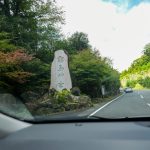
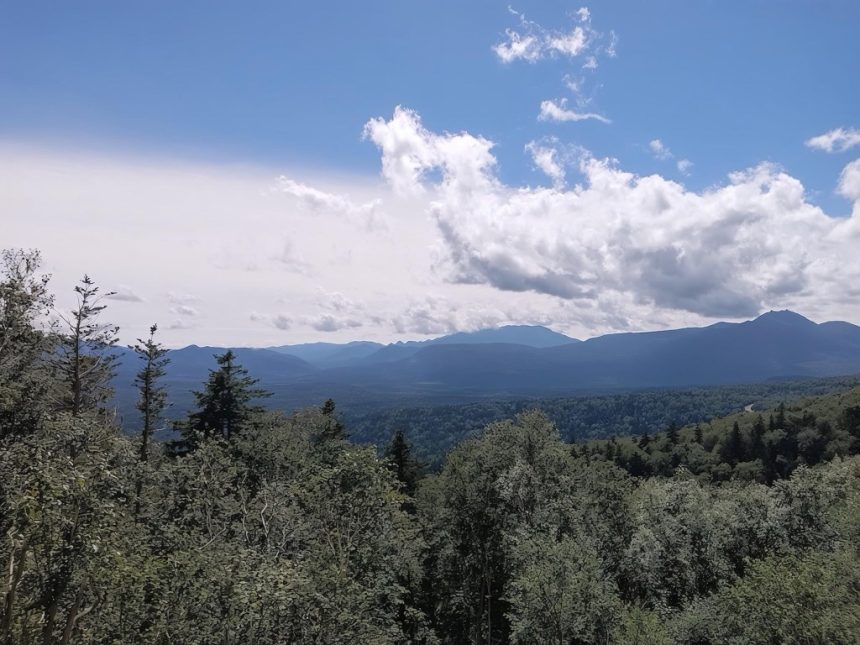
Hi there! This is GO!GO!TOUR, your English-language partner for rental cars, eSIMs and travel activities across Japan. For anyone flying in from Tokyo, Singapore, Bangkok or the US in August, Hokkaido feels like a completely different country: no rush of humid heat when you step off the plane, no need to hide indoors past noon, and enough daylight to stack two full sightseeing loops into a single day. New Chitose Airport (CTS) has direct international flights from Seoul, Taipei, Singapore, Bangkok, Hong Kong and multiple US/EU gateways via Tokyo. Wakkanai Airport (WKJ) is the practical hub for anyone chasing Rebun or Rishiri Island. In this guide, we cover Hokkaido August weather the way a traveller actually uses it: temperature and rainfall data, a packing checklist, deep-dive introductions to every spot shown in our photos — Mikuni Pass, Taushubetsu River Bridge, Sky Cape, Sukoton Cape, Konpira Shrine Torii, Momoiwa Trail, Shosanbetsu Village — plus rental-car strategy, model courses, and the questions travellers ask most.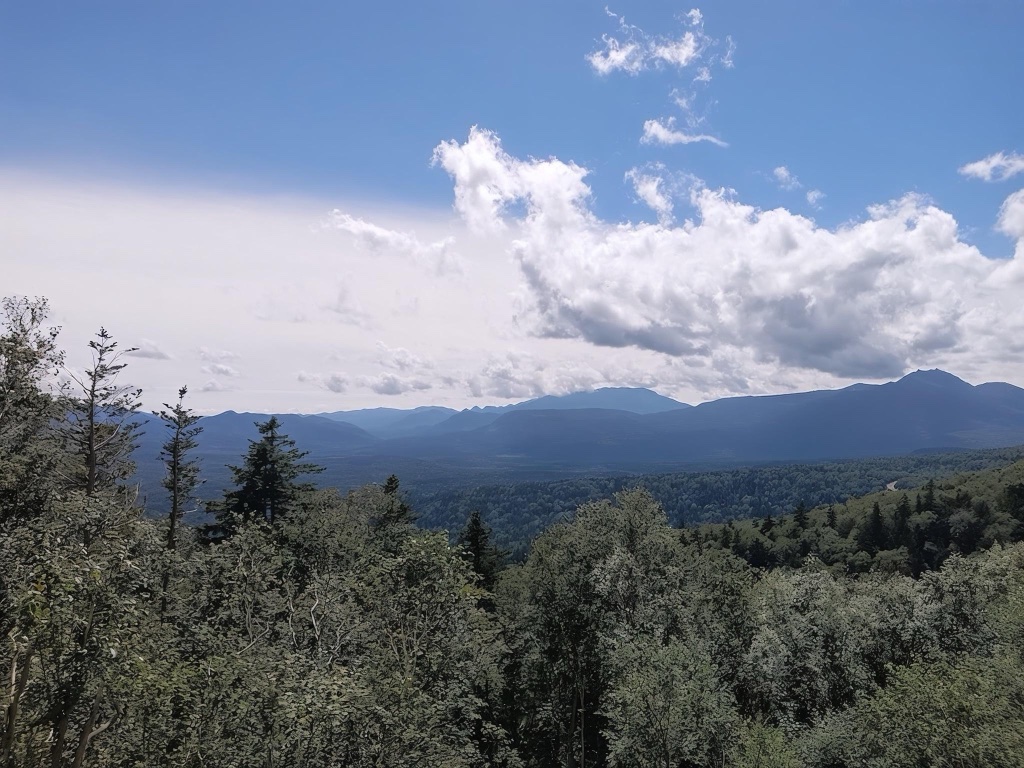 The photo above is Mikuni Pass (Mikuni-tōge), the highest national highway pass in Hokkaido at 1,139 metres. In August the surrounding Daisetsuzan primeval forest turns into a genuine “sea of green” you can drive right through. Temperatures at the pass stay around 15–20°C even at midday — step out of the car and it feels like natural air conditioning. This is the single most iconic August driving moment on the island.
To reach places like this without wasting entire days on infrequent buses, book a rental car from day one. Public transit in Hokkaido is thin, and JR routes deliberately detour around the mountains. GO!GO!TOUR Hokkaido rental cars handle everything in English — quotes, insurance, ETC cards, airport pickup — so your first drive starts the moment you clear customs.
The photo above is Mikuni Pass (Mikuni-tōge), the highest national highway pass in Hokkaido at 1,139 metres. In August the surrounding Daisetsuzan primeval forest turns into a genuine “sea of green” you can drive right through. Temperatures at the pass stay around 15–20°C even at midday — step out of the car and it feels like natural air conditioning. This is the single most iconic August driving moment on the island.
To reach places like this without wasting entire days on infrequent buses, book a rental car from day one. Public transit in Hokkaido is thin, and JR routes deliberately detour around the mountains. GO!GO!TOUR Hokkaido rental cars handle everything in English — quotes, insurance, ETC cards, airport pickup — so your first drive starts the moment you clear customs.
Hokkaido Weather in August at a Glance
Here is the entire August forecast condensed into one table. Pack straight from your screen.| Item | August (Sapporo) | Traveller note |
|---|---|---|
| Average temperature | Mean 22°C / High 26°C / Low 19°C | Comfortable summer — no tropical-night heat |
| Humidity | Around 75%, but feels much lower | Dry-air relief compared with Tokyo/Osaka |
| Rainfall & rainy days | About 155mm / ~11 rainy days | Typhoons rarely reach Hokkaido directly |
| Daylight | Roughly 14 hours per day | Sun sets around 7 PM early August |
| UV index | High to very high (8–10) | Peak UV month of the year — SPF 50 mandatory |
| Water temperature | Sea 22°C, lakes 20°C | Swim, SUP, snorkel — all in season |
| Flowers & nature | Late lavender, sunflowers, Rebun alpine flowers | Rebun “floating island of flowers” peak |
| Best time to visit | Early to mid August | Perseid meteors (12 Aug), flowers, dry roads |
What to Pack for Hokkaido in August — Cool Days, Cooler Evenings
Hokkaido in August feels like “the summer you wish August was”. Days are firmly T-shirt weather, but mornings dip to 19°C and the mountains stay in the mid-teens. Layers again beat single outfits. If you are flying up from Tokyo, expect roughly a 6–8°C temperature drop. From Southeast Asia, a 10°C+ drop. From the US East Coast or Europe, it will feel similar to your own August, only drier. Packing list for August Hokkaido:- Daytime, city (22–26°C): T-shirt, shorts or light pants — fully summer.
- Morning & evening (19–21°C): One thin cardigan or long-sleeve on top of a T-shirt.
- Mountains & passes (15–20°C): Light windbreaker or hoodie required — Daisetsuzan summits stay in the low teens even in August.
- Water activities: Sea 22°C means swimming, SUP, kayaking, snorkelling are all fair game. Waterproof camera and reef shoes recommended.
- All day: UV 8–10 is the year’s strongest. SPF 50 sunscreen, brimmed hat, sunglasses non-negotiable, plus a light cardigan for cold indoor air.
- Rebun/Rishiri visits: Islands are windy — bring a windbreaker and grippy hiking shoes.
Hokkaido’s August Highlights — Every Spot in Our Photos
August combines big landscapes, wildflowers, and the country’s clearest night skies. Here is every location in this article, in the order you might visit them.1. Mikuni Pass (Mikuni-tōge) — Hokkaido’s Highest Highway Panorama
Mikuni Pass sits at 1,139 m above sea level, the highest point of any national highway in Hokkaido. From the observation deck the Daisetsuzan primeval forest rolls out in every direction — a genuine “green sea” broken only by the arched Matsumi Bridge crossing the valley.- Location: Kamishihoro-chō, Kamikawa District, along National Route 273
- Elevation: 1,139 m — highest national highway pass in Hokkaido
- August temperature: 15–20°C even at midday — natural aircon
- Facilities: Mikuni Pass Café & observation deck (24-hour restrooms)
- Drive time: 3 hours from Sapporo, 2 hours from Asahikawa
2. Taushubetsu River Bridge — The “Phantom Bridge” of Lake Nukabira
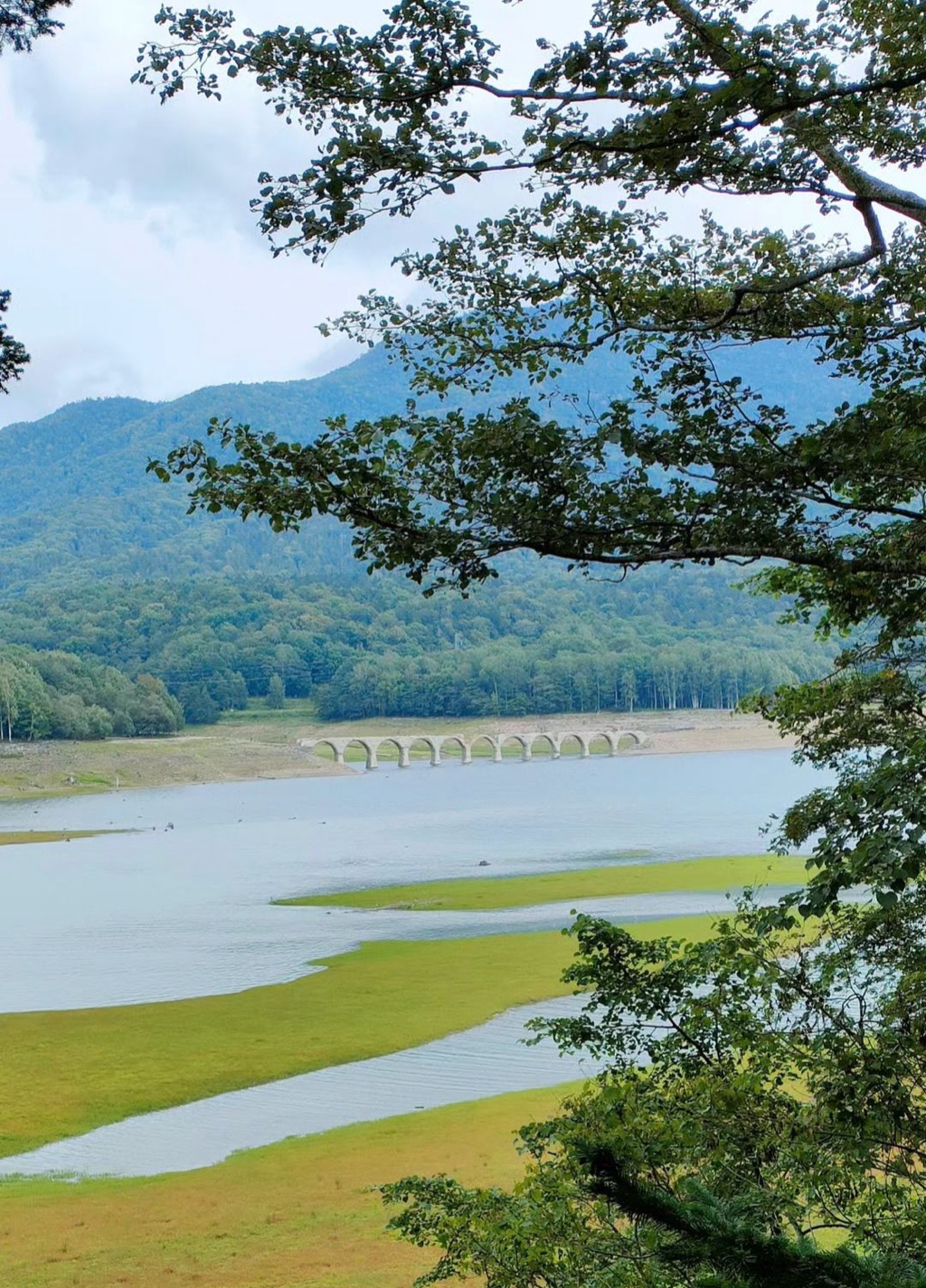 The Taushubetsu River Bridge (Taushubetsu-gawa Kyōryō) is a concrete arch railway bridge built in 1937 that now sits inside Lake Nukabira. As the reservoir’s water level rises and falls with the seasons, the bridge appears and disappears — earning it the local nickname “Phantom Bridge”.
- Location: Lake Nukabira, Kamishihoro-chō, Hokkaido
- Best month to see it: Late July to early September — reservoir at low ebb
- Access: NPO guided tours from Nukabira Onsen village (advance reservation)
- Fee: Guided tour around ¥5,000; free-view point (distant) from parking lot
- Drive time: 30 minutes from Mikuni Pass — pair the two into one day
3. Sky Cape (Sukai-misaki) — Rebun Island’s Northern Cliff Panorama
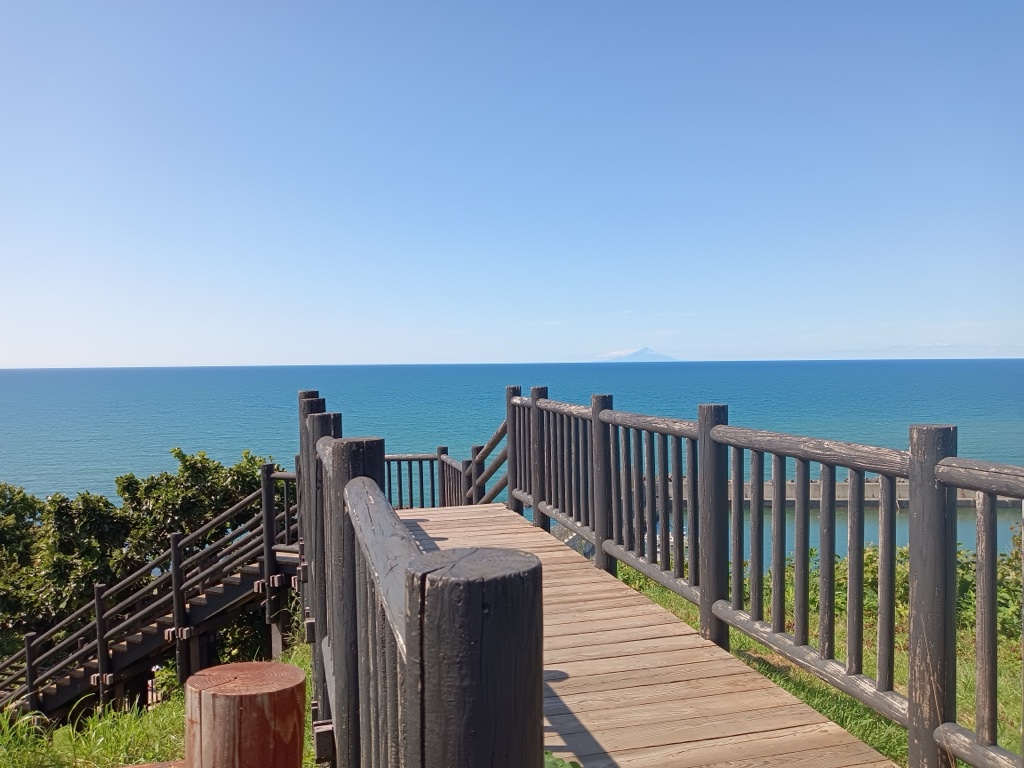
 Sky Cape (Sukai-misaki) is the signature viewpoint on the northern coast of Rebun Island. True to its name, sea, sky and grassland merge into one big panorama. On clear early-August days, Rishiri Fuji rises across the water like a smaller Mount Fuji.
- Location: Funadomari, Rebun-chō (northern coast road)
- Admission: Free / free parking
- August temperature: 22°C daytime; wind is strong (bring windbreaker)
- Best time to shoot: 9–10 AM (avoids harsh backlight)
- Access: 40 minutes from Kafuka Port ferry terminal by rental car
4. Sukoton Cape (Sukoton-misaki) — Japan’s Northernmost Reachable Cape
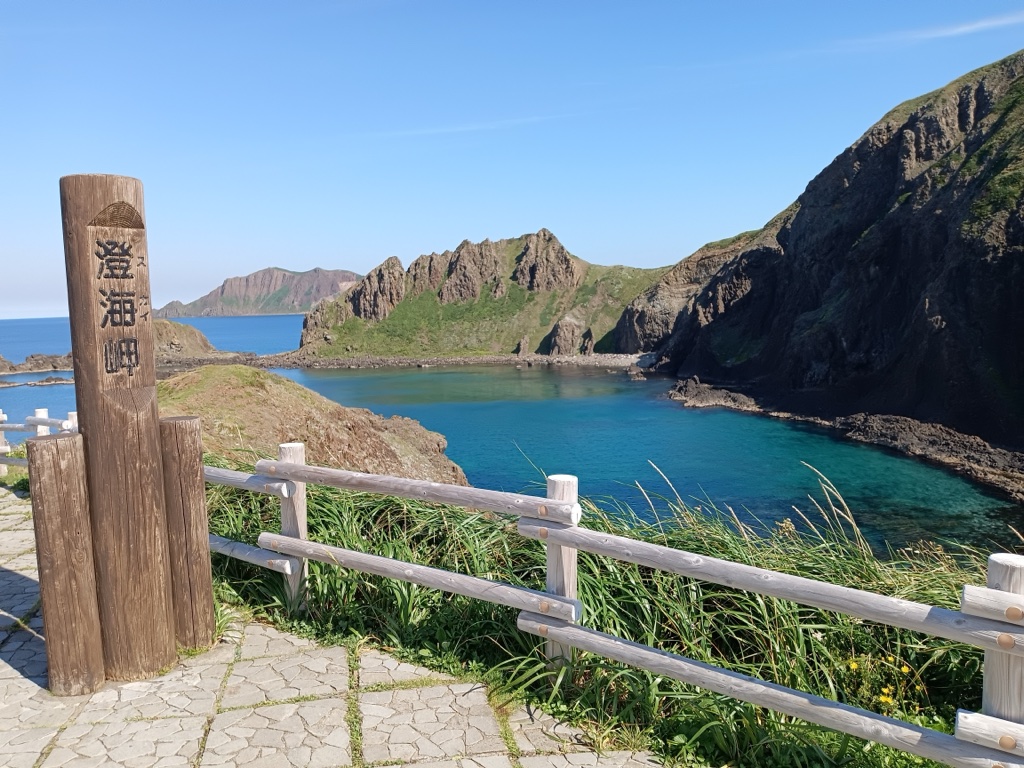
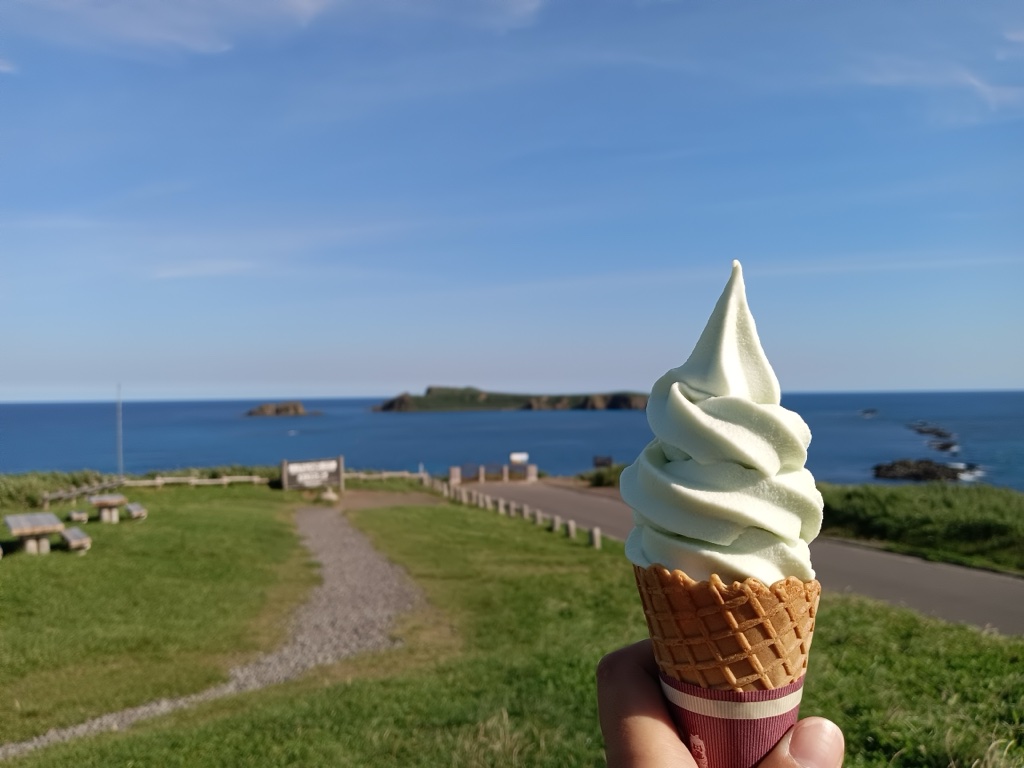 Sukoton Cape (Sukoton-misaki) is the famous “northernmost reachable cape in Japan“. A signpost marks the point, uninhabited Todo Island floats offshore, and in August the surrounding rocks host harbour seals and seabird colonies.
- Location: Sukoton, Funadomari, Rebun-chō (northern tip of Rebun Island)
- Admission: Free
- August temperature: 22°C daytime, very strong wind (thin jacket essential)
- Facilities: “Sukoton-ko” shop selling northernmost-point certificates and souvenirs
- Access: 50 minutes by rental car from Kafuka Port
5. Konpira Shrine Torii — A Red Gate Facing the Sea
 Konpira Shrine (Konpira-jinja) on Rebun’s northern coast greets travellers with a bright red torii gate framing the open sea. It appears without warning as you drive between Sukoton Cape and the southern half of the island, and the red-against-blue contrast is one of the most photographed compositions in northern Hokkaido.
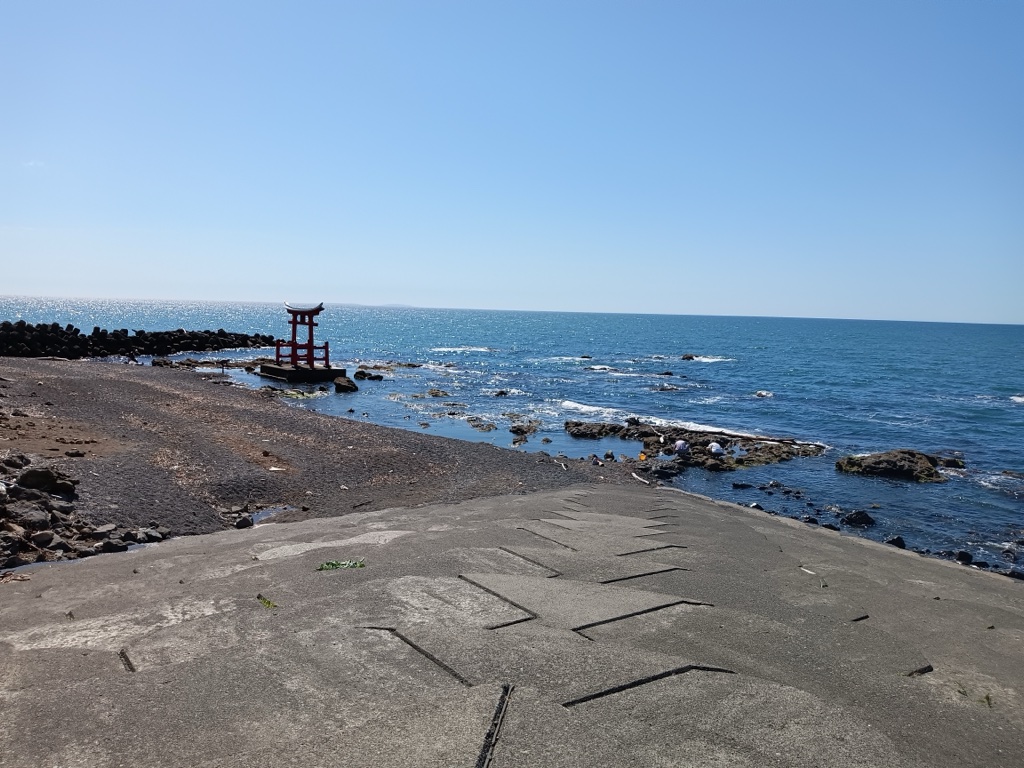
- Location: Funadomari coastal road, Rebun-chō
- Admission: Free (shrine etiquette applies)
- Best time to shoot: Early morning or late afternoon (avoids backlight)
- Parking: Small roadside pull-in; use the lower lot when full
6. Momoiwa Trekking Course — A World-Class Flower Trail
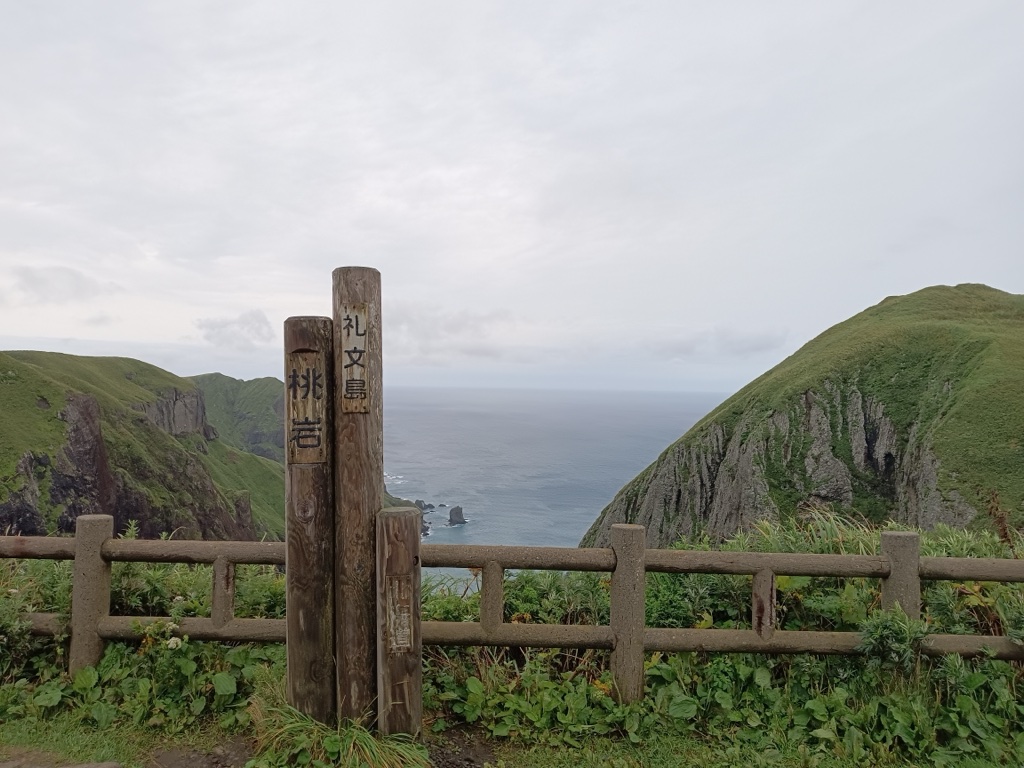 Momoiwa Trekking Course (Momoiwa Tenbōdai Course) is Rebun’s most famous walk and one of Japan’s 100 Best Trails. Starting from the peach-shaped rock (Momoiwa), the path runs along coastal cliffs, blending wildflowers, open sea, and Rishiri Fuji into a single continuous panorama.
- Distance: About 8 km one-way (allow 3–4 hours)
- Difficulty: Moderate — gentle undulation, slippery when wet
- Best season: Mid-June to early August (wildflower window)
- August highlights: Late Rishiri Poppy, Ezo-no-shishiudo, Ō-hana-shinobu
- What to wear: Trekking shoes, light windbreaker, at least 500 ml of water
- Caution: Fog and wind change rapidly — check forecasts
7. Shosanbetsu Village — Coastal Sunsets and the Perseid Meteor Shower
 Shosanbetsu (Shosanbetsu-mura) is a village of about 1,000 people on the Sea of Japan coast, famous for a triple bill of astronomical observatory, coastal cliffs, and sunsets. Its cliff-top shrine, Shosanbetsu Misaki-dai Shrine, faces the sea with a symbolic torii silhouetted against the sunset.
- Location: Shosanbetsu-mura, Tomamae District, Hokkaido
- Recommended spots: Shosanbetsu Observatory · Misaki-dai Shrine · beach · campground
- August night sky: Bortle-1 dark sky area — Perseid meteor shower peaks around 12 August
- Sunset times: 18:45 early August / 18:15 late August
- Drive time: 3 hours from Sapporo, 2.5 hours from Asahikawa
Two Small Things That Save the Trip — eSIM and Coupons
Behind the wheel of a rental car, you’ll depend on Google Maps, real-time transit alternatives, and continuous cloud photo uploads — all of which need reliable data. GO!GO!TOUR eSIM for stress-free data Pocket Wi-Fi means daily charging and airport returns; carrier roaming costs $10+ a day. GO!GO!TOUR eSIM activates in seconds via QR code — 5 GB for 5 days at ¥1,980, the cheapest available. Your home SIM stays live for calls, texts and two-factor codes. GO!GO!TOUR coupons for extra savings Before you check out on any car or eSIM order, take 30 seconds at GO!GO!TOUR coupons. Rotating discount codes apply at the last step of checkout.Hokkaido in August = A Road Trip. Here’s Why.
Unlike Tokyo or Osaka, Hokkaido rewards drivers over train travellers. Three concrete reasons:- 1. The distances are big. Sapporo → Mikuni Pass 3h, Sapporo → Shosanbetsu 3h, Wakkanai → Rebun ferry 2h. JR and bus schedules are sparse and transfer-heavy.
- 2. The best spots are in the middle of nowhere. Passes, island trails, phantom bridges, dark-sky campgrounds — public transit does not reach any of them.
- 3. August weather is perfect for driving. No snow, low rain, and 14 hours of daylight let you cover 700 km without stress.
- ✅ English booking from start to finish
- ✅ Pickup and return at New Chitose or Wakkanai Airport
- ✅ Transparent pricing — insurance options explained in English
- ✅ English-speaking Japan-based support for changes and emergencies
- ✅ ETC card, child seat, ferry-linked bookings — all available on demand
Planning the Trip — Model Courses & Regional Info
“Rebun, Mikuni Pass and Shosanbetsu — how do I even fit them into one itinerary?” GO!GO!TOUR’s model courses and the Hokkaido travel info hub shortcut the whole planning process. 🗺️ Hokkaido Model Courses — Practical 4- to 6-Day Itineraries GO!GO!TOUR Hokkaido Model Courses line up sightseeing, nature and activities day by day. Two picks that shine in August:- “Wakkanai + Rebun + Rishiri — 5 nights / 6 days” — flower island trekking with ferry connections
- “Sapporo + Daisetsuzan + Mikuni Pass — 4 nights / 5 days” — nature, hot springs, and starry-sky August essentials
- Sightseeing — Sapporo, Otaru, Biei, Furano, Wakkanai driving routes
- Food — Ramen, seafood, dairy desserts
- Weather & packing — Monthly temperature, rainfall, outfit guides
- Festivals — Snow Festival, Lavender Festival, Perseids and more
- Rental car safety — Winter driving, snow tires, practical tips
Hokkaido August Weather FAQ
Q1. Is Hokkaido hot in August? Do I need air-con at hotels?
Compared with Tokyo or Southeast Asia, absolutely not — Sapporo tops out around 26°C and low temperatures near 19°C mean no tropical nights. That said, recent summers have seen occasional 30°C days, so check hotel air-conditioning when booking. Outside the city, natural cooling handles most of the work.Q2. Give me the packing list in one line.
T-shirt + shorts for daytime; light cardigan for mornings and evenings; windbreaker for the mountains. If Milan or Boston in early June would work for you, this will too.Q3. Can I still see Rebun’s wildflowers in August?
Peak is June to mid-July, but early August is the tail end — you’ll still find late-blooming Rishiri Poppy, Ezo-no-shishiudo and Ō-hana-shinobu. Book Momoiwa Trail before the first week of August for the last serious flower window.Q4. Do typhoons hit Hokkaido in August?
Rarely. Hokkaido’s high latitude puts it outside most typhoon tracks. Late-August or early-September remnants can still cause ferry cancellations, so if your itinerary depends on the Wakkanai–Rebun ferry, build in a buffer day.Q5. Can I swim? What water activities work in August?
Yes — August is the only real swim month in Hokkaido. Sea sits at 22°C, lakes at 20°C, and swim, SUP, snorkel and dive tours are all open. Shosanbetsu Beach and Otaru Asari Beach are top picks. Watch for strong currents outside designated swim zones.Q6. Where can I watch the Perseid meteor shower on 12 August?
Hokkaido is one of Japan’s best dark-sky regions. Head for Shosanbetsu Observatory, Rikubetsu’s “Galaxy Town”, or the southern shore of Lake Shikotsu. You must escape city lights, so a rental car is required. Reclining a car seat and looking up delivers dozens of meteors an hour at peak.Q7. Where do I get an eSIM and coupons?
GO!GO!TOUR eSIM offers 5 GB / 5 days from ¥1,980, and GO!GO!TOUR coupons lists active discount codes for cars, eSIM and activities.Wrap-Up — The One Month When Hokkaido Gives You Everything at Once
August is when Hokkaido delivers cool air, wildflowers, warm-enough seas, and the country’s darkest skies — all in the same day. Days in the low-to-mid twenties, less than half of Tokyo’s rainfall, 14 hours of daylight, and a landscape that lets you drive from a 1,139 m mountain pass to a coastal sunset in a single afternoon. Everything you need to remember:- Average 22°C, high 26°C, low 19°C — no tropical nights
- ~155 mm rainfall — half of Tokyo; a folding umbrella covers it
- 14 hours of daylight — pack itineraries loosely
- UV 8–10, the year’s strongest — SPF 50, hat, sunglasses
- Rebun flowers hang on until early August; Momoiwa Trail top priority
- Mikuni Pass panorama, Taushubetsu Bridge, Shosanbetsu Perseids (12 Aug) — August-only highlights
- Rental car effectively required — public transit cannot reach the highlights
📌 Plan Your Hokkaido Trip with GO!GO!TOUR
Five essentials for a smooth Hokkaido trip — all in one place.- 🚗 Hokkaido rental car booking — New Chitose & Wakkanai pickup, English booking, insurance and NOC included
- 🗺️ Hokkaido model courses — proven itineraries with rental-car routes
- 📖 Hokkaido travel info — sightseeing, food, packing and winter driving in one hub
- 📱 GO!GO!TOUR eSIM — 5 GB / 5 days from ¥1,980, activate instantly with a QR code
- 🎟️ GO!GO!TOUR coupons — rotating discount codes for cars, eSIM and activities