- Hokkaido Weather in July — Peak Lavender, Cool Nights and Japan's Widest Panoramas
- Hokkaido Weather in July at a Glance
- What to Pack for Hokkaido in July — Long Days, Cool Nights
- Hokkaido's July Highlights — Every Spot in Our Photos
- Two Small Things That Save the Trip — eSIM and Coupons
- Hokkaido in July = A Road Trip. Here's Why.
- Planning the Trip — Model Courses & Regional Info
- Hokkaido July Weather FAQ
- Wrap-Up — Peak Lavender, Endless Daylight, and Japan's Widest Skies
Hokkaido Weather in July — Peak Lavender, Cool Nights and Japan’s Widest Panoramas
Quick answer: In July, Hokkaido settles at around 21°C on average, 25°C at the high, 17°C at the low, and about 90mm of rain for the month. It is the only region in Japan that escapes the mainland rainy season (tsuyu) almost entirely, humidity is low, and daylight stretches for 15+ hours. Lavender hits full bloom in Furano, Shiretoko turns lush green, and the caldera lakes of eastern Hokkaido reflect the clearest skies of the year. If you can only pick one month for a first Hokkaido road trip, this is arguably it. These figures reflect typical Hokkaido weather in July, based on 30-year climate averages from the Japan Meteorological Agency.
Hi there! This is GO!GO!TOUR, your English-language partner for rental cars, eSIMs and travel activities across Japan. For anyone escaping the humidity of Tokyo, Bangkok, Singapore or a Southern-US July, Hokkaido feels like walking into a different continent — cool air, wide open pastures, and enough daylight to fit two full sightseeing loops into one day.
New Chitose Airport (CTS) has direct international flights from Seoul, Taipei, Singapore, Bangkok, Hong Kong and multiple US/EU gateways via Tokyo. For eastern Hokkaido — Shiretoko, Akan-Mashu National Park, Notsuke — either Memanbetsu (MMB) or Nakashibetsu (SHB) airports save hours of driving.
Why Visit Hokkaido in July
In this guide, we cover Hokkaido July weather the way a traveller actually uses it: temperature and rainfall data, a packing checklist, deep-dive introductions to every location in our photos — Lake Kussharo (Teshikaga), Kaiyodai Observatory, Notsuke Peninsula, Shiretoko (Shari), Abashiri, Rishiri Island, Ningle Terrace, Iwamizawa Park — plus a rental-car strategy, model courses, and the questions travellers ask us most.
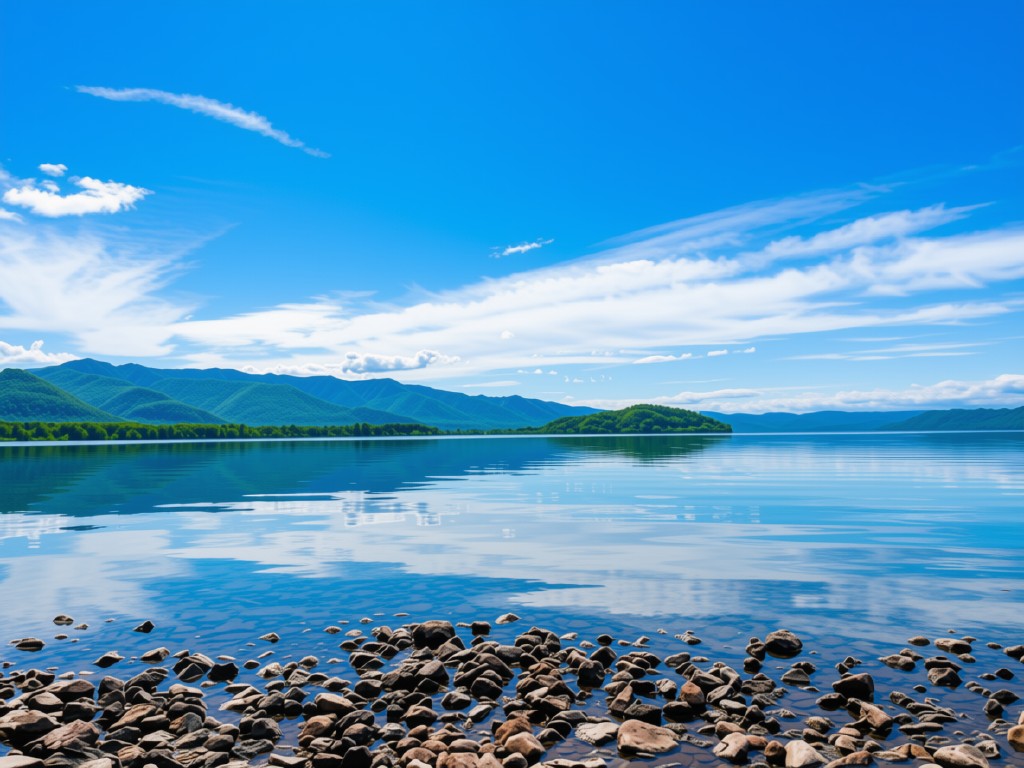
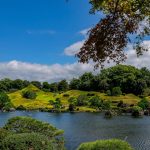
The photo above is Lake Kussharo (Kussharo-ko) at sunset in Teshikaga, the heart of Akan-Mashu National Park. It is Japan’s largest caldera lake and one of the few places in the country where you can watch the sun sink directly into an inland lake surrounded by primeval forest. July evenings hold their light past 7 PM, so a dinner drive from an onsen village to a lakeside pull-out becomes a nightly ritual for anyone visiting Kushiro or Nakashibetsu.
To reach places like this without wasting entire days on infrequent buses, book a rental car from day one. Public transit in eastern Hokkaido is sparse, and JR routes deliberately detour around the mountains. GO!GO!TOUR Hokkaido rental cars handle everything in English — quotes, insurance, ETC cards, airport pickup — so your first drive starts the moment you clear customs.
Hokkaido Weather in July at a Glance
Here is the entire Hokkaido weather in July forecast condensed into one table. Pack straight from your screen.
| Item | July (Sapporo) | Traveller note |
|---|---|---|
| Average temperature | Mean 21°C / High 25°C / Low 17°C | Comfortable summer — no tropical-night heat |
| Humidity | Around 78%, but feels far lower | Dry-air relief compared with Tokyo/Osaka |
| Rainfall & rainy days | About 90mm / ~10 rainy days | Ezo tsuyu weakens early July; showers only |
| Daylight | Roughly 15 hours per day | Sun sets after 7 PM — long evenings |
| UV index | Very high (8–9) | Peak-summer UV — SPF 50 non-negotiable |
| Water temperature | Sea 18–20°C, lakes 18–20°C | SUP and kayak comfortable; swim if brave |
| Flowers & nature | Lavender peak, sunflowers, Rebun alpine flowers | Furano-Biei “Panorama Road” at its best |
| Best time to visit | Mid to late July | Lavender peak, dry roads, long daylight |
That single table covers most of what you need. From here we go deeper.
What to Pack for Hokkaido in July — Long Days, Cool Nights
Hokkaido weather in July feels like “summer with air conditioning built in”. Days are firmly T-shirt weather, but the mercury drops into the high teens after sundown, and eastern Hokkaido’s coasts stay noticeably cooler than Sapporo.
If you are flying up from Tokyo, expect a 4–6°C temperature drop. From Southeast Asia, a 10°C+ drop. From the US East Coast or the UK, it will feel much like your own July — only drier, and with more usable daylight.
Packing list for July Hokkaido:
- Daytime, city (21–25°C): T-shirt, shorts or light pants — fully summer.
- Morning & evening (17–19°C): A light cardigan or long-sleeve on top of a T-shirt.
- Mountains & passes (14–18°C): Light windbreaker or hoodie required — Daisetsuzan summits and Rishiri Fuji stay in the low teens.
- Water activities: Lakes 18–20°C means SUP, kayaking and mild swimming are fair game. Waterproof camera and reef shoes recommended.
- All day: UV 8–9. SPF 50 sunscreen, brimmed hat, sunglasses non-negotiable, plus a light cardigan for cold indoor air.
- Eastern coast & Notsuke: Sea breeze cools things down; bring a windbreaker.
Hokkaido’s July Highlights — Every Spot in Our Photos
July combines lavender fields, mystical lakes, wildlife-rich wetlands and UNESCO wilderness. Here is every location in this article, in the order you might visit them.
1. Lake Kussharo (Teshikaga) — Japan’s Largest Caldera Lake
Lake Kussharo (Kussharo-ko) in Teshikaga is the largest caldera lake in Japan and a signature stop inside Akan-Mashu National Park. It sits at the heart of a volcanic region where you can dig your own free hot spring on the beach (Sunayu), watch mist rise off the water at dawn, and — as the photo above shows — see the sun fall directly into the lake in late July.
- Location: Teshikaga-chō, Kawakami District, eastern Hokkaido
- Signature spots: Sunayu (dig-your-own onsen), Bihoro Pass viewpoint, Kotan Onsen (free open-air bath)
- July temperature: 20°C daytime, 12°C at night — cool enough for a jacket
- Best time to visit: Sunrise (fog on the water) or sunset (colour over the volcano)
- Drive time: 2 hours from Memanbetsu Airport, 1.5 hours from Kushiro Airport
Nearby Lake Mashu (a “mirror lake” often hidden in fog) and Iō-zan (Sulphur Mountain) round out an unforgettable day-drive loop.
2. Kaiyodai Observatory (Nakashibetsu) — 330° Panoramic Pasture
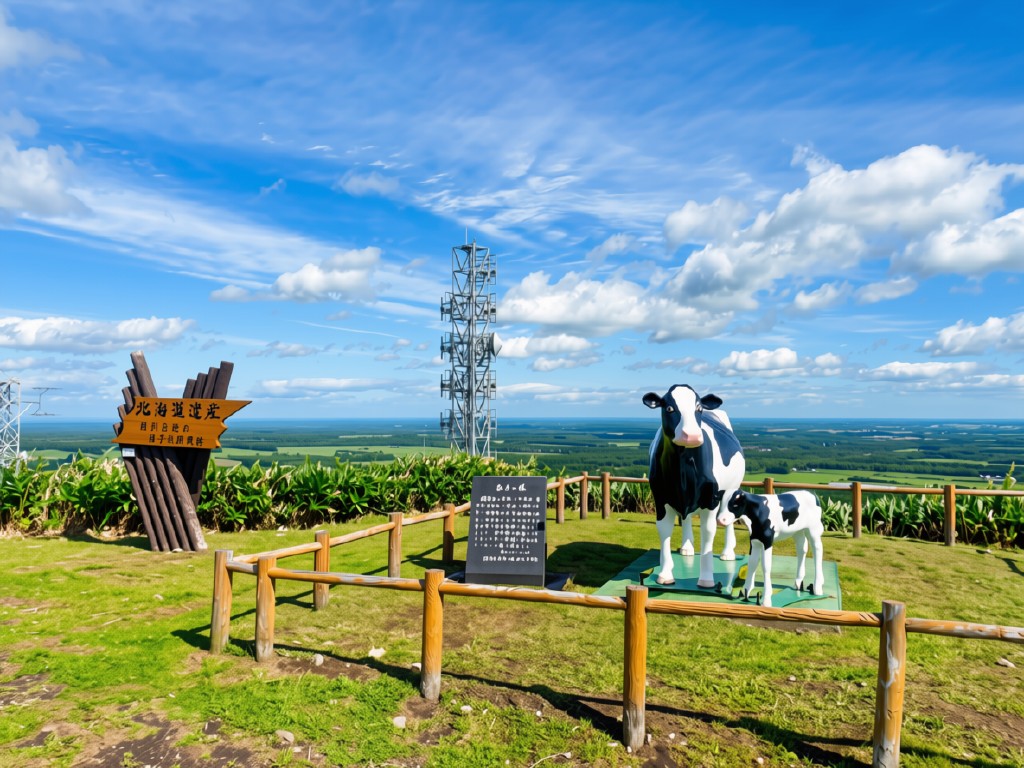
Kaiyodai Observatory (Kaiyō-dai) stands on a low hill above Nakashibetsu and offers a 330° panorama of rolling dairy pastures — a view Japan simply does not have anywhere else. On clear July days you can see all the way to the Shiretoko mountains and the Notsuke Peninsula. The famous life-size cow sculpture at the deck reminds you that this is Japan’s largest dairy region.
- Location: Kaiyōdai, Nakashibetsu-chō, Shibetsu District
- Admission: Free / free parking
- July temperature: 20°C daytime, breezy on the deck
- Facilities: Café, viewing tower, restrooms
- Drive time: 30 minutes from Nakashibetsu Airport (SHB)
Come at sunrise for the softest light on the pastures, or stay after sunset — Nakashibetsu is a dark-sky area, so the Milky Way rises out of the same 330° panorama.
3. Notsuke Peninsula — Ramsar Wetland with Wild Sika Deer
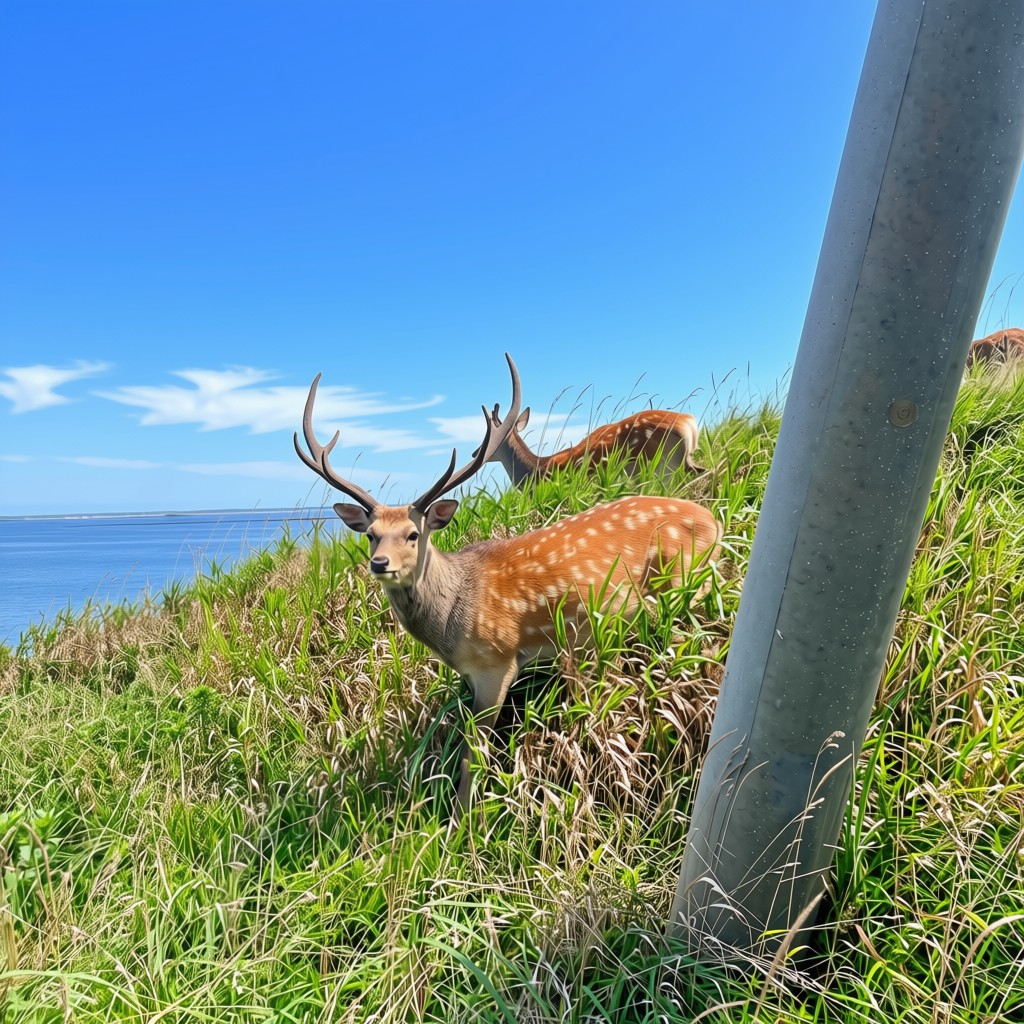
Notsuke Peninsula is a 28-km sand spit hooking into the Sea of Okhotsk. Protected as a Ramsar Wetland, its salt marshes host wild Ezo sika deer (photo), harbour seals in the shallows, and — most famously — Todowara, a “ghost forest” of dead trees that once flourished before saltwater intrusion killed them.
- Location: Betsukai-chō, Notsuke District, eastern Hokkaido
- Recommended stops: Nature Centre (free), Todowara boardwalk, Betsukai Pass restroom stop
- July temperature: 18°C — cooler than inland; sea breeze is strong
- Wildlife: Ezo sika deer year-round, migratory shorebirds, harbour seals
- Drive time: 1 hour from Nakashibetsu Airport, 45 minutes from Kaiyodai
Drive slowly — deer cross the road without warning, and in July the pastures are so green that the horizon and the deer merge into a watercolour scene straight out of a Ghibli film.
4. Shari (Gateway to Shiretoko) — Summer Farmland Under a UNESCO Sky
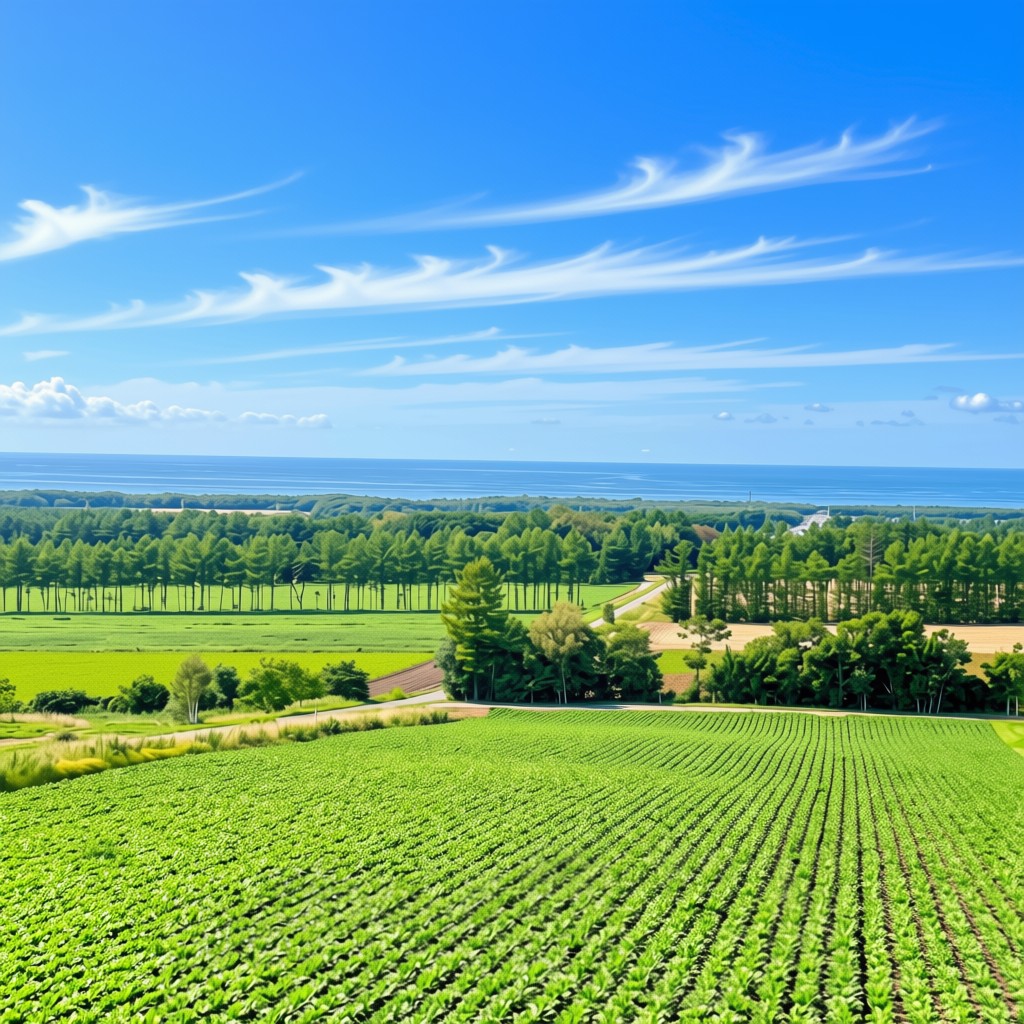
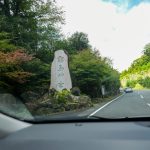
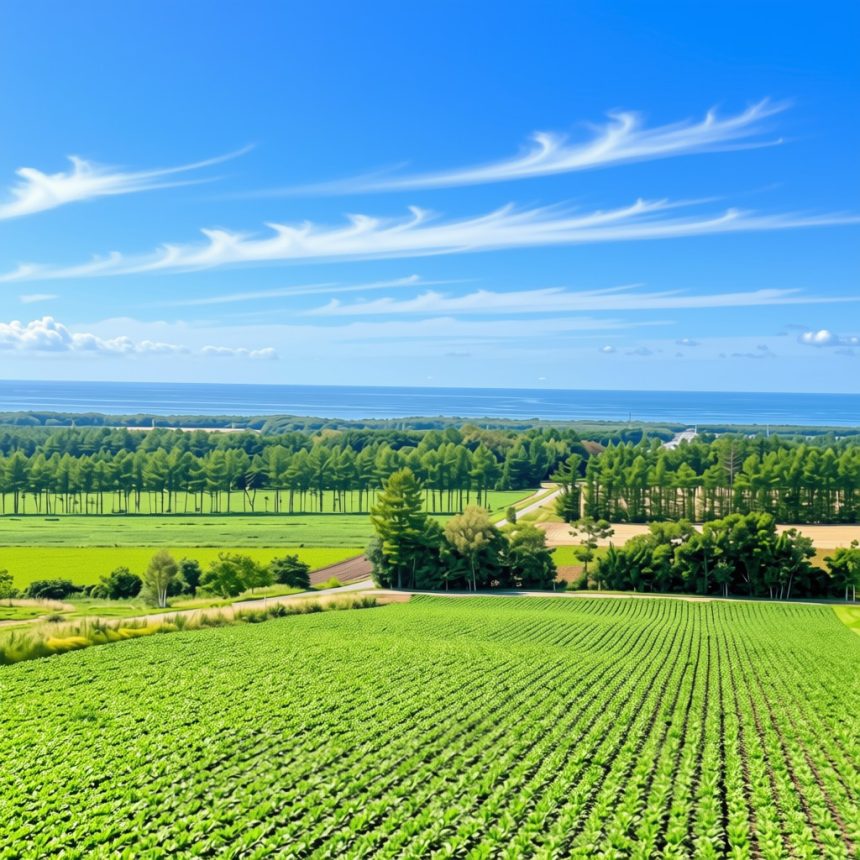
Shari-chō is the western gateway to Shiretoko National Park, Japan’s northernmost UNESCO World Natural Heritage site. Before you reach the wild coast, you drive through an unbroken sea of summer wheat, beet and dairy fields. The photo captures a July afternoon on the “Route 334 golden road” — a hillside stretch where the road appears to point straight at the horizon.
- Location: Shari-chō, Shari District, eastern Hokkaido
- Signature stops: Oshinkoshin Falls, Shiretoko Five Lakes, Utoro Onsen, Cape Puyuni
- July temperature: 22°C daytime, 15°C nights — mountain air is fresh
- Wildlife: Ezo brown bears (from cruises), Steller’s sea eagles, orcas offshore
- Drive time: 1 hour from Memanbetsu Airport, 2.5 hours from Abashiri
Book a Shiretoko sightseeing cruise from Utoro — in July, the chance of seeing brown bears at the water’s edge is high, and the boat gets you along cliffs no road can.
5. Abashiri — Cool Coastal Forest Between Sea and Prison Museum
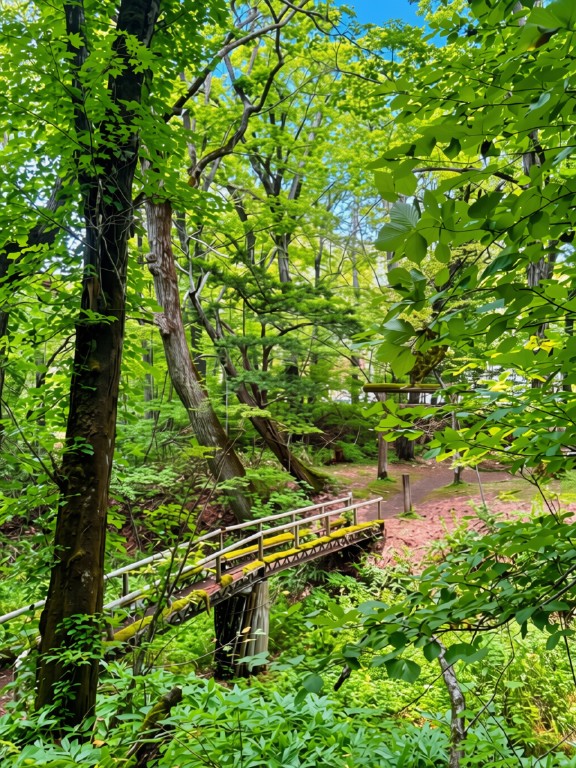
Abashiri-shi is best known for winter drift-ice cruises, but its summer face is a surprise: cool coniferous forests along the coast, the historic Abashiri Prison Museum, and the Okhotsk Ryu-hyō Museum — where you can touch real drift ice year-round. The photo shows a July forest walk near the coast where temperatures stay 3–4°C below inland Sapporo.
- Location: Abashiri-shi, Okhotsk Sub-Prefecture, eastern Hokkaido
- Recommended stops: Abashiri Prison Museum, Okhotsk Ryu-hyō Museum, Mt. Tento observatory, Lake Notoro (coral grass in September)
- July temperature: 19°C daytime — coolest coastal city in central Hokkaido
- Facilities: Full urban amenities, JR station, rental car offices
- Drive time: 30 minutes from Memanbetsu Airport
An overnight in Abashiri makes an ideal base to loop Shiretoko (east), Akan-Mashu (south) and Saroma-ko (west) over 2–3 days.
6. Rishiri Island — The Volcanic Cone of Northern Hokkaido
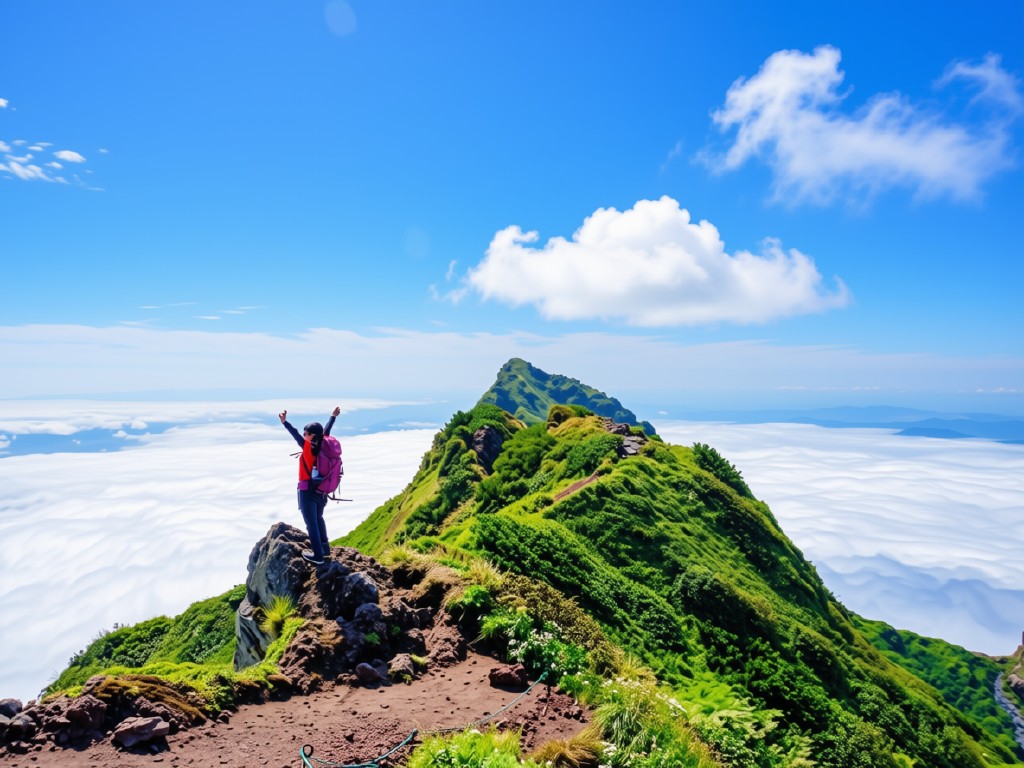
Rishiri Island (Rishiri-tō) is a nearly perfect 1,721 m volcanic cone rising straight out of the Sea of Japan. Locals call it “Rishiri Fuji” — from Rebun Island’s cliffs it looks uncannily like the real thing. July is prime hiking season for the summit trail; the lower loop drive around the island takes 2 hours and stops at kombu-drying beaches, secret lakes, and the famous Ōta-yama Meisui spring water.
- Location: Rishiri-chō & Rishirifuji-chō, Rishiri District
- Access: 1h 40m ferry from Wakkanai; 30-min flight from Sapporo Okadama
- Signature spots: Rishiri Fuji summit trail (10h round-trip), Himenuma Pond, Ōta-yama Meisui spring, Kutsugata Cape
- July temperature: 18°C at sea level, ~5°C at summit
- Wildlife: Puffins (occasional), sea otters, alpine flowers to 8,000 ft
Pair Rishiri with Rebun into a 3-day northern loop for the classic “floating island” experience.
7. Ningle Terrace (Furano) — Fifteen Craft Cabins in an Evening Forest
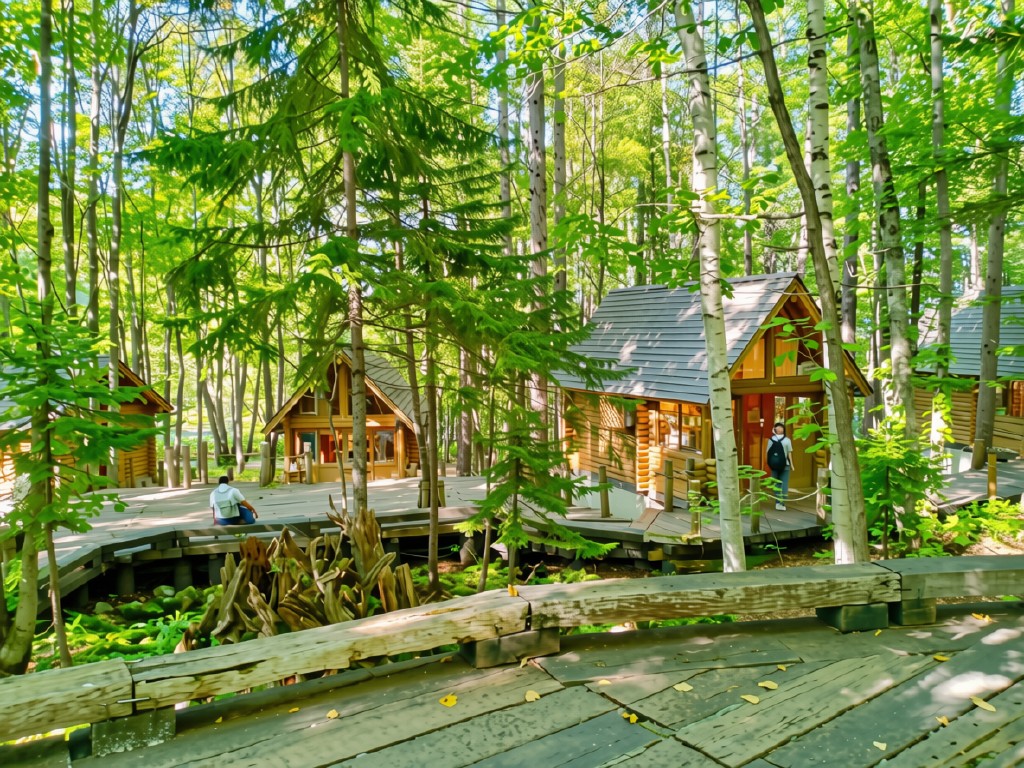
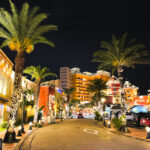
Ningle Terrace is a cluster of 15 tiny wooden cabins tucked into a dark forest behind the New Furano Prince Hotel. Each cabin is a working craft studio — glass, leather, jewellery, wooden puzzles — and the entire complex lights up like a fairy tale after sunset. In July the surrounding beech and larch forest is at its densest, and evening walks (16:00 open) feel 10°C cooler than the town.
- Location: New Furano Prince Hotel grounds, Furano-shi
- Hours: 12:00–20:45 (daily in summer)
- Admission: Free (individual craft purchases vary)
- July temperature: 20°C but cabin lights make it feel autumn-cool
- Drive time: 2 hours from New Chitose Airport, 1 hour from Asahikawa Airport
Pair it with daytime lavender at Farm Tomita (mid-July peak) and dinner at the hotel’s Le Gaufre & Coffee — the entire Furano evening comes together into a single, iconic Hokkaido summer memory.
8. Iwamizawa Park — A Cool-Air Retreat for Families
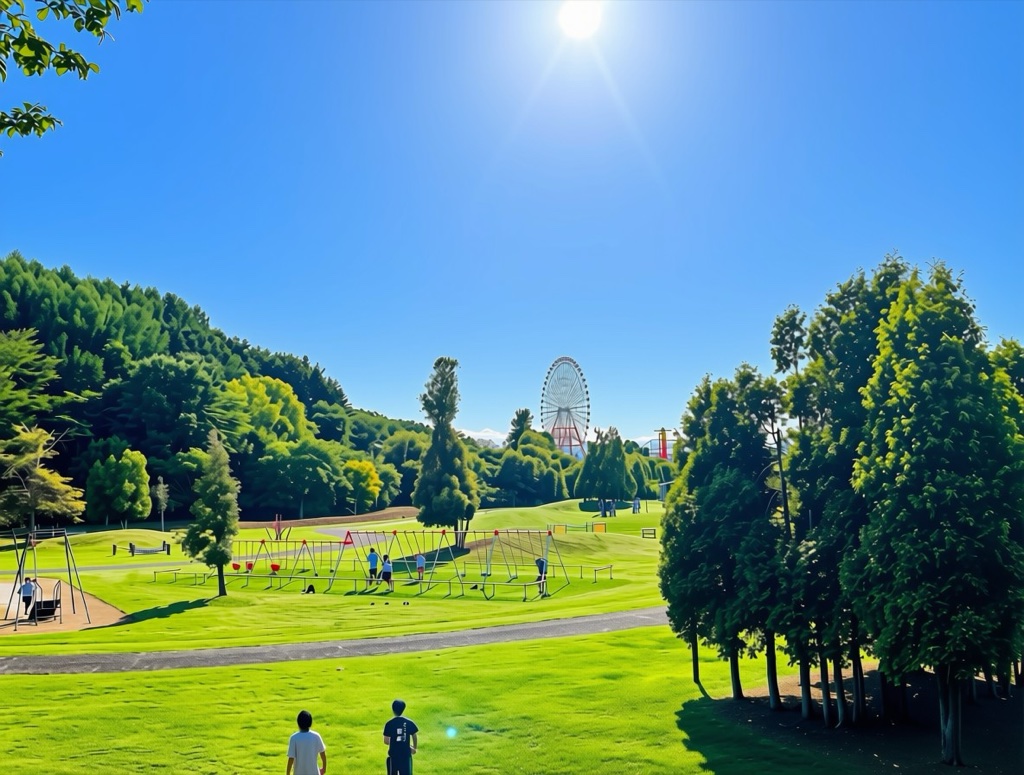
Iwamizawa-shi is a stop between Sapporo and Furano that most first-time travellers drive straight past. Locals know it for the Iwamizawa Park (Iwamizawa Kōen), a sprawling rose garden + amusement playpark + roseland that opens fully in July. The photo shows the small ferris wheel that anchors the family playpark — perfect for a mid-drive break with kids.
- Location: Nishiyama, Iwamizawa-shi, central Hokkaido
- Recommended stops: Rose Garden (600+ varieties, July–August peak), Playpark, Barbecue plaza
- Admission: Rose Garden ~¥600; Playpark rides pay-per-ride
- July temperature: 22°C daytime — one of the cooler mid-day options near Sapporo
- Drive time: 40 minutes from Sapporo, 1h 30m from New Chitose Airport
An easy family half-day between Sapporo and the lavender fields.
Two Small Things That Save the Trip — eSIM and Coupons
Behind the wheel of a rental car, you’ll depend on Google Maps, real-time transit alternatives, and continuous cloud photo uploads — all of which need reliable data.
GO!GO!TOUR eSIM for stress-free data Pocket Wi-Fi means daily charging and airport returns; carrier roaming costs $10+ a day. GO!GO!TOUR eSIM activates in seconds via QR code — 5 GB for 5 days at ¥1,980, the cheapest available. Your home SIM stays live for calls, texts and two-factor codes.
GO!GO!TOUR coupons for extra savings Before you check out on any car or eSIM order, take 30 seconds at GO!GO!TOUR coupons. Rotating discount codes apply at the last step of checkout.
Hokkaido in July = A Road Trip. Here’s Why.
Unlike Tokyo or Osaka, Hokkaido rewards drivers over train travellers. Three concrete reasons:
- 1. The distances are big. Sapporo → Furano 2h 30m, Memanbetsu → Shiretoko 2h, Wakkanai → Rishiri ferry 1h 40m. JR and bus schedules are sparse and transfer-heavy.
- 2. The best spots are in the middle of nowhere. Panoramic pastures, wildlife wetlands, hidden onsen and volcanic lakes — public transit does not reach any of them.
- 3. July weather is perfect for driving. No snow, low rain, and 15 hours of daylight let you cover 700 km without stress.
Why book with GO!GO!TOUR Hokkaido:
- ✅ English booking from start to finish
- ✅ Pickup and return at New Chitose, Wakkanai, Memanbetsu & Nakashibetsu Airports
- ✅ Transparent pricing — insurance options explained in English
- ✅ English-speaking Japan-based support for changes and emergencies
- ✅ ETC card, child seat, ferry-linked bookings available on demand
👉 Book your Hokkaido rental car in English: GO!GO!TOUR Hokkaido rental cars
Planning the Trip — Model Courses & Regional Info
“Lavender in Furano, then Shiretoko, then Rishiri — how do I actually fit that into a route?” GO!GO!TOUR’s model courses and the Hokkaido travel info hub shortcut the whole planning process.
🗺️ Hokkaido Model Courses — Practical 4- to 7-Day Itineraries GO!GO!TOUR Hokkaido Model Courses line up sightseeing, nature and activities day by day. Two picks that shine in July:
- “Furano Lavender + Biei + Asahikawa — 4 nights / 5 days” — mid-July lavender peak, Blue Pond, Ningle Terrace
- “Memanbetsu + Shiretoko + Akan-Mashu + Notsuke — 5 nights / 6 days” — eastern Hokkaido volcanic lakes, UNESCO wilderness, dairy pastures
Each course includes rental-car drive times and recommended stops, so “planning shrinks from half a day to five minutes”.
📖 Hokkaido Travel Info Hub — Seasonal & Regional Guides GO!GO!TOUR Hokkaido Travel Info collects the answers to natural follow-up questions: “What are other months like? How does winter driving work?”
- Sightseeing — Sapporo, Otaru, Biei, Furano, Wakkanai, Shiretoko driving routes
- Food — Ramen, seafood, dairy desserts
- Weather & packing — Monthly temperature, rainfall, outfit guides
- Festivals — Snow Festival, Lavender Festival, dairy events and more
- Rental car safety — Winter driving, snow tires, practical tips
Bookmark it for this trip and every future Hokkaido visit.
Hokkaido July Weather FAQ
Q1. Does Hokkaido have a rainy season in July?
Not really — Hokkaido weather in July is famously dry. It is the only region in Japan that escapes the mainland tsuyu. Early July can bring a few grey days locals call “Ezo tsuyu”, but it is light drizzle — not the sustained rain of Tokyo. At roughly 90mm total for the month (about half of Tokyo), it has almost no impact on your itinerary.
Q2. Give me the packing list in one line.
T-shirt + shorts for daytime, thin cardigan or long-sleeve for mornings and evenings, waterproof jacket for the odd drizzle. If Milan or Boston in June would work for you, this will too.
Q3. When is the lavender peak in July?
Mid-July — roughly 10–25 July — is when Furano’s fields are at maximum bloom. Farm Tomita’s Sakiwai Field is the classic shot. Rebun Island’s alpine flowers also hit their absolute peak in the first half of July, if you want a coastal alternative.
Q4. Do typhoons hit Hokkaido in July?
Rarely. Hokkaido’s high latitude puts it outside most typhoon tracks in July. Late July can occasionally bring a weakening remnant, so if your itinerary depends on the Wakkanai–Rishiri/Rebun ferry, build in one buffer day.
Q5. Can I swim? What water activities work in July?
Lakes are 18–20°C and open for swim/SUP/kayak. The sea is cold enough that most travellers only swim if experienced — but SUP, canoe and clear-bottom kayak tours run everywhere. Lake Kussharo and Lake Shikotsu are the two most popular choices.
Q6. Can I see brown bears in Shiretoko in July?
Yes — Shiretoko sightseeing cruises from Utoro report brown bear sightings on 70–90% of July departures. On land, always join a guided walk in the Shiretoko Five Lakes ground path during bear season (roughly May–July).
Q7. Where do I get an eSIM and coupons?
GO!GO!TOUR eSIM offers 5 GB / 5 days from ¥1,980, and GO!GO!TOUR coupons lists active discount codes for cars, eSIM and activities.
Wrap-Up — Peak Lavender, Endless Daylight, and Japan’s Widest Skies
Hokkaido weather in July delivers Japan’s coolest summer with lavender at peak bloom, wildlife-rich wetlands, mystical caldera lakes and 15 hours of usable daylight. Daytime temperatures of 21–25°C, less than half of Tokyo’s rainfall, and long evenings for slow drives past dairy pastures — everything about this month favours a first-time Hokkaido road trip.
Everything you need to remember:
- Average 21°C, high 25°C, low 17°C — think Milan or Munich in June
- ~90 mm rainfall — half of Tokyo; a folding umbrella is enough
- 15 hours of daylight — pack itineraries loosely; you have time
- UV 8–9 — SPF 50, hat, sunglasses non-negotiable
- Furano lavender peaks mid-July; Rebun alpine flowers peak early July
- Shiretoko brown-bear cruises, Kaiyodai panorama, Notsuke deer, Ningle Terrace — the summer greatest hits
- Rental car effectively required — public transit cannot reach the highlights
📌 Plan Your Hokkaido Trip with GO!GO!TOUR
Five essentials for a smooth Hokkaido trip — all in one place.
- 🚗 Hokkaido rental car booking — New Chitose, Wakkanai, Memanbetsu & Nakashibetsu pickup, English booking, insurance and NOC included
- 🗺️ Hokkaido model courses — proven itineraries with rental-car routes
- 📖 Hokkaido travel info — sightseeing, food, packing and winter driving in one hub
- 📱 GO!GO!TOUR eSIM — 5 GB / 5 days from ¥1,980, activate instantly with a QR code
- 🎟️ GO!GO!TOUR coupons — rotating discount codes for cars, eSIM and activities